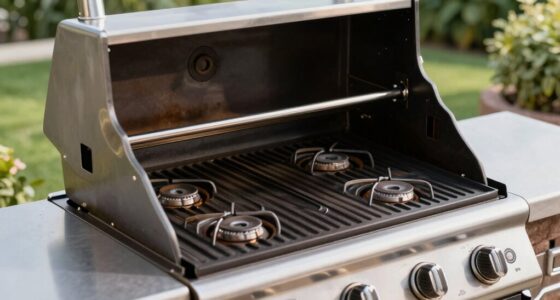
Pellet grills control temperature by using a digital controller that adjusts pellet feed and airflow to maintain steady heat and smoke. When you set a temperature, the controller signals the auger to feed pellets and the fan to improve combustion. Sensors monitor the temperature constantly and fine-tune pellet delivery and airflow for consistent results. If you’re curious about how to keep your grill at its best, explore further to learn more about its inner workings.
Key Takeaways
- Pellet grills use an auger and firepot to control pellet feed and combustion, maintaining consistent heat.
- The digital controller automatically adjusts pellet flow and fan speed based on sensor readings.
- Proper airflow management and regular cleaning prevent temperature fluctuations and hot or cold spots.
- Moisture in pellets or blocked vents can disrupt combustion and cause inconsistent temperatures.
- Regular maintenance of components like sensors, firepot, and vents ensures accurate temperature regulation.

WOOPOWER Digital Thermostat Controller Board, Digital Thermostat Pellet Grill Control Board for All Traeger
Easy use. Helps control your temperatures. High mode can be used for highest heat possible.
As an affiliate, we earn on qualifying purchases.
As an affiliate, we earn on qualifying purchases.
How Pellet Grills Generate Heat and Smoke

Pellet grills generate heat and smoke through a combination of precise pellet feed and controlled airflow. When you start the grill, the pellet feed system automatically supplies pellets to the firepot, where they ignite and produce heat. The rate of pellet feed determines the temperature, allowing you to set your desired heat level. As the pellets burn, they release smoke that imparts a rich smoke flavor to your food. The grill’s fan and exhaust system regulate airflow, ensuring consistent combustion and smoke production. This steady process creates a smoky environment that infuses your meat with flavor while maintaining steady heat. Understanding airflow is essential for mastering temperature regulation and smoke control in pellet grilling. By controlling pellet feed and airflow, pellet grills deliver a reliable balance of heat and smoke flavor for perfect outdoor cooking. Additionally, temperature sensors help monitor and adjust heat levels automatically, enhancing precision during cooking. Proper ventilation is also crucial to optimize smoke and heat distribution throughout the cooking chamber. Achieving optimal airflow management can significantly improve the efficiency and flavor profile of your grilling experience.

LESYAO 2-Pack Meat Thermometer Replacement for Pit Boss Pellet Grills and Smokers, 3.5 mm Plug Waterproof Probes with 2 Pack Probe Grommets
COMPATIBILITY: Meat probe is only compatible with Pit Boss wood pellet grills and smokers. NOTE: The Pit Boss…
As an affiliate, we earn on qualifying purchases.
As an affiliate, we earn on qualifying purchases.
How the Digital Controller Keeps Your Grill at the Right Temperature

The digital controller plays a crucial role in maintaining consistent temperature by automatically adjusting the pellet feed and fan speed. It uses precise controller algorithms to interpret temperature readings and make real-time adjustments. To guarantee accuracy, many controllers undergo digital calibration, aligning their sensor readings with actual temperatures. When your grill detects a drop or rise in temperature, the controller algorithms calculate the necessary changes and send signals to the auger and fan. This dynamic process keeps your grill steady at the target temperature, even as external conditions change. Additionally, understanding the importance of sensor calibration helps in troubleshooting and optimizing your grill’s performance. By continuously fine-tuning pellet delivery and airflow, the digital controller ensures your cooking environment remains stable, giving you consistent results every time. Proper calibration is essential for optimal performance and accurate temperature control. Additionally, regular maintenance of the sensors and components helps maintain the integrity of the digital control system, which relies heavily on sensor accuracy for effective operation. Proper calibration techniques are supported by insights from sound healing science, which emphasizes the importance of precise adjustments to optimize overall system health.

2.0 RPM Auger Motor Replacement Parts, Compatible with Traeger, Pit Boss, and Camp Chef, Wood Pellet Grill Smokers, Universal Barbecue Auger Motor Replacement 120V 60Hz 2 Pole
【Wide Compatibility】: The universal auger drive motor replacement is suitable for all Traeger, Pit Boss (except PTG) and…
As an affiliate, we earn on qualifying purchases.
As an affiliate, we earn on qualifying purchases.
The Role of the Auger, Fan, and Firepot in Temperature Control
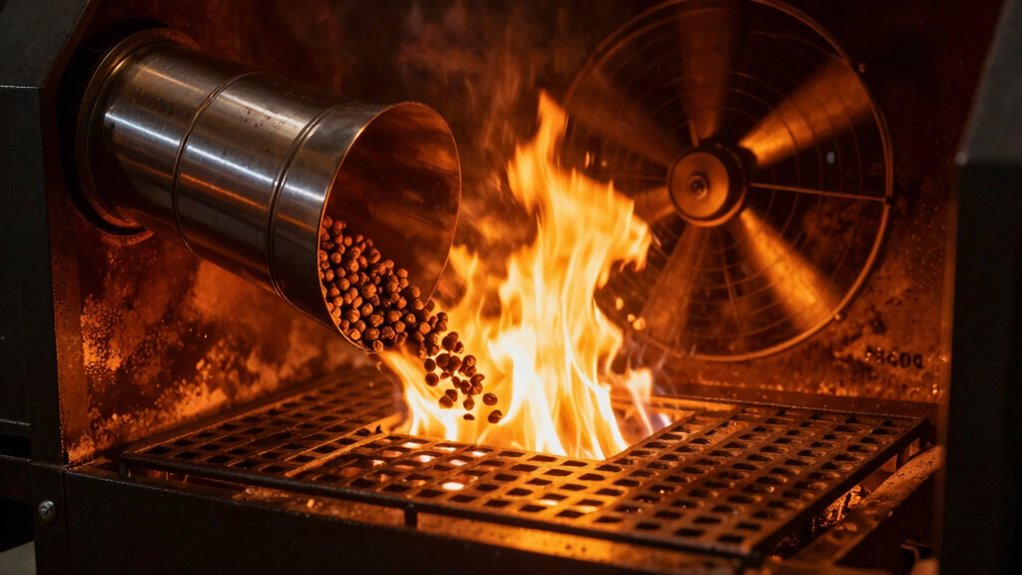
The digital controller interacts directly with the auger, fan, and firepot to regulate temperature effectively. The auger mechanics control pellet feed, adjusting how many pellets are delivered to maintain the desired heat. The fan operation manages airflow, ensuring proper combustion and consistent heat distribution. The firepot is where combustion occurs, and its stability depends on the right balance of pellet feed and airflow. Keep in mind:
- The auger increases or decreases pellet flow based on temperature readings.
- The fan enhances combustion by providing fresh oxygen.
- Proper firepot management ensures steady heat without fluctuations.
- Regular maintenance of the firepot can prevent issues that lead to temperature inconsistencies.
Additionally, understanding how the digital controller coordinates these components can help troubleshoot common problems and optimize your grilling experience. Together, these components work seamlessly to keep your grill at a precise temperature, allowing you to cook with confidence and consistency. Their coordination is crucial for ideal pellet grill performance.

Traeger Grills Pro 22 Wood Pellet Grill & Smoker, Electric Pellet Smoker Grill Combo, 6-in-1 BBQ Versatility, 572 sq. in. Grilling Capacity, Meat Probe, 450 Degree Max Temperature, 18LB Hopper, Bronze
6-in-1 Versatility: The Traeger Pro 22 is the original wood pellet smoker and grill combo trusted by. Grill,…
As an affiliate, we earn on qualifying purchases.
As an affiliate, we earn on qualifying purchases.
Common Reasons Your Pellet Grill Temperature Is Off
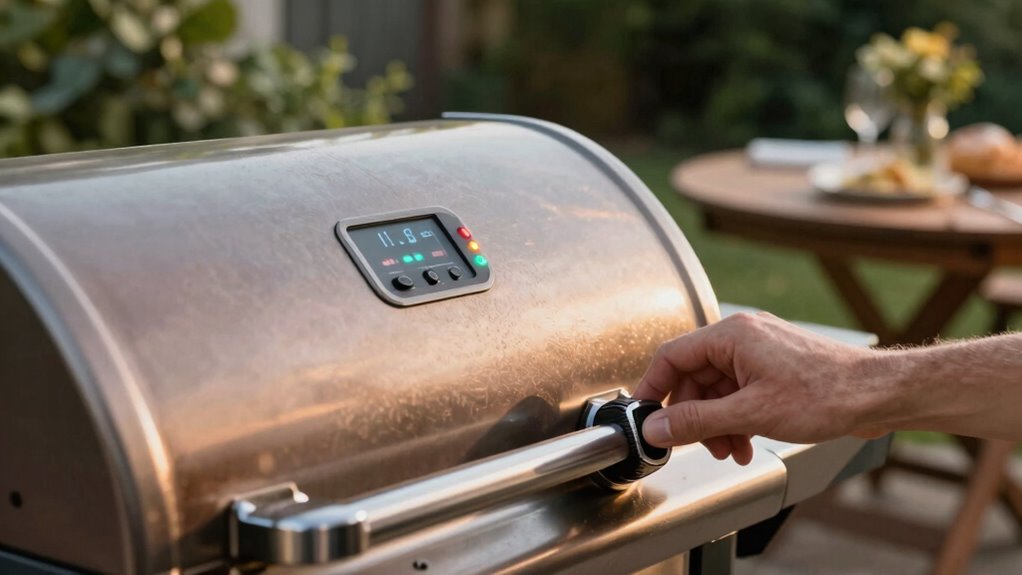
When your pellet grill isn’t maintaining the desired temperature, several common issues could be the culprit. Poor pellet grill maintenance is often overlooked but essential; dirty parts or clogged vents can disrupt airflow and heat regulation. Additionally, improper pellet storage tips matter—exposing pellets to moisture can cause inconsistent burning and temperature fluctuations. Always store pellets in a dry, airtight container to prevent moisture absorption. Another factor may be a faulty temperature probe or sensor, which misreads the internal temperature and causes incorrect adjustments. Regular calibration of your temperature sensors ensures accurate readings and consistent cooking results. Also, inspecting and cleaning the airflow system can prevent buildup that impairs heat distribution. Proper airflow management is crucial for maintaining consistent temperatures during cooking. Finally, check for blockages or buildup in the auger or firepot, as these can impede pellet feed and heat output. Maintaining cycling confidence and ensuring your grill’s components are clean can help prevent many temperature issues and ensure more consistent results. Proper extension cord standards and weatherproof tool storage are also important for safe and reliable operation of your equipment.
Tips to Troubleshoot and Optimize Your Pellet Grill’s Temperature
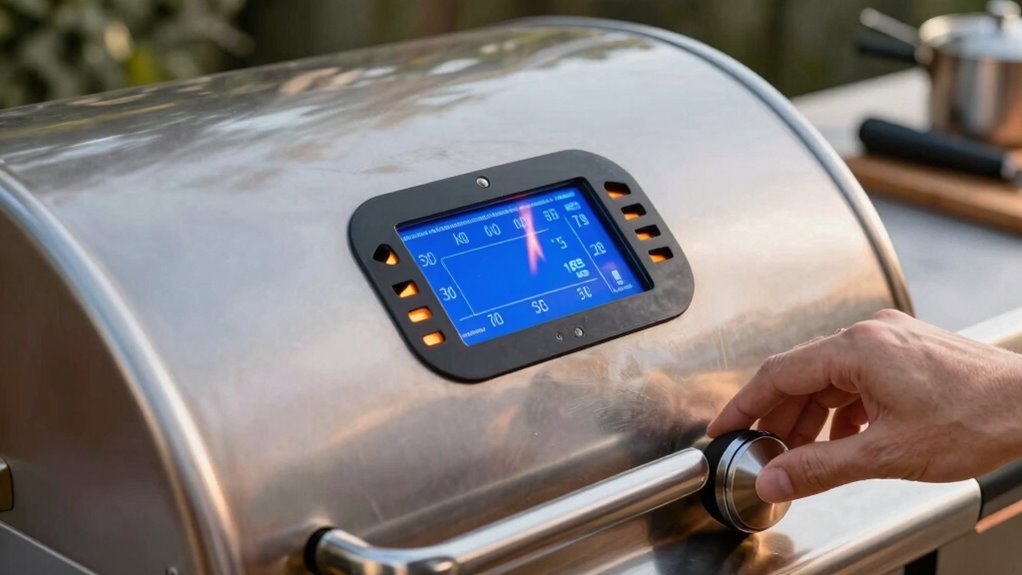
To effectively troubleshoot and optimize your pellet grill’s temperature, start by verifying that your grill is clean and well-maintained. Dirty grates or pellet storage can hinder airflow and cause temperature fluctuations. Regular pellet maintenance ensures consistent fuel quality, which directly impacts heat stability. Check for blockages in the hopper and clean out any debris. Proper pellet storage is vital; keep pellets in a dry, airtight container to prevent moisture absorption that can affect combustion. Additionally, monitor the auger and firepot for buildup. To improve temperature control: – Ensure pellets are fresh and dry – Clean the firepot regularly – Store pellets properly to avoid moisture – Maintain proper airflow by checking vents and fans. These steps help maintain consistent heat and prevent hot or cold spots, leading to better grilling results. Also, be aware that airflow management is essential for precise temperature regulation, as it influences how evenly heat is distributed throughout the grill. Maintaining consistent airflow can significantly enhance temperature stability and overall grill performance. Ensuring adequate ventilation can further enhance airflow and temperature stability within your pellet grill.
Frequently Asked Questions
How Do Pellet Grills Adjust Temperature During Different Cooking Phases?
During different cooking phases, you control temperature by adjusting the pellet feed rate and fan speed. Your grill’s calibration guarantees accurate readings, so you can trust the settings. Better pellet quality burns more consistently, helping maintain steady heat. As you tweak these settings, the grill responds by increasing or decreasing pellet flow, ensuring your food cooks at the perfect temperature throughout each phase.
Can External Weather Affect Pellet Grill Temperature Consistency?
External factors like weather impact your pellet grill’s temperature consistency. Cold, wind, or rain can challenge the grill’s ability to maintain steady heat, causing fluctuations. You might notice your grill struggles to reach or hold the set temperature during harsh weather. To minimize this, use a windbreak, keep the grill sheltered, or adjust your temperature settings slightly. Being aware of external factors helps you achieve more consistent results.
Are There Different Types of Pellets That Influence Temperature Control?
Think of pellets like fuel in a fire; different types can impact how steady your temperature stays. High-quality pellets burn more evenly, giving you better control, while poor-quality ones cause fluctuations. Proper pellet storage keeps them dry and ready, preventing inconsistent burns. Choose premium pellets suited for your grill, and store them in a cool, dry place to maintain peak temperature control and achieve delicious, consistent results every time.
How Often Should I Clean My Pellet Grill’s Internal Components?
You should clean your pellet grill’s internal components at least once a month, or more often if you use it frequently. Follow a regular cleaning schedule to prevent internal buildup of grease and ash, which can affect temperature control and performance. After each use, brush out the firepot and wipe down the interior to keep your grill running smoothly and make certain of consistent cooking results.
What Are the Signs of a Malfunctioning Digital Controller?
Like a vintage radio losing its tune, a malfunctioning digital controller shows signs of trouble. You’ll notice temperature fluctuation alerts, meaning the control isn’t regulating heat properly. If your grill’s temperature jumps unexpectedly or fails to respond to adjustments, it’s a sign of digital controller malfunctions. These issues can lead to uneven cooking or even damage, so check for error messages and consider replacing the controller if problems persist.
Conclusion
Think of your pellet grill as a steady heartbeat, with the digital controller as its vigilant pulse. When you understand how the auger, fan, and firepot work together, you’re just tuning the rhythm to perfection. Keep your grill well-maintained, and it’ll dance seamlessly to your cooking tune. Master this balance, and your grill becomes a trusted partner, turning simple ingredients into symphonies of flavor—an orchestra conducted by your careful hands.