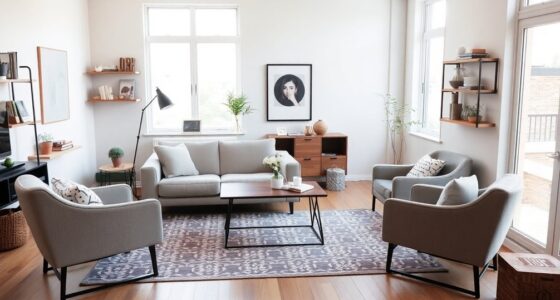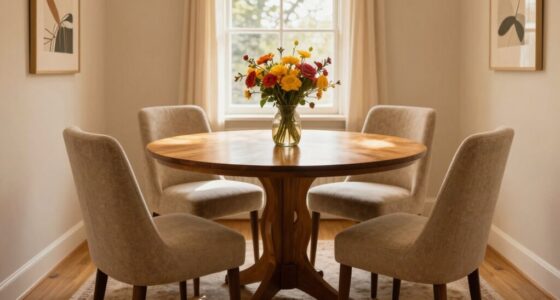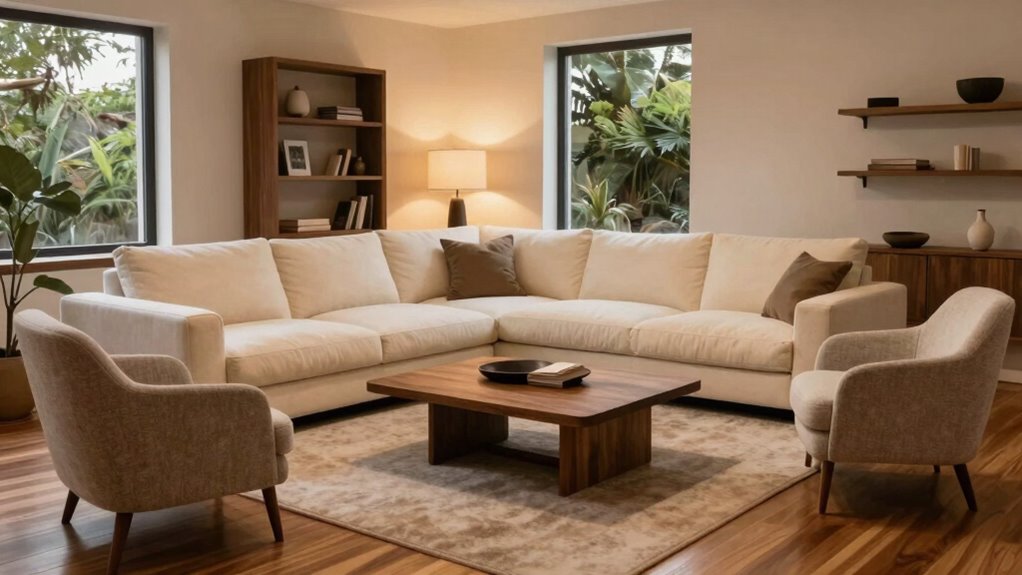

To create a conversation-first living room, arrange your furniture so sofas and chairs face each other or gather around a central coffee table. Avoid pushing furniture against walls or hiding in corners. Use warm lighting, natural light, and a cohesive color scheme to foster a relaxing atmosphere. Focus on accessible, flowing layouts that invite eye contact and interaction. Want more tips on designing your ideal social space? Keep exploring how every detail can make a difference.

Get furniture and decor delivered free with Prime
- Fast, free delivery on millions of items
- Prime Video, Amazon Music and more included
- Member-only deals all year
Key Takeaways
- Arrange sofas and chairs facing each other around a central coffee table to promote eye contact and natural dialogue.
- Use soft, cohesive color schemes with accent pops to create a calming, inviting atmosphere conducive to conversation.
- Incorporate layered, adjustable lighting to set a warm, cozy mood for both lively and intimate interactions.
- Maximize natural light by positioning seating near windows while avoiding blocking light sources.
- Design a balanced layout that supports easy movement and accessibility for spontaneous social gatherings.
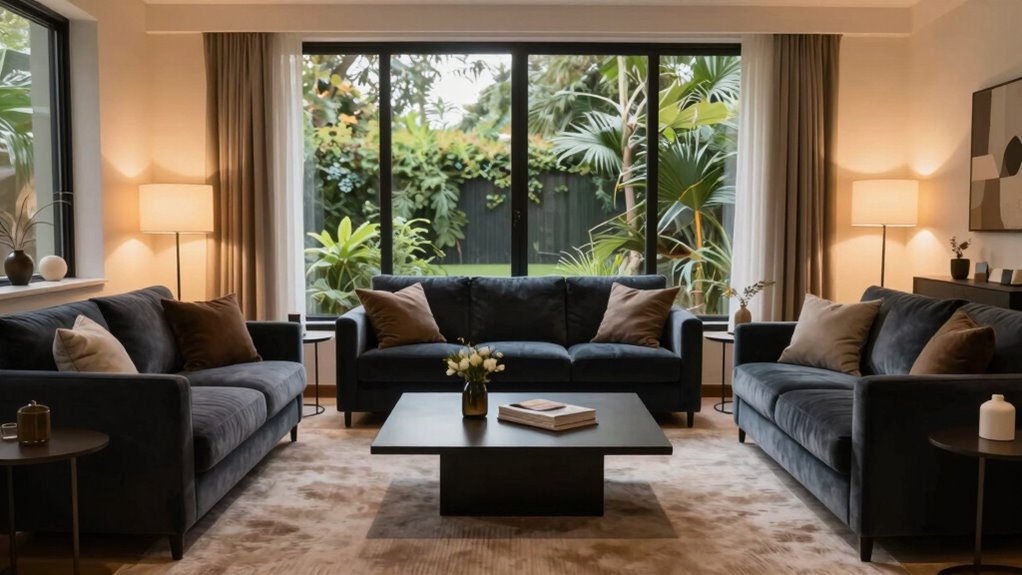
Creating a conversation-friendly living room starts with thoughtful furniture placement. When you arrange your furniture with interaction in mind, you encourage easy communication and a welcoming atmosphere. Start by positioning your seating in a way that promotes eye contact and shared space. For example, place sofas and chairs facing each other or around a central focal point like a coffee table. This setup helps everyone feel included and naturally invites conversation. Avoid isolating seating arrangements, such as placing pieces against walls or in corners, which can make the space feel disconnected. Incorporating biodiversity into your decor, like potted plants or natural materials, can also enhance the calming and inviting ambiance. Your choice of color schemes plays a significant role in fostering a warm, inviting environment. Opt for colors that create a sense of harmony and comfort, like soft neutrals, warm earth tones, or calming pastels. These palettes reduce visual clutter and make people feel relaxed. Bright, bold hues can energize the room, but use them sparingly—perhaps in accent pillows or artwork—to keep the space balanced. Combining colors thoughtfully enhances the overall mood and encourages open dialogue. Remember, a cohesive color scheme helps tie the room together, making it more inviting for spontaneous conversations. Proper lighting options are just as *vital* as furniture placement and color schemes. You want a mix of lighting sources that can be easily adjusted depending on the mood or activity. Overhead lighting should be soft and diffuse, avoiding harsh glare that might make the space feel unwelcoming. Incorporate table lamps, floor lamps, or even string lights to add layers of warm illumination. Dimmable lights are ideal because they let you tailor the ambiance—bright enough for lively chats or dim enough for intimate talks. Proper lighting not only highlights your furniture arrangement but also sets a cozy tone, making your living room an ideal spot for conversations to flow freely. Positioning furniture in relation to windows and light sources can make a big difference. If you have natural light, arrange seating to take advantage of it, but avoid placing furniture directly in front of windows, which can block light and create awkward shadows. Instead, use curtains or blinds to control sunlight, ensuring the room remains bright but not overwhelming. Thoughtful lighting placement can significantly enhance the room’s overall warmth and functionality, especially when considering natural light to maximize comfort and energy efficiency. Additionally, paying attention to the room layout ensures that the space remains functional and inviting for all guests. When all these elements work together, your living room becomes a true hub for connection and comfort.
As an affiliate, we earn on qualifying purchases.
Frequently Asked Questions
How Can I Maximize Space in a Small Living Room?
To maximize space in your small living room, choose multifunctional furniture like ottomans with storage or fold-out sofas that serve multiple purposes. Use space-saving solutions such as wall-mounted shelves and compact tables to keep clutter at bay. Arrange furniture thoughtfully, keeping pathways clear for easy movement. These strategies help you create a functional, inviting space without sacrificing comfort, making your small living room feel larger and more efficient.
What Are the Best Furniture Materials for Comfort and Style?
You’ll want furniture with textile options that feel like a cloud and withstand a marathon, blending comfort and style effortlessly. Opt for plush fabrics like velvet or chenille for softness, and consider durable materials like leather or tightly woven upholstery to resist wear and tear. This combo guarantees your furniture isn’t just stunning but also resilient, making your living room a cozy, stylish haven that lasts through all your conversations and lounging marathons.
How Do I Incorporate Lighting Into a Conversation-Friendly Layout?
You should incorporate ambient lighting to create a warm, inviting atmosphere that encourages conversation. Use dimmable options to adjust the mood easily. Add statement fixtures like a bold chandelier or unique pendant lights to serve as focal points and spark interest. Position these fixtures strategically above seating areas, ensuring even, soft lighting that fosters intimacy and makes your living room perfect for chatting and relaxing.
What Color Schemes Promote a Cozy, Inviting Atmosphere?
To create a cozy, inviting atmosphere, opt for warm color palettes like soft reds, gentle oranges, and earthy browns. These colors leverage color psychology to foster comfort and intimacy. Incorporate warm hues on walls, rugs, and accessories, balancing them with neutral tones. This combination makes your space feel welcoming, encouraging conversations and making everyone feel at ease. Your choice of warm colors truly sets the mood for a friendly, cozy environment.
How Can I Arrange Furniture for Easy TV Viewing?
Think of your living room as a stage where the TV is the star. To guarantee everyone gets a front-row seat, arrange furniture around the television placement with ideal viewing angles. Position sofas and chairs so they face the TV directly, avoiding glare and awkward angles. Keep enough space for easy movement, and angle seats slightly toward the screen for the best viewing experience, making your space both functional and inviting.
Conclusion
Creating a conversation-first living room isn’t just about furniture placement; it’s about fostering connection. When your furniture encourages face-to-face interactions, you transform a space into a hub of warmth and intimacy. Think of your layout as both a functional arrangement and a canvas for shared moments. Just like a good conversation, the right furniture setup invites openness—turning everyday gatherings into memorable experiences. In your living room, design not only for style but for meaningful connection.
Halloween Picks
halloween
As an affiliate, we earn on qualifying purchases.