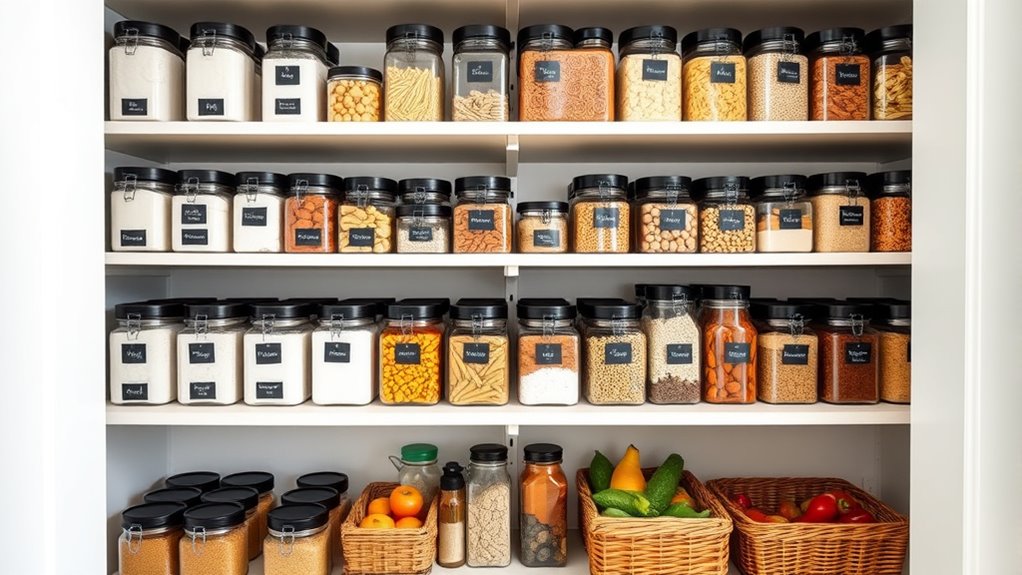
To organize your kitchen pantry effectively, start by creating designated zones for snacks, baking, and breakfast items. Use clear, airtight containers for visibility and freshness, choosing different sizes to hold various ingredients. Apply consistent labels to help everyone identify contents quickly and track expiration dates. Incorporate vertical storage solutions like risers and stackable bins to maximize space. Keep your pantry tidy and efficient — explore more tips to master your kitchen organization skills.
Key Takeaways
- Create designated zones for snacks, baking, and breakfast to improve accessibility and streamline meal prep.
- Use uniform, clear, airtight containers in various sizes to keep pantry items fresh and visually cohesive.
- Label containers and shelves clearly to identify contents quickly and track expiration dates easily.
- Utilize vertical storage solutions like risers and stackable bins to maximize space and reduce clutter.
- Regularly review and tidy the pantry to maintain organization, discard expired items, and optimize space efficiency.
A well-organized kitchen pantry can transform your cooking experience and save you time searching for ingredients. When your pantry is tidy and thoughtfully arranged, meal prep becomes smoother, allowing you to quickly gather everything you need without rummaging through clutter. Effective storage solutions are the backbone of this organization, helping you maximize space and keep everything accessible. Start by evaluating what you regularly use and grouping similar items together. For example, keep all baking supplies in one area, canned goods in another, and snacks in a designated zone. This zoning method not only simplifies finding what you need but also makes restocking easier, ensuring your pantry remains functional and clutter-free.
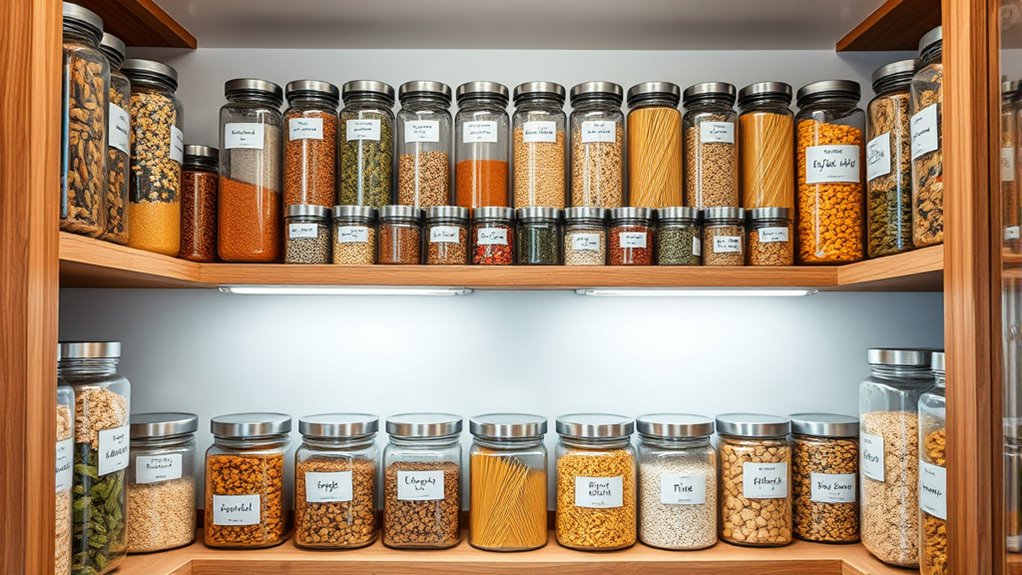
Investing in the right storage solutions is essential. Clear, airtight containers are a game changer—they keep ingredients fresh and visible, so you can easily see when supplies are running low. Use uniform containers to create a cohesive look and streamline your space, making it easier to stack and organize. Consider different sizes to accommodate various items, from small spice jars to large bags of grains. Shelf risers or stackable bins can also help utilize vertical space efficiently, especially in smaller pantries. These solutions reduce clutter and make it simple to access items without disturbing the entire shelf.
Clear, airtight containers keep ingredients fresh, visible, and organized, making pantry management simple and clutter-free.
Labeling plays a vital role in maintaining your organization over time. When you label containers and shelves, you eliminate confusion and speed up your shopping and meal prep processes. Use clear, legible labels, whether handwritten or printed, to identify contents at a glance. This way, everyone in your household can put items back in the right place, maintaining order effortlessly. Labels also help you keep track of expiration dates, preventing waste and ensuring you’re always working with fresh ingredients. Incorporating mindfulness into your organization routine, such as being intentionally present during tidying, can make the task more enjoyable and effective.
To enhance your pantry’s functionality, think about creating designated zones for specific tasks. For instance, set aside a snack zone, a baking station, or a breakfast area. This zoning makes meal prep more efficient because ingredients are grouped by their usage, saving you time and effort during busy mornings or when hosting guests. Regularly review and tidy your pantry to prevent overstocking and to discard expired items. With a strategic approach to zones, storage solutions, and labels, your pantry will become a well-oiled part of your kitchen, boosting your cooking efficiency and making meal prep a pleasure rather than a chore.
Frequently Asked Questions
How Often Should I Reorganize My Pantry?
You should reorganize your pantry every 3 to 6 months to stay on top of pantry maintenance and keep things functional. Regular organizational routines prevent clutter and make it easier to find what you need. Take time to declutter expired items, update labels, and adjust zones as your needs change. Consistent reorganization guarantees your pantry remains tidy, accessible, and efficient, saving you time and reducing stress during meal prep.
What Are the Best Materials for Pantry Containers?
You’ll love choosing containers made from eco-friendly materials like glass or bamboo, which are both stylish and sustainable. Look for options with airtight seals to keep your food fresh and enjoy the peace of mind they provide. These materials are durable, easy to clean, and better for the environment. By selecting eco-friendly containers with airtight seals, you turn pantry organization into a delightful, guilt-free habit.
How Do I Prevent Pests in My Pantry?
To prevent pests in your pantry, you should implement rodent proofing measures like sealing cracks and installing door sweeps. Use pest resistant storage containers made of glass, metal, or thick plastic to keep bugs and rodents out. Keep your pantry clean by wiping spills promptly and regularly checking for signs of pests. Properly stored food and a tidy space deter pests and help maintain a pest-free environment.
Can I Use Labels on Transparent Containers?
A touch of elegance in your pantry can be achieved with clear labeling on transparent containers. Yes, you can use labels on see-through containers, enhancing both style and functionality. This allows you to effortlessly identify contents while maintaining a sleek appearance. Container transparency combined with clear labeling helps keep your pantry organized, reduces clutter, and makes shopping or refilling easier, all while adding a sophisticated touch to your storage solutions.
What Is the Ideal Pantry Lighting Setup?
You should install LED strip lighting in your pantry for bright, even illumination, making it easier to find what you need. Incorporate motion sensor lights for convenience, so they turn on automatically when you open the door and turn off when you leave. This setup saves energy and adds a modern touch. Make certain the lighting is adjustable to suit your preferences and enhances visibility for all your pantry items.
Conclusion
By thoughtfully organizing your kitchen pantry, you’re creating a space that feels welcoming and calming, even on the busiest days. With just a few simple zones, containers, and labels, you’ll find joy in every meal prep and a sense of peace in your home. Embrace the little changes, and watch how your pantry transforms into a haven of order and comfort—making every moment in your kitchen a little brighter.