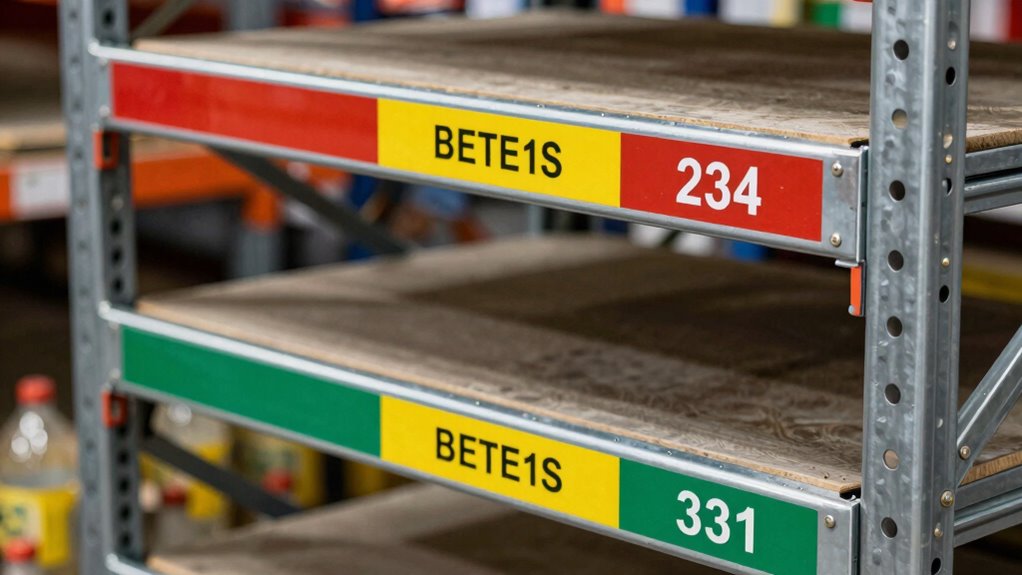

To avoid being misled by storage rack weight ratings, always check the manufacturer’s specifications and verify proper assembly. Never rely solely on labels—inspect for damage and confirm load limits for each shelf. Spread weight evenly across all levels and avoid overloading. Regular inspections and careful load management are key. If you want to keep your racks safe and sturdy, understanding these factors will help you make smarter choices—keep going to learn more.

Get furniture and decor delivered free — and shop member deals
- Fast, free delivery on millions of items
- Access to Prime Big Deal Days deals on October 6–7
- Prime Video, Amazon Music and more included
Key Takeaways
- Always rely on manufacturer specifications for accurate weight ratings, not generic labels or assumptions.
- Properly assemble racks with even weight distribution and support to prevent structural failure.
- Regularly inspect for damage, rust, or loose bolts to maintain safety and capacity.
- Avoid overloading beyond the rated capacity; consider shelf-level differences and accessory ratings.
- Conduct load tests with evenly distributed weight to verify stability and identify potential weaknesses.
heavy duty storage rack with high weight capacity
As an affiliate, we earn on qualifying purchases.
As an affiliate, we earn on qualifying purchases.
What Do Storage Rack Weight Ratings Really Mean?
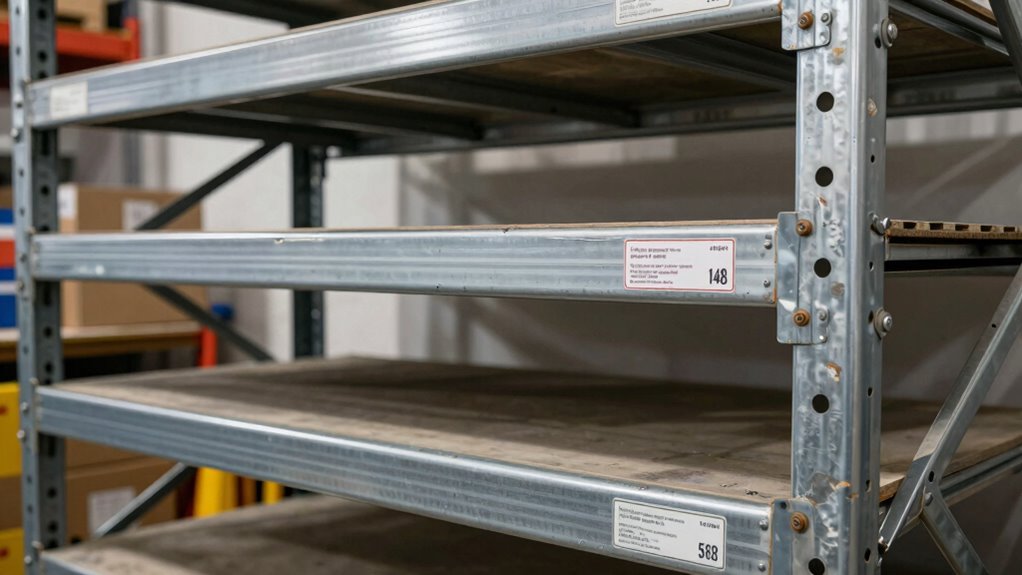
Understanding what storage rack weight ratings really signify is essential to guarantee your shelves are safe and effective. These ratings reflect the maximum weight the rack can support based on its material durability and design. Material durability determines how well the shelves resist bending or breaking under load, so stronger materials typically allow for higher weight ratings. Proper weight distribution is equally important; evenly spreading the load across the entire shelf prevents weak spots that could cause failure. Keep in mind that exceeding these ratings can compromise the rack’s integrity, leading to potential accidents or damage. Always check the manufacturer’s specifications and ensure your storage practices align with the rated capacities. Being aware of the material strength and how it affects load capacity can help you select the right storage solutions. Additionally, understanding how design features influence weight distribution can enhance safety and longevity. Using appropriate mounting techniques can further secure the rack and prevent tipping or collapse, ensuring long-term safety. Incorporating load testing methods can also help verify that your storage system performs reliably under expected conditions, further safeguarding your belongings and environment. Doing so helps you maintain a safe, functional, and long-lasting storage system.
How Installation and Usage Affect Your Racks’ Weight Limits
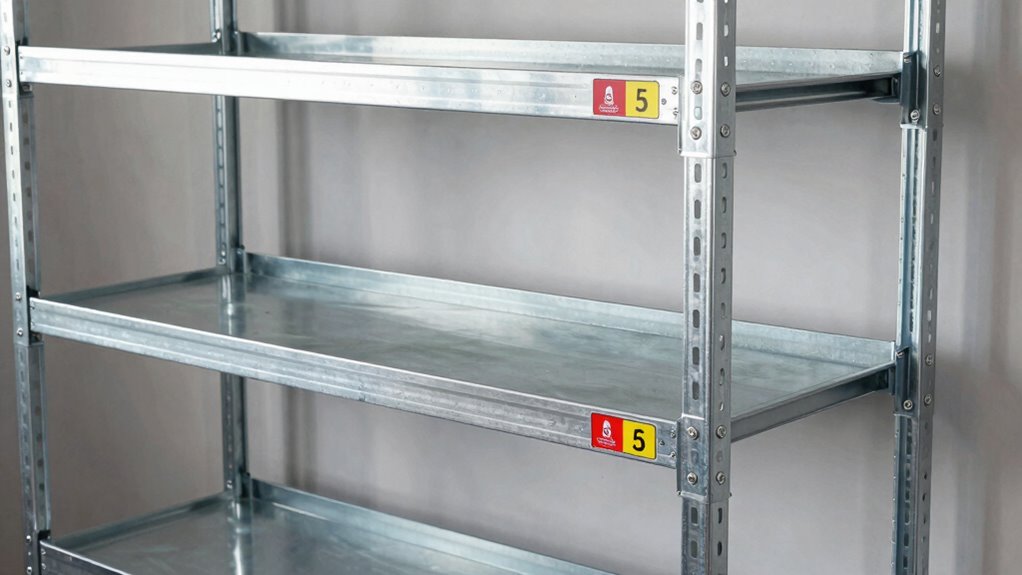
How you install and maintain your racks directly impacts their weight capacity. Using proper assembly techniques guarantees the racks are stable and safe, while regular maintenance prevents damage that could weaken their structure. Paying attention to these details helps you maximize your racks’ weight limits and keep your storage secure. Additionally, understanding accessibility features can assist in ensuring safe and user-friendly handling of heavy or bulky items. Properly testing load capacities periodically can also help identify potential weaknesses before they become safety issues. Implementing manufacturer guidelines can further ensure that you are adhering to recommended practices for longevity and safety. Recognizing structural integrity is essential for maintaining the overall strength of your racks over time. Regular inspections and clear weight ratings help prevent overloading and potential accidents.
Proper Assembly Techniques
Proper assembly is essential to ensuring your storage racks can safely handle their designated weight limits. When assembling, focus on correct placement of beams and supports to promote proper weight distribution across the entire structure. Misaligned or improperly secured components can compromise rack stability, increasing the risk of collapse under load. Always follow the manufacturer’s instructions carefully, ensuring all bolts and fasteners are tightened correctly. Use the right tools and verify that each part is installed as specified. Avoid over-tightening, which can damage components, or under-tightening, which reduces stability. Regularly check for loose connections or bent parts. Proper assembly not only maximizes load capacity but also maintains safety, preventing accidents caused by structural failure. Additionally, understanding regional flavors and chicory can help inform how you organize and prioritize your storage needs for different types of supplies. Ensuring proper assembly techniques can significantly improve your racks’ overall safety and durability, especially when considering weight distribution principles during setup. Properly distributing loads across the rack structure helps prevent uneven stress that could lead to failure, emphasizing the importance of balanced placement.
Regular Maintenance Practices
Regular maintenance is essential because it guarantees your storage racks remain safe and capable of supporting their intended loads over time. Regular inspections help identify issues like rust, loose bolts, or damaged components that could compromise weight distribution. Proper rack customization ensures each rack is suited for specific loads, preventing overloading and uneven weight spread. Adjusting shelving and accessories as needed maintains ideal weight capacity and prevents stress points. Keep an eye on how you load items—distributing weight evenly across shelves prevents sagging and structural failure. Additionally, understanding weight ratings and adhering to manufacturer guidelines helps avoid accidental overloads. Knowing how installation practices impact a rack’s weight capacity can prevent premature wear and failure. By routinely checking and maintaining your racks, you ensure they stay within their weight ratings and prolong their lifespan. Consistent maintenance is a simple yet effective way to keep your storage system safe and reliable.
Common Mistakes When Interpreting Storage Rack Ratings
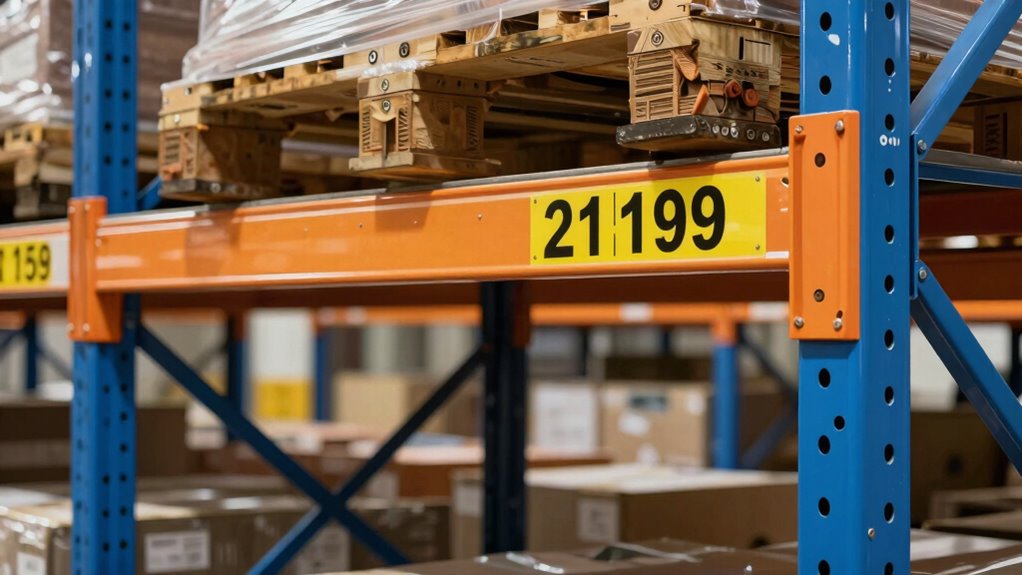
Misinterpreting storage rack ratings is a common mistake that can lead to safety hazards and equipment damage. One mistake is ignoring the importance of rack accessories, which can affect load capacity if not properly rated or installed. Overloading racks beyond their specified weight ratings causes stress and potential failure. Many assume that the stated weight limit applies universally across all shelf levels, but each component has its own rating you must consider. Another error is neglecting load optimization—placing heavier items on weaker areas or unevenly distributing weight can compromise stability. Always check the manufacturer’s specifications for rack accessories and understand how different loads impact overall capacity. Additionally, understanding the contrast ratio of your storage setup can help in assessing how well your storage solutions perform under different conditions. Proper interpretation ensures safe, efficient storage without risking damage or accidents. Being aware of rack accessory ratings can further prevent unintended overloads and extend the lifespan of your storage system. Also, considering the material strength of your shelving components can help prevent unexpected failures under heavy loads.
How to Properly Assess Your Storage Rack’s Capacity
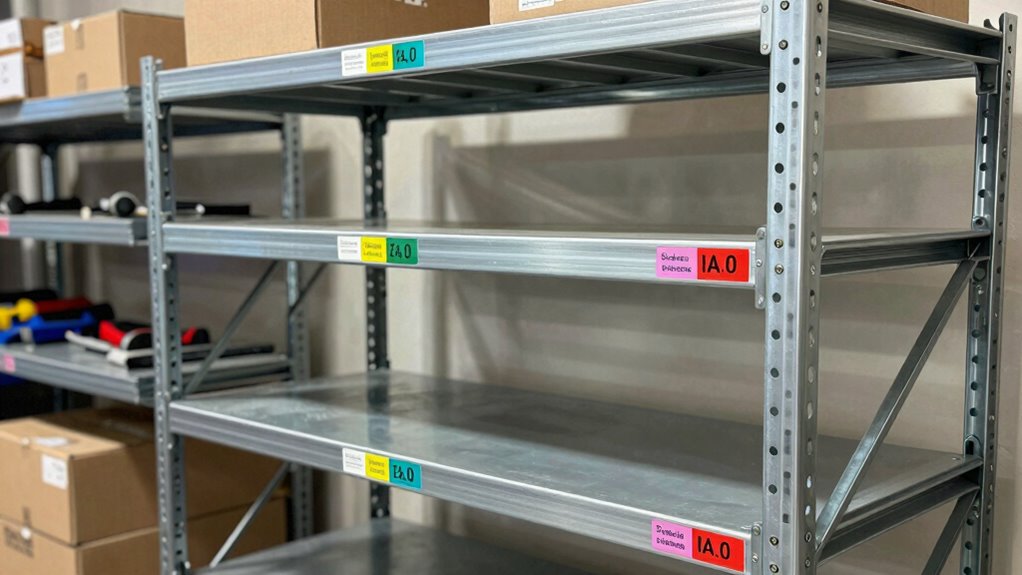
To properly assess your storage rack’s capacity, start by checking the manufacturer’s specifications for weight limits. Then, consider how your items are distributed across shelves to avoid overloading any one area. To ensure ongoing safety and optimal performance, it’s also important to monitor load distribution and make adjustments as needed. Additionally, understanding weight capacity limits can help prevent accidental overloads that could lead to structural failure. Finally, regularly inspect the rack for damage or wear that could compromise its safety and capacity. Incorporating free floating design principles can also help prevent structural stress by allowing the rack to adapt to varying load distributions.
Check Manufacturer Specifications
Before placing any items on your storage rack, it’s crucial to review the manufacturer’s specifications. These details reveal the rack’s maximum weight capacity and guarantee you don’t overload it. Pay close attention to material durability, as stronger materials can support heavier loads safely. Manufacturers often design racks with specific applications in mind, so check if rack customization options align with your needs. Properly understanding these specifications helps prevent structural failure and prolongs your rack’s lifespan. Don’t assume capacity from similar racks or generic labels; always rely on the manufacturer’s data. Accurate assessment of weight ratings based on official specifications ensures safe, efficient storage and saves you from costly mistakes or accidents later. Additionally, understanding the water resistance of your storage materials can be important if your items are exposed to humidity or moisture.
Consider Shelf Distribution
Evaluating your storage rack’s capacity accurately depends on understanding how weight is distributed across its shelves. Proper shelf distribution ensures you don’t overload one area while neglecting others, maintaining overall weight balance. To assess this, check how your items are arranged: heavier items should be placed on lower shelves to lower the center of gravity and improve stability. Spread weight evenly across each shelf, avoiding concentrated loads that could cause sagging or failure. Consider the weight capacity of individual shelves and how they are supported. Additionally, proper weight distribution is essential to prevent uneven wear and potential structural damage over time. Ensuring adequate support systems can help maintain the integrity of your storage rack under load. Adjust your storage plan if you notice uneven loads or uneven shelf usage. Maintaining an even shelf distribution helps prevent accidents, prolongs the life of your rack, and guarantees your storage system operates safely and efficiently.
Regularly Inspect for Damage
Regular inspections are essential for ensuring your storage rack remains safe and capable of handling its rated weight. By regularly checking for damage, you prevent potential accidents and maintain proper weight distribution. Here are three key steps:
- Examine shelf labeling to confirm it matches the actual weight capacity and hasn’t been tampered with.
- Inspect for signs of damage, like dents, rust, or bent beams, which can compromise load-bearing ability.
- Assess weight distribution across shelves to ensure loads are evenly spread, reducing stress on any single point.
Consistent inspections help catch issues early, allowing you to address them before they cause failure. Properly maintaining your rack’s condition ensures it continues to support your stored items safely and effectively.
Questions to Ask Before Buying Storage Racks
When shopping for storage racks, asking the right questions can guarantee you select the best option for your needs. Start by inquiring about the material composition—steel, wire, or plastic—as each affects weight capacity and durability. Knowing what the rack is made of helps determine if it can handle your storage demands. Also, consider the brand reputation; reputable brands often provide reliable quality and clear weight ratings. Ask about customer reviews and warranty policies to gauge long-term performance. Don’t hesitate to verify if the rack’s specifications match your intended load levels. Clarifying these details ensures you’re making an informed choice, reducing the risk of overloading or premature failure. Asking these questions saves you time, money, and potential safety hazards down the line.
Why Overloading Is Dangerous: and How to Prevent It
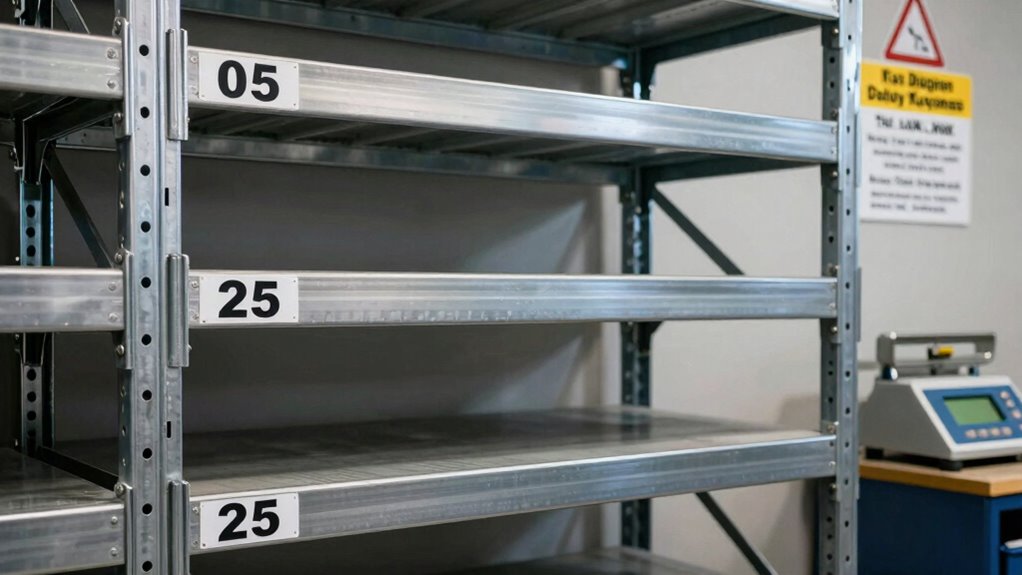
Overloading your storage racks can lead to serious safety hazards, including structural failure and accidents. When you exceed the load capacity, you risk damaging the rack’s integrity and endangering everyone nearby. To prevent this:
- Always check the manufacturer’s specified load capacity and stick to it.
- Distribute weight evenly across shelves to avoid putting stress on one area.
- Regularly inspect racks for signs of wear, like bent frames or loose bolts.
Ignoring these safety guidelines can cause racks to collapse unexpectedly, leading to injuries or property damage. Overloading compromises the safety hazards your storage system is designed to prevent. By respecting load limits and maintaining your racks, you protect yourself, your coworkers, and your inventory. Stay vigilant—safety starts with understanding and respecting weight ratings.
Safe Ways to Test Your Storage Rack’s Strength

To guarantee your storage racks can safely handle their intended loads, it’s important to test their strength periodically. Start by inspecting the rack material for any signs of wear, rust, or damage, which can compromise weight capacity. When testing, ensure weight distribution is even across shelves to prevent overstressing one area. Use calibrated weights or load testing equipment that gradually applies force, rather than sudden loads, to observe how your rack responds. Keep a close eye on stability during testing, checking for any wobbling or bending. Avoid exceeding the manufacturer’s recommended weight limits. These steps help you verify your rack’s integrity safely, ensuring it supports your storage needs without risking failure due to unseen weaknesses in material or uneven weight distribution.
Key Factors to Consider When Choosing the Right Storage Racks
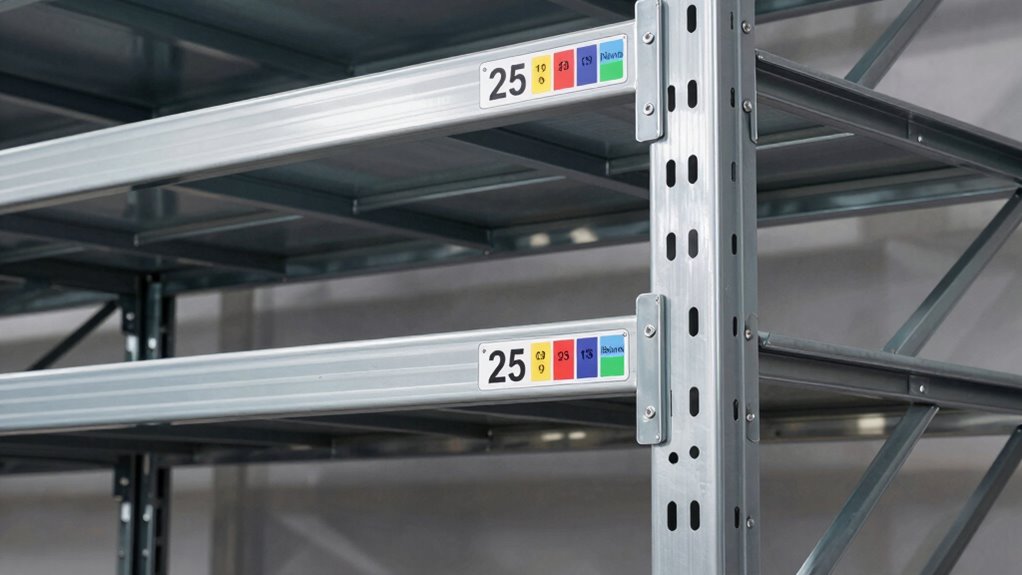
Choosing the right storage racks starts with understanding your specific needs and the environment where they’ll be used. You need to take into account factors that guarantee safety and efficiency. First, check bolt compatibility to make sure the rack components fit securely, preventing accidents. Second, look at the color coding system; it helps organize items and quickly identify weight capacities or categories. Third, assess the environment—humidity, temperature, and space—to select racks that withstand conditions and maximize storage. Remember, proper bolt compatibility ensures stability, and color coding simplifies management. By focusing on these key factors, you’ll select racks that are safe, durable, and tailored to your storage needs, avoiding costly mistakes and ensuring smooth operation.
Frequently Asked Questions
Can Storage Rack Ratings Vary Between Manufacturers?
Yes, storage rack ratings can vary between manufacturers. You should always check the manufacturer labels and compare them to industry standards. Different companies might have different testing methods or quality controls, so ratings aren’t always directly comparable. Always verify the weight capacity and make sure it meets the required safety standards. Don’t rely solely on numbers; look for reputable brands that follow recognized industry standards to ensure your storage is safe.
How Often Should I Inspect My Racks for Safety?
You should inspect your racks for safety at least once a year, or more often if they bear heavy loads or show signs of wear. Regular safety inspections help make certain your load capacity isn’t compromised and prevent accidents. Look for rust, bent components, or loose bolts. If you notice any damage, stop using the rack immediately and consult a professional. Staying proactive keeps your storage safe and reliable.
Are There Legal Regulations for Warehouse Storage Rack Loads?
Yes, there are legal regulations for warehouse storage rack loads to ensure rack safety and load compliance. You must follow OSHA standards and local building codes, which specify maximum load capacities and safety measures. It is crucial to regularly inspect your racks, maintain proper load distribution, and stay updated on regulations to prevent accidents. Always adhere to manufacturer guidelines and seek professional assessments if you’re unsure about your racks’ load limits.
What Materials Are Most Durable for Heavy-Duty Racks?
Think of your racks as the backbone of your warehouse—choose materials with unmatched strength to guarantee long-lasting support. Steel, especially high-grade alloy steel, symbolizes durability and resilience, making it the most durable choice for heavy-duty racks. Its material strength boosts rack longevity, allowing you to safely store heavy loads without worry. Investing in robust steel racks protects your inventory and keeps operations smooth for years to come.
How Do Environmental Factors Affect Storage Rack Strength?
Environmental factors like corrosion and temperature effects can weaken your storage rack over time. Exposure to moisture causes environmental corrosion, rusting metal components and reducing strength. Extreme temperatures, whether hot or cold, can cause materials to expand or contract, compromising structural integrity. To maintain your rack’s strength, consider using corrosion-resistant materials and place racks in controlled environments. Regular inspections help identify early signs of damage caused by these environmental influences.
Conclusion
Understanding storage rack weight ratings is like reading a map—you need to know what each symbol means to avoid getting lost. By knowing how to interpret numbers, install correctly, and select the right racks, you protect your belongings and prevent accidents. Think of your racks as a sturdy bridge; overload it, and it could collapse. Stay informed, ask the right questions, and test safely to keep your storage area secure and reliable.
Halloween Picks
halloween
As an affiliate, we earn on qualifying purchases.