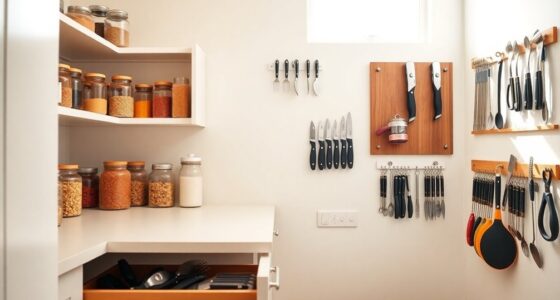
To choose sustainable organizing solutions, focus on items made from eco-friendly materials like bamboo, recycled fabrics, or recyclable plastics. Bamboo is a fast-growing, durable choice suitable for baskets and shelving, while recycled fabrics like organic cotton or hemp help reduce waste and add softness. Recyclable metals and glass provide long-lasting storage options. By selecting these eco-conscious materials, you support both your home’s organization and the planet’s health; explore more options to create sustainable storage solutions.
Key Takeaways
- Prioritize eco-friendly materials like bamboo, recycled fabrics, and recyclable plastics to minimize environmental impact.
- Choose bamboo for its rapid growth, durability, and sustainable forestry benefits.
- Opt for fabric storage solutions made from recycled or organic materials that are biodegradable and customizable.
- Select recyclable items made from metal, glass, or labeled plastics to promote reuse and reduce waste.
- Consider the full lifecycle of products to ensure they support circular economy practices and long-term sustainability.
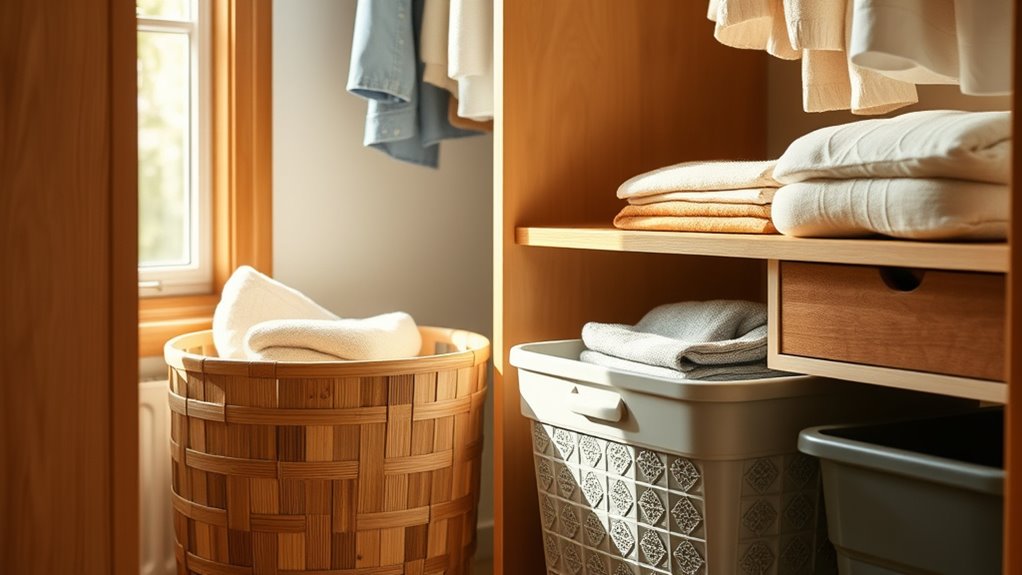
In today’s world, choosing sustainable organizing solutions is essential for reducing environmental impact and creating long-lasting order in your space. When you opt for eco friendly materials, you’re making a conscious decision that benefits both your home and the planet. These materials, such as bamboo, recycled fabrics, and other natural options, are renewable and biodegradable, helping to decrease reliance on plastics and non-renewable resources. By selecting products made from eco friendly materials, you guarantee that your storage solutions are not only functional but also environmentally responsible. Recyclable storage options are particularly advantageous because they can be reused, repurposed, or recycled at the end of their lifecycle, reducing waste and promoting a circular economy.
Choosing eco friendly storage solutions reduces waste and supports sustainable living.
Bamboo, for instance, is an excellent choice for sustainable organization because it grows quickly and requires minimal resources. It’s naturally durable and lightweight, making it ideal for baskets, bins, and shelving. When you incorporate bamboo into your storage system, you’re choosing a material that’s both sturdy and eco-friendly, supporting sustainable forestry practices. Bamboo’s versatility means you can find it in various forms—whether as woven baskets, drawer dividers, or decorative boxes—that seamlessly blend into your home decor while reducing your carbon footprint. Additionally, bamboo’s popularity in the security zone industry demonstrates its durability and eco-friendliness in various applications.
Fabric-based storage solutions also align with eco-friendly principles. Opt for containers made from recycled fabrics, organic cotton, or hemp, which are biodegradable and often produced with fewer chemicals. These materials are perfect for soft storage like bins, baskets, or drawer organizers. When you choose fabric storage made from recycled materials, you’re giving new life to textiles that might otherwise end up in landfills. Plus, many recycled fabric options are washable, durable, and customizable, allowing you to adapt them to your needs and style.
Recyclable storage items, whether made from metal, glass, or certain plastics, offer a sustainable alternative to single-use or non-recyclable options. Look for containers with labels indicating they’re recyclable or made from recycled content. These solutions help you cut down on waste, encourage reuse, and support eco-conscious manufacturing. By integrating recyclable storage into your organization plan, you’re actively participating in reducing landfill waste and promoting a sustainable lifestyle.

Pwryon Deosur 4-Pack Bamboo Storage Baskets with Removable Washable Liners – Natural Woven Organizers for Closet, Bathroom, Bedroom & Pantry
Complete 4-Piece Organizer Set with Washable Liners: Includes 1 large basket (13" × 9" × 5.1") and 3…
As an affiliate, we earn on qualifying purchases.
As an affiliate, we earn on qualifying purchases.
Frequently Asked Questions
Are Sustainable Organizers More Expensive Than Conventional Options?
Sustainable organizers can be more expensive than conventional options, but it varies. Price comparison shows that eco-friendly materials like bamboo, fabric, and recycled items often cost more upfront due to sustainable sourcing and manufacturing processes. However, market availability is growing, making these options more accessible and affordable over time. You might find better deals as demand increases, and investing in sustainable organizers supports eco-conscious choices.
How Long Do Bamboo and Recycled Material Organizers Typically Last?
Bamboo and recycled material organizers can last 3 to 10 years, depending on material durability and usage. On average, bamboo items tend to have a lifespan of about 5-7 years, thanks to their strength and natural resistance. Recycled materials, especially when well-made, often last around 4-8 years. Proper care extends their lifespan, so you get durable, eco-friendly storage solutions that stand the test of time.
Can Sustainable Materials Handle Heavy or Bulky Items?
Sustainable materials like bamboo, fabric, and recycled items can handle heavy or bulky items if you consider weight capacity and durability. Bamboo, for example, is strong and sturdy, making it suitable for heavier loads, while thicker fabrics and reinforced recycled materials can support bulkier items. Always check the weight capacity and durability considerations for each product to guarantee it meets your needs without compromising sustainability.
Are There Any Health Concerns With Eco-Friendly Organizing Products?
Yes, eco-friendly organizing products generally pose minimal health concerns. You won’t worry about chemical leaching, as many are crafted without harmful toxins, and mold resistance is often built in, preventing mold buildup. You can confidently choose sustainable solutions, knowing they’re safe for your space and health. These products promote pure, peaceful environments, making your organization eco-conscious, effortless, and enjoyable, without risking allergic reactions or harmful chemical exposure.
How Do I Properly Care for and Clean Sustainable Organizers?
To properly care for your sustainable organizers, follow simple cleaning techniques like spot cleaning with a damp cloth for bamboo and fabric pieces. Use gentle, eco-friendly cleaners to avoid damage. Regular maintenance tips include avoiding excessive moisture, keeping them dry, and storing them in a cool, dry place. This helps preserve their longevity, appearance, and eco-friendly qualities, ensuring your organizers stay functional and beautiful for years to come.

Amazon Basics Collapsible Fabric Storage Cube Bins Organizer with Handles, Sturdy, Beige, 13-x-13-x-13-inch, Pack of 6
INCLUDES SIX CUBES: Keep your home tidy and organized with this set of six cloth storage cubes
As an affiliate, we earn on qualifying purchases.
As an affiliate, we earn on qualifying purchases.
Conclusion
By selecting sustainable organizing solutions like bamboo, fabric, and recycled materials, you’re making a positive impact on the environment. These eco-friendly options not only help reduce waste but also add natural beauty to your space. Isn’t it worth choosing items that support a healthier planet while keeping your home organized? Every small decision adds up—so why not start today and embrace a greener, more conscious way of organizing your life?

Plano 4-Shelf Plastic Storage Shelves, 48” x 23” x 14”, 200lb Capacity, Pantry, Office, Closet and Garage Shelves, Easy to Assemble, Durable Plastic Shelving Unit
PLANO PLASTIC STORAGE SHELVES: Organize your home, closet, garage, laundry room or office with Plano heavy-duty Shelving Units.
As an affiliate, we earn on qualifying purchases.
As an affiliate, we earn on qualifying purchases.

Vtopmart 8 Pack Glass Food Storage Containers with Airtight Lids, Glass Meal Prep Containers, Lunch Office Meal for Microwave, Oven, Freezer and Dishwasher, BPA Free
【Set of 8 Glass Storage Containers】Rectangle (35.1OZ)+(21.6OZ)+(12.5OZ)+(5OZ); Square (27.1OZ)+(17.6OZ)+(10.8OZ)+(6.8OZ); large and small containers are versatile for different use:…
As an affiliate, we earn on qualifying purchases.
As an affiliate, we earn on qualifying purchases.