
To mix light and dark woods successfully, focus on balancing contrast with harmony. Use light woods to brighten spaces or serve as neutral backgrounds, while dark woods act as statement pieces or accents. Distribute these tones evenly to create visual rhythm, and pay attention to grain textures to add depth. Aim for a cohesive look by blending warm with cool shades and matching accessories to your overall palette. Keep exploring these principles to refine your design skills further.

Get furniture and decor delivered free with Prime
- Fast, free delivery on millions of items
- Prime Video, Amazon Music and more included
- Member-only deals all year
Key Takeaways
- Balance contrasting grain textures and patterns to create visual interest without overwhelming the space.
- Use color harmony by pairing warm light woods with warm dark woods, and cool light woods with cooler dark tones.
- Distribute light and dark wood elements evenly to maintain visual rhythm and prevent imbalance.
- Incorporate both types of woods thoughtfully, using dark woods as statement pieces and light woods as neutral backdrops.
- Highlight the unique textures and grains of each wood to add depth and cohesion to the design.
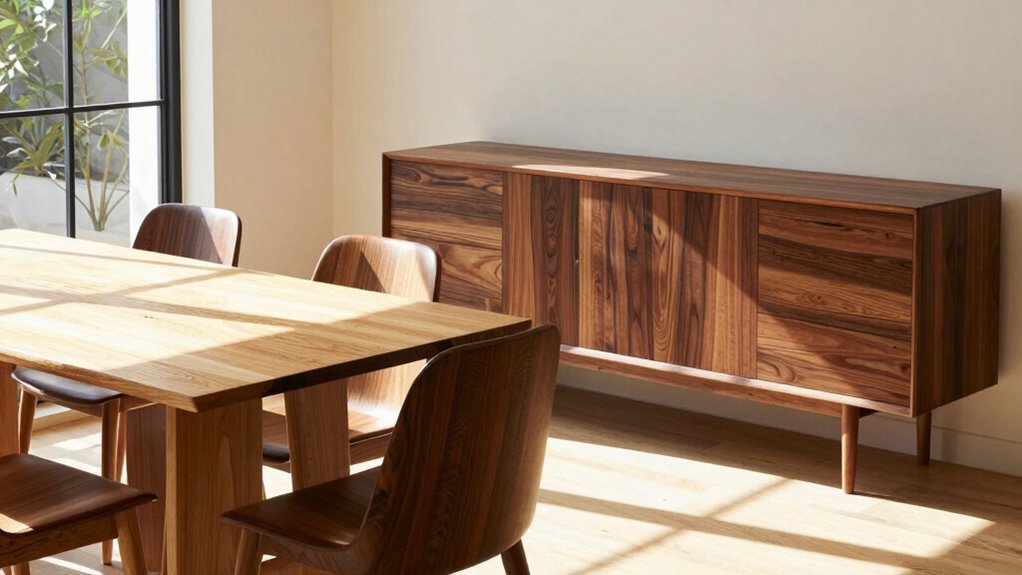
Have you ever wondered how to seamlessly combine light and dark woods in your interior design? Achieving a balanced look isn’t just about pairing contrasting shades; it’s about understanding how grain contrast and color harmony work together. When you mix light and dark woods thoughtfully, you create a space that feels both dynamic and cohesive. The key lies in appreciating the unique textures and tones each wood brings, then intentionally blending them to highlight their differences while maintaining visual unity.
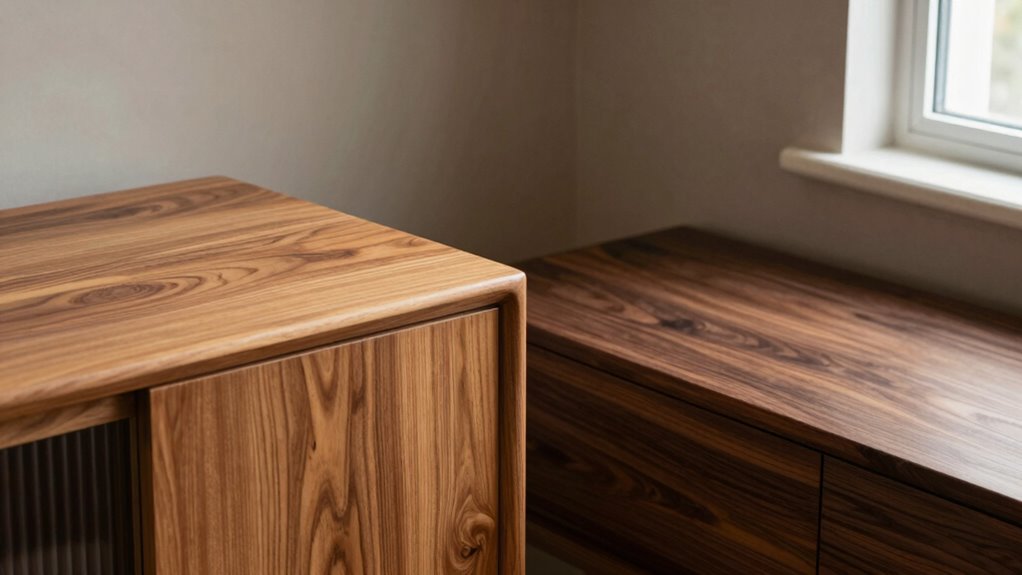
Grain contrast plays a significant role in creating interest and depth. Light woods, like maple or ash, often have fine, subtle grains that add a delicate texture. Dark woods, such as walnut or mahogany, typically display more pronounced, bold grain patterns. When you combine these, the contrast in grain pattern brings a lively energy to your space. Think of it as a visual rhythm—lighter grains providing a soft, understated background, while darker grains serve as striking focal points. The interplay between these textures can prevent your room from feeling flat or monotonous. Instead, it introduces a layered richness that invites the eye to explore every surface.
Color harmony is equally important. You want the shades to complement rather than clash. To do this, consider the undertones within your woods. For example, warm honey-toned light woods pair beautifully with warm, deep dark woods like cherry or walnut, creating a cozy, inviting atmosphere. Conversely, cooler-toned light woods, such as ash or maple, work well with darker woods that have bluish or grayish undertones, like certain stains of oak or even ash. When selecting pieces or finishes, aim for a balance where neither light nor dark overwhelms the other. Incorporate accessories, textiles, or paint colors that echo the overall palette, reinforcing the harmony. Recognizing the visual contrast between different woods can help you achieve a more balanced and appealing design. Additionally, understanding the color harmony principles can further refine your choices for a harmonious aesthetic.
In your space, contrast doesn’t mean chaos. Instead, it’s about striking the right balance. Use light woods to brighten up a room or to serve as a neutral backdrop, then introduce dark woods as statement pieces or accents. Conversely, dark woods can ground a space, and light woods can soften the overall look. The trick is to maintain a sense of rhythm—distributing the lighter and darker elements evenly and thoughtfully. By paying attention to grain contrast and color harmony, you’ll craft a space that feels intentional and visually appealing, showcasing the artful dance between light and dark woods.
As an affiliate, we earn on qualifying purchases.
Frequently Asked Questions
How Do I Prevent Dark Woods From Overpowering Light Woods?
To prevent dark woods from overpowering light woods, focus on achieving color harmony and contrast balance. You can do this by incorporating accessories or furniture pieces in medium tones to bridge the gap between light and dark woods. Use balanced proportions, and avoid overwhelming the space with too many dark elements. This approach guarantees a cohesive look where the dark woods add depth without dominating the lighter tones.
What Tools Are Best for Mixing Different Wood Tones?
You should use tools like fine-grit sandpaper and soft cloths to blend different wood tones seamlessly. For mixing wood tones, consider stain brushes and foam applicators that allow precise control, especially when working with various grain patterns. Experiment with stain techniques such as wiping or layering to balance light and dark woods, ensuring they complement each other without overpowering. These tools help you achieve a harmonious, professional finish.
Can Mixing Wood Types Affect Furniture Longevity?
Think of your furniture as a story where different woods symbolize characters. Mixing wood types can impact longevity if you consider wood treatment and grain pattern. Proper treatment protects diverse grains, ensuring durability. When you select woods with complementary grain patterns, it helps prevent cracking or warping over time. So, yes, mixing different wood types can affect longevity, but with careful treatment and matching, your furniture can stand the test of time.
How Do Lighting Conditions Influence Wood Color Perception?
Lighting conditions greatly influence how you perceive wood color. Natural light makes colors appear more vibrant and true to their original shade, while artificial lighting can alter their look depending on its color temperature. Warm light enhances golden tones, making dark woods appear richer, whereas cool light emphasizes lighter shades, softening the overall appearance. To see your wood’s true color, observe it under different lighting conditions and choose the right light for your space.
Are There Specific Design Styles That Favor Mixed Woods?
You’ll find that vintage contrast and eclectic fusion styles truly shine when mixing light and dark woods. About 60% of designers favor these styles, creating bold, inviting spaces. Vintage contrast emphasizes the charm of aged, lighter woods paired with darker accents, while eclectic fusion blends various textures and hues for a dynamic look. These styles celebrate the beauty of contrasting woods, making your space feel both timeless and lively.
Conclusion
By blending light and dark woods thoughtfully, you create a balanced, timeless look that elevates any space. Some believe mixing woods disrupts harmony, but research shows contrast can actually enhance visual interest and depth. When you consider both the theory and your personal style, you’ll find that successful mixing isn’t just about color—it’s about creating a space that feels curated and cohesive. Trust your instincts, and let the natural variation of woods tell your unique story.
Halloween Picks
halloween
As an affiliate, we earn on qualifying purchases.