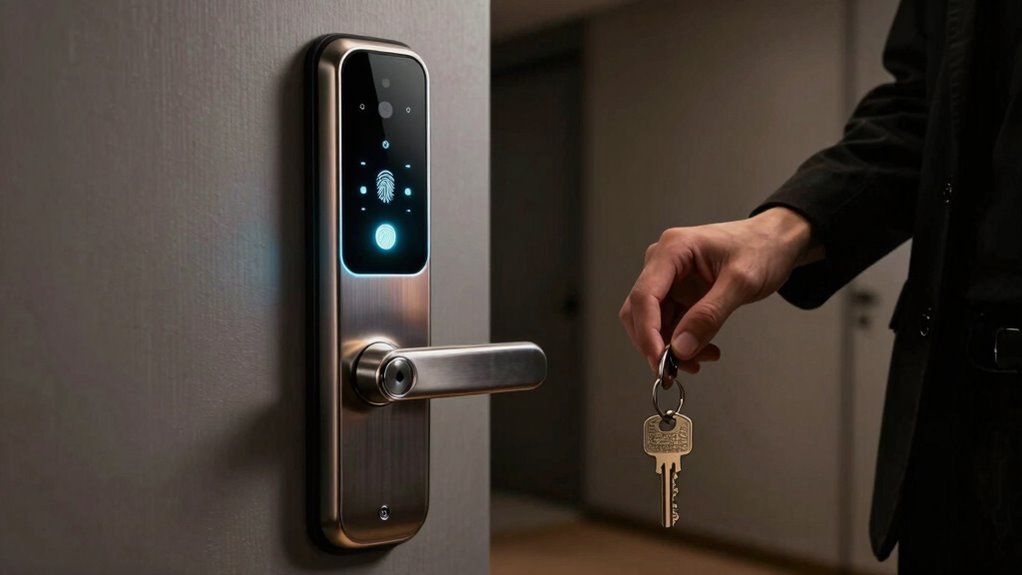

Fingerprint smart locks can make your home feel like it’s straight out of a sci-fi movie. However, if you ignore backup entry options, you might face a frustrating lockout. Sensors can misread fingerprints due to dirt or moisture, and battery issues could leave you stranded outside. To stay secure and stress-free, it’s essential to have a backup plan, like spare keys or keypads. Want to guarantee you don’t get locked out? There’s more to take into account.

Get furniture and decor delivered free with Prime
- Fast, free delivery on millions of items
- Prime Video, Amazon Music and more included
- Member-only deals all year
Key Takeaways
- Fingerprint smart locks offer advanced security but require backup options to prevent lockouts from sensor failures or battery issues.
- Familiarize yourself with backup entry methods, such as physical keys or keypads, to ensure access during emergencies.
- Biometric systems may misread fingerprints due to dirt or moisture, highlighting the need for reliable backup access.
- Securing spare keys in hidden locations can provide peace of mind and prevent being locked out unexpectedly.
- Balancing the convenience of smart locks with caution regarding their vulnerabilities ensures a seamless home security experience.
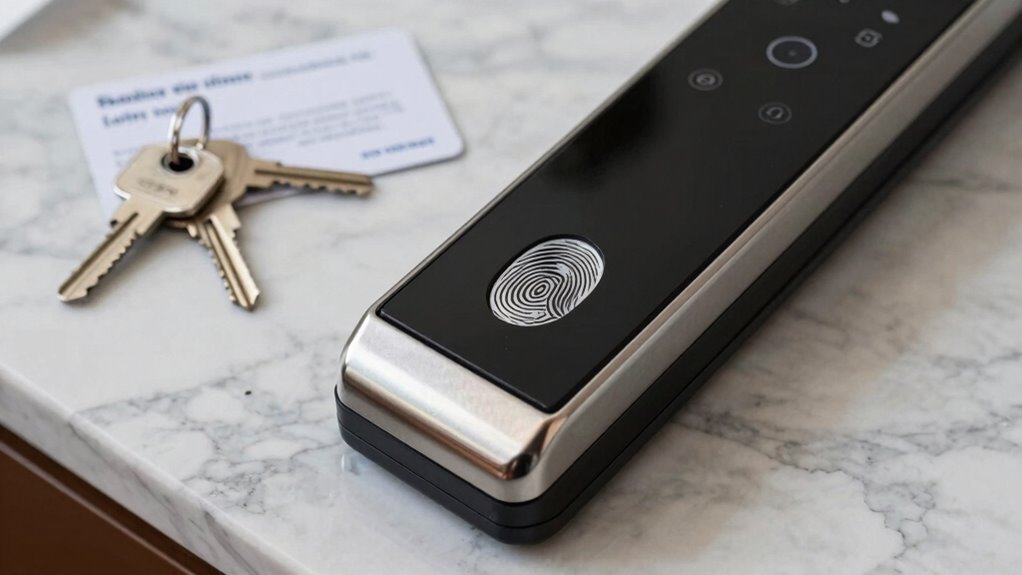
Fingerprint smart locks are revolutionizing home security, making it easier than ever to protect your space. With biometric security technology, these locks let you open your door with just your fingerprint, eliminating the need for keys or codes. You can step up your access control game and guarantee that only authorized individuals can enter your home. It feels like something out of a sci-fi movie, right? However, there’s an important aspect you shouldn’t overlook: backup entry options.
Imagine this scenario: you’ve just come home from a long day, your hands are full, and you confidently stroll up to your door, ready to open it with your fingerprint. But what happens if the sensor fails? Maybe your fingers are wet, or perhaps the lock’s battery is dead. Suddenly, that high-tech gadget feels more like a burden than a blessing. You could be locked out, left standing there wishing you had thought ahead.
Imagine coming home with your hands full, ready to unlock your door, only to face a sensor failure—suddenly, high-tech feels like a hassle.
Backup entry methods are vital for any smart lock, and fingerprint locks are no exception. While the technology is impressive, relying solely on your fingerprint can be risky. Many models offer backup keys or keypad options, but if you ignore these features, you might find yourself in a frustrating situation. It’s important to familiarize yourself with your lock’s backup options to avoid being locked out.
Consider also the risk of false rejections. Even the best biometric systems can misread fingerprints due to dirt, moisture, or other factors. You wouldn’t want to be stuck outside your home just because the sensor didn’t recognize you. By having a reliable backup entry method in place, you can minimize this risk and enjoy the convenience of biometric security without compromising your peace of mind. Additionally, understanding home security vulnerabilities can help you better protect your home from potential threats.
As you embrace this futuristic technology, remember to balance convenience with caution. The allure of access control at your fingertips is undeniable, but the reality is that technology can be unpredictable. Always keep a backup plan handy, whether it’s a spare key hidden securely or a secondary access method like a keypad. Knowing common lock vulnerabilities can help you identify potential weak points and improve your overall home security. Additionally, understanding the security vulnerabilities of biometric systems can help you make informed decisions about your home safety.
In the end, fingerprint smart locks can elevate your home security while offering convenience and peace of mind. Just don’t forget to prepare for those unexpected moments when technology might let you down. With a little foresight, you can enjoy all the benefits without the anxiety of being locked out. After all, the future of home security should feel empowering, not limiting.
As an affiliate, we earn on qualifying purchases.
Frequently Asked Questions
How Do Fingerprint Smart Locks Work in Extreme Temperatures?
Fingerprint smart locks can struggle in extreme temperatures due to temperature sensitivity. In freezing conditions, the moisture from your skin may freeze, preventing a proper scan. Conversely, high heat can cause internal components to expand, possibly leading to malfunctions. If you live in areas with drastic temperature changes, it’s wise to have a backup entry method handy. This way, you won’t be left locked out when conditions aren’t ideal for your smart lock.
Can I Use Multiple Fingerprints for One Lock?
Yes, you can usually register multiple fingerprints for one lock. Imagine the convenience: you reach for the door, and it recognizes not just your print, but also your partner’s or a trusted friend’s. This enhances user experience, but it can raise security concerns. What if someone else gains access to those prints? Always guarantee your lock’s software is up-to-date and manage fingerprints carefully to keep your entry secure and worry-free.
What Happens if the Lock’s Battery Dies?
If the lock’s battery dies, you won’t be able to access your home using the fingerprint feature. However, most smart locks come with emergency access options. You can usually replace the battery easily, often without needing to remove the lock. Some models even allow you to use a backup key or passcode to regain access. Always check your lock’s manual for specific instructions on battery replacement and emergency access methods.
Are Fingerprint Locks Safe From Hacking?
Fingerprint locks aren’t immune to hacking, though they offer enhanced biometric security compared to traditional locks. Hackers use various methods, like spoofing fingerprints with molds or high-resolution images. While these attacks require advanced skills, it’s wise to remember that no system is completely foolproof. Always combine your fingerprint lock with additional security measures, such as PIN codes or backup keys, to guarantee your home stays safe from potential breaches.
How Do I Maintain a Fingerprint Smart Lock?
To maintain your fingerprint smart lock, regularly clean the fingerprint scanner with a soft cloth to prevent dirt buildup. Check the batteries every few months and replace them if they’re low. During installation, make sure the lock is aligned properly to avoid common issues like misreading fingerprints. Finally, keep the firmware updated for enhanced security and performance. By following these tips, you’ll guarantee your lock remains reliable and functional.
Conclusion
In a world where convenience reigns, fingerprint smart locks seem like a dream come true—until you find yourself locked out because you forgot to set up a backup entry. It’s funny how a moment of oversight can turn high-tech into high-stress. Just like the time you lost your keys right before a big meeting, it’s a reminder that tech can fail us when we least expect it. So, always have a backup plan; it might just save your day!
Halloween Picks
halloween
As an affiliate, we earn on qualifying purchases.