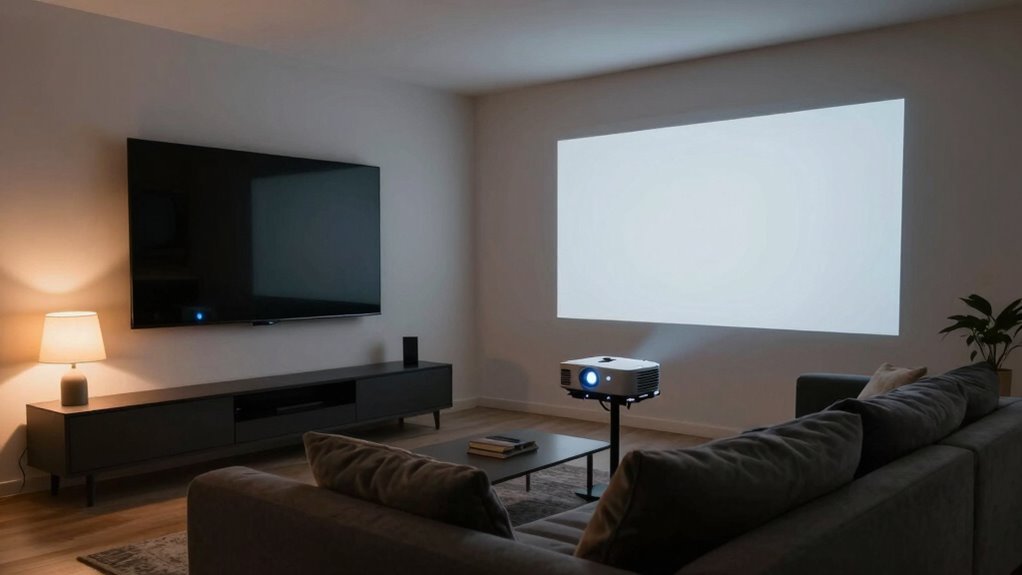

Choosing between a projector and a TV depends largely on your room’s lighting, size, layout, and acoustics. In bright rooms, a TV with high brightness works best, while dimmer spaces benefit from projectors. Larger rooms with open layouts suit projectors, but smaller, cozy rooms often favor TVs. Seating distance and decor also influence your choice to guarantee comfort and style. Keep exploring to discover the details that make the perfect setup for your space.
Key Takeaways
- Ambient lighting levels determine whether a high-brightness TV or a projector in a dim environment offers better image quality.
- Room size and layout influence projector placement and screen size, while limited space may favor a TV.
- Seating distance affects viewing comfort and image clarity, guiding the choice between a large projector screen or a TV.
- Room acoustics and noise levels impact sound quality, making soundproofing and speaker placement key considerations.
- Decor style and room aesthetics help select equipment that complements the environment, whether modern TVs or vintage projectors.

TCL 65 Inch Class QM6K Series | Mini LED QLED 4K HDR | 65QM6K, 2025 Model | 120HZ-144HZ High Brightness Smart Google TV Dolby Atmos Onkyo Audio | Voice Remote Alexa Gaming Streaming Television
TCL QM6K QD-MINI LED TV SERIES – AFFORDABLE PREMIUM PERFORMANCE FOR SPORTS, GAMING & STREAMING. Experience superior contrast,…
As an affiliate, we earn on qualifying purchases.
As an affiliate, we earn on qualifying purchases.
How Do Lighting Conditions Affect Your Projector or TV Choice?
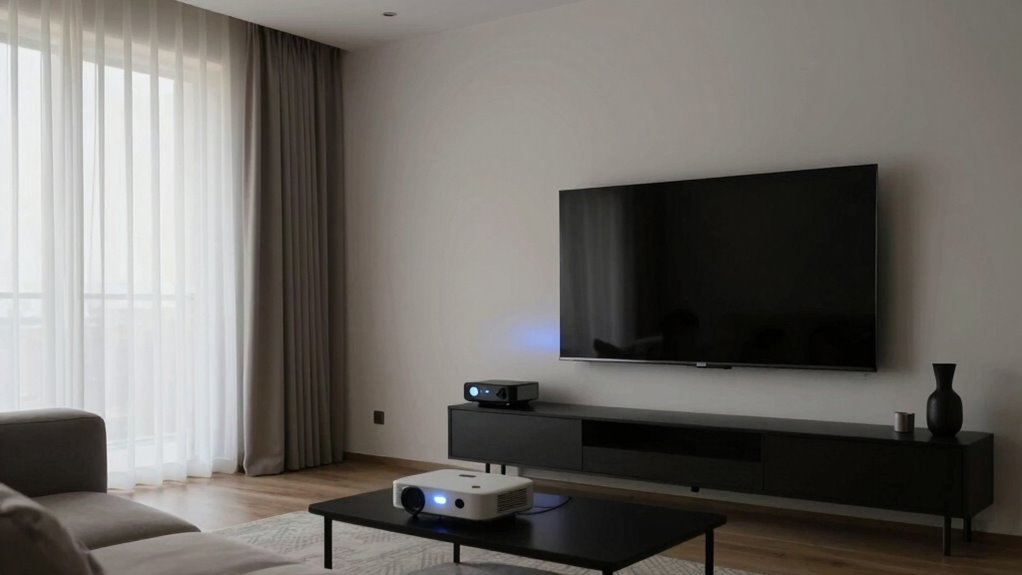
Have you ever noticed how the lighting in your room influences whether a projector or a TV is the better choice? Ambient lighting plays a big role in this decision. Bright rooms with lots of natural or artificial light can wash out a projector’s image, making it hard to see details. You might also experience screen glare, which causes reflections and reduces contrast, further impacting picture quality. If your space has high ambient light, a TV with a high brightness level is usually a better fit because it handles light better and maintains vibrant colors. Conversely, dimmer rooms with controlled lighting let a projector shine, providing a cinematic experience without interference from glare or ambient brightness. Recognizing your room’s lighting conditions is key to choosing the right display. Additionally, using appropriate home lighting control can help optimize your viewing experience regardless of the device you select. Understanding ambient light management can further enhance your viewing quality and device longevity, especially when combined with proper room design. Moreover, screen placement is essential for minimizing glare and reflections, which can be significantly affected by ambient light and impact image clarity.
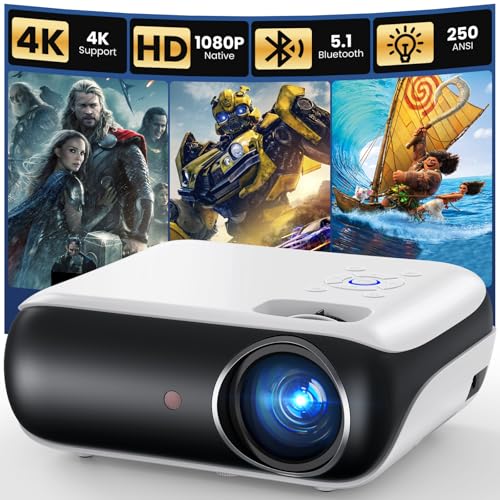
HAPPRUN Native 1080P Bluetooth Mini Projector, Full HD Portable Outdoor Movie Projector with Built-in Speaker, Compatible with Smartphone, HDMI, USB, AV, Fire Stick, PS5 for Home, Bedroom, Outdoor Use
[ Native 1080P Full HD Resolution ] – Enjoy crystal-clear visuals with HAPPRUN H1's native 1920×1080 resolution, delivering…
As an affiliate, we earn on qualifying purchases.
As an affiliate, we earn on qualifying purchases.
How Room Size and Layout Impact Your Screen Selection?
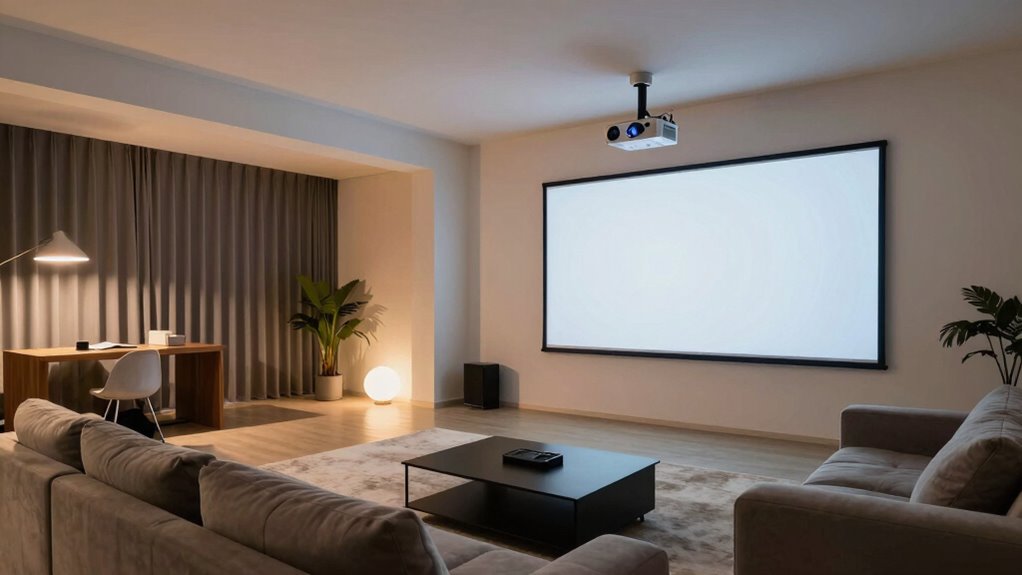
Considering your room’s size and layout is essential when choosing between a projector and a TV. Larger rooms with open layouts often suit projectors, but wall placement and available space matter. If your walls are far apart, a projector can create a massive screen; however, if walls are narrow, a TV might be better. Ambient noise levels also influence your choice—quiet rooms enhance projector sound quality, while noisy spaces may require a TV’s built-in speakers. Additionally, contrast ratio plays a significant role in image quality, especially in rooms with varying lighting conditions. Furthermore, room acoustics can impact the overall viewing experience, making sound considerations important when selecting your display. Ensuring your room has appropriate fireproof storage for electronic equipment can also help protect your investment from accidents. Proper room conditioning can also improve comfort and viewing quality, influencing your decision. Keep in mind that equipment safety measures are vital to prevent damage and ensure longevity of your devices.

ViewSonic PX700HDH DLP 1080p Projector with 3700 Lumens, Supercolor, 1.1x Optical Zoom, 22000:1 Contrast Ratio, Dual HDMI, and Vertical Keystone for Home Theater
Full HD Home Theater Projector: FHD (1920x1080p) resolution with a 1.5-1.6 throw ratio and 3,700 ANSI lumens perfect…
As an affiliate, we earn on qualifying purchases.
As an affiliate, we earn on qualifying purchases.
Does Seating Distance Influence Your Display Setup?
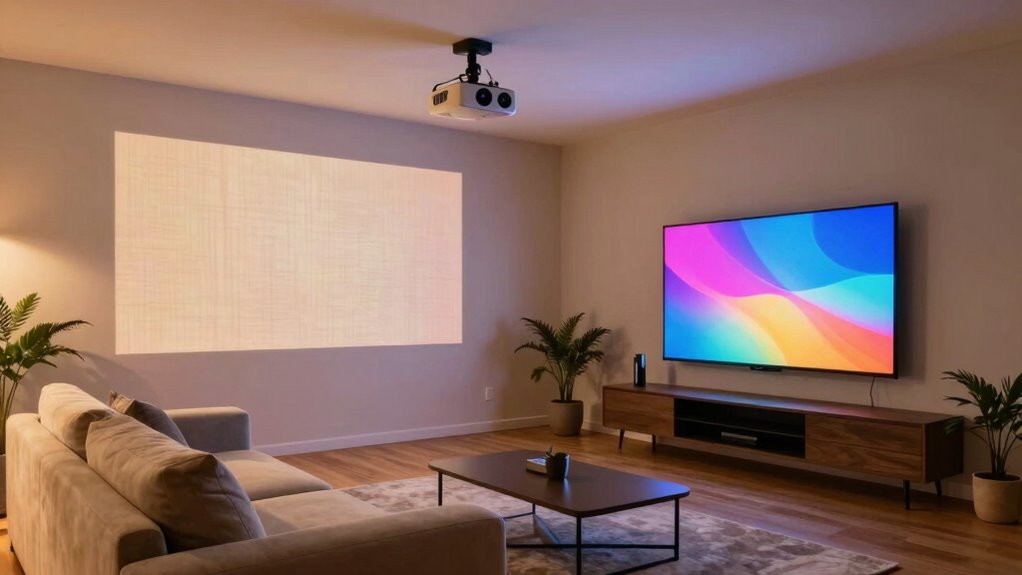
Seating distance plays a significant role in determining the ideal display setup for your space. When you’re seated too close, you might experience discomfort and limited viewing angles, making it hard to enjoy the picture fully. Conversely, sitting too far away can reduce your seating comfort and diminish the immersive experience. For TVs, maintaining an appropriate distance ensures you get clear images without straining your eyes or neck. For projectors, placement depends heavily on your seating arrangement to avoid distortion and maximize viewing angles. Your goal is to find a balance where you feel comfortable and can see the entire screen clearly. Adjusting seating distance helps improve overall viewing comfort and guarantees your display setup delivers the best possible experience. Additionally, considering display size and resolution can further optimize your viewing experience by matching your seating distance to the specifications of your display.

Focusound 52 Pack Acoustic Foam Panels 1" x 12" x 12" Sound Proof Foam Panles Soundproofing Noise Cancelling Wedge Panels for Home Office Recoding Studio with 300PCS Double-Side Adhesive
Soundproofing – Acoustic foam panels triangular grooves structure for better noise absorption, helps to reduce and absorb unwanted…
As an affiliate, we earn on qualifying purchases.
As an affiliate, we earn on qualifying purchases.
What Acoustic Factors Should You Consider When Setting Up?

Sound quality is an essential aspect often overlooked when setting up your home entertainment system. To optimize audio, consider acoustic treatment to reduce echoes and improve sound clarity. Adding rugs, curtains, or acoustic panels can absorb unwanted reflections, creating a more natural sound environment. Additionally, soundproofing options help prevent sound from leaking into other rooms and reduce external noise disturbances, ensuring you enjoy a clearer audio experience. Proper placement of speakers also plays a fundamental role; avoid placing them near reflective surfaces or in corners that can cause sound distortions. Understanding sound reflection management techniques can provide insights into how to effectively manage sound reflections and protect valuable equipment. Incorporating room acoustics principles during setup can significantly enhance overall audio performance. Employing acoustic treatment strategies tailored to your space can further optimize sound quality. Being aware of soundproofing methods can help in selecting the right solutions for your environment. By addressing these acoustic factors, you’ll enjoy richer, more immersive sound that complements your visual setup and enhances your overall viewing experience.
How Can You Match Your Room’s Style With Your Entertainment System?

Matching your entertainment system to your room’s style begins with choosing equipment that complements your existing decor. Consider your decor style—modern, rustic, minimalist, or eclectic—and select devices that fit seamlessly. For example, a sleek, slim TV works well in a contemporary space, while a projector with a vintage-inspired frame suits a retro look. Pay attention to your room’s color palette; matching or contrasting the equipment’s colors can create harmony. If your walls are neutral, bold-colored screens or projector casings can add a pop of personality. Conversely, neutral-toned devices blend easily into subtle schemes. The goal is to ensure your entertainment setup enhances your space without clashing, creating a cohesive and inviting environment that reflects your personal style. Effective traceability can help ensure that your equipment choices align with your room’s aesthetic goals and technical requirements. Additionally, considering room factors such as size and lighting conditions can significantly influence your equipment selection, ensuring optimal viewing experiences.
Frequently Asked Questions
What Are the Maintenance Requirements for Projectors Versus TVS?
You need to regularly clean your projector’s lens and filters to maintain screen durability and prevent dust buildup, which can affect image quality. TVs require less maintenance; just wipe the screen with a microfiber cloth and occasionally check for software updates. Projectors demand more frequent cleaning routines, especially of internal components, but TVs generally need fewer upkeep efforts, making them more convenient for low-maintenance use.
How Does Ambient Sound Influence Your Display Choice?
Think of ambient sound like background noise in a busy café—you notice it more during quiet moments. If your room has high ambient noise, a TV with built-in speakers or external soundproofing can guarantee clear audio, making it easier to follow dialogue. Projectors often require better soundproofing since their speakers are weaker. So, consider your noise levels when choosing, or you’ll struggle to enjoy your favorite shows.
Can Room Temperature Affect Projector Performance?
Yes, room temperature can affect your projector’s performance. Temperature effects include overheating or reduced brightness, especially if the room gets too warm. Make certain you consider airflow considerations to keep the projector cool, as proper ventilation prevents overheating and maintains ideal function. Keeping the room at a moderate temperature ensures your projector runs smoothly, avoiding performance issues caused by temperature fluctuations.
What Are the Energy Consumption Differences Between Projectors and TVS?
You’ll find that TVs generally have higher power consumption than projectors, making projectors more energy-efficient for large displays. Modern LED TVs are quite efficient, but their continuous use can rack up energy costs. Projectors, especially LED or laser models, use less power, especially if you turn them off when not in use. So, if energy efficiency matters, a projector might be the better choice for your setup.
How Do Power Supply Stability Issues Impact Your Entertainment Setup?
Power fluctuations and electrical noise are like storms in your entertainment sky, threatening smooth sailing. When your power supply isn’t stable, it can cause flickering screens, device malfunctions, or even damage your equipment. You might experience interruptions or degraded picture quality. To keep your setup safe and reliable, use surge protectors and consider an uninterruptible power supply (UPS). Guarding your devices ensures uninterrupted enjoyment and longevity.
Conclusion
Ultimately, choosing between a projector and a TV depends on your room’s unique factors. By considering lighting, size, layout, seating, and acoustics, you can create an entertainment setup that transforms your space into a cinematic haven. When you get it right, your room becomes an immersive experience so spectacular, it’ll feel like you’ve entered a whole new universe. So, take your time, plan carefully, and enjoy the journey to the perfect home theater!