
The right kids’ desk storage solution turns a daily homework battle into a two-minute cleanup, and the wrong one becomes another bin of chaos by the end of the week. After comparing seven popular options, the Vtopmart Clear Desktop Organizer stands out as my best overall pick thanks to its visible drawers and removable dividers that grow with a child’s supply collection. For younger kids, the hand2mind Junior Flexible Desk Organizer offers a modular, forgiving design that suits small hands, while the rotating lazy Susan caddy is the fastest way to keep frequently used markers and crayons within reach. The main tradeoff in this category is between open accessibility, which encourages independent cleanup, and concealed storage, which hides clutter but requires more effort from your child. Price and durability also diverge sharply, from under-$20 caddies to a full storage table. Keep reading for the full breakdown of which solution fits your child’s age, desk size, and mess tolerance.

Get furniture and decor delivered free — and shop member deals
- Fast, free delivery on millions of items
- Access to Prime Big Deal Days deals on October 6–7
- Prime Video, Amazon Music and more included
Complete the kit


Key Takeaways
- Clear or open designs dramatically outperformed opaque bins for daily use — kids actually put supplies back when they can see where things belong, which is why the Vtopmart clear drawer unit took the top spot.
- The Learning Resources Create-a-Space line appears three times in this roundup, and the comparison revealed that the full-size Storage Center beats both Mini Centers unless desk space is genuinely tight.
- Rotating caddies like the lazy Susan organizer won for shared desks and art stations, but they expose supplies to dust and invite dumping behavior in kids under five.
- The RiverRidge activity table is the only pick that solves the storage and furniture problem at once, but it only makes sense if you’re buying a desk anyway — as a storage add-on it’s poor value.
- Modular systems like the hand2mind organizer cost more per compartment than fixed organizers, but they’re the best hedge for kids whose supply collection changes every school year.
| Vtopmart Clear Desktop Organizer, 4-Tier Drawer Storage with Dividers |  | Best Overall | Brand: Vtopmart | Drawer count: 4 pull-out drawers | Dividers: Removable, customizable | VIEW LATEST PRICE | See Our Full Breakdown |
| Learning Resources Create-a-Space Storage Mini Center, White |  | Best Portable Pick | Color: White | Compartments: 3 removable cups | Portability: Integrated carry handle | VIEW LATEST PRICE | See Our Full Breakdown |
| hand2mind Junior Flexible Desk Organizer, Modular Desk Organizer, Ages 3+ |  | Best for Preschoolers | Recommended age: 3 years and up | Material: Plastic | Compartments: 2 large compartments with 4 removable dividers | VIEW LATEST PRICE | See Our Full Breakdown |
| RiverRidge Kids Desk and Activity Table with Storage Cubbies – White |  | Best Furniture-Storage Combo | Dimensions: 40.13″ W x 28″ D x 14.38″ H | Storage cubbies: 6 open cubbies | Weight capacity per cubby: 20 lbs | VIEW LATEST PRICE | See Our Full Breakdown |
| Learning Resources Create-a-Space Storage Mini Center, Blue |  | Best Value | Color: Blue | Material: Sturdy plastic | Portability: Carry handle sized for kids’ hands | VIEW LATEST PRICE | See Our Full Breakdown |
| Kids Art Supply Storage Organizer with Dividers, 8.6″ Rotating Lazy Susan Caddy |  | Best Space-Saver | Size: 8.6 inches | Rotation: 360° spinning Lazy Susan base | Bins: 7 colorful removable bins | VIEW LATEST PRICE | See Our Full Breakdown |
| Learning Resources Create-a-Space Storage Center |  | Best for Shared Spaces | Diameter: 12 inches | Compartments: 9 removable sections | Material: High-quality plastic | VIEW LATEST PRICE | See Our Full Breakdown |
More Details on Our Top Picks
Vtopmart Clear Desktop Organizer, 4-Tier Drawer Storage with Dividers
When I weigh capacity, visibility, and adaptability against everything else in this roundup, this 4-tier drawer tower earns the top spot. The transparent pull-out drawers solve the single biggest problem with kids’ desk storage: children actually put things back when they can see where things go. Compared with the Learning Resources Create-a-Space Mini Center, which keeps supplies visible but caps out at three compartments, this unit stacks far more storage into the same footprint by building vertically. The removable dividers let the layout grow with your child — markers one year, flashcards and folders the next. The tradeoff is honest, though: it’s stationary. Unlike the portable caddies in this guide, it stays on the desk, and oversize items like coloring books or wooden puzzle boards won’t fit in any drawer.
Pros:- Transparent drawers let kids find supplies without dumping everything out
- Removable dividers adapt as storage needs change
- Vertical 4-tier design frees up scarce desk surface
- Tool-free assembly takes minutes
Cons:- Drawers only accommodate small items — no coloring books or bulky craft kits
- Stationary design offers none of the portability of caddy-style organizers
- Clear plastic look may clash with more styled bedrooms
Best for: School-age kids with a fixed desk who need to organize lots of small supplies like markers, crayons, erasers, and craft odds and ends
Not ideal for: Families with toddlers or kids who roam the house with supplies — it’s not portable, and drawers can be pulled out by curious little hands
- Brand:Vtopmart
- Drawer count:4 pull-out drawers
- Dividers:Removable, customizable
- Drawer material:Clear transparent plastic
- Assembly:Tool-free
- Model number:SDVT0009AMUK
- Best sellers rank:#6,212 in Office Products
Our verdict“If your child works at one dedicated desk and owns a lot of small supplies, this is the most scalable and kid-friendly organizer in the lineup.”
Learning Resources Create-a-Space Storage Mini Center, White
What separates this Mini Center from the drawer-based Vtopmart organizer is mobility. The easy-carry handle turns desk storage into a grab-and-go kit — homework supplies migrate from bedroom to kitchen table without a single dropped pencil. The removable compartments mean the caddy can split apart: one cup stays at the desk, another rides along in a backpack. In a classroom or homeschool setting, that flexibility beats a fixed drawer tower for shared spaces where supplies rotate between kids. The white finish also reads more neutral than the blue version (Product 5), which matters if the storage lives in a common area rather than a child’s room. The real limitation is scale — three compartments fill up fast, and anything longer than a standard pencil crowds the bins.
Pros:- Carry handle makes it genuinely portable between rooms
- Removable compartments can be used separately
- Compact footprint fits small desks and shared tables
- Neutral white finish suits common living spaces
Cons:- Only three compartments — capacity is tight for serious craft lovers
- Too small for scissors packs, rulers, or larger supplies
Best for: Homeschool families and multi-room households whose kids do schoolwork in different spots and need supplies that travel
Not ideal for: Kids with large supply collections — the three-compartment capacity overflows quickly compared to tiered organizers
- Color:White
- Compartments:3 removable cups
- Portability:Integrated carry handle
- Use cases:Home, office, craft room, classroom
- Brand:Learning Resources
Our verdict“Buy this if your child’s workspace moves around the house; skip it if all the supplies live at one desk and volume matters more than portability.”
hand2mind Junior Flexible Desk Organizer, Modular Desk Organizer, Ages 3+
Most organizers in this roundup assume school-age kids; this one is built for ages 3 and up, and it shows in the design. The modular compartments flex into different shapes to fit odd desk corners or slide into a cubby, something rigid options like the Vtopmart drawer tower simply can’t do. The built-in 12-inch ruler doubles the organizer as a learning tool, which is a clever touch for early-measurement activities. Compared with the rotating lazy Susan caddy in this guide, it trades spin-around access for a small drawer — better for hiding away tiny treasures and headphones that preschoolers love to fiddle with. The catch: reshaping it requires manual adjustment of the hinged sections, which small children will need help with, and the compact scale means standard adult office supplies won’t fit well.
Pros:- Modular shape adjusts to fit different desk sizes and layouts
- Built-in 12-inch ruler adds educational value
- Small drawer keeps fiddly items contained
- Durable plastic survives rough preschool handling
Cons:- Changing configurations requires adult help for young kids
- Compact size excludes larger school supplies
- Limited or unspecified color choices
Best for: Parents of preschool and early-elementary kids who want an organizer that adapts to small desks and doubles as a learning accessory
Not ideal for: Older elementary kids with bigger supplies — the compartments and drawer are sized for junior pencils and crayons, not full workloads
- Recommended age:3 years and up
- Material:Plastic
- Compartments:2 large compartments with 4 removable dividers
- Extra features:Small drawer, built-in 12-inch ruler with metric markings
- Length:12 inches when straightened
- Configuration:Flexible modular, manually adjustable
Our verdict“This is the pick for the 3-to-6 crowd whose supplies are small, whose desks are smaller, and who benefit from a ruler built right in.”
RiverRidge Kids Desk and Activity Table with Storage Cubbies – White
This one plays a different game than everything else here: it’s not an organizer you put on a desk — it’s the desk and the storage in one purchase. With six open cubbies beneath a scratch-resistant tabletop, it replaces both a separate art table and a shelf unit, which is why it makes sense for a playroom even at a higher price than any caddy in this guide. Pair it with the Learning Resources Create-a-Space Mini Center and you get a complete system: the caddy handles desk-top supplies while the cubbies swallow books, paper stacks, and toy bins. Two genuine frustrations temper the value. The cubbies require separately purchased bins to look tidy — open shelves plus loose crayons equals chaos — and assembly is on you, which takes real time compared to the unbox-and-go organizers elsewhere in this roundup.
Pros:- Six cubbies provide far more total storage than any desktop organizer here
- Scratch-resistant tabletop handles art projects and cleanup
- 75 lb tabletop capacity supports heavy play and leaning
- Versatile as art table, play surface, or study desk
Cons:- Storage bins for the cubbies cost extra
- Full assembly required — not a quick setup like the caddies
- Large footprint dominates small bedrooms
Best for: Furnishing a playroom or bedroom from scratch who want a workspace and bulk storage solved in a single piece of furniture
Not ideal for: Anyone who already has a desk — the footprint is large at 40 inches wide, and you’d be paying twice for work surface
- Dimensions:40.13″ W x 28″ D x 14.38″ H
- Storage cubbies:6 open cubbies
- Weight capacity per cubby:20 lbs
- Tabletop capacity:75 lbs
- Total weight capacity:195 lbs
- Finish:Scratch-resistant white
- Assembly:Required
Our verdict“Buy this when you need the whole workstation, not just the storage — just budget for bins and an afternoon of assembly.”
Learning Resources Create-a-Space Storage Mini Center, Blue
This blue Mini Center lands in the value slot because it delivers the core promise of kids’ desk storage — visible, grabbable, contained supplies — at the lowest complexity in the roundup. Functionally it mirrors the white version (Product 2), so the choice between them comes down to style: the cheerful blue reads as clearly kid-owned, which works in a child’s room where the white version’s neutral tone doesn’t. Compared with the hand2mind Junior organizer, it skips the modular flexing and the ruler in favor of simplicity — fewer parts to lose, nothing to adjust, and a wipe-clean surface that shrugs off glue and paint. It’s also sturdier than it looks in photos, with thick plastic that survives being carried one-handed by an enthusiastic six-year-old. Just go in with realistic expectations: this is a pencils-and-markers solution, not a place for workbooks or art paper.
Pros:- Low price for a durable, purpose-built kids organizer
- Handle lets kids carry supplies independently
- Wipe-clean plastic handles paint and glue spills
- Kid-friendly blue color signals ownership
Cons:- Capacity limited to small items like pencils, crayons, and markers
- No dividers or drawer — everything sits in shared compartments
Best for: Budget-conscious parents of young kids who want a simple, cheerful supply caddy without paying for modular features they won’t use
Not ideal for: Classrooms or homes needing serious capacity — it tops out at small supplies and won’t replace any real storage system
- Color:Blue
- Material:Sturdy plastic
- Portability:Carry handle sized for kids’ hands
- Designed for:Art supplies, pencils, classroom essentials
- Settings:Classroom, homeschool, home
- Cleanup:Easy-wipe surface
Our verdict“For a first desk organizer or a second caddy for another room, this is the most sensible low-cost buy in the lineup.”
Kids Art Supply Storage Organizer with Dividers, 8.6″ Rotating Lazy Susan Caddy
This rotating caddy takes up barely more room than a dinner plate, which is exactly why it earns the space-saver role in this lineup. The 360° Lazy Susan base means a child seated on either side of a shared desk can spin the caddy to grab a marker instead of reaching across and knocking things over — a small design choice that pays off daily in sibling-heavy households. Compared with the Learning Resources Create-a-Space Storage Center, it sacrifices about three inches of diameter and two compartments, but the removable bins with handles let kids carry just the crayons to the kitchen table, something the Create-a-Space’s fixed tray doesn’t allow. The tradeoff is real, though: at 8.6 inches, this is strictly a small-supply solution. Paint bottles, sketch pads, and scissors-heavy craft kits will overwhelm it, and larger items may require repositioning the dividers or removing them entirely.
Pros:- Rotates smoothly so kids on any side of the desk can reach supplies without grabbing or reaching
- Removable bins with handles make carrying supplies to another room and cleanup genuinely easy
- Compact 8.6-inch footprint leaves most of the desk surface free for actual work
- Color-coded bins help young children sort supplies back where they belong
Cons:- Limited to small art supplies — anything longer or bulkier than a marker won’t fit well
- Dividers may need frequent adjustment or removal as a child’s supply collection grows
Best for: Families with tight desk space or shared sibling workstations who mainly need crayons, markers, and pencils corralled
Not ideal for: Households with bulky craft supplies like paint sets, large scissors, or tablets — the 8.6-inch footprint and shallow bins can’t accommodate them
- Size:8.6 inches
- Rotation:360° spinning Lazy Susan base
- Bins:7 colorful removable bins
- Handles:Yes, on each removable bin
- Dividers:Removable and adjustable
- Best supplies:Crayons, markers, pencils
Our verdict“Buy this if desk real estate is scarce and the supply list is mostly markers and crayons; skip it for anything beyond small art materials.”
Learning Resources Create-a-Space Storage Center
Where the rotating caddy above prioritizes a tiny footprint, this 12-inch center prioritizes capacity and durability, making it the stronger pick for classrooms, playrooms, or a homework station used by more than one child. Its nine removable compartments include a mix of sizes, so scissors and glue sticks get homes alongside the usual markers — the rotating caddy simply can’t hold that variety. The heavy-duty plastic stands up to being carried between rooms by enthusiastic kids, and the removable cups let each child take just their needed section, which cuts down on squabbles. The tradeoffs: at 12 inches across it eats noticeably more desk surface than the 8.6-inch caddy or the Create-a-Space Mini Center, and the toy-like classroom aesthetic may clash with a tween’s more grown-up bedroom setup. It also tops out at small-to-medium supplies — no sketchbooks or paint bottles.
Pros:- Nine removable compartments in varied sizes accommodate scissors, glue sticks, and mixed supplies
- Durable plastic survives daily handling and being carried room to room
- Removable sections let multiple kids share one organizer without conflict
- Fits on a desk or shelf while holding a genuinely broad supply collection
Cons:- 12-inch diameter consumes significant desk space compared with compact caddies
- Classroom-style design may not appeal to older children or match home decor
- Cannot hold large or bulky items like sketch pads or paint bottles
Best for: Classrooms, playrooms, and multi-child homework stations where supplies are shared and durability matters more than style
Not ideal for: Older kids or design-conscious teens who want storage that blends with an adult-looking desk setup
- Diameter:12 inches
- Compartments:9 removable sections
- Material:High-quality plastic
- Capacity:Markers, crayons, colored pencils, scissors, glue sticks, and more
- Portability:Removable cups for individual carrying
- Placement:Desk or shelf
- Best setting:Shared or multi-user spaces
Our verdict“This is the pick when two or more kids share supplies and you need rugged, divisible storage — not the choice for a solo older student with style preferences.”
How We Picked
I evaluated each product against four criteria that actually determine whether a kids’ desk organizer survives a school year: accessibility for the child’s age, build quality under daily handling, storage flexibility, and value relative to alternatives. Accessibility came first because the entire point of desk storage for kids is independent cleanup — an organizer a parent has to manage defeats itself. I weighed whether lids, drawers, and compartments could be operated by the target age group without spills or pinched fingers.
Build quality ranked second: thin plastic that cracks when dropped or drawers that jump their tracks were disqualifying for top spots. Flexibility mattered for longevity — divider systems and modular pieces scored higher than fixed single-purpose bins because supply collections change every year. Finally, I compared prices directly across the lineup, which surfaced some clear patterns: the three Learning Resources products let me isolate size-versus-price tradeoffs within one brand, and the RiverRidge table only earns its keep when it replaces a furniture purchase. Products ranked higher when they solved a problem multiple cheaper options couldn’t.
Factors to Consider When Choosing Kids’ Desk Storage Solutions
Before settling on a specific organizer, it helps to understand the broader patterns in kids’ desk storage — where buyers commonly go wrong, and which factors matter more than they seem on the product page.
Match the Storage Style to Your Child’s Age, Not the Product’s Rating
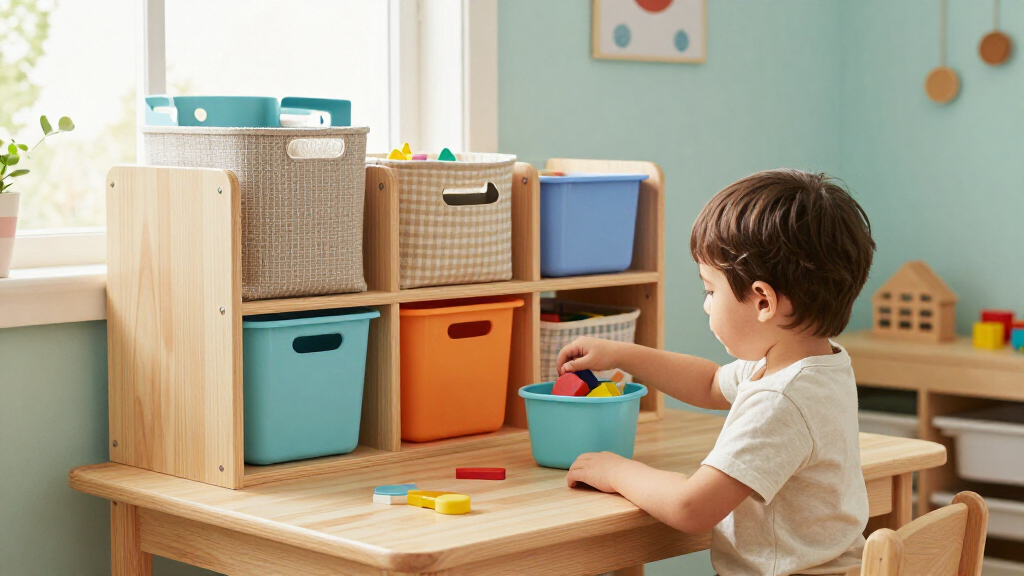
The most common mistake I see is parents buying an organizer that suits their own aesthetic rather than their child’s motor skills. Kids ages three to six do best with open bins and low sides — anything with a lid, latch, or sliding drawer becomes a parent’s job within a week. Elementary-age kids can handle drawers and rotating caddies, and by middle school, tiered drawer towers like the Vtopmart work well because the child has the discipline to slide drawers fully closed. A highly rated product aimed at toddlers will frustrate a nine-year-old, and vice versa. Age also determines how much supervision cleanup will need, which is the hidden labor cost of any organizer. When in doubt, choose the simpler mechanism, even if it stores less.
Desk Footprint: Measure Before You Buy
Desktop organizers steal work surface, and a desk used for homework plus crafts plus LEGO needs every inch. Before buying, measure the actual usable desktop and subtract what the organizer will claim — the RiverRidge table solves this by building storage under the surface instead of on top of it, which is why furniture-integrated options exist at all. Rotating caddies occupy a circular footprint but return the favor by making every compartment reachable, whereas rectangular drawer towers use space more efficiently in a corner. If two kids share a desk, vertical storage wins over horizontal sprawl. A common error is buying a four-tier organizer for a desk that only fits a lamp and a laptop — check dimensions against your desk, not against other organizers.
Clear Versus Concealed: The Visibility Tradeoff
This is the single biggest fork in the road, and it shapes daily behavior more than any other choice. Clear storage like the Vtopmart drawers lets a child find supplies without opening anything, which speeds cleanup and reduces the “where’s my red marker” interruptions. The cost is visual clutter — you will see every stubby pencil and dried-out glue stick, all day, every day. Concealed options keep the room looking tidy but rely on the child remembering what’s inside, and unlabeled opaque bins tend to become landfills. A middle path many families land on is clear drawers for supplies plus one decorative cup or caddy on top for the daily-use items. Decide how much visible clutter your tolerance — and your child’s tidiness — can absorb before choosing.
Material Durability and the Drop Test Reality
Kids drop organizers, pull drawers out at angles, and stand on things they shouldn’t. Thin polypropylene flexes and survives; brittle polystyrene cracks on the first fall, and no organizer survives a cracked corner drawer track. Check whether drawers are removable and individually replaceable, because a single broken drawer typically renders a whole tower awkward to use. Fabric and cardboard organizers look great out of the box but absorb marker stains and lose shape within months in a child’s environment. Rigid plastic with rounded corners is the safest bet for ages three through ten. If the organizer will sit on a wobbly table or a surface a toddler can reach, prioritize a low center of gravity — tall towers tip.
Fixed Versus Modular: Which Grows With Your Child?
A fixed-compartment organizer works beautifully in September and fails by spring, because the ratio of markers to scissors to erasers shifts every few months. Modular systems and removable dividers, like the hand2mind junior set and the Vtopmart’s divider inserts, cost somewhat more per compartment but reconfigure as supplies change. Fixed caddies like the Create-a-Space line trade that flexibility for sturdiness and simplicity — nothing to lose, nothing to misalign. Families with multiple kids of different ages should lean modular, since the system gets handed down and repurposed. Single-child households with a stable supply collection can save money with fixed designs. The honest tradeoff: modular pieces get lost, fixed pieces get outgrown.
When to Buy Furniture Instead of an Organizer
If you’re shopping for desk storage because the desk itself is the problem, an organizer is a bandage on a larger issue. Furniture-integrated options like the RiverRidge table with storage cubbies deliver far more cubic storage than any desktop product can, often at a lower cost per stored item. The catch is obvious: it only makes financial sense when you were buying a desk anyway. If the desk is staying, wall-mounted shelves, a rolling cart beside the desk, or under-desk bins usually beat desktop towers for bulk storage. Desktop organizers should handle the daily-use supplies only — a rule of thumb worth enforcing is that nothing used less than twice a week belongs on the desk surface. Separating bulk storage from daily storage is the cheapest organization upgrade available.
Frequently Asked Questions
Should I buy one large organizer or several small ones for my child’s desk?
One large organizer works better for a single child with a defined supply set, because it creates one cleanup destination and fewer loose parts to lose. Several small organizers make sense when the desk is shared, when supplies rotate seasonally, or when you want to separate school supplies from art supplies — a rotating caddy for daily items plus a drawer tower for the rest is a combo that works well. The failure mode of multiple small organizers is sprawl: three bins become five, and the desktop disappears. The failure mode of one large organizer is a child who won’t dig through deep drawers for a single pencil. If your child does homework and crafts in the same session, split storage by activity rather than by supply type.
Are rotating caddies actually good for young kids, or do they just spin them?
Honest answer: kids under five will absolutely spin them, at least for the first week or two, because rotation is genuinely fun. After the novelty fades, the spin mechanism becomes a feature rather than a toy, and most school-age kids use it as intended. The bigger risk with lazy Susan caddies isn’t spinning — it’s the open-top design, which makes it easy to dump every compartment at once and harder to keep dust out. If you buy one, set an expectation that it stays on the desk and establish a refill routine. For toddlers, a caddy with taller divider walls or a non-rotating cup set is the safer choice.
What’s the real difference between the three Learning Resources Create-a-Space models in this roundup?
The main differentiator is capacity and footprint, not quality — all three share the same tray-plus-center-cup design and comparable plastic. The full-size Storage Center holds substantially more and includes more removable cups, making it the better buy for a dedicated homework or art desk. The Mini Centers in white and blue cut the footprint roughly in half, which matters on small desks or in shared spaces, but they fill up fast once you add scissors, glue, and a marker collection. The color choice between the white and blue Mini is purely cosmetic. If desk space allows, the full-size version is the one to get; the Minis only win when surface area is the constraint that decides everything else.
How much should I expect to spend on kids’ desk storage?
Functional desktop organizers in this category run roughly $12 to $35, and the honest truth is that the $15–$25 band covers the best value — the top-ranked Vtopmart and the full-size Create-a-Space both sit there. Below $15, you’re typically trading down on plastic thickness or drawer fit, which shows up as cracked corners within a school year. Above $35, you’re paying for modularity, brand durability guarantees, or furniture integration rather than raw storage. The one exception worth stretching for is a furniture-storage combo like the RiverRidge table, which replaces two purchases at once. Don’t assume a pricier organizer stores more — in this category, price tracks build quality and flexibility more than capacity.
How do I get my child to actually use the organizer I buy?
The organizer itself does about a third of the work — the setup does the rest. Label every compartment with words or pictures depending on reading level, because kids won’t guess where things belong. Put the organizer within arm’s reach of where work happens; anything requiring the child to stand up will be skipped. Build cleanup into the routine with a two-minute timer before screens or dinner, and resist the urge to redo their cleanup, which teaches them it’s your job. Clear or open storage helps enormously here, since kids can verify placement without opening anything. Finally, purge supplies monthly — an organizer stuffed with dead markers and broken crayons stops working no matter how well it’s designed.
Conclusion
The right pick here depends less on budget and more on your child’s age and how they work. For best overall, the Vtopmart Clear Desktop Organizer earns the top spot with visible drawers, removable dividers, and enough capacity to handle a full school year of supplies. For best value, the full-size Learning Resources Create-a-Space Storage Center delivers durable, kid-friendly organization at a midrange price and outclasses its own Mini siblings. For best for beginners — preschoolers and early elementary kids — the hand2mind Junior Flexible Desk Organizer is the safest entry point, with modular pieces sized for small hands and no lids or drawers to fight with. For best for shared desks and art stations, the rotating lazy Susan caddy puts every supply one spin away. And for families shopping for furniture anyway, the RiverRidge Desk and Activity Table with Storage Cubbies is the premium pick that solves two problems in one purchase. Whatever you choose, pair it with labels and a cleanup routine — the organizer is the tool, not the fix.
Fall Picks
fall essentials
As an affiliate, we earn on qualifying purchases.