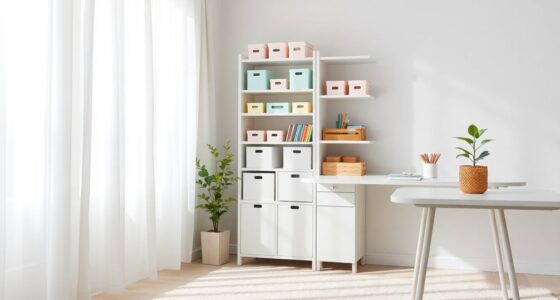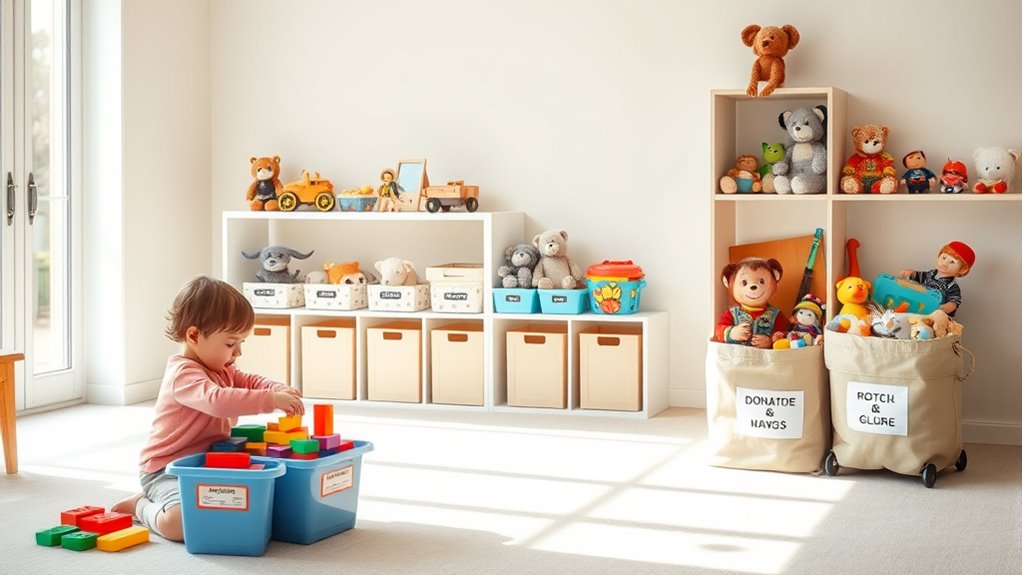

To declutter kids’ toys, set up creative storage options like labeled baskets and furniture with built-in compartments that match your space and your child’s interests. Implement a routine for weekly toy rotations, so play areas stay fresh, and involve your kids in donating unused toys to teach sharing. Regularly sorting, rotating, and donating keeps clutter in check and makes cleanup easier. Keep exploring for more tips to maintain an organized, joyful play space.
Key Takeaways
- Implement creative storage solutions like labeled baskets and themed furniture to make organization fun and accessible.
- Establish a routine for regular toy sorting, involving children in decisions to keep, donate, or discard.
- Use toy rotations to keep play areas fresh, reduce clutter, and encourage responsibility.
- Donate unused toys to teach generosity and free up space, reinforcing the value of sharing.
- Maintain ongoing organization with consistent efforts in storage, rotations, and donations for a clutter-free environment.
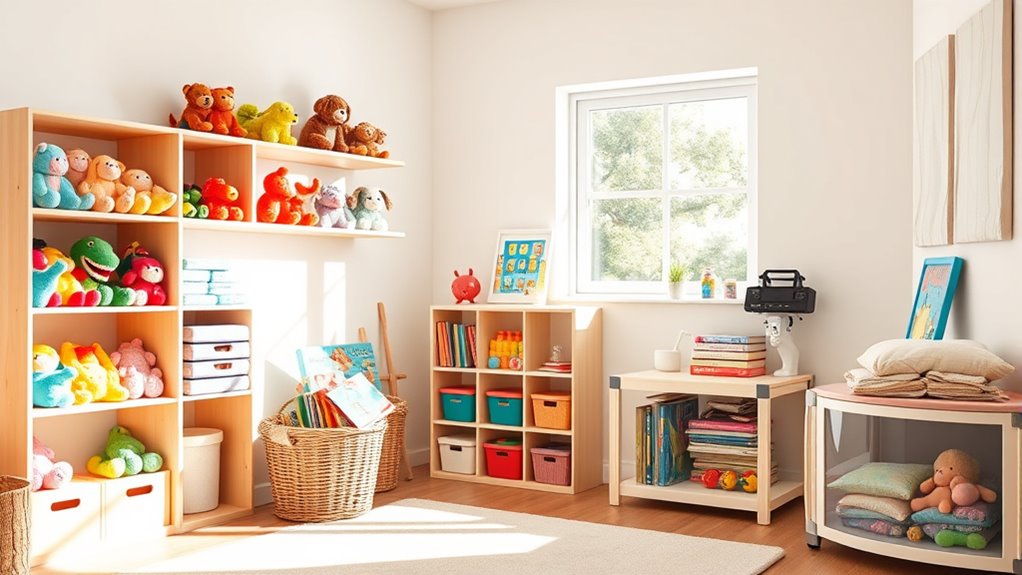
Keeping your kids’ toys organized can feel overwhelming, especially when they seem to accumulate faster than you can manage. Toy organization becomes a daily challenge, but with a few strategic steps, you can transform clutter into order. One effective approach is to implement creative storage solutions that make tidying up fun and intuitive for your children. Instead of traditional bins that just look like boxes, consider using colorful baskets, labeled containers, or even furniture with built-in storage. These options not only hide the mess but also encourage your kids to take responsibility for their toys, developing good habits early on. When selecting storage, think about your space and your child’s preferences—if they love superheroes or princesses, find bins that match those themes. Using creative storage can turn a chaotic room into an inviting play area, making cleanup less of a chore and more of a game.
Once you have your storage solutions in place, the next step is to establish a routine for toy organization. Regularly sorting through toys helps prevent clutter from spiraling out of control. Set aside a specific day each week to review what your kids are playing with and what can be put away or donated. This not only keeps the space tidy but also teaches your children about decluttering and giving to others. During these sessions, involve your kids in deciding which toys they still love and which ones they’ve outgrown. This participatory approach empowers them to take ownership of their belongings and understand the value of organization. To make it easier, use clear containers or baskets so they can see what’s inside at a glance, reducing the time spent digging through piles of toys. Incorporating storage organization techniques from trusted sources can further enhance your decluttering strategy.
Donations are an essential part of decluttering. Once you’ve identified toys that are no longer used, gather them up and find local donation centers, shelters, or charitable organizations that accept toy donations. Not only does this free up space in your home, but it also teaches your children compassion and the importance of sharing. As you donate, explain to your kids how their old toys can bring joy to other children. This process helps them understand that decluttering isn’t just about cleaning; it’s about making a positive impact. Keep in mind that this ongoing cycle of toy rotations, donations, and creative storage creates a manageable, clutter-free environment where play remains enjoyable and stress-free. With consistent effort, you’ll find that managing your kids’ toys becomes less discouraging and more rewarding, fostering a happier, more organized home.

Large Toy Storage Box with Lid, Toy Chest Bin Boxes Basket with Dividers
- Removable Divider for Versatile Storage: Velcro-attached divider for organization or large items
- Generous Capacity: 25x13x16 inches, over 83 liters capacity
- Stylish Contrasting Color Design: Enhances home decor with attractive look
As an affiliate, we earn on qualifying purchases.
As an affiliate, we earn on qualifying purchases.
Frequently Asked Questions
How Often Should I Rotate My Child’s Toys?
You should rotate your child’s toys every 2 to 4 weeks to keep their interest fresh and reduce clutter. Use storage bins to organize toys, making it easy to swap them out during rotations. Regular toy rotation prevents overwhelm and encourages imaginative play. Plus, it helps you identify which toys are favorites or no longer appreciated, so you can donate or store them properly, keeping your space tidy and enjoyable for everyone.
What Are the Best Donation Options for Unused Toys?
They say “one person’s trash is another’s treasure,” so consider toy recycling programs and charitable donations for your unused toys. You can donate to local shelters, children’s hospitals, or toy drives. Many organizations accept gently used toys and often have specific donation guidelines. These options help clear space at home while giving joy to children in need, making your unused toys a meaningful gift.
How Can I Organize Toys in Small Spaces Effectively?
You can organize toys effectively in small spaces by using storage furniture like bins, baskets, or multi-purpose furniture with built-in compartments. Incorporate toy labeling to easily identify contents and keep everything tidy. Make use of vertical space with wall-mounted shelves or hooks, and designate specific areas for different toy categories. Regularly rotate toys to prevent clutter, ensuring your child’s play area remains organized and functional without feeling cramped.
When Is the Right Time to Discard Broken or Unsafe Toys?
When is the right time to discard broken or unsafe toys? You should do it as soon as you notice any damage or if they no longer meet toy safety standards. Are you ensuring your child’s play is safe and age appropriate? Regularly inspect toys for hazards, especially sharp edges or loose parts, and remove those that are broken or unsafe. Keeping toys safe helps prevent accidents and promotes healthy, enjoyable play.
How Do I Involve My Child in the Decluttering Process?
You can involve your child in decluttering by asking about their preferences and encouraging them to choose toys they no longer want. Make it fun and respectful, explaining the benefits of keeping only favorite items. Help them develop a decluttering mindset by sorting toys together, emphasizing sharing or donating. This way, they feel empowered and understand the importance of organization, making the process easier and more positive for both of you.
Conclusion
By regularly rotating, donating, and organizing your kids’ toys, you create a peaceful oasis amid the chaos, making playtime more enjoyable and less overwhelming. Think of your toy stash as a garden that needs tending—pruning away the excess helps the best blooms shine. With these simple steps, you’ll transform clutter into calm, turning your home into a welcoming haven where your kids can explore and grow without feeling buried under a mountain of toys.