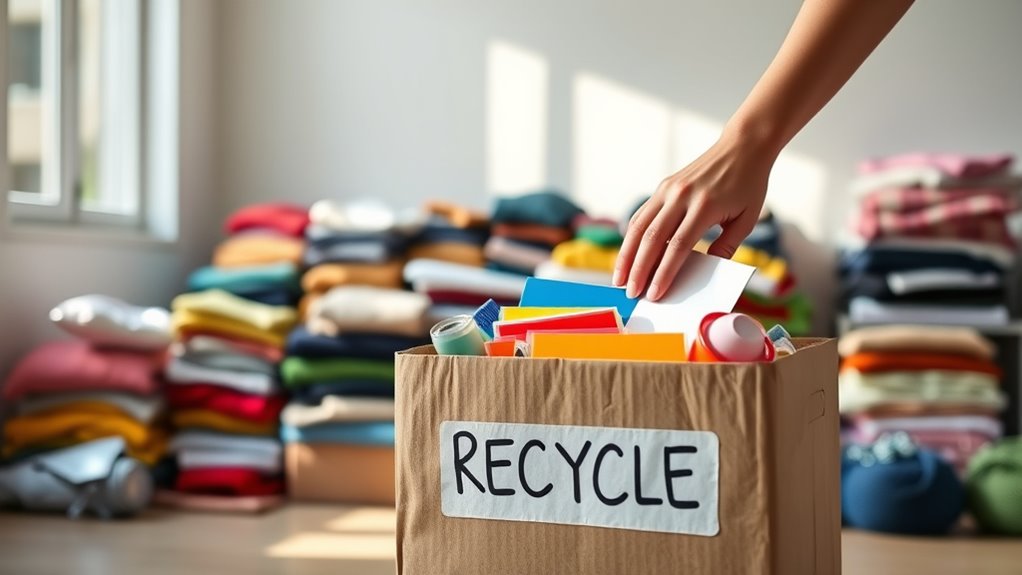

To declutter responsibly, start by evaluating if your items are reusable or repairable before tossing them out. Donate in good condition to charities or community groups, and upcycle or repurpose what you can to extend their life. Properly sort recyclables and use specialized centers for hazardous waste like batteries or chemicals. Using these eco-friendly practices helps reduce waste and pollution. Keep exploring to learn how you can make even smarter disposal choices.
Key Takeaways
- Assess items for repair or reuse before discarding to minimize waste.
- Donate in good condition to charities to support community and reduce landfill.
- Upcycle or repurpose items creatively instead of unnecessary disposal.
- Follow local recycling guidelines to ensure proper sorting and processing.
- Dispose of hazardous waste safely at designated centers to prevent environmental harm.
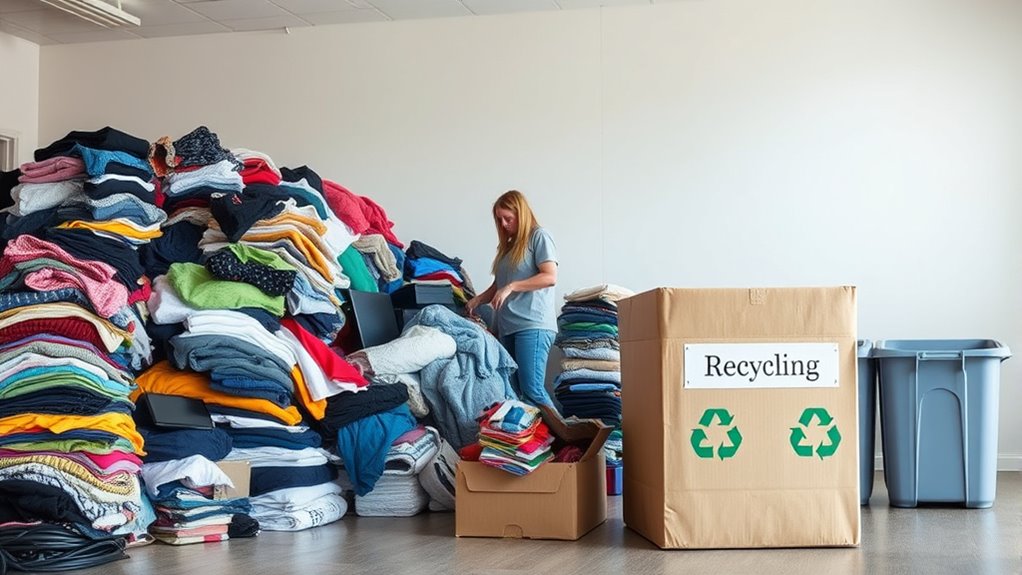
Donation and recycling are powerful ways to reduce waste and give new life to items that might otherwise end up in landfills. When you’re decluttering, it’s important to think beyond simply tossing things out. Instead, consider the impact your choices can have on the environment and the community. One effective approach is to explore upcycling tips, which allow you to creatively transform old or unused items into something new and useful. For example, turning glass jars into storage containers or repurposing worn-out furniture with a fresh coat of paint not only extends the lifespan of these objects but also reduces the need for new resources. By practicing upcycling, you contribute to eco friendly disposal methods that lessen the burden on landfills and decrease pollution.
Making responsible decisions during your decluttering process helps you to minimize waste. When sorting your belongings, ask yourself if items are truly beyond repair or reuse. If they are still functional or could be creatively reused, don’t just toss them in the trash. Instead, consider donation options. Many charities and community organizations gladly accept clothing, household goods, and electronics in good condition, giving these items a second chance and supporting those in need. This act of eco friendly disposal not only benefits others but also reduces the environmental footprint of your waste. If items are damaged or unusable, recycling becomes the best route. Recycling helps recover valuable materials and reduces the demand for new raw resources, contributing to a more sustainable cycle of consumption. Additionally, understanding the different types of recycling materials and their specific disposal requirements can greatly improve your recycling efficiency.
To make the most of your recycling efforts, familiarize yourself with local recycling guidelines. Properly sorting your waste ensures that recyclable items are processed correctly, preventing contamination and increasing the chances they’ll be repurposed into new products. For items that are difficult to recycle through curbside programs, look for specialized recycling centers. Some materials, like certain plastics or electronics, require specific handling to guarantee eco friendly disposal. Additionally, when dealing with hazardous waste, such as batteries or chemicals, always follow safety protocols and disposal instructions to avoid environmental harm.
Frequently Asked Questions
How Do I Determine Which Items Are Suitable for Donation?
To determine which items are suitable for donation, assess their donation criteria and donation readiness. You should consider if items are clean, gently used, and functional, avoiding broken or stained goods. Think about whether they align with what charities accept. If your items meet these standards, they’re likely ready for donation. Trust your judgment, and when in doubt, research the specific charity’s guidelines to ensure your items are helpful and appropriate.
Are There Specific Recycling Guidelines for Electronics?
Oh, surely you’ve mastered the art of ignoring e waste regulations, right? Well, to stay on the right side of the law, just follow your local electronic recycling programs, which often have specific guidelines for e-waste disposal. Many places require you to wipe personal data first and use designated drop-off spots. Ignoring these rules risks fines and environmental harm, so it’s best to stay informed and recycle responsibly.
What Are the Best Ways to Declutter Without Waste?
To declutter without waste, you should adopt minimalist strategies by keeping only what you truly need and love. Upcycling crafts allow you to creatively reuse items, giving them new life instead of throwing them away. Consider repurposing old containers or clothing into useful or decorative items. This approach reduces waste, saves space, and makes your decluttering process eco-friendly, all while adding a personal touch to your home.
How Can I Ensure My Donations Are Properly Appreciated?
To guarantee your donations are properly appreciated, follow donation etiquette by providing clean, functional items and including a heartfelt note if possible. Appreciation tips include researching charities beforehand to confirm they need what you’re donating, and asking for a receipt for your records. When delivering, politely thank staff or volunteers, and consider volunteering your time to see the impact firsthand. This thoughtful approach encourages gratitude and ensures your generosity is truly valued.
Are There Environmentally Friendly Ways to Dispose of Hazardous Materials?
Yes, there are eco-friendly disposal methods for hazardous materials. You should avoid dumping them in regular trash and instead use biodegradable packaging designed for hazardous waste. Check local regulations for proper disposal sites or recycling programs that handle such materials safely. By opting for eco-friendly disposal methods, you help protect the environment and reduce your carbon footprint. Always prioritize responsible disposal to ensure hazardous substances don’t harm ecosystems or communities.
Conclusion
By choosing to donate and recycle, you’re making a positive impact on your community and the environment. Remember, “One person’s trash is another person’s treasure,” so your decluttering can bring joy to others while reducing waste. Small steps like these add up, creating a cleaner, greener world. Stay committed to responsible practices, and you’ll find that decluttering becomes a rewarding and sustainable habit. Every effort counts—start today and make a difference!