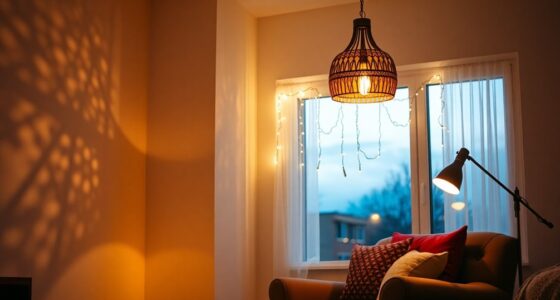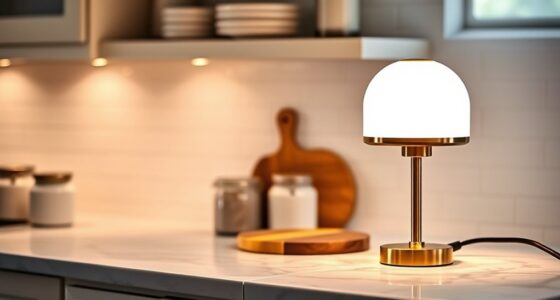

To select the right bulb, consider lumens for brightness—more lumens mean brighter light suitable for tasks, while fewer create a cozy atmosphere. Match the color temperature (Kelvin) to set the mood; warm white offers a soft glow, and cooler temperatures are more energetic. Also, prioritize energy-efficient options like LEDs to save on bills and reduce environmental impact. Keep exploring these factors further to guarantee you get the perfect fit for your space.
Key Takeaways
- Match lumens to room size and task for appropriate brightness; higher lumens for tasks, lower for ambiance.
- Choose color temperature based on mood: warm white (2700K–3000K) for coziness, cooler (4000K–5000K) for energy.
- Verify bulb compatibility with fixture socket type, wattage limits, and design to prevent flickering and fit issues.
- Opt for LED bulbs for better energy efficiency, longer lifespan, and cost savings over traditional incandescent or CFL options.
- Consider additional features like dimmability and smart controls to enhance energy savings and customize lighting ambiance.
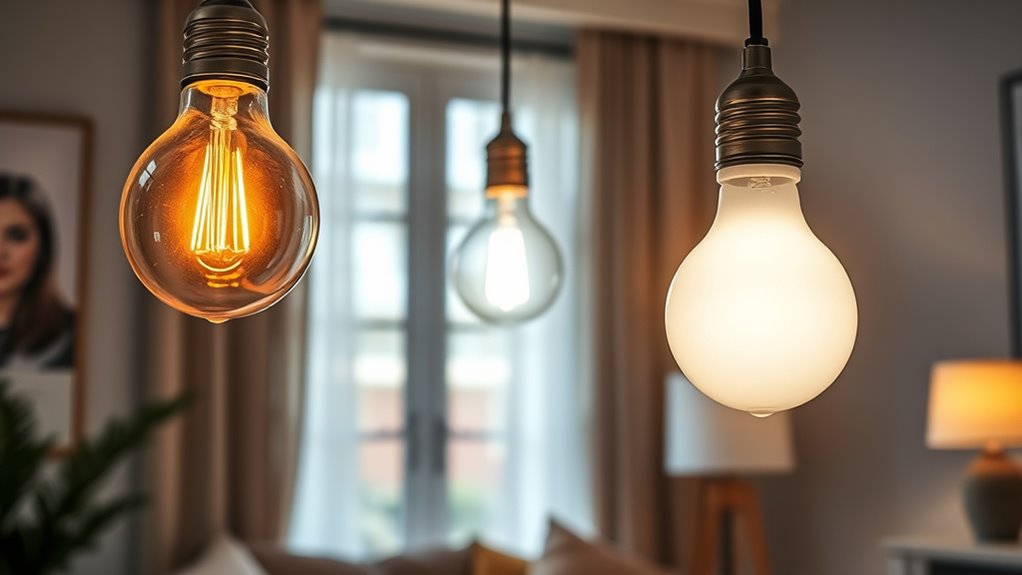
Selecting the right bulb is essential for creating the perfect lighting in your space. When choosing a bulb, you need to consider several factors, including light fixture compatibility, brightness, color temperature, and efficiency. Making certain of compatibility with your existing fixtures prevents issues like flickering or limited socket fit, so always check the fixture’s socket type and wattage limits before purchasing. This step saves you time and avoids the hassle of returns or replacements later on.
Next, focus on lumen output, which measures brightness. Unlike watts, which indicate energy consumption, lumens tell you how much light a bulb produces. For tasks like reading or cooking, opt for higher lumens to ensure sufficient illumination. For ambient lighting, lower lumens create a softer, more relaxing atmosphere. Keep in mind that choosing a bulb with the right brightness level helps you avoid over- or under-lighting your space, making your environment more comfortable and functional.
Color temperature is another key element. It’s measured in Kelvin (K) and influences the mood of your room. Bulbs with a warm white (around 2700K–3000K) emit a cozy, inviting glow, perfect for living rooms and bedrooms. Cooler temperatures (4000K–5000K) produce a bright, energetic light suitable for workspaces or kitchens. Selecting the right temperature enhances the ambiance and ensures your lighting matches the activity or mood you want to create.
Efficiency should also weigh heavily in your decision. LED bulbs are the most energy-efficient option, lasting longer and consuming less power than incandescent or halogen bulbs. To maximize savings, incorporate energy saving tips like turning off lights when you leave a room or installing dimmers to control brightness levels. This not only reduces your energy bills but also extends the lifespan of your bulbs, saving you money over time.
Additionally, be mindful of the bulb’s shape and size to match the fixture’s design and aesthetic. Some fixtures require specific shapes or sizes for proper fit and appearance. If you’re replacing bulbs in fixtures with unique designs or enclosed covers, double-check the specifications to verify compatibility.
To further improve your lighting setup, consider the suction power of your bulbs or fixtures, especially in smart or automated lighting systems, which can affect their performance and energy efficiency. Ultimately, choosing the right bulb involves balancing brightness, color, efficiency, and fixture compatibility. By considering these factors carefully, you can create a well-lit space that’s both energy-efficient and tailored to your needs. Taking the time to select the appropriate bulb ensures you’ll enjoy ideal lighting, lower energy costs, and a more comfortable environment.
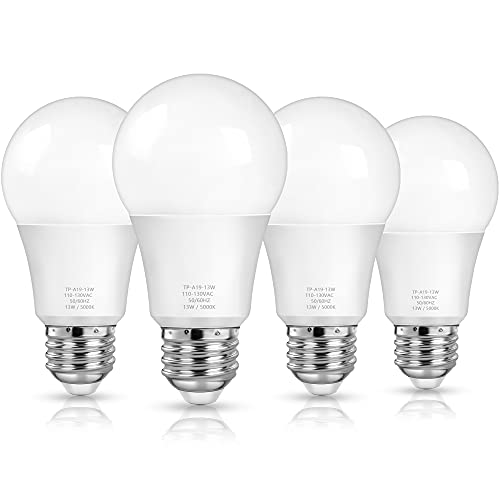
MAXvolador A19 LED Light Bulbs, 100 Watt Equivalent LED Bulbs, Daylight White 5000K, 1500LM, E26 Base, Non-Dimmable, 13W Bright LED Bulbs, 4-Pack
- Energy Efficient: Replaces 100-125W bulbs with 13W LED
- Super Bright: 1500 lumens, daylight white, high CRI
- Long Lifespan: Over 25,000 hours of use
As an affiliate, we earn on qualifying purchases.
As an affiliate, we earn on qualifying purchases.
Frequently Asked Questions
How Do Bulb Wattage and Lumens Relate?
Wattage comparison shows how much energy a bulb uses, while lumens measure brightness. Lumens versus wattage helps you understand that a higher lumen count means brighter light without necessarily using more power. For example, an LED bulb with lower wattage can produce the same brightness as a higher wattage incandescent. So, focus on lumens for brightness, and wattage comparison to gauge energy efficiency when selecting your bulbs.
Are LED Bulbs More Energy-Efficient Than CFLS?
Yes, LED bulbs are more energy-efficient than CFLs. LED efficiency means they produce more lumens per watt, using less energy for the same brightness. When comparing CFLs, LEDs consume less power and last longer, making them a smarter choice overall. You’ll save money on energy bills and replacements over time. So, if you want an eco-friendly and cost-effective lighting option, go for LED bulbs instead of CFLs.
What Color Temperature Is Best for Reading Areas?
If you want the perfect reading area, go for bulbs around 4000K. They offer excellent color accuracy, making it easier to see details without straining your eyes. Plus, this temperature creates a neutral, inviting atmosphere—ideal for focused tasks. Don’t settle for dull or overly warm light; instead, choose a balanced color temperature that enhances your mood lighting and keeps you comfortable during long reading sessions.
Can Dimmable Bulbs Be Used With Any Switch?
Dimmable bulbs can’t be used with any switch; you need to check switch compatibility. If your switch isn’t dimmer-compatible, the bulb won’t dim properly or could flicker. Make sure your switch is labeled as dimming compatible before installing dimmable bulbs. If you want to control brightness, opt for switches designed for dimming, ensuring smooth operation and avoiding potential damage to your bulbs or fixture.
How Often Should I Replace My Light Bulbs?
Think of your light bulb as a trusted friend who guides your space. Usually, you should replace it every 1 to 3 years, depending on its usage and type. LED bulbs last longer, with a lifespan of up to 25,000 hours, so you might only need replacements every 4-6 years. Keep an eye on brightness and flickering—these clues signal it’s time for a new bulb to keep your home shining brightly.
Conclusion
So, next time you’re shopping for bulbs, remember to consider lumens for brightness, color temperature for mood, and efficiency for savings. For example, imagine replacing your living room lights with LEDs that offer warm light and high efficiency—you’ll enjoy cozy ambiance without skyrocketing bills. By understanding these factors, you can make smarter choices that brighten your space beautifully and save you money in the long run. Happy bulb hunting!