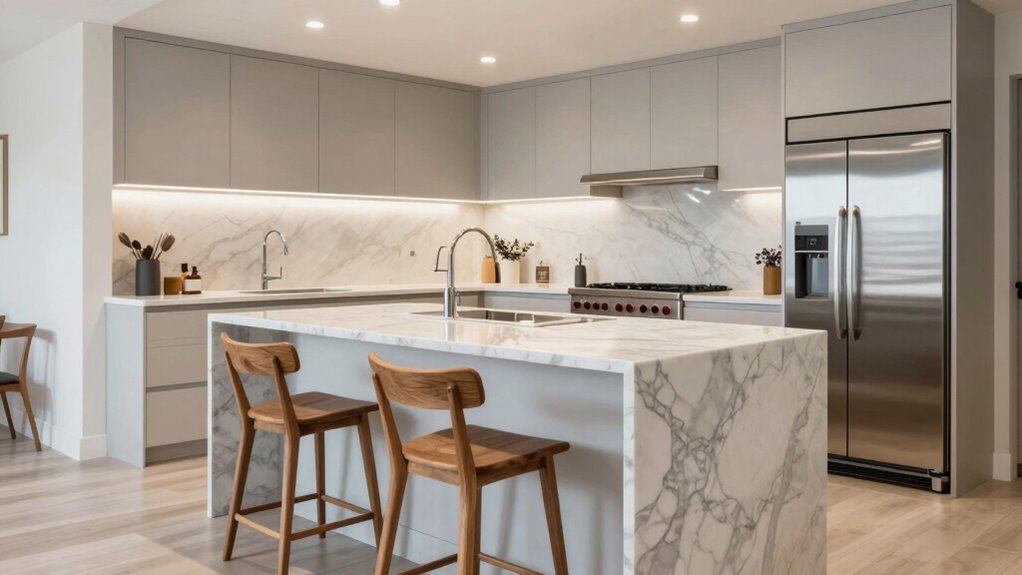
For safe and comfortable kitchen movement, aim for at least 36 to 48 inches of clearance around your island, especially in high-traffic areas. Stools should have about 24 to 30 inches of space for easy seating and movement. Proper spacing prevents congestion and makes your kitchen more functional. To optimize your layout and ensure safety, understanding these key measurements is vital—keep exploring to find out how to get your perfect balance.
Key Takeaways
- Maintain a minimum of 36 inches of clearance around the kitchen island for safe movement and appliance access.
- For high-traffic kitchens, increase walkway width to 42-48 inches to prevent congestion.
- Allow 24-30 inches of space per stool at the island for comfortable seating and easy movement.
- Keep 15-18 inches of clearance behind cooktops and sinks for safety and accessibility.
- Ensure 36 inches of clearance between the island and surrounding counters for optimal navigation.
Why Clearance Matters for Safety and Comfort
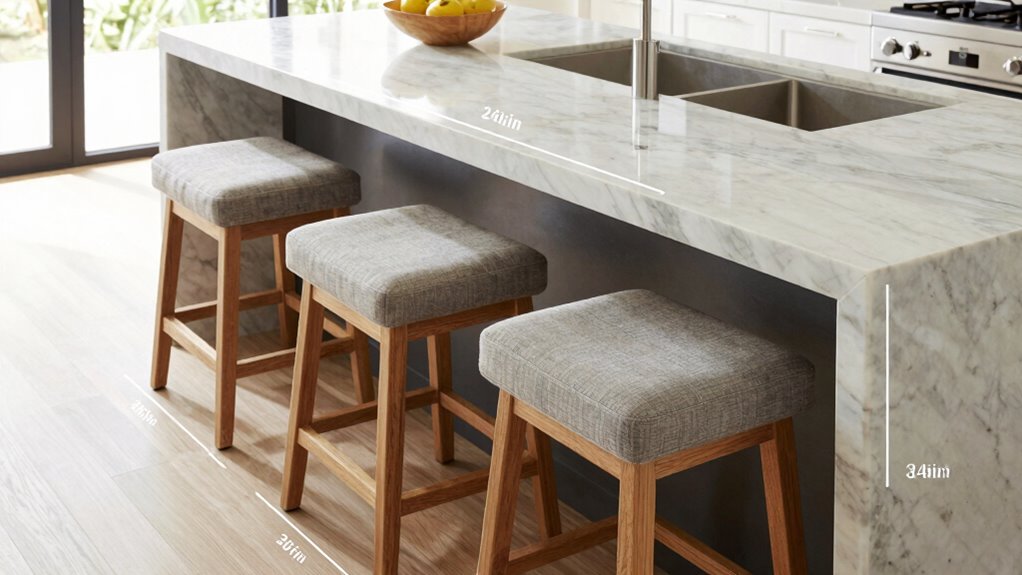
Having enough clearance around your kitchen island is essential because it directly impacts both safety and comfort. Proper clearance ensures you have enough space for appliance placement without crowding, reducing the risk of accidents. It also allows you to move freely, whether you’re cooking, serving, or cleaning. When considering countertop height, keeping clear walkways prevents bumping into cabinets or appliances, making the space more functional. Adequate clearance helps prevent spills or injuries caused by cramped movement. It also creates a welcoming atmosphere for family and guests, making the kitchen more enjoyable to use. Additionally, understanding free floating concepts can help you optimize your layout for maximum safety and efficiency. Recognizing clearance guidelines is crucial for designing a kitchen that balances safety and practicality. Paying attention to walkway widths ensures unobstructed movement, especially when multiple people are using the space simultaneously. Considering ergonomic design principles can further enhance comfort and safety in your kitchen layout. In short, paying attention to clearance around your island ensures a safer, more efficient, and comfortable cooking environment.
How to Measure Your Kitchen for Proper Clearance
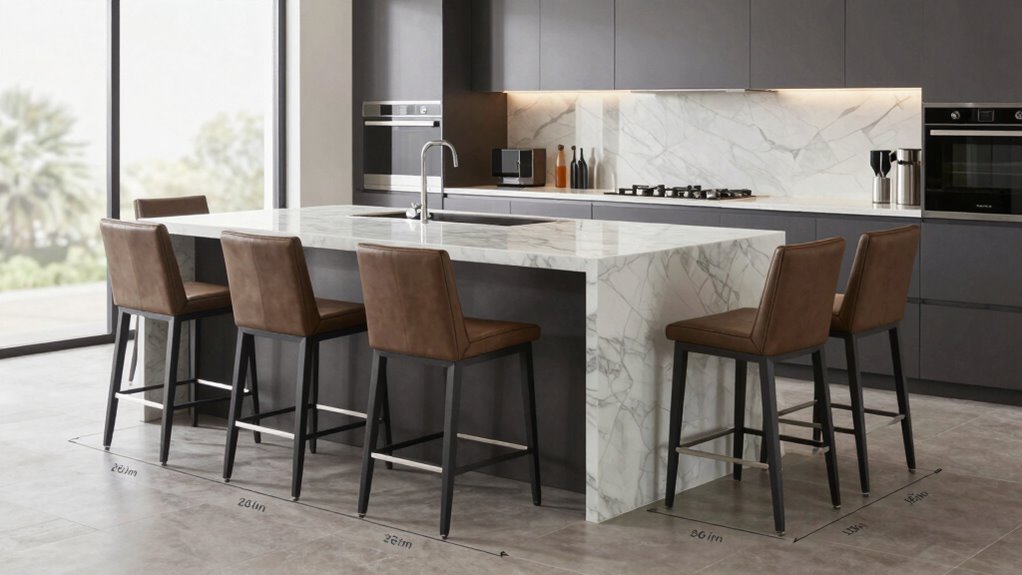
To make certain your kitchen island fits comfortably, start by measuring the available floor space accurately. Keep in mind how traffic will move around the island to avoid congestion. Don’t forget to take into account any additional features, like cabinets or appliances, that might impact clearance. Considering the ideal walkway width can help ensure smooth movement and optimal functionality in your kitchen layout. Additionally, understanding space planning techniques related to digital concepts can provide innovative solutions for maximizing your kitchen’s efficiency. Being aware of future economies and how adaptable your design can be may also enhance your kitchen’s long-term usability, especially when incorporating tracking gear to monitor space utilization and traffic flow.
Measuring Floor Space Accurately
Measuring your kitchen floor space accurately is essential to guarantee your new island fits comfortably and maintains proper clearance. Start by noting the exact placement of appliances, ensuring you measure around appliances like the refrigerator, oven, and dishwasher to avoid obstructions. Use a tape measure to mark the available width and length, accounting for any built-in features. Don’t forget to contemplate your countertop material, as thicker surfaces may slightly reduce usable space. Be precise when measuring distances between existing countertops, walls, and other fixtures. Double-check your measurements to prevent errors. Properly understanding your floor space helps you select an appropriately sized island that won’t disrupt your workflow or traffic flow while accommodating desired features and finishes. Additionally, considering multi-mower setups can inspire innovative ways to maintain larger yards efficiently, but always prioritize accurate space measurements to ensure your kitchen layout functions smoothly. Taking the time to create a detailed floor plan can further help visualize your space and make better design decisions. Remember that clearance requirements are critical for both safety and functionality, so always verify local building codes or guidelines before finalizing your layout.
Considering Traffic Flow Needs
Ensuring your kitchen has smooth traffic flow is key to creating a functional space. Start by considering appliance placement; arrange ovens, refrigerators, and dishwashers to minimize congestion. Measure the countertop depth around these appliances to ensure enough space for movement without crowding. When planning walkways, aim for at least 36 inches of clearance between the island and surrounding counters or cabinets. If your kitchen has high traffic, opt for a wider gap to prevent bottlenecks. Think about how people will move when multiple family members are in the space, especially during busy meal prep times. Proper measurements help you avoid cramped areas and guarantee easy navigation, making your kitchen both efficient and comfortable for everyday use.
Accounting for Additional Features
When adding features like a sink, cooktop, or seating area, you need to account for their specific dimensions to maintain proper clearance. Appliance integration often requires extra space, especially around sinks and cooktops, to ensure safe operation and easy access. Measure the depth and width of each feature, including any handles or controls, and add at least 15-18 inches of clearance for movement and safety. If you’re using different countertop materials, consider their thickness and how they affect overall height and edge profiles. This guarantees your island remains functional and comfortable for daily use. Proper measurement of these features helps prevent overcrowding, supports efficient workflow, and creates a seamless look that balances utility with style. Additionally, understanding kitchen workflow can help optimize your layout for better efficiency and safety.
What Is the Recommended Space Around a Kitchen Island?
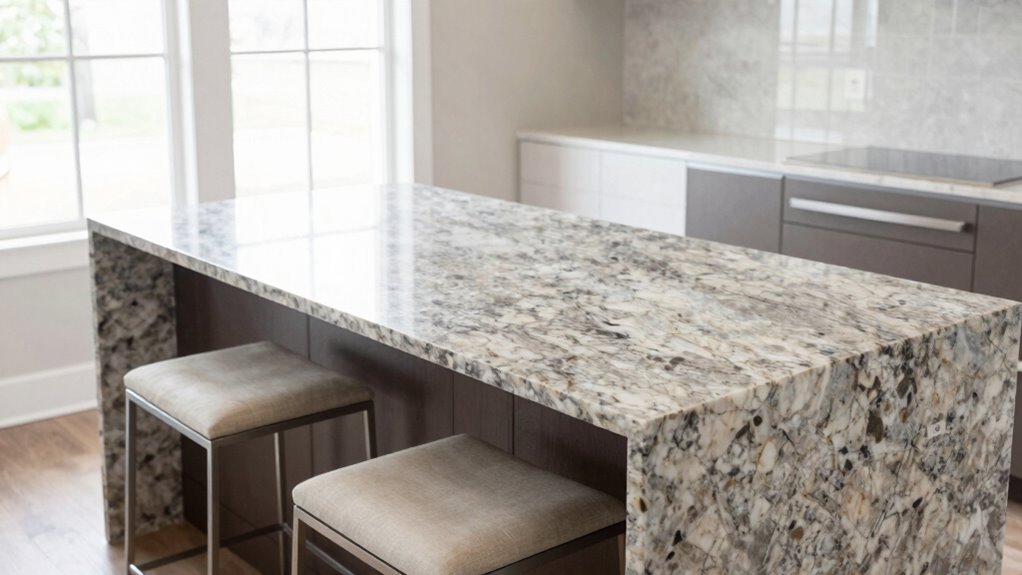
To move comfortably around your kitchen island, you should leave enough space for easy access and functionality. A minimum of 36 to 48 inches of clearance on all sides allows you to navigate without feeling cramped. This space also accommodates movement when opening cabinets or appliances nearby. When planning your layout, consider color coordination and material choices to create a cohesive look. Lighter colors and sleek materials can make the area feel more open, while darker shades or busy patterns might require additional space to avoid visual clutter. Proper spacing guarantees smooth traffic flow, reduces congestion, and enhances safety. Additionally, ergonomic design principles can help optimize your kitchen layout for both comfort and efficiency. Incorporating professional consultation can further ensure your space meets safety standards and functional needs. Keep these factors in mind to balance aesthetic appeal with practicality, creating a kitchen that’s both beautiful and highly functional. For optimal comfort, understanding space planning is essential to maximize your kitchen’s usability and style. Moreover, considering building codes and regulations can ensure your layout complies with safety standards while achieving your desired aesthetic. Being aware of air circulation and ventilation requirements can also improve overall comfort and safety in your kitchen space.
How Much Seat Clearance Do Stools Need?

To guarantee your stools are comfortable, you’ll need to contemplate the standard seat height and how much legroom is available. Proper spacing between stools also prevents crowding and makes sitting down easier. Paying attention to these points helps create a functional and inviting seating area around your kitchen island. Additionally, considering wall surface finishes can influence the overall aesthetic and comfort of your space, ensuring that your seating area complements the surrounding decor. Being mindful of ergonomic design principles can further enhance comfort and usability for everyone. Incorporating appropriate material choices can also improve durability and ease of cleaning in your seating area.
Standard Seat Height
Ensuring the right seat height for stools is essential for comfort and functionality at your kitchen island. Standard seat height typically ranges from 24 to 26 inches, matching most countertop heights of 36 inches. This height provides ideal seating comfort, allowing your legs to rest naturally without feeling cramped or overly stretched. When selecting stools, aim for a seat height that leaves about 9 to 13 inches of clearance between the top of the seat and the underside of the counter. This ensures you can sit comfortably without your knees hitting the countertop or feeling too high. Properly matched seat height not only enhances comfort but also promotes better posture, making your kitchen experience more enjoyable and efficient.
Optimal Leg Room
When choosing stools for your kitchen island, making sure there’s enough legroom can considerably boost comfort and functionality. Aim for at least 9 inches of clearance between the seat and the underside of the countertop, especially if you have sturdy countertop materials like stone or concrete that add weight and height. This space allows you to sit comfortably without feeling cramped. Also, consider lighting fixtures above your island; pendant lights should be hung high enough to avoid bumping your head and to maximize legroom. Proper clearance ensures that you can move freely and sit comfortably, regardless of the countertop materials used. Balancing these factors creates a functional, inviting space perfect for everyday use and entertaining.
Comfortable Stooling Spacing
Having the right amount of seat clearance is essential for comfortable and practical seating at your kitchen island. To guarantee proper spacing, consider these guidelines:
- Leave at least 12 inches between the stool seat and the countertop material, accommodating various countertop materials like granite or wood.
- Allow 24 to 30 inches of space from neighboring stools for easy movement.
- Ensure that lighting fixtures above the island don’t hang too low—ideally 30 to 36 inches from the countertop—to avoid crowding.
- Provide enough clearance for footrests, typically 10 to 12 inches from the floor to the underside of the stool seat. These measurements promote comfort, prevent congestion, and highlight how strategic stool spacing enhances your kitchen’s functionality.
Common Mistakes When Planning Island Space
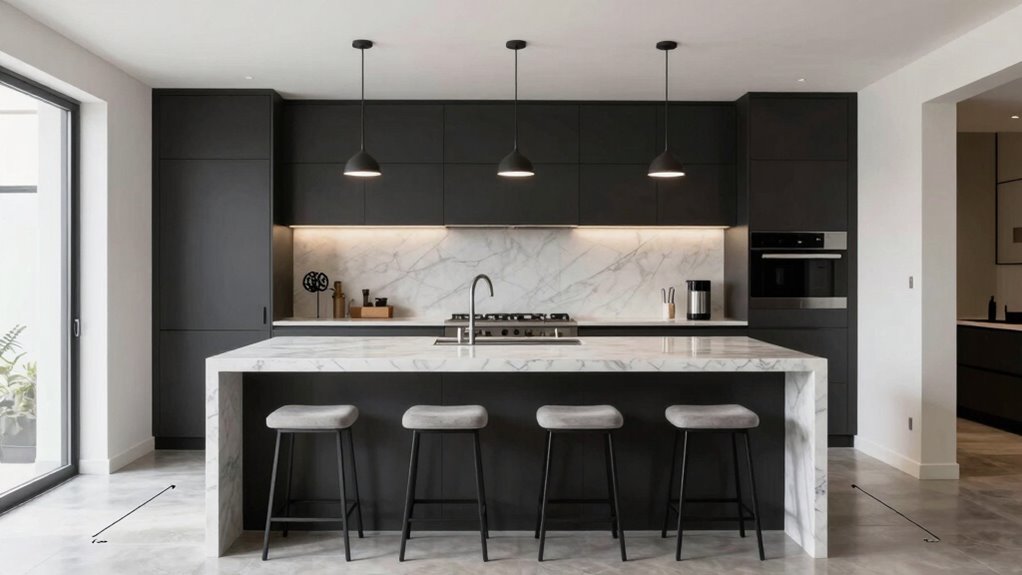
One of the most common mistakes when planning your kitchen island space is neglecting to leave enough clearance around it. Without proper space, your workflow becomes cramped, making cooking and movement frustrating. Be mindful of different cabinet styles and how they impact available space; some designs can add bulk, reducing clearance. Similarly, choosing heavy or thick countertop materials, like solid granite or butcher block, can sometimes limit walkways. Overlooking these details may lead you to underestimate the needed space, resulting in a crowded kitchen. Always measure carefully, considering how cabinet styles and countertop materials influence overall dimensions. Proper clearance ensures smooth navigation, safe movement, and a comfortable cooking environment. Avoid rushing this step to create a functional, enjoyable kitchen.
Adjusting Clearance for Your Kitchen Size and Layout
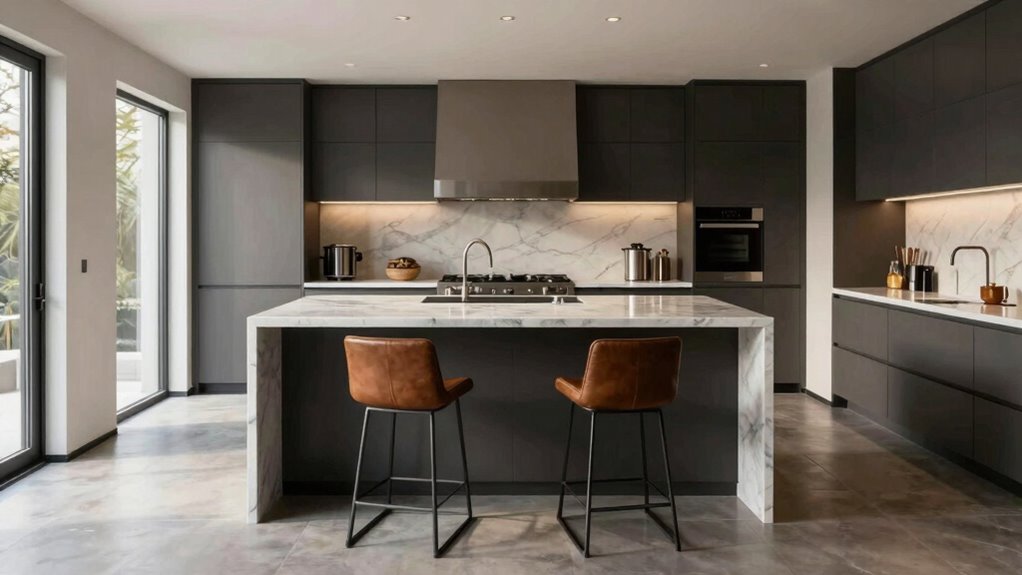
Adjusting your kitchen island clearance to fit your space begins with understanding your overall kitchen size and layout. First, consider your appliance placement; make certain there’s enough space around appliances to open doors comfortably. Second, evaluate your countertop height; it influences how much clearance you need for comfortable movement. Third, measure the distance between the island and surrounding cabinets or walls; aim for at least 36 inches for walkways. Fourth, think about stool placement if you plan to add seating; allow for 24-30 inches per stool for comfortable seating and movement. By focusing on these factors, you can customize your clearance to match your kitchen’s dimensions, creating a functional, safe, and inviting space tailored to your needs.
Design Tips for a Safe and Stylish Kitchen Island
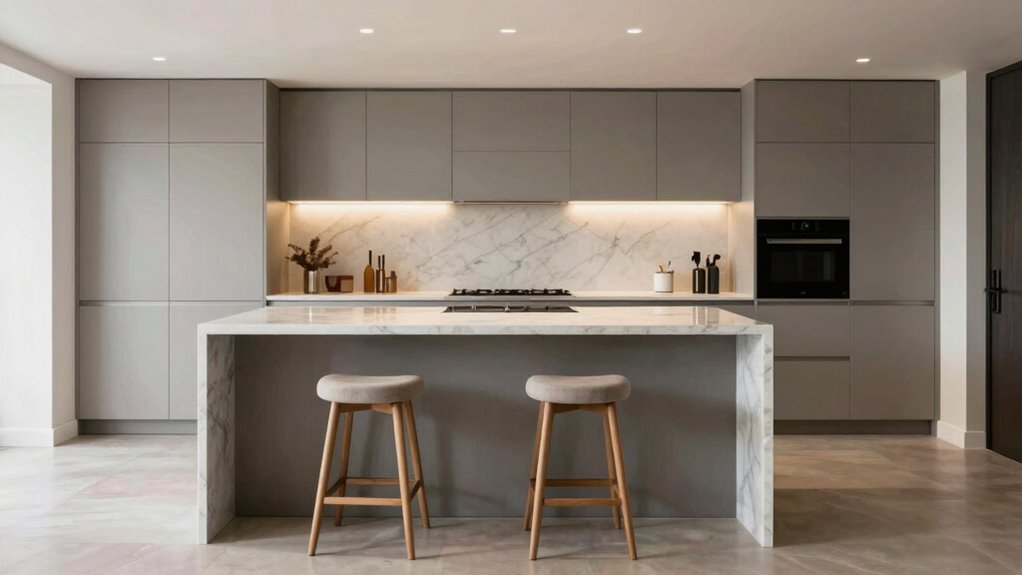
A well-designed kitchen island balances safety and style to enhance your space. To achieve this, focus on smart appliance placement so your workflow remains smooth and clutter-free. Keep heavy appliances, like mixers or toasters, close to outlets but away from walkways to prevent accidents. Incorporate pantry organization solutions nearby to reduce clutter on the island surface, maintaining a clean look. Use open shelving or cabinet doors to hide less attractive items and keep essentials within reach. Choose durable, stylish materials that withstand daily use while adding aesthetic appeal. Incorporate seating that respects clearance guidelines, ensuring stools slide in easily without obstructing pathways. Overall, thoughtful placement and organized storage make your kitchen safer and more inviting.
FAQs About Kitchen Island Clearance Guidelines

Understanding kitchen island clearance guidelines is essential to creating a safe and functional space. You might wonder about ideal distances for appliance placement and lighting design. Here are common FAQs:
- What’s the ideal clearance between the island and appliances? Aim for at least 36 inches to allow easy movement.
- How close can stools be to the island edge? Maintain 24-30 inches to provide comfortable seating space.
- What about lighting design? Ensure fixtures hang 30-36 inches above the island surface for adequate illumination without obstruction.
- Are there specific clearance rules for walkways? Yes, a minimum of 42-48 inches is recommended to ensure smooth traffic flow.
Following these guidelines helps you balance safety, accessibility, and style in your kitchen.
Frequently Asked Questions
Can I Modify Clearance Requirements for Small or Open Kitchens?
Yes, you can modify clearance requirements for small or open-concept kitchens by customizing your island design. In open layouts, you might reduce walkway space if it still feels comfortable and functional. Focus on creating a balanced flow that suits your space, but make certain there’s enough room for stool seating and movement. Custom island designs allow flexibility, so adapt clearance measurements to your needs while maintaining safety and ease of use.
How Do Clearance Needs Differ Between Island Shapes and Sizes?
Like a well-choreographed dance, your island shape and size influence clearance needs. For rectangular islands, guarantee at least 42-48 inches of walkway, especially around stool height seating. L-shaped or curved islands need similar space, but the angles might slightly modify clearance. Larger islands require more room, while smaller or rounded shapes can be more flexible. Always prioritize comfortable movement and easy access to stools and prep zones.
Are There Specific Clearance Guidelines for Wheelchair Accessibility?
You should follow wheelchair compliance standards for accessible design, ensuring at least 36 inches of clearance around your kitchen island. This allows enough space for maneuvering and easy access. Make sure the design accommodates various needs, including knee space under the counter and reachable heights. By adhering to these guidelines, you create a more inclusive, functional space that suits everyone’s needs, making your kitchen both safe and welcoming.
What Are the Best Materials to Maximize Space Around the Island?
Imagine transforming your kitchen with the perfect materials that maximize space and style. Opt for lightweight yet durable surfaces like quartz or butcher block, which offer excellent countertop durability without overwhelming your layout. These materials also blend stunning aesthetics with practicality, making your island both functional and beautiful. Their sleek, versatile finishes help create an open, airy feel, ensuring your kitchen feels spacious and inviting every time you step in.
How Does Clearance Impact Kitchen Workflow and Efficiency?
Clearance greatly impacts your kitchen workflow and efficiency by ensuring smooth traffic flow around the island. When you maintain proper space, you can easily access appliances without congestion, reducing delays and frustration. Adequate clearance allows multiple people to work comfortably and move freely, making meal prep and cleanup more efficient. Proper appliance placement combined with ideal clearance helps keep your kitchen organized, safe, and functional for everyday use.
Conclusion
So, next time you’re planning your kitchen island, remember—those “magic” numbers aren’t just suggestions; they’re the secret to avoiding chaos. Ignore clearance, and you might end up bumping into stools or dodging traffic. Who knew safety and comfort could be so simple? With the right measurements, you’ll have a stylish, functional space that actually works. Ironically, it’s just a matter of following a few clear rules—rather than winging it!