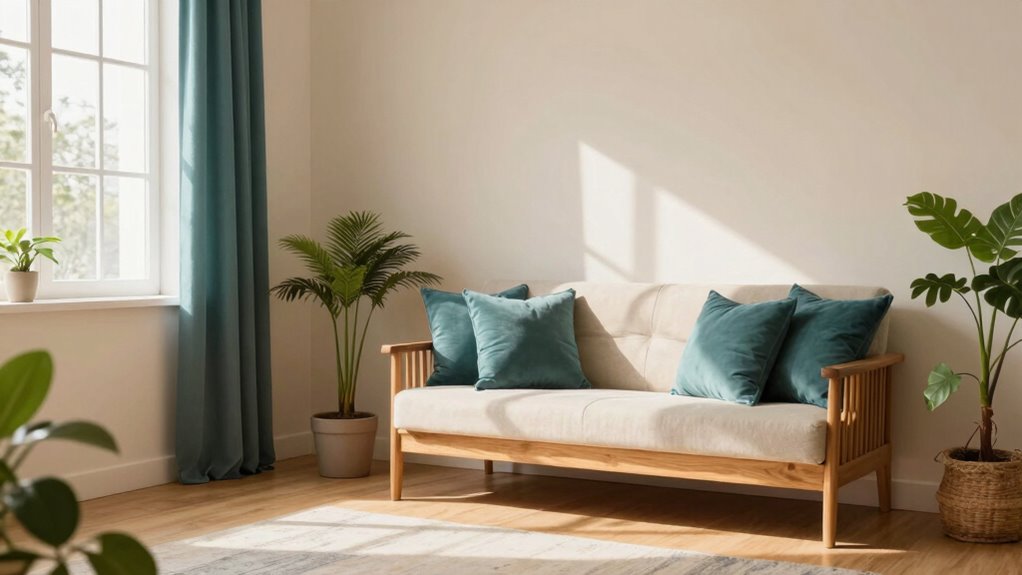

To choose a better color palette for a north-facing room, opt for warm, bright hues like soft yellows, gentle oranges, or creamy neutrals to counteract the cooler, darker light. Use layered lighting, including warm-toned lamps and reflective surfaces, to boost warmth and brightness. Test paint samples in different parts of the room at various times to see how the colors react to the light. Keep exploring for more tips to create a cozy, inviting space.
Key Takeaways
- Prioritize warm, bright hues like soft yellows, beiges, or warm whites to counteract cooler natural light.
- Incorporate layered lighting with warm-toned fixtures to enhance color vibrancy and create a cozy atmosphere.
- Use reflective surfaces and gloss finishes to maximize light reflection and brighten the space.
- Test paint samples at different times of day to observe how lighting affects color perception.
- Balance cool shades with strategic lighting to maintain tranquility without making the room feel dark or cold.
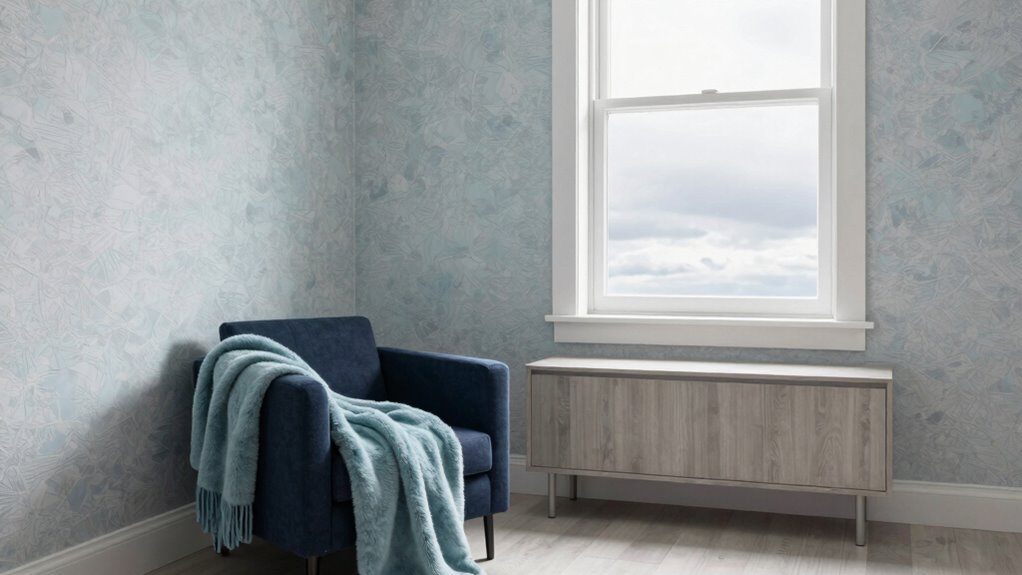
North-facing rooms often receive less natural light, which can make them feel cooler and darker. This unique lighting situation influences how colors appear and how the space feels overall. To create a welcoming and vibrant atmosphere, you need to take lighting effects carefully when choosing a color palette. Cooler light from the north can make soft, muted colors seem dull, so opting for warm tones can help counteract this effect. Bright whites with a hint of warmth or creamy neutrals can reflect available light, making the room feel brighter and more inviting. Additionally, incorporating strategic lighting fixtures like warm-toned lamps or wall sconces can enhance the effects of your chosen colors, ensuring the space doesn’t feel gloomy or unwelcoming.
Color psychology plays an essential role in transforming a north-facing room into a cozy retreat or a lively workspace. Warm colors such as soft yellows, gentle oranges, or warm beiges evoke feelings of comfort, energy, and warmth. These shades can counteract the cooler light and create a sense of coziness that the room might otherwise lack. On the other hand, if you prefer a calmer, more serene environment, cool hues like light blues, muted greens, or lavender can evoke tranquility. Just keep in mind that these cooler shades may require more strategic lighting to prevent the space from feeling overly dark or cold. Understanding lighting effects and how they interact with color choices is crucial for achieving the desired ambiance. Experimenting with different lighting techniques can further optimize the mood and perception of your chosen palette. Exploring light layering strategies can also help balance light and shadow, enhancing the overall atmosphere. Incorporating test paint samples**** in different parts of the room is also recommended to see how they look under various lighting conditions throughout the day. Moreover, considering the use of reflective surfaces or gloss finishes can help bounce light around the space, making it feel more open and lively.
When choosing your palette, think about the mood you want to establish and how lighting will interact with those colors. For instance, if you want your room to feel lively and energetic, lean toward warm, bright hues that reflect light well. If serenity is your goal, cooler shades combined with layered lighting will help achieve that peaceful atmosphere. It’s also wise to test paint samples in different parts of the room to see how they look at various times of day, considering the limited natural light. This step ensures your chosen colors will truly work with your room’s lighting conditions.
Ultimately, selecting a color palette for a north-facing room is about balancing lighting effects and understanding color psychology. Bright, warm tones can lift the space’s mood and make it appear larger, while thoughtful lighting choices amplify this effect. By carefully considering how colors interact with limited daylight and using lighting to enhance their impact, you’ll create a space that feels warm, vibrant, and perfectly tailored to your style.

ONEWISH Small Bedside Lamp for Bedroom, 3-Way Dimmable Touch Control, 600 Lumen Bright Opal Glass Shade, 7.5 Inch Ultra Compact Nightstand Lamp, Warm White 2700K LED Bulb Included, Modern Design
- Bright 600 Lumens LED Light: 600 lumens warm light, flicker-free
- Compact 7.5-inch Design: Fits any nightstand, modern look
- Touch Control with 3 Brightness Levels: Easy tap to adjust brightness
As an affiliate, we earn on qualifying purchases.
As an affiliate, we earn on qualifying purchases.
Frequently Asked Questions
How Does the Size of the Room Affect Color Choices?
The size of your room influences your color choices because larger spaces can handle darker or bolder colors without feeling cramped, while smaller rooms benefit from lighter shades to maximize natural light and create a sense of openness. In a north-facing room with limited natural light, choose warm, light colors to improve the color temperature and make the space feel inviting. Avoid dark hues that can make the room seem smaller and gloomier.
Are There Specific Colors to Avoid in North-Facing Rooms?
In north-facing rooms, avoid dark, cool colors like deep blues or charcoal, as they can make the space feel gloomy and damp, impacting your mood negatively. Instead, opt for warm, light shades like soft yellows or warm beiges, which reflect natural light and uplift your emotional state. Understanding color psychology helps you choose hues that brighten your space and positively influence your feelings, creating a welcoming atmosphere.
How Can Lighting Influence the Chosen Color Palette?
Ever wonder how lighting shapes your room’s vibe? Natural light in a north-facing space is softer and cooler, affecting your color choices. Opt for warm tones to balance the coolness, or choose colors with high color temperature for brightness. Lighting influences how your palette appears throughout the day, so consider how natural light interacts with your colors to create a cozy, inviting atmosphere.
What Color Accents Work Best in a North-Facing Space?
In a north-facing room, warm accent colors like rich oranges, deep reds, or golden yellows work best, leveraging color psychology to create coziness and warmth. You might consider accent wall ideas that incorporate these shades, adding visual interest and contrast. These bold accents help counteract the cool, muted natural light, making your space feel inviting and lively, even on overcast days.
Can Plants or Decor Alter the Room’s Color Perception?
Plants and decor accessories can influence your room’s color perception by adding contrast and warmth. By carefully selecting plant placement, you introduce natural greens that brighten and refresh the space. Incorporate decor accessories with warm tones or metallic finishes to reflect and diffuse light, making the room feel more inviting. These elements help counteract the coolness of a north-facing room, creating an environment that feels lively and balanced.
Conclusion
Choosing the right color palette for your north-facing room is like tending a garden in shade—it requires patience and the right tools. I once painted my own space with warm, reflective hues, transforming the gloom into a cozy retreat. Just as sunlight is limited, so is direct warmth; but with thoughtful colors, you can create a space that feels inviting and vibrant. Trust your instincts, and let your palette bloom into a haven you’ll love.