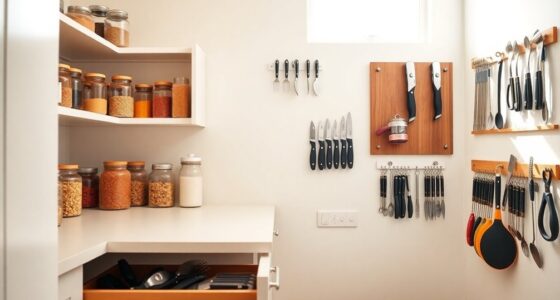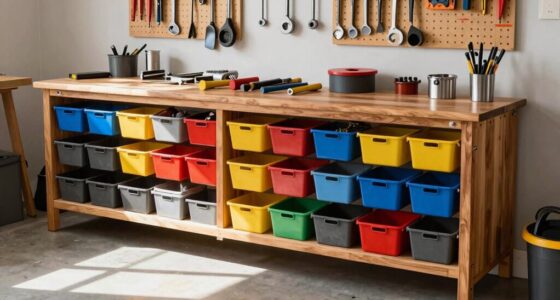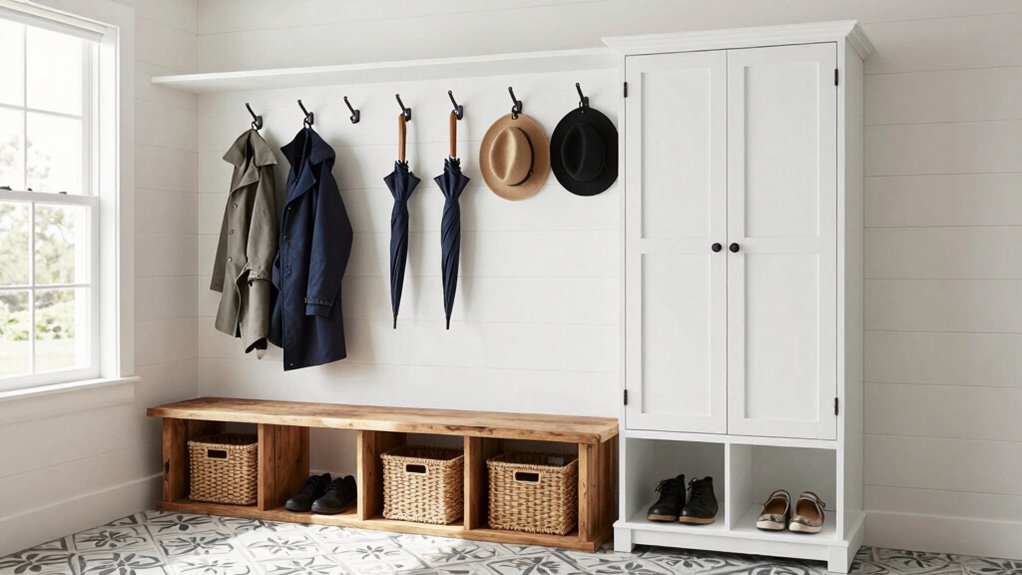

To plan a more functional mudroom from scratch, start by evaluating your daily routines and storage needs, choosing practical options like cubbies, hooks, and benches with hidden compartments. Maximize space by utilizing vertical storage and wall-mounted fixtures, and select durable, eco-friendly materials that resist wear. Incorporate proper lighting for visibility and organization, and assign specific spots for essentials like keys and mail. For smarter organization tips, keep exploring how to create a space that’s both efficient and inviting.

Get furniture and decor delivered free with Prime
- Fast, free delivery on millions of items
- Prime Video, Amazon Music and more included
- Member-only deals all year
Key Takeaways
- Assess daily routines and storage needs, then choose space-efficient solutions like vertical storage and multi-purpose furniture.
- Incorporate labeled baskets, hooks, and designated zones for quick access and clutter prevention.
- Select durable, eco-friendly materials that are easy to maintain and withstand frequent use.
- Enhance visibility with strategic lighting and maximize natural light to create an inviting, functional space.
- Balance aesthetics and practicality by organizing everything with a designated spot for each item to ensure long-term order.
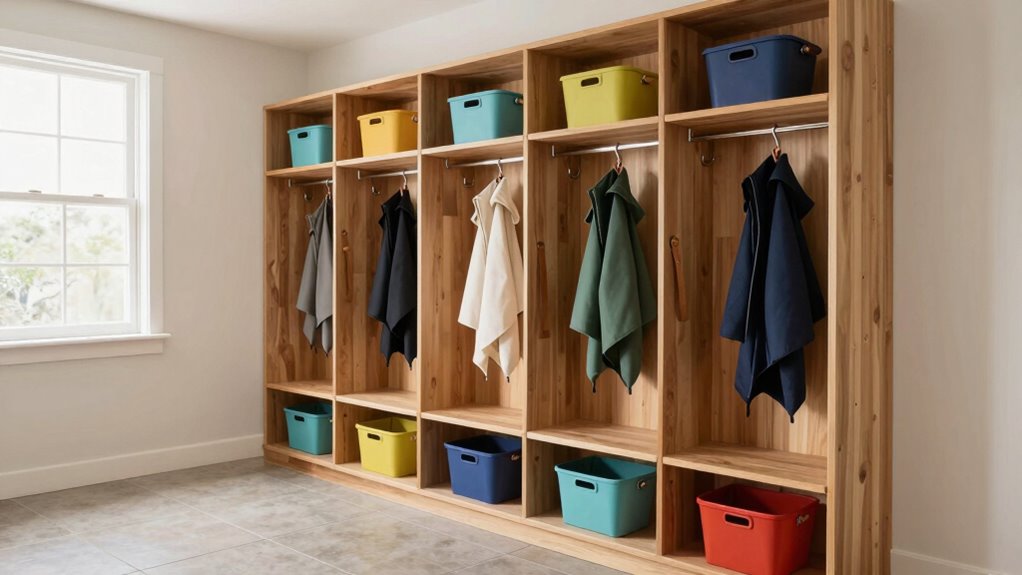
A well-designed mudroom can transform the chaos of daily life into organized simplicity, but planning one from scratch requires careful thought. You need to consider how you’ll manage the influx of coats, shoes, backpacks, and sports gear while maintaining a clean, welcoming space. The key is to focus on effective storage solutions and entryway organization, ensuring everything has a designated spot. Start by evaluating your daily routines and the types of items your family frequently brings in. This will help you determine what storage options are most practical, whether that’s cubbies for shoes, hooks for coats, or benches with built-in compartments for bags.
Next, think about your available space and how to utilize it efficiently. If you have a narrow entryway, vertical storage becomes essential. Wall-mounted hooks and tall, slim cabinets can maximize every inch without cluttering the doorway. For larger areas, incorporate benches with hidden storage underneath—these provide a convenient seat for putting on shoes and a discreet place to stash outdoor gear. Incorporating baskets or bins on open shelves allows you to keep smaller items, like gloves and hats, organized and easily accessible. This creates a tidy appearance and prevents clutter from piling up.
When planning entryway organization, consider how you want your family to access items daily. Position frequently used items at eye level or within easy reach. For instance, install hooks at different heights to accommodate children and adults, making it simple for everyone to put away their belongings without fuss. Labeling bins and baskets can also streamline the process, so each family member knows exactly where to store their items. Don’t forget to include a designated space for mail, keys, and other essentials to prevent them from cluttering countertops or floors. Establishing a systematic approach to organization can help maintain order over time. Additionally, understanding biodiversity and sustainable materials can help you choose eco-friendly options for your storage solutions. Incorporating eco-friendly materials not only benefits the environment but can also improve indoor air quality and durability.
Lighting plays a vital role in making your mudroom functional and inviting. Bright, well-placed fixtures help you quickly find what you need and make the space feel open. If natural light is limited, consider adding LED strip lights under shelves or inside cabinets for better visibility. When designing storage solutions, prioritize durability and ease of maintenance—materials like waterproof laminate or coated metal resist wear and tear over time. Incorporating eco-friendly and sustainable materials can also contribute to a greener home environment.
Ultimately, a successful mudroom balances form and function. By carefully selecting storage solutions and focusing on entryway organization, you create a space that’s both practical and welcoming. With thoughtful planning, your mudroom will become a reliable hub for your daily routines, reducing clutter and making life a little easier for everyone in your household.
mudroom cubbies with hidden storage
As an affiliate, we earn on qualifying purchases.
As an affiliate, we earn on qualifying purchases.
Frequently Asked Questions
What Is the Ideal Size for a Mudroom?
The ideal size for a mudroom depends on your space and needs, but generally, aim for at least 6×8 feet for functionality. You should plan your design layout to include enough storage and seating, while considering lighting options to keep the area bright and welcoming. Prioritize space for coats, shoes, and bags, ensuring easy access and a smooth flow for your daily routines.
How Much Does a Custom Mudroom Typically Cost?
A custom mudroom typically costs between $5,000 and $15,000, depending on size, materials, and design complexity. Cost factors include cabinetry, flooring, lighting, and installation. To manage expenses, set a clear budget early and prioritize essential features. Budgeting tips include choosing durable but affordable materials, combining custom and prefab elements, and working with a contractor who offers transparent pricing. This approach helps you create a functional mudroom without overspending.
Can a Mudroom Be Added to an Existing Home?
Yes, you can add a mudroom to an existing home, transforming your entryway organization and family entry solutions. The process might surprise you, revealing hidden potential in your space. With careful planning, you’ll create a functional area that keeps clutter at bay and enhances your home’s flow. A few strategic modifications can turn an unused corner into a stylish, practical mudroom, seamlessly blending into your current layout.
What Are the Best Materials for Mudroom Flooring?
You should choose durable flooring materials for your mudroom, like ceramic tiles, vinyl, or concrete, since they withstand moisture, mud, and heavy foot traffic. These options are easy to clean and resist damage. For aesthetic options, consider patterned tiles, wood-look vinyl, or stamped concrete to add style. Prioritize durability while selecting a material that complements your overall design, ensuring your mudroom stays both functional and visually appealing.
How Do I Maximize Storage in a Small Mudroom?
To maximize storage in a small mudroom, use vertical space with wall-mounted shelves and hooks for coats, hats, and bags. Incorporate storage solutions like cubbies or slim cabinets to keep shoes organized without clutter. Utilize multi-functional furniture, such as benches with hidden compartments, for seating and extra storage. Follow organization tips by decluttering regularly and assigning specific spots for each item, making it easier to maintain a tidy, efficient space.
Conclusion
By thoughtfully designing your mudroom with practical storage solutions and smart layout choices, you create a welcoming, organized space that simplifies daily routines. Remember, your mudroom is more than just a catch-all; it’s a hub that can set the tone for your entire home. Isn’t it worth investing a little effort now to enjoy a more seamless, clutter-free life every day? With these tips, you’re well on your way to a truly functional mudroom.
Halloween Picks
halloween
As an affiliate, we earn on qualifying purchases.