
TL;DR

Get furniture and decor delivered free — and shop member deals
- Fast, free delivery on millions of items
- Access to Prime Big Deal Days deals on October 6–7
- Prime Video, Amazon Music and more included
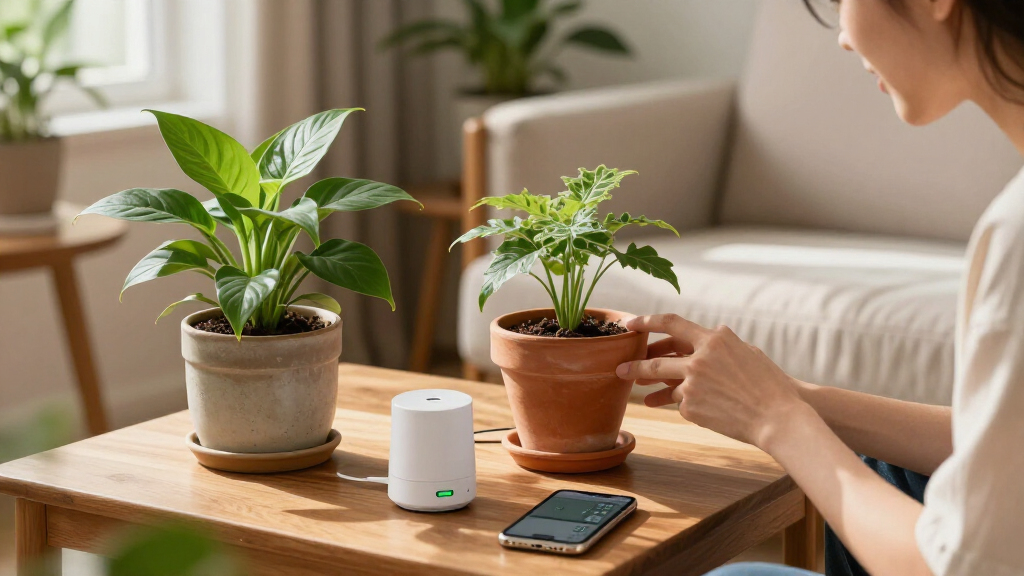
Matter Alpha reports that smart-home climate sensors and a compatible humidifier can help plant owners track indoor humidity and automate adjustments. Soil-moisture products are only beginning to emerge, and Matter devices cannot reliably judge the quality of sunlight a plant receives.
Matter Alpha has published a first-person report describing how Matter-compatible climate sensors and a smart humidifier can help a household monitor conditions for houseplants, while warning that the technology does not yet solve every plant-care problem. The account says soil-moisture support is only starting to appear and that choosing the right light still requires a person to assess the plant’s location.
The writer says they use temperature and humidity sensors around their home to check whether a room’s climate is suited to a plant and to track changes that might help improve its conditions. The report names IKEA’s TIMMERFLOTTE as the writer’s personal favorite, while noting they own one. These experiences are the author’s account, not a controlled test comparing plant growth or device accuracy.
For humidity adjustments, the report describes using a smart humidifier that can turn on when humidity falls and switch off once a chosen level is reached. It gives the SwitchBot Evaporative Humidifier as an example, and says a sensor can also send a notification when the desired level is met. The author notes that a humidifier still needs refilling and periodic cleaning.
Watering is a less settled area. The report says soil-moisture measurement was integrated into Matter 1.5 and that the first products were announced at IFA 2026. In the interim, it points to a Zigbee-based ThirdReality watering kit that can be bridged into a smart-home setup, or a do-it-yourself sensor. It also advises using pots with drainage, since wet soil at the bottom can threaten roots even when the surface looks dry.
Where Automation Helps Plant Care
The practical value described is monitoring and routine control, not a guarantee that plants will thrive. A climate sensor can show whether a room is consistently dry or humid and help an owner decide whether to move a plant or adjust the environment. Automating a humidifier may reduce the need to check conditions and switch the unit on and off manually.
For readers already using Matter devices, the report outlines a way to apply them to a household task without treating automation as a substitute for plant-specific care. Humidity and watering needs differ among plants, and the source provides no universal target levels. Users still need to identify what a particular plant requires, keep equipment maintained, and check whether automated readings and actions are producing suitable conditions.
The limits matter as much as the uses. Matter support does not mean that every plant-care sensor is available or that a system can interpret all relevant growing conditions. The report says light assessment remains outside the capabilities it describes, leaving owners to judge whether a plant receives direct or indirect sunlight.
Matter-compatible indoor climate sensors for plants
As an affiliate, we earn on qualifying purchases.
As an affiliate, we earn on qualifying purchases.
Matter’s Plant-Care Capabilities
The report is a personal account from Matter Alpha, a publication focused on the smart-home standard. It identifies several device types rather than reporting a new product launch or a test of plant outcomes: indoor climate sensors, a smart humidifier, and soil-moisture sensors. The source page also discloses that it may contain affiliate links, so its product examples should be read as recommendations from the author, not independent comparative findings.
According to the report, temperature and humidity monitoring is already useful with available compatible sensors, while soil-moisture measurement is a newer addition to Matter. It describes the first related products as having been announced at IFA 2026. The article does not provide a full list of products, release dates, prices, or compatibility details for those announcements.
“I can see before purchasing a plant if the humidity in a room will not be an ideal fit.”
— Matter Alpha report author
Gaps in Sensors and Evidence
The report does not establish that using these devices improves plant survival or growth, and it gives no measured results, comparison group, or accuracy figures for the products discussed. The climate-sensor examples reflect the author’s experience. Readers should not treat them as proof that a particular setup will suit every species or home.
It is also unclear from the source which soil-moisture products announced at IFA 2026 are available to buy, when they will ship, and how broadly they will work across Matter platforms. The report says light sensors are not designed to distinguish the direct sun and partial sun conditions plants may need; it offers no indication of when that capability might be added. Matter device compatibility and exact automation features can vary by product and smart-home system.
More Soil-Sensing Products Ahead
The next development to watch is whether the soil-moisture products announced at IFA 2026 reach stores and work across the Matter systems consumers use. The report says it expects further coverage of this product category, but does not give a publication date or name confirmed retail launch dates.
For now, the approach described is to monitor humidity where a plant is kept, use a compatible humidifier if conditions call for one, and assess sunlight by observation. Owners considering any device should check its Matter or bridge compatibility, confirm that its controls match their needs, and continue basic care such as watering appropriately, providing drainage, and cleaning humidifiers.
Key Questions
Which Matter devices does the report say can help with houseplants?
It describes temperature and humidity sensors for tracking indoor conditions and a compatible smart humidifier for adjusting humidity. It also discusses soil-moisture sensing as an emerging category.
Can Matter tell whether a plant is getting enough sunlight?
Not according to the report. It says smart-home light sensors are not designed to distinguish direct sun from partial sun, so owners still need to assess the plant’s position and light by observation.
Are Matter soil-moisture sensors widely available?
The report says soil-moisture measurement was integrated into Matter 1.5 and that initial products were announced at IFA 2026. It does not confirm their release dates or broad retail availability.
Does a humidity sensor guarantee healthier plants?
No. The article offers a first-person account and does not report measured plant-growth results. Owners still need to match conditions to each plant and maintain any humidifier or sensor setup.
Source: rss
Fall Picks
fall essentials
As an affiliate, we earn on qualifying purchases.