
TL;DR

Get furniture and decor delivered free with Prime
- Fast, free delivery on millions of items
- Prime Video, Amazon Music and more included
- Member-only deals all year
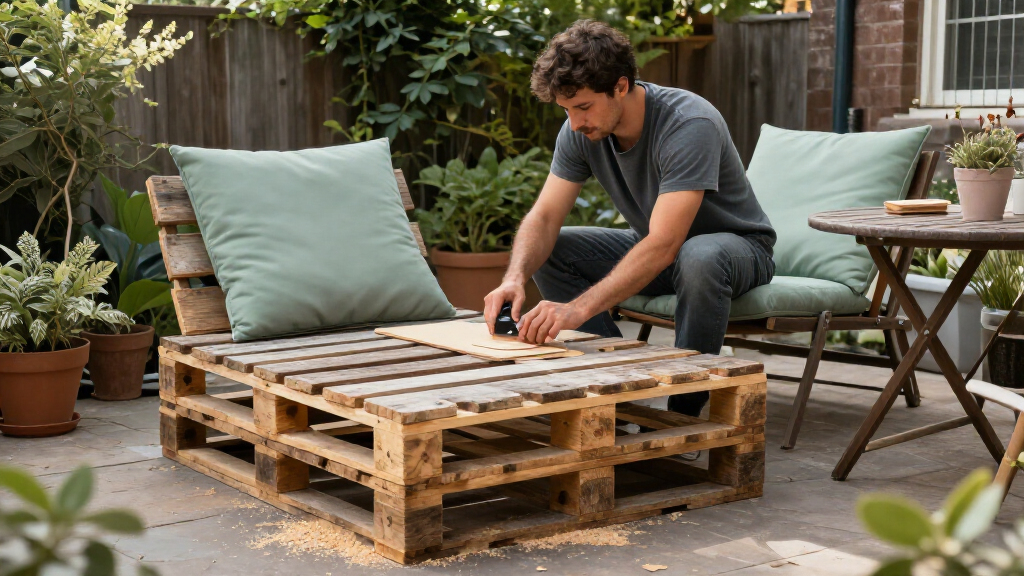
A DIY with Andrew video featured by Hunker shows a patio lounge chair built from reclaimed wood taken from one pallet. The project uses basic tools, but the source says viewers should consult a follow-up video for exact measurements and protect the finished chair from weather.
A DIY with Andrew video shows how to turn wood from one old pallet into a patio lounge chair, according to a report by Hunker. The project offers a lower-cost route to outdoor seating for people who can source reclaimed pallets and already have basic tools, but the chair’s precise dimensions and weather protection require attention.
The build starts by taking apart a pallet with a pry bar and hammer, then sanding the boards, measuring and cutting them with a jigsaw, and fastening the pieces with a drill and wood screws. Hunker says the video moves through the dismantling, sanding, cutting and assembly steps. Its report describes the build as manageable but not quick.
In the design shown, four slats form the seat and three form the backrest. Notches in the seat slats allow them to fit around the armrests and back supports. Andrew uses a speed square to set the angle of the back supports; Hunker estimates the chair appears to recline by about 15 degrees, while suggesting a range of 10 to 15 degrees for a lounge chair.
The project calls for pre-drilling screw holes because, as Hunker explains, thin pallet boards can split. The original video did not provide every measurement, the report says. After viewers raised that issue in comments, Andrew posted a second video with exact dimensions for the individual pieces. Hunker advises recording those measurements before beginning the build.
A Lower-Cost Route to Outdoor Seating
Making a chair from reclaimed wood may help reduce the cost of adding seating to a patio, particularly for people who need more than a pair of chairs. Hunker notes that buying multiple commercial chairs can add up, while the DIY approach may require little spending if the builder already has tools and can obtain pallets at no cost.
That cost comparison is conditional, not a guaranteed price: the source gives no measured project budget, and it does not establish that pallets are free or suitable in every case. Builders may still need to buy wood screws and sandpaper, as well as supplies to seal the chair. The project’s appeal is also practical: it reuses available wood and can be adjusted to suit a patio, although the report does not give tested weight limits or durability results.
Products Worth Considering

Levoit Vital 100S-P Air Purifier with Washable Pre-Filter

Philips Hue Festavia Globe Outdoor String Lights, 32 Bulbs, 91 ft

Philips Hue Festavia 130-Foot Indoor/Outdoor Smart String Lights, 500 LEDs
As an affiliate, we earn on qualifying purchases.
From Pallet Boards to Chair Frame
The Hunker report presents the chair as one example of turning discarded or unused pallet wood into patio furniture. The featured video uses a pile of pallets, which the report says suggests Andrew may be planning a set, but it does not confirm that he completed multiple chairs. The specific demonstration described is a chair built from one pallet.
The process depends on recovering usable boards, preparing their surfaces, and cutting pieces to fit the design. Hunker identifies a pry bar, hammer, sander, tape measure, jigsaw, drill and wood screws among the tools used or needed. It also reports that Andrew’s second video supplies exact piece measurements after viewers said the first video lacked details. The article does not provide those measurements itself.
“The chair is made with four slats for the seat and three slats for the backrest.”
— Hunker, describing the chair design
Measurements and Durability Still Matter
The source does not specify the exact measurements in its own text, provide a complete bill of materials, or state how much the chair costs to build. It points readers to Andrew’s follow-up video for dimensions, but those figures are not reproduced in the report. Hunker’s estimate of an approximately 15-degree recline is an interpretation of the video, not a confirmed measurement.
The report also does not provide load testing, a weight capacity, or evidence about how long the chair lasts in different climates. It says a finish is not shown in the original video and recommends protecting the wood. The type and amount of weatherproofing needed will depend on the product used and the chair’s exposure; the source does not report any test comparing finishes.
Check the Plans Before Cutting
Anyone considering the build should review Andrew’s follow-up video for the piece-by-piece measurements before cutting reclaimed boards, rather than relying on the estimated recline angle in Hunker’s description. The report also recommends pre-drilling holes and applying a protective finish suited to outdoor use.
Hunker says a penetrating marine-grade sealer may need reapplication when water no longer beads on the surface, while a topcoat such as Minwax may need to be reapplied every few years. Those intervals are the report’s general guidance, not a tested maintenance schedule for this particular chair. No further build results or durability updates are included in the source material.
Key Questions
How many pallets does the chair require?
The Hunker report says the demonstration makes a chair from one old wood pallet. The amount of usable wood can vary by pallet.
What tools are needed for the project?
The report lists a pry bar, hammer, sander, tape measure, jigsaw and drill, along with wood screws. It also says the boards need sanding and recommends pre-drilling screw holes.
Where can builders find the exact measurements?
Hunker says Andrew posted a second video with exact measurements after viewers asked for more detail. The report advises checking those dimensions before starting, but does not reproduce them.
Does the finished chair need weatherproofing?
Yes. Hunker says pallet wood can be porous and prone to cracking, and recommends applying an outdoor protective finish. Its report describes both a topcoat and a penetrating marine-grade sealer as options.
Source: hunker.com