To plan a functional kitchen, focus on creating an efficient layout by positioning key appliances within the work triangle—refrigerator, stove, and sink—so you minimize unnecessary steps. Maximize storage with tall cabinets, deep drawers, and strategic zones for spices or small appliances. Keep countertops clear and organize tools for easy access. Thoughtful placement of each element improves flow and comfort. Continue exploring ways to optimize your space for a kitchen that’s both practical and inviting.

Get furniture and decor delivered free with Prime
- Fast, free delivery on millions of items
- Prime Video, Amazon Music and more included
- Member-only deals all year
Key Takeaways
- Design the kitchen around the work triangle connecting the stove, sink, and refrigerator for efficiency.
- Strategically place appliances to ensure easy access while maintaining a clutter-free workspace.
- Maximize storage with tall cabinets, deep drawers, and pull-out shelves to keep essentials organized.
- Optimize space by balancing open areas with dedicated zones for spices, utensils, and small appliances.
- Plan the layout to keep countertops clear, improve flow, and enhance comfort and safety during cooking.
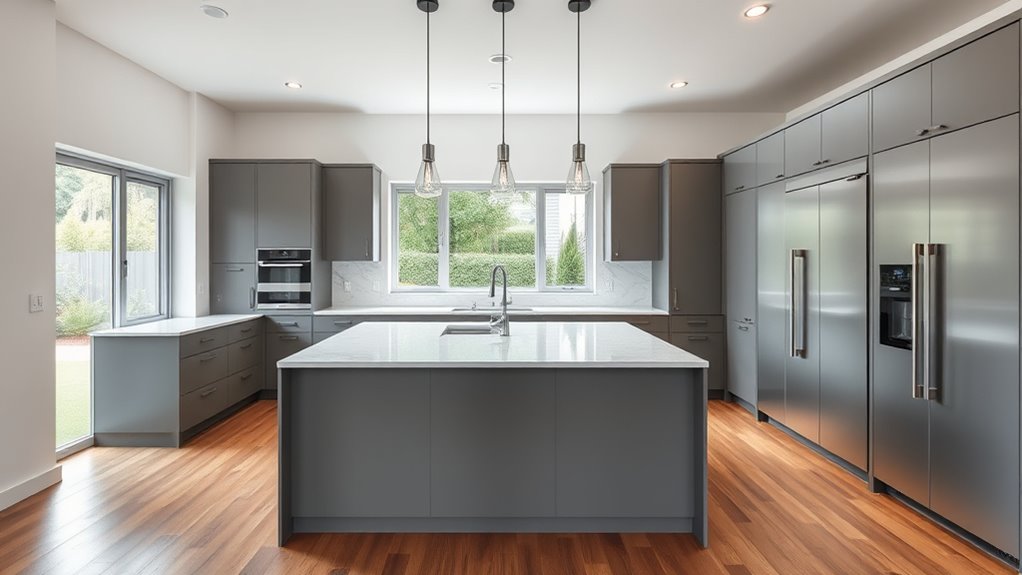
Are you wondering how to create a kitchen layout that maximizes space and efficiency? The key lies in thoughtful planning, especially when it comes to appliance placement and storage solutions. When designing your kitchen, start by considering how you move through the space. The goal is to minimize unnecessary steps and create a smooth workflow, often called the kitchen work triangle, connecting the stove, sink, and refrigerator. Proper appliance placement is essential here; position these key elements so they’re within easy reach of each other without cluttering the workspace. For example, placing the refrigerator near the prep area makes grabbing ingredients quick and effortless, while keeping the oven and cooktop close to the sink streamlines cleaning and cooking tasks.
Create an efficient kitchen with the work triangle: stove, sink, and fridge in easy reach.
Next, focus on storage solutions that keep your kitchen organized and clutter-free. Think vertically—install tall cabinets or open shelves to maximize storage without sacrificing floor space. Use deep drawers for pots, pans, and utensils, so everything is easily accessible and neatly tucked away. Incorporate pull-out shelves or lazy Susans inside cabinets to make better use of corner space. Consider adding hooks or magnetic strips on the walls for frequently used utensils or knives, freeing up drawer space. When planning storage, also think about designated zones—areas for baking supplies, spices, or small appliances—so you can find what you need quickly and keep everything in its place. Additionally, understanding the Prophetic Dreams concept can inspire innovative ideas for organizing your space in a way that feels intuitive and harmonious. Incorporating water-efficient appliances can further enhance your kitchen’s sustainability and reduce utility costs over time.
Efficiency isn’t just about where things are placed; it’s also about how you use your space. A well-designed layout will balance open areas with plenty of storage, preventing your countertops from becoming overwhelmed with gadgets and ingredients. To achieve this, choose storage solutions that suit your habits—like a spice rack near the stove or a pull-out trash bin hidden inside a cabinet. Position small appliances on designated countertop areas or within easy-to-reach cabinets, so they’re accessible but don’t clutter your workspace. This approach not only keeps your kitchen looking tidy but also speeds up meal prep and clean-up. Considering ergonomic design principles can help ensure your kitchen remains comfortable and safe to work in over time.
Ultimately, creating a functional kitchen layout involves a careful blend of appliance placement and smart storage solutions. By thoughtfully arranging your appliances and maximizing storage, you’ll craft a space that’s both efficient and inviting. When every item has a designated spot and everything is within reach, your kitchen becomes a true hub of productivity and comfort. This strategic planning makes cooking more enjoyable, cleaning less stressful, and your entire kitchen feel more organized and spacious. Paying attention to space utilization can further refine your design and enhance overall functionality.
kitchen work triangle appliance set
As an affiliate, we earn on qualifying purchases.
As an affiliate, we earn on qualifying purchases.
Frequently Asked Questions
How Do I Choose the Best Layout for a Small Kitchen?
When choosing the best layout for a small kitchen, focus on maximizing space and efficiency. Opt for compact appliances that save room and keep everything within easy reach. Use light color schemes to make the area feel larger and more open. Consider layouts like the galley or L-shape, which optimize flow. Keep clutter minimal, and plan storage smartly to guarantee your small kitchen feels functional and inviting.
What Are the Latest Trends in Kitchen Layout Designs?
Imagine your kitchen as a stage where innovation takes center stage. Today’s trends highlight sleek kitchen technology and eco-friendly materials, creating a harmonious blend of style and sustainability. You’re embracing smart appliances, hidden storage, and sustainable countertops, making your space both modern and eco-conscious. These designs prioritize efficiency, natural light, and green choices, helping you craft a functional, stylish kitchen that’s ready for the future while reducing your carbon footprint.
How Can I Optimize Storage in My Kitchen Layout?
To optimize storage in your kitchen, focus on smart pantry organization by using clear containers and adjustable shelves. Incorporate innovative cabinet solutions like pull-out shelves, lazy Susans, and vertical dividers to maximize space. Keep frequently used items accessible and declutter regularly. This approach not only enhances functionality but also keeps your kitchen tidy and efficient, making cooking and cleaning more enjoyable.
What Are Common Mistakes to Avoid in Kitchen Planning?
When planning your kitchen, avoid common mistakes like neglecting counter space and poor lighting placement. You might clutter your counters if you don’t plan enough workspace, so prioritize ample counter area. Also, make certain lighting is well-placed to illuminate key areas and prevent shadows. Overlooking these details can make your kitchen less functional and inviting. Focus on a balanced layout that enhances usability, safety, and ambiance for a more enjoyable cooking experience.
How Do I Incorporate an Island Into My Kitchen Design?
Think of your kitchen as a stage, and the island as the central actor. When you incorporate an island, consider ideal island placement to maximize space and flow. Include versatile seating options for family and guests, making it a social hub. I once saw a kitchen where the island became the heart of family gatherings, proving thoughtful placement and seating truly enhance functionality and ambiance.
Conclusion
Think of your kitchen as the heart of your home, where every element beats in harmony. By choosing a layout that fits your needs, you create a space that’s not just functional but also welcoming. When you plan thoughtfully, you’re designing more than just a kitchen—you’re crafting a place where memories will simmer and stories will be served. So, take the time to map out your perfect layout, and let your kitchen become the pulse of your home.
Halloween Picks
halloween
As an affiliate, we earn on qualifying purchases.