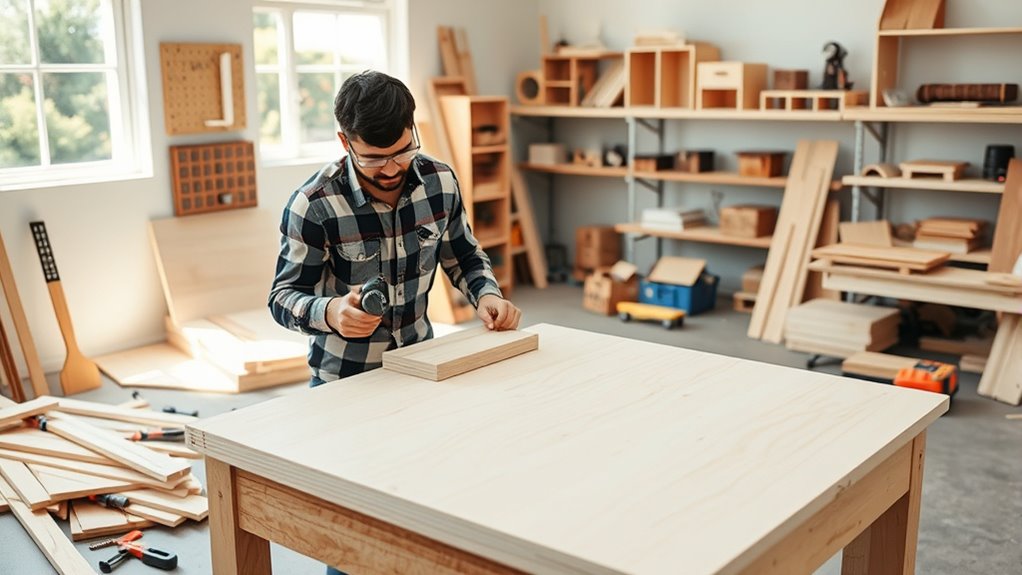

If you’re new to woodworking, start with simple DIY projects like benches or accent chairs that use basic measuring, cutting, and assembly techniques. Using reclaimed wood can add character and keep costs low, while upholstered cushions bring comfort and style. Gather essential tools like a saw, drill, and sander to make the process easier. With these beginner-friendly ideas, you’ll build functional furniture that suits your space—and there’s more to discover for your next project.
Key Takeaways
- Start with beginner-friendly projects like benches or accent chairs using straightforward construction techniques.
- Use reclaimed wood for character, sustainability, and easier sourcing from salvage yards or online suppliers.
- Measure, cut, and assemble components carefully, ensuring proper safety and secure joinery.
- Sand all surfaces thoroughly to eliminate splinters and prepare for finishing touches.
- Add upholstered cushions to enhance comfort and style, customizing fabric and size to match your decor.
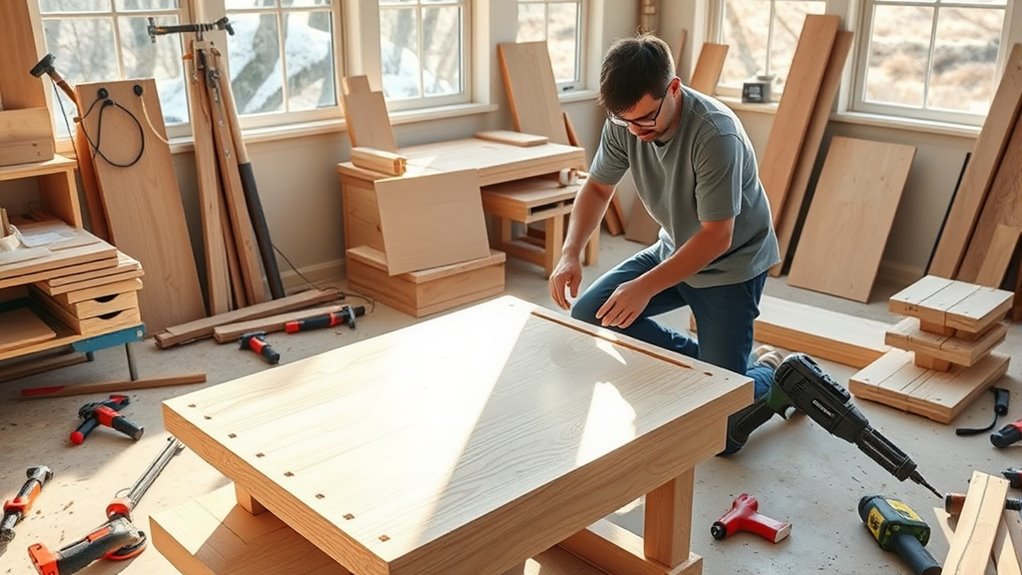
Have you ever considered building your own furniture to save money and customize your space? It’s a rewarding project, especially for beginners, because you get to see your vision come to life with your own hands. Starting with simple pieces like a cozy bench or an accent chair can make a big difference in your home. One of the easiest ways to add comfort and style is by incorporating upholstered cushions. These can be crafted from foam, batting, and fabric, and they’re perfect for giving your furniture a plush, inviting feel. Plus, they’re straightforward to make and attach, making them ideal for novice woodworkers. When combined with reclaimed wood, your pieces not only look stylish but also carry a sense of sustainability and history. Reclaimed wood offers a unique character—knots, imperfections, and aged patina—that can’t be replicated with new lumber. It’s also environmentally friendly, giving new life to materials that might otherwise be discarded.
Getting started with building furniture using reclaimed wood requires a bit of patience and some basic tools, but the process remains accessible. You’ll want to begin by sourcing quality reclaimed wood from local salvage yards or online suppliers. Once you have your materials, plan your project carefully, measuring and sketching your design. For a simple bench, for example, you’ll need a sturdy reclaimed wood plank for the seat, along with legs made from additional reclaimed pieces. Cutting and assembling the parts can be done with a saw, drill, and some wood screws. Sanding the wood smooth is essential to avoid splinters and to prepare it for finishing.
Adding upholstered cushions to your DIY furniture elevates the comfort level considerably. You can make cushions that fit perfectly on your reclaimed wood seat or backrest, customizing the fabric to match your decor. To make the cushions, cut foam to size, wrap it with batting, and cover it with fabric using a staple gun or sewing machine. Attaching the cushions to your furniture is simple—just secure them with upholstery tacks or slip them into a fitted cover. The combination of reclaimed wood’s rustic charm and the softness of upholstered cushions creates a piece that’s both functional and stylish. Your DIY furniture not only saves money but also carries a personal touch that store-bought pieces often lack. It’s a satisfying process, and with a little effort, you’ll end up with furniture that’s uniquely yours, durable, and eco-friendly.

Wood Carving Kit Whittling Kit: Deluxe Wood Carving Tools Knife Set with Leather Case – Woodworking Hobby Kit for Beginners Adults Kids – DIY Art Craft Gift for Men Teens
[Wood Carving Kit Deluxe Edition] BLUVIZO wood carving set provides everything for beginners or professional needs: 4 carving…
As an affiliate, we earn on qualifying purchases.
As an affiliate, we earn on qualifying purchases.
Frequently Asked Questions
What Safety Gear Is Essential for DIY Woodworking Projects?
You should always wear protective eyewear to shield your eyes from wood chips and dust. A dust mask is essential to prevent inhaling sawdust and particles that can harm your lungs. Additionally, consider using ear protection for loud tools and gloves for handling rough or splintered wood. Prioritizing safety gear keeps you protected while you work on your woodworking projects, making the experience safer and more enjoyable.
How Do I Choose the Right Type of Wood for My Project?
When choosing the right wood, consider your project’s purpose and durability needs. Opt for a wood grain selection that matches your design—straight grains are easier to work with. Decide between hardwood and softwood based on strength and cost; hardwoods like oak are sturdy but pricier, while softwoods like pine are easier for beginners. Your choice impacts workability, appearance, and longevity, so pick wisely for the best results.
What Are Common Mistakes to Avoid in Beginner Woodworking?
Think of woodworking as a dance, where every move counts. Avoid common missteps like rushing and skipping proper measuring—precision keeps your project from wobbling. Keep your tools sharp and well-maintained; they’re your partners in this dance. Don’t rush the process, and double-check measurements before cutting. Patience and care transform rough wood into polished art, guiding you smoothly through each project, turning mistakes into lessons.
How Can I Personalize My DIY Furniture Designs?
You can personalize your DIY furniture by experimenting with custom paint finishes to match your style and adding fabric upholstery options for a unique touch. Choose colors and techniques that reflect your personality, like distressed or matte finishes, and select fabrics that complement your space. Don’t be afraid to mix textures and patterns—these details make your piece truly yours. Your creativity is the key to crafting one-of-a-kind furniture.
What Tools Are Necessary for Basic Furniture Building?
A stitch in time saves nine, so start with the essentials. For basic furniture building, you’ll need woodworking hand tools like a hammer, screwdrivers, and chisels. Power tool selection is key, so consider a drill, jigsaw, and circular saw for efficiency. These tools help you craft sturdy, personalized pieces while making the process enjoyable. With the right gear, you’ll confidently turn your ideas into reality.

Working Reclaimed Wood: A Guide for Woodworkers, Makers & Designers
As an affiliate, we earn on qualifying purchases.
As an affiliate, we earn on qualifying purchases.
Conclusion
Now that you’ve got the basics, there’s no limit to what you can create. With just a few simple tools and some determination, you might just build furniture so stunning, it’ll outshine even the finest stores. Remember, every expert was once a beginner—so don’t be afraid to jump in and make mistakes. Before you know it, you’ll be turning your home into a masterpiece of DIY craftsmanship. The only thing stopping you now is your imagination!

Vicatiful High-Density Upholstery Foam Padding (4" x 24" x 72"),Memory Foam for Couch Seat Cushion Replacement, Chair Foam, Square Padding for Seats
High-density foam: An ideal replacement for seat cushions in sofas, patio chairs, benches, golf cart seats, stools, footstools,…
As an affiliate, we earn on qualifying purchases.
As an affiliate, we earn on qualifying purchases.

Lunghaa 6-Frame Premade Accent Wall Molding Kit, Ready-to-Assemble Wainscoting Panels, Pre-Cut Chair Rail Moulding Trim for Home Décor
Premade Wall Molding Kit: Our wall moldings are pre-cut, eliminating the need for tedious cutting and alignment, simplifying…
As an affiliate, we earn on qualifying purchases.
As an affiliate, we earn on qualifying purchases.