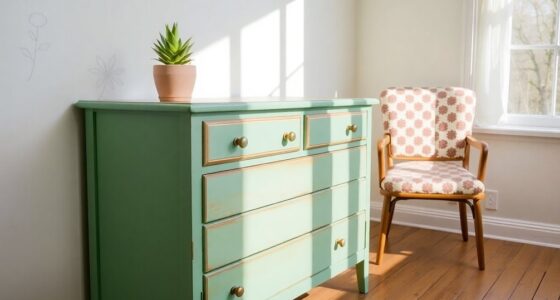
Thrift store treasures are perfect for finding unique and affordable furniture that you can easily transform into stylish, personalized pieces. Don’t overlook worn or outdated fabric, as vintage upholstery can be a charming blank canvas for updates, especially when combined with DIY painting techniques. By evaluating each piece and adding your own creative touch, you turn pre-loved furniture into one-of-a-kind statements. Keep exploring to learn how to make the most of these hidden gems.
Key Takeaways
- Thrift stores are goldmines for unique, affordable furniture with vintage character and endless refurbishment possibilities.
- Assess vintage upholstery carefully; old fabrics can be stripped and updated with modern textiles for a fresh look.
- Use DIY painting techniques like sanding, priming, and distressing to transform furniture cost-effectively.
- Customize pieces with different paint styles, colors, and finishes to match your aesthetic, from shabby chic to sleek modern.
- Proper preparation, including cleaning and surface treatment, ensures a durable, personality-rich refurbished furniture piece.

Thrift stores are goldmines for finding unique and affordable treasures. When you step into one, you’re opening the door to endless possibilities for transforming furniture into statement pieces that reflect your style. One of the most exciting aspects is discovering vintage upholstery that adds character and charm to a piece. These older fabrics often feature intricate patterns, vibrant colors, or textured weaves that can’t be found in modern furniture. If you find a chair or sofa with vintage upholstery that’s worn or outdated, don’t dismiss it right away. Instead, see it as a blank canvas waiting for a fresh look. You can strip away the old fabric and breathe new life into the frame with some simple DIY painting techniques, creating a piece that’s uniquely yours.
Refurbishing vintage upholstery doesn’t always mean replacing it completely. Sometimes, all it takes is carefully removing the old fabric, cleaning the padding, and reupholstering with a modern fabric that complements your decor. But if you’re feeling creative, you can also opt for a DIY painting approach on wooden or metal parts of the furniture. Painting is a cost-effective way to update a piece without losing its vintage charm. When you choose to paint, prep your furniture properly by sanding rough surfaces and applying a primer to ensure the paint adheres smoothly. You can go bold with bright colors or stick to muted tones for a more subtle, distressed look.
The beauty of DIY painting is that it allows you to customize your furniture to match your personal aesthetic. Whether you prefer a shabby chic finish or a sleek, modern coat, you’re in control of the outcome. Using chalk paint or other specialty paints makes the process even easier, often requiring less prep and giving you a smooth, matte finish. After painting, consider distressing the edges or adding a wax finish for that weathered, vintage feel. This technique can make a simple piece look like a treasured antique, adding character and depth. With patience and a bit of creativity, you can turn a thrift store find into a one-of-a-kind masterpiece that’s both functional and full of personality. So, don’t overlook furniture with vintage upholstery or shy away from DIY painting — these are your tools for creating truly unique, refurbished treasures.
Frequently Asked Questions
How Do I Determine the Value of Vintage Furniture?
To determine the value of vintage furniture, start with a vintage appraisal from a professional appraiser or research similar pieces online for a furniture valuation. Consider the piece’s age, condition, brand, and rarity, as these factors influence its worth. Check antique and vintage furniture guides, and compare prices on auction sites or marketplaces. This combined approach helps you accurately assess your furniture’s value and potential resale price.
What Are the Best Tools for Refurbishing Old Furniture?
You should use quality brushes and rollers for smooth paint application, and consider spray guns for larger surfaces. For paint techniques, experiment with distressing, dry brushing, or chalk paint to achieve unique finishes. Hardware selection is essential—choose complementary knobs and pulls to enhance your piece’s style. Always prep surfaces properly, and use primer and sealant for durability. These tools and techniques will help you transform your thrift store find into a stunning, refurbished masterpiece.
How Can I Identify Genuine Antique Pieces?
You can identify genuine antique pieces by examining their craftsmanship, materials, and signs of age. Look for hand-carved details, dovetail joints, and original hardware, which reflect antique restoration techniques. Check for patina, wear in familiar spots, and unique markings indicating historical significance. Research the style and period, and consult antique guides or experts if needed. These clues help confirm authenticity and guarantee you’re investing in true antiques.
What Safety Precautions Should I Take During Refurbishment?
Imagine battling a paint monster in your workshop—safety gear is your armor. Wear gloves, goggles, and a mask to protect against dust, fumes, and splatters. Keep ventilation precautions in mind; open windows and use fans to clear out harmful vapors. Don’t skip these steps, or you’ll end up fighting a different beast—health issues. Stay safe, stay smart, and your furniture will thank you with a gorgeous new look.
How Do I Successfully Negotiate Prices at Thrift Stores?
To successfully negotiate prices at thrift stores, use effective pricing strategies like asking for discounts on multiple items or during sales. Build positive store relationships by being friendly and respectful; staff are more likely to offer deals to regular customers. Show genuine interest in the furniture, and don’t hesitate to politely ask if there’s room for negotiation. Your friendly approach and understanding of store policies can lead to better deals.
Conclusion
Now that you’ve uncovered the hidden gems waiting in thrift stores, it’s time to breathe new life into them. With a little patience and creativity, you turn ordinary pieces into extraordinary treasures—like a painter transforming a blank canvas into a masterpiece. Every refurbished find becomes a story you’ve written with your hands, a reflection of your style. So, keep exploring and refurbishing; your next stunning project is just around the corner, waiting to shine.