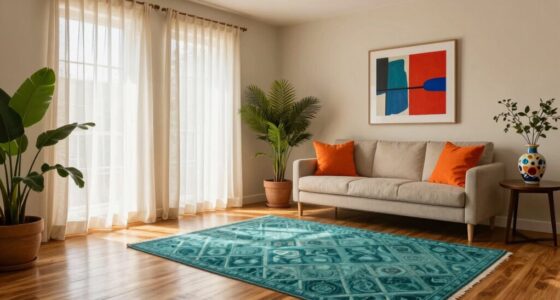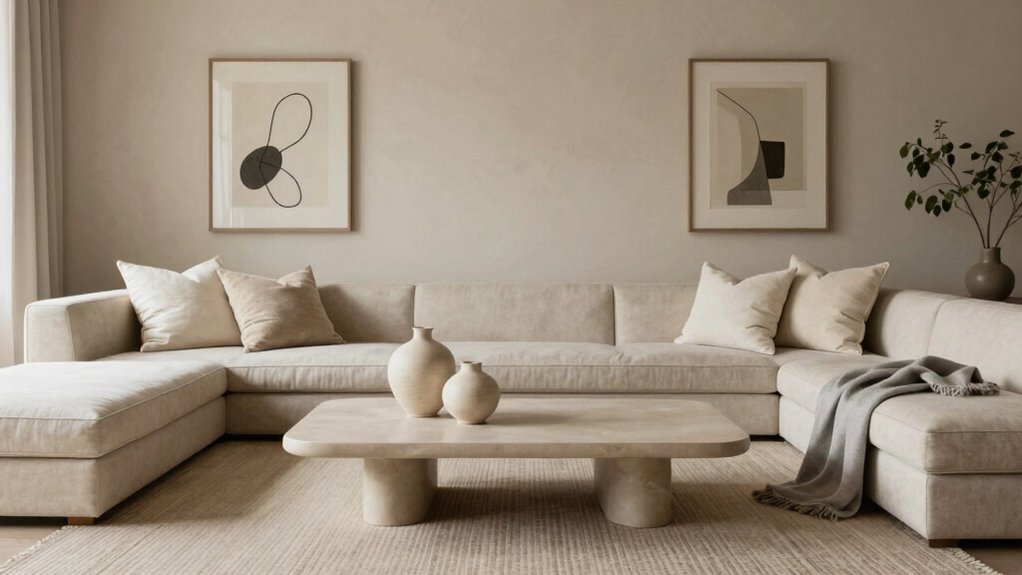
To add depth to your all-neutral home, incorporate textured fabrics like boucle or woven textiles for tactile interest and visual layers. Use layered lighting—ambient, task, and accent—to create shadows and highlights that add dimension. Mix subtle shades of neutrals with different finishes, like matte and gloss, to prevent flatness. Incorporate art and accessories with varied shapes and textures for personality. Continue exploring ways to transform your space into a warm, inviting environment full of visual richness.

Get furniture and decor delivered free with Prime
- Fast, free delivery on millions of items
- Prime Video, Amazon Music and more included
- Member-only deals all year
Key Takeaways
- Incorporate textured fabrics like boucle and velvet to add tactile interest and visual depth.
- Layer different lighting sources, including ambient, task, and accent lights, to create shadows and highlights.
- Use a nuanced neutral palette with varying shades, finishes, and subtle contrasts for a layered look.
- Add art and accessories with diverse textures, shapes, and sizes to create visual focal points.
- Select materials and decorative objects with varied finishes and textures for a cohesive, multi-dimensional environment.
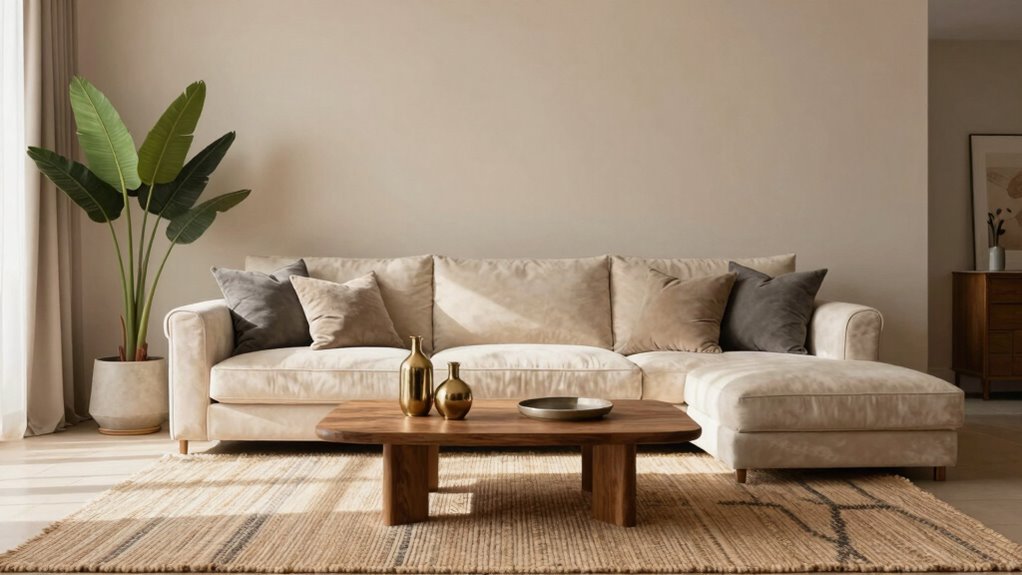
Creating visual interest in an all-neutral home can seem challenging, but with intentional design choices, you can add depth and dimension effortlessly. One of the most effective ways to do this is by incorporating textured fabrics. When you choose materials like chenille, boucle, or woven textiles, you introduce tactile variations that catch the eye and make your space feel layered and inviting. Instead of relying solely on color, you focus on the surface quality of your fabrics to create contrast. For example, pairing a plush velvet sofa with smooth linen throw pillows adds visual complexity. These textures not only break up the monotony but also invite touch, making your home feel richer and more dynamic. Texture variation plays a vital role in creating visual depth within a neutral palette. Layered lighting is another key element in adding depth to your neutral space. Relying on a single light source can flatten a room’s appearance, so you want to diversify your lighting options. Use a combination of ambient, task, and accent lighting to highlight different areas and features. For instance, install a statement chandelier or pendant light for general illumination, then add table lamps or sconces to create cozy pockets of light. Incorporate dimmers to adjust the mood and emphasize textures and architectural details. When you layer your lighting, shadows and highlights emerge naturally, giving your room a three-dimensional feel that shifts with the time of day and your mood. Mixing various shades of neutrals is also essential. Instead of sticking to one tone, combine warm beiges with cool greys or soft taupes. This subtle variation prevents your space from looking flat. You can also add visual interest by playing with finishes—matte, satin, or gloss—on different surfaces. For example, a matte wall paired with glossy trim creates subtle contrast without introducing color. These nuanced differences help your space feel curated and layered, even within a neutral palette. Additionally, incorporating art and accessories thoughtfully can enhance the sense of depth and personality in your environment. Carefully selecting artistic elements with different textures and styles can add visual layers and draw the eye around the room. Incorporating art with texture can further amplify the tactile and visual interest. To elevate the overall aesthetic, consider how material choices influence the perception of depth and richness in your space. Large-scale artwork in monochrome or textured wall hangings can serve as focal points. Use decorative objects with varied shapes and finishes to create visual interest at different heights. When you combine textured fabrics, layered lighting, a nuanced color palette, and thoughtful accessories, your all-neutral home transforms into a space full of depth and personality. It becomes more than just a blank canvas; it’s a thoughtfully curated environment that feels warm, inviting, and endlessly interesting.
Products Worth Considering

LEVOIT Vital 200S-P Smart Air Purifier for Large Rooms, White

Philips Hue Festavia 130-Foot Indoor/Outdoor Smart String Lights, 500 LEDs

Levoit EverestAir-P Smart Air Purifier for Large Rooms
As an affiliate, we earn on qualifying purchases.
Frequently Asked Questions
How Can Texture Influence the Depth of a Neutral-Colored Home?
Texture can markedly influence the depth of your neutral-colored home by creating visual interest through textural contrast and surface variation. You can incorporate different materials like rough stone, sleek wood, or soft fabrics to break up monotony. These textures catch light differently and add layers to your space, making it feel more dynamic and inviting. By intentionally mixing textures, you enhance depth without overwhelming the calm, neutral palette.
What Lighting Techniques Best Enhance Neutral Interior Spaces?
Oh, you’re not just lighting a room; you’re orchestrating a symphony of shadows and highlights. Use layered lighting to add warmth and dimension, avoiding flatness. Accent illumination draws attention to art or architectural features, creating visual interest. Combine ambient, task, and accent lights to make your neutral space feel inviting and dynamic. Remember, good lighting isn’t just functional—it’s the secret sauce that turns bland into breathtaking.
Are There Specific Furniture Styles That Add Depth to Neutral Decor?
You can add depth to your neutral decor by choosing furniture with textured or layered designs. Incorporate accent pillows in varied fabrics and subtle patterns to create visual interest, and add a patterned rug to anchor the space. These furniture styles, combined with textured textiles, bring warmth and dimension, preventing your neutral space from feeling flat. Mixing different materials and prints helps your decor feel sophisticated and inviting.
How Does Artwork Contribute to Creating Depth in Neutral Rooms?
Artwork creates depth by introducing color contrast and serving as focal points that draw your eye. You can choose pieces with bold hues or layered textures that stand out against neutral backgrounds, adding visual interest and emotional warmth. Positioning artwork strategically in key areas amplifies this effect, transforming flat walls into dynamic spaces. Ultimately, artwork enriches your neutral room, making it feel more layered, lively, and inviting.
Can Outdoor Elements Impact the Perceived Depth of an Indoor Neutral Space?
Yes, outdoor elements like outdoor plants and natural materials can considerably impact the perceived depth of your indoor neutral space. Incorporating lush greenery or natural textures brings a sense of dimension and life, creating visual layers that draw the eye inward. You can place outdoor plants near windows or use natural materials like wood or stone in decor elements, making your space feel more expansive and connected to nature.
Conclusion
So, now that you’re armed with tips to breathe life into your all-neutral home, go ahead—dare to be bold! After all, if your walls are going to stay silent, you might as well give them some personality. Who needs color when you’ve got texture and layers? Just remember, the real trick is convincing your furniture it’s a masterpiece, even if it’s just a cozy, understated hero in your monochrome saga. Happy decorating!