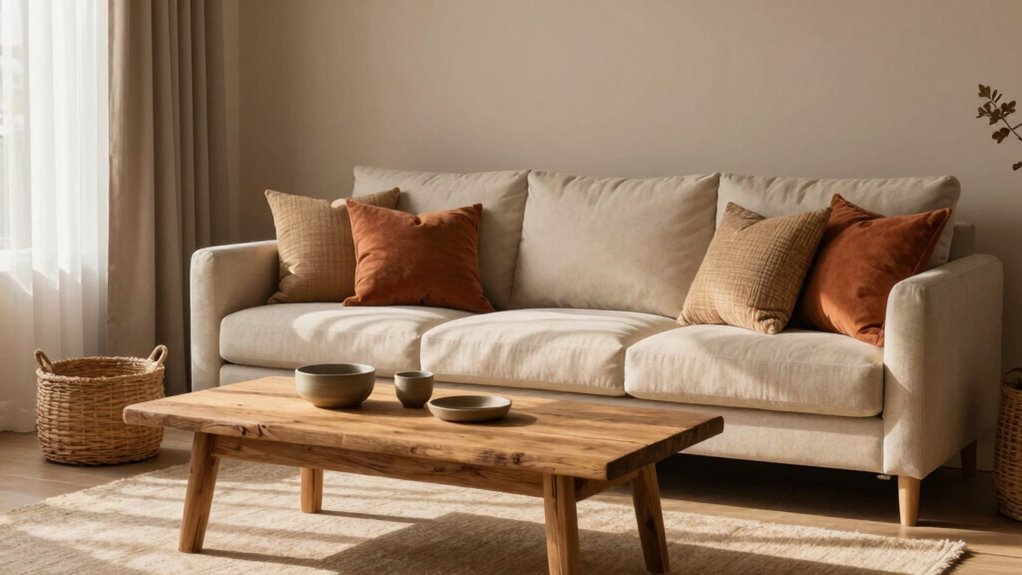

To use earth tones without making a room feel heavy, balance deep hues like terracotta or chocolate with lighter shades such as cream, beige, or muted greens. Incorporate varied textures like woven baskets, linen curtains, and matte wood finishes to add depth without adding weight. Brighten the space with neutral accents and natural elements like plants, which bring freshness and vibrancy. Keep proportions balanced for a cozy, open feel—more tips to help you create a warm, inviting space await.

Get furniture and decor delivered free — and shop member deals
- Fast, free delivery on millions of items
- Access to Prime Big Deal Days deals on October 6–7
- Prime Video, Amazon Music and more included
Key Takeaways
- Balance deep earth tones with light, neutral shades like cream or beige to create an airy, open feel.
- Incorporate contrasting colors and textures to prevent the space from appearing too heavy or dull.
- Use natural elements such as plants and woven baskets to add freshness and organic interest.
- Layer varied textures like linen, ceramics, and matte wood for depth without visual bulk.
- Maintain proportion and harmony by pairing darker shades with lighter accents for a balanced aesthetic.
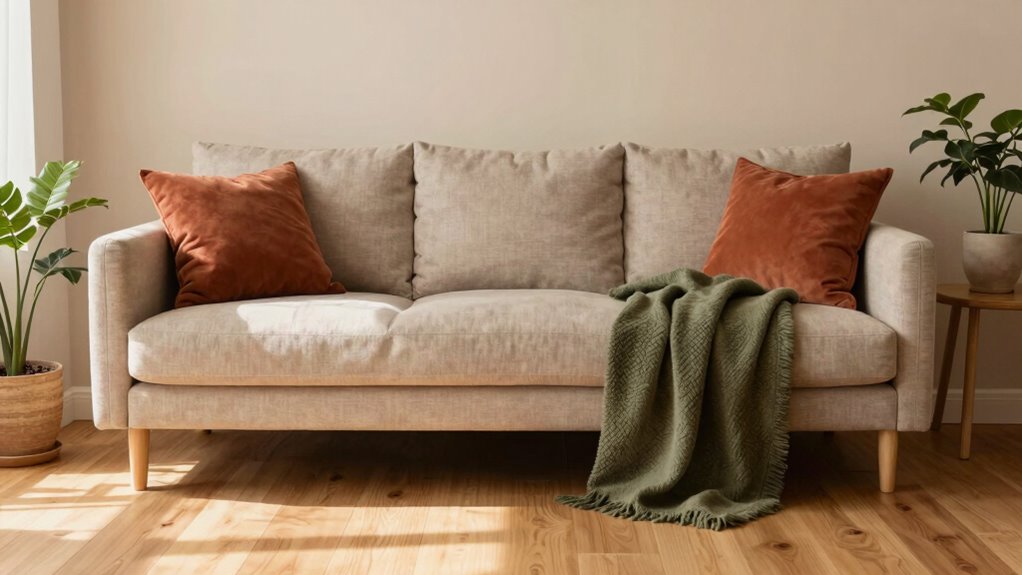
Earth tones bring warmth and natural beauty to any space or outfit, making them a versatile choice for various styles. But if you’re worried about your room feeling heavy or dull when using these colors, there are ways to keep the atmosphere light and inviting. The key lies in thoughtful color pairing and texture integration. Instead of overwhelming your space with too many dark shades, balance them with lighter hues and fresh accents to create a balanced, airy feel.
Balance earth tones with light hues and textures for a warm, inviting, and airy space or outfit.
When it comes to color pairing, you want to think about contrast and harmony. Pair deep, rich earth tones like chocolate brown or terracotta with lighter shades such as cream, soft beige, or muted greens. This contrast prevents your room from feeling weighed down, instead giving it a layered, lively appearance. For outfits, combining a deep olive jacket with a cream-colored shirt creates a sophisticated yet fresh look. In your space, a dark wood coffee table paired with white walls and pale textiles can open up the room visually. The goal is to use earth tones as grounding elements, then brighten the overall palette with lighter, neutral accents to maintain an open, breathable feel. Incorporating natural elements like plants or woven baskets further enhances the organic vibe and helps balance the warmth of earth tones. Understanding color psychology can help you choose shades that evoke the right mood and atmosphere in your space. Recognizing how different shades influence emotions can be a powerful tool in designing a balanced environment. Additionally, paying attention to color proportions ensures that no single tone dominates, maintaining harmony and openness.
Texture integration plays an essential role in keeping earth tones from becoming overwhelming. Incorporate different textures—think rough woven rugs, smooth ceramics, soft linen curtains, and matte wood finishes. These varied surfaces add depth and interest without adding visual heaviness. For example, a leather sofa in a deep brown can be softened with plush cushions in beige or cream. Layering textures keeps the space visually engaging while preventing the colors from feeling too one-dimensional or oppressive. In your wardrobe, mixing textures like a suede jacket with a cotton shirt can elevate your look without making it seem heavy or dull. Adding textural variety ensures the space remains lively and inviting, even with darker shades. Additionally, don’t forget to incorporate natural elements like plants or woven baskets. They not only add visual interest but also bring a fresh, organic vibe that complements earth tones beautifully. Using plants with light green foliage or textured woven baskets adds a touch of nature, which lifts the overall aesthetic and makes the space feel more airy and vibrant.
Ultimately, balancing earth tones through strategic color pairing and texture integration allows you to enjoy their warmth and richness without sacrificing lightness and openness. Play around with contrasting shades, layer different textures, and include natural accents. This approach helps you craft a space or outfit that feels cozy, inviting, and effortlessly stylish—never heavy or overwhelming.
As an affiliate, we earn on qualifying purchases.
Frequently Asked Questions
Can Earth Tones Work in Small Spaces Effectively?
Yes, earth tones work well in small spaces. They create a warm, inviting atmosphere through color psychology, making the room feel cozy without overwhelming it. To keep the space lively, you should incorporate texture layering with different fabrics and surfaces. This adds depth and visual interest, preventing the room from feeling heavy or dull. Use lighter shades of earth tones and strategic accents to keep your small space feeling open and balanced.
What Colors Complement Earth Tones Best?
You’ll find that soft blues, warm terracottas, and muted greens complement earth tones beautifully, creating a soothing color harmony. These shades add depth without overpowering your space. Use accent accessories like cushions or vases in these hues to evoke calm and connection. When you thoughtfully balance earth tones with these complementary colors, your room feels inviting, harmonious, and effortlessly stylish—turning a simple space into a cozy retreat.
How Can I Add Color Without Overwhelming the Room?
You can add color without overwhelming the room by incorporating subtle color accents through pillows, artwork, or small decor pieces. Use texture layering with rugs, throws, and varied fabrics to create visual interest without overpowering the space. Stick to a neutral base, then strategically introduce pops of color to balance warmth and vibrancy. This approach keeps your room lively yet harmonious, preventing it from feeling heavy or cluttered.
Are There Specific Lighting Tips for Earth-Toned Rooms?
To enhance earth-toned rooms, maximize natural light by keeping window treatments light and airy, which brightens the space and highlights the warm hues. Incorporate ambient lighting, like soft overhead fixtures or table lamps with warm bulbs, to create a cozy atmosphere without overpowering the earth tones. Consider layering different light sources to add depth and warmth, making your room inviting and well-balanced.
How Do I Incorporate Patterns With Earth Tones?
You can effortlessly incorporate patterns with earth tones by mixing textures and patterns that complement each other. Start with subtle prints like stripes or florals, then contrast them with textured fabrics like linen or woven rugs. By balancing bold patterns with soft, natural hues, you create visual interest without overwhelming the space. This pattern mixing technique adds depth and personality, making your room inviting and harmonious.
Conclusion
By blending earth tones thoughtfully, you create a warm, inviting haven that feels like a gentle hug from nature itself. Think of these colors as the soft whispers of a forest floor or the calming embrace of a sunset’s glow—subtle yet powerful. When balanced carefully, earth tones transform your space into a serene sanctuary, where each hue dances harmoniously like leaves in the breeze. Embrace their quiet strength, and let your room breathe life and tranquility.
Fall Picks
fall essentials
As an affiliate, we earn on qualifying purchases.