
TL;DR

Get furniture and decor delivered free — and shop member deals
- Fast, free delivery on millions of items
- Access to Prime Big Deal Days deals on October 6–7
- Prime Video, Amazon Music and more included
Teresa van Dongen showcased her work on designing with living systems, focusing on microbial ecosystems that power sustainable and adaptive design. The exhibition highlights her approach to integrating biology into creative processes.
Dutch designer Teresa van Dongen has unveiled her latest work involving designing with living systems during a recent exhibition. Her project centers on integrating microbial ecosystems into creative and functional design, highlighting a shift towards more sustainable and biologically responsive practices. This development underscores a growing interest in biological design approaches within the contemporary design community.
During the exhibition, Teresa van Dongen showcased her exploration of microbial ecosystems as active components in design. She collected samples from a harbor, using these microbes to feed and power electric life forms, demonstrating a novel method of working with living biological processes. Her work aims to foster a symbiotic relationship between humans and microorganisms, emphasizing sustainability and adaptability.
Van Dongen’s approach involves harnessing microbes’ natural functions to create living, responsive environments. Her projects include using microbial activity to influence material properties and develop dynamic, self-sustaining systems. The exhibition featured prototypes and installations that visually and functionally demonstrate these concepts, emphasizing the potential for biology-driven design to address ecological challenges.
She explained that her work is rooted in research into microbial behavior and ecosystems, often involving collecting samples from natural environments like harbors. Her goal is to develop design practices that are not only inspired by living systems but actively incorporate them as collaborators in the creative process, rather than mere inspiration.
Implications of Microbial-Driven Design Approaches
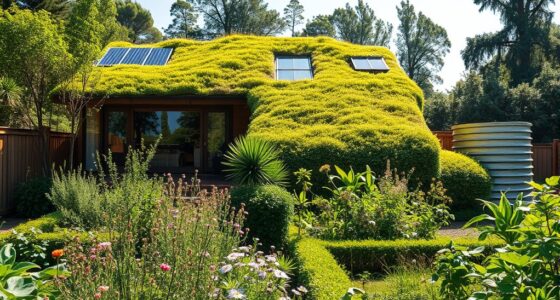
This development highlights a shift towards biologically integrated design that could influence sustainable practices across architecture, product design, and environmental management. By working directly with living systems, designers like Van Dongen are exploring new ways to create adaptable, self-regulating environments that reduce reliance on traditional manufacturing and resource-intensive processes. Such approaches could lead to innovations in eco-friendly materials and living architecture, addressing urgent ecological concerns and promoting resilience.
As an affiliate, we earn on qualifying purchases.
Evolution of Biological Design in Contemporary Practice
Over the past decade, there has been increasing interest in integrating biology into design, driven by advances in synthetic biology, ecology, and materials science. Artists and designers have experimented with living materials, such as algae, fungi, and microbes, to develop sustainable products and environments. Van Dongen’s work continues this trajectory, emphasizing active collaboration with microbial life rather than passive inspiration.
This trend aligns with broader movements toward eco-conscious design and regenerative practices, where the goal is to create systems that sustain and enhance their environments. Her recent exhibition reflects a practical application of these ideas, demonstrating how microbes can power and influence design in real-time.
“Van Dongen’s work exemplifies a new frontier in design—one that actively collaborates with living systems to create sustainable and adaptive environments.”
— an anonymous researcher
Unanswered Questions About Microbial Design Integration
It is not yet clear how scalable Van Dongen’s microbial systems are for broader application outside experimental settings. Questions remain about the long-term stability, control, and safety of working with living organisms in built environments. Additionally, the regulatory and ethical considerations of deploying microbial ecosystems at larger scales are still under discussion, and detailed technical data about her prototypes has not been publicly released.
Future Developments in Living Systems Design
Van Dongen is expected to continue refining her microbial projects, potentially collaborating with research institutions and industry partners to develop scalable prototypes. Further exhibitions and publications may showcase how her principles can be integrated into architectural and product design. Monitoring her work will reveal how biological systems can become practical components in sustainable design solutions.
Key Questions
What is Teresa van Dongen’s main focus in her recent work?
Her main focus is on integrating microbial ecosystems into design processes to create sustainable, adaptive environments that work in harmony with living systems.
How does Van Dongen collect microbes for her projects?
She collects samples from natural environments like harbors, which are then used to feed and power her microbial-based systems, demonstrating a practical use of environmental microbes in design.
Are microbial systems in design currently scalable for commercial use?
It remains unclear how scalable and stable these systems are outside experimental settings. Further research and development are needed before wider commercial application can be considered.
What are the potential benefits of designing with living systems?
Potential benefits include increased sustainability, adaptability, and resilience of built environments, as well as reduced reliance on resource-intensive manufacturing processes.
What challenges does microbial design face?
Challenges include technical stability, safety, regulation, and ethical considerations related to working with living organisms in human environments.
Source: designboom
Fall Picks
fall essentials
As an affiliate, we earn on qualifying purchases.