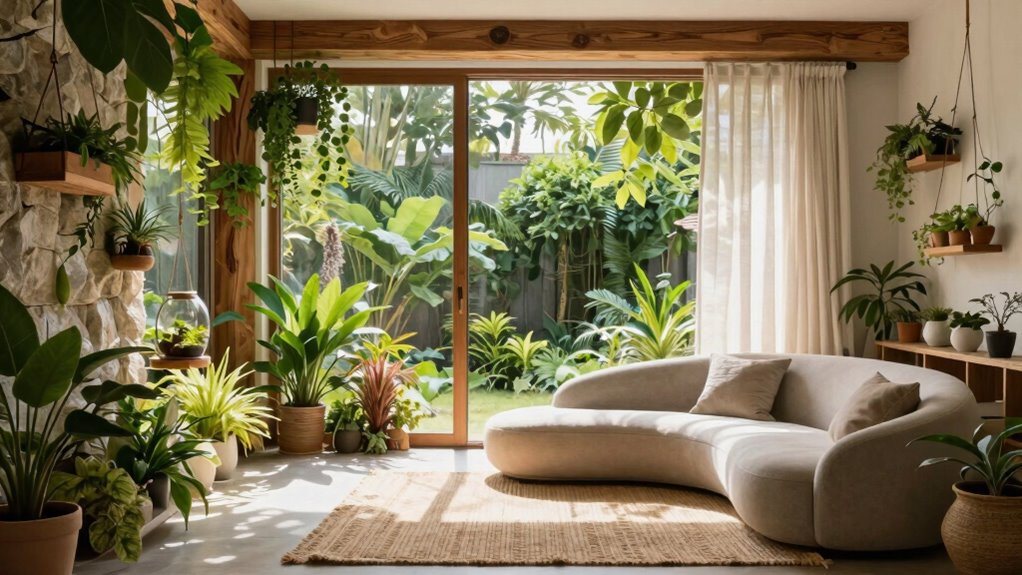

By 2026, biophilic design will be standard in homes, transforming your space into a natural, restorative environment that boosts your wellbeing. You’ll find large windows, skylights, and greenery everywhere, making your home feel vibrant and calming. Natural materials like wood and stone will create warmth, while smart tech makes it easy to customize your environment. This shift enhances your physical and mental health. If you keep going, you’ll discover how these changes can truly redefine your daily living.

Get furniture and decor delivered free with Prime
- Fast, free delivery on millions of items
- Prime Video, Amazon Music and more included
- Member-only deals all year
Key Takeaways
- Emphasis on maximizing natural light through large windows, skylights, and glass doors to boost mood and energy.
- Incorporation of indoor greenery and vertical gardens to improve air quality and create calming environments.
- Use of natural materials like wood and stone to add warmth and foster a connection to nature.
- Integration of smart technology with sustainable design to customize and eco-friendly optimize living spaces.
- Homes evolve into restorative retreats that enhance physical and mental well-being through biophilic principles.
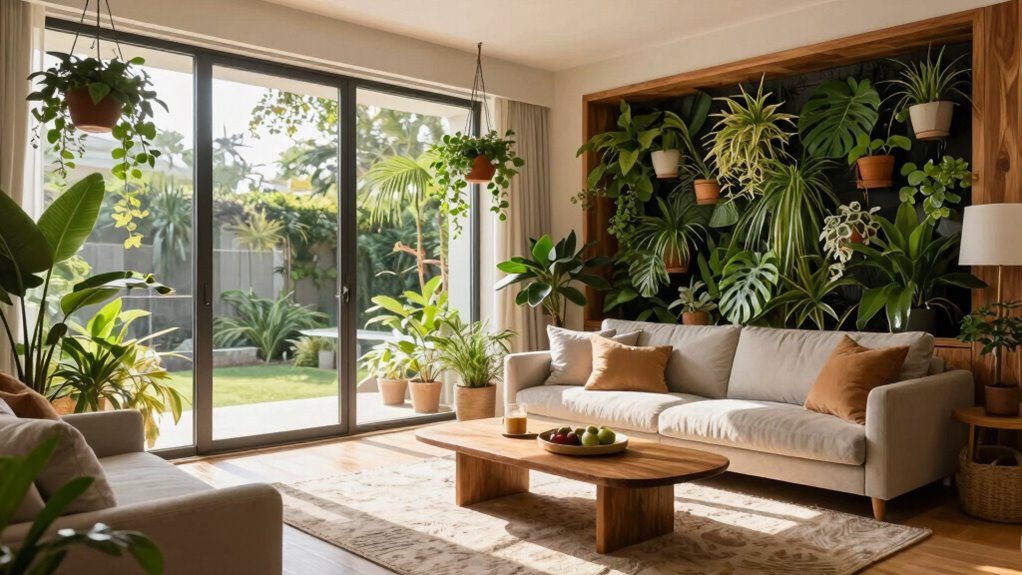
Imagine living in a space that seamlessly connects you with nature, boosting your well-being and reducing stress. That’s the essence of biophilic design, and by 2026, it’s set to transform how you experience your home daily. The future of biophilic design emphasizes natural lighting, which plays a vital role in creating a vibrant, healthy environment. Large windows, skylights, and glass doors aren’t just aesthetic choices—they’re essential tools to flood your space with sunlight, improving mood and regulating your internal clock. As natural light fills your rooms, you’ll notice your energy levels rise and your sleep patterns become more regular, all while reducing your reliance on artificial lighting.
Natural light transforms homes into vibrant, health-boosting spaces that enhance mood and regulate sleep.
Indoor greenery remains a cornerstone of this design philosophy, but by 2026, it’ll go beyond simple potted plants. Expect walls covered in lush, living green installations, vertical gardens that serve as natural art pieces, and even integrated plant systems that filter your air while serving as decorative features. These elements aren’t just for visual appeal—they actively improve air quality, humidity, and overall health. You’ll find yourself drawn to spaces where plants thrive, encouraging you to spend more time in nature-inspired environments and fostering a calming, restorative atmosphere in every room. Additionally, advancements in natural materials will further enhance the tactile and visual connection to the outdoors, supporting the use of sustainable and biodegradable options that align with eco-friendly living. Incorporating biophilic elements can also positively influence your overall sense of well-being by fostering a deeper connection to nature in your daily life.
The integration of natural materials will also reach new heights, with homes incorporating wood, stone, and other organic textures that connect you physically and emotionally to the outdoors. These textures not only add visual warmth but also create tactile experiences that promote relaxation. Expect your living spaces to feature furniture and finishes that echo nature, making your home feel like a sanctuary rather than just a shelter. Incorporating smart technology will further personalize this experience, allowing your environment to adapt seamlessly to your daily needs. As innovations in sustainable design continue to grow, they will support more eco-conscious choices that benefit both your home and the planet.
In the future, biophilic design isn’t just about aesthetics; it’s about transforming your everyday environment into a restorative retreat. By prioritizing natural lighting, indoor greenery, and organic materials, your home becomes a space that nurtures your physical and mental health, helping you feel more connected to the natural world amid modern living.
As an affiliate, we earn on qualifying purchases.
Frequently Asked Questions
How Does Biophilic Design Impact Indoor Air Quality?
Biophilic design improves indoor air quality by actively reducing indoor pollutants through natural ventilation strategies, allowing fresh air to circulate and clear out contaminants. You’ll notice better air quality, thanks to plants that naturally filter toxins and humidity control. This approach fosters a healthier environment, making your home more comfortable and reducing allergy or asthma triggers, ultimately creating a space that’s both connected to nature and safer for your wellbeing.
What Are Cost-Effective Ways to Incorporate Biophilic Elements?
You can incorporate biophilic elements cost-effectively by choosing sustainable materials like bamboo or reclaimed wood for decor and furniture. Start DIY projects such as building your own planters, vertical gardens, or moss walls with affordable supplies. Incorporate natural light by optimizing window placement, and add indoor plants to boost air quality and aesthetics without breaking the bank. These simple steps make biophilic design accessible and eco-friendly for your home.
Can Biophilic Design Improve Mental Health in Homes?
Yes, biophilic design can considerably improve your mental health at home. By maximizing natural lighting, you boost your mood and energy levels, while sensory stimulation from plants and natural textures reduces stress. Incorporating elements like large windows, indoor greenery, and natural materials creates a calming environment. This connection to nature helps you feel more relaxed, focused, and mentally resilient, fostering overall well-being in your daily life.
How to Maintain Biophilic Features Over Time?
To maintain biophilic features over time, focus on lighting optimization by maximizing natural light and adjusting fixtures for energy efficiency. Regularly care for plants and natural materials to guarantee their health and beauty. Prioritize material sustainability by choosing eco-friendly, durable products that age well, and replace or repair components as needed. These practices help preserve the natural ambiance, keeping your home welcoming and connected to nature long-term.
Are There Specific Plants Recommended for Indoor Biophilic Design?
You should choose low-maintenance indoor plants like pothos, snake plants, or ZZ plants for your biophilic decor styles. These plants thrive with minimal indoor plant care, making them perfect for everyday homes. They also add vibrant greenery that enhances your space’s natural feel. Keep in mind, consistent watering and proper lighting are key to maintaining their health over time, ensuring your biophilic features stay lush and inviting.
Conclusion
Embracing biophilic design in your home isn’t just about aesthetics; it’s about reconnecting with nature and nurturing your well-being. Imagine the calming presence of lush greenery and natural light transforming your space into a sanctuary of serenity. As you invite nature inside, you’ll find yourself revitalized, grounded, and inspired. Don’t let your home be a cage—let it be a living, breathing sanctuary that forever reminds you of life’s vibrant beauty.
Halloween Picks
halloween
As an affiliate, we earn on qualifying purchases.