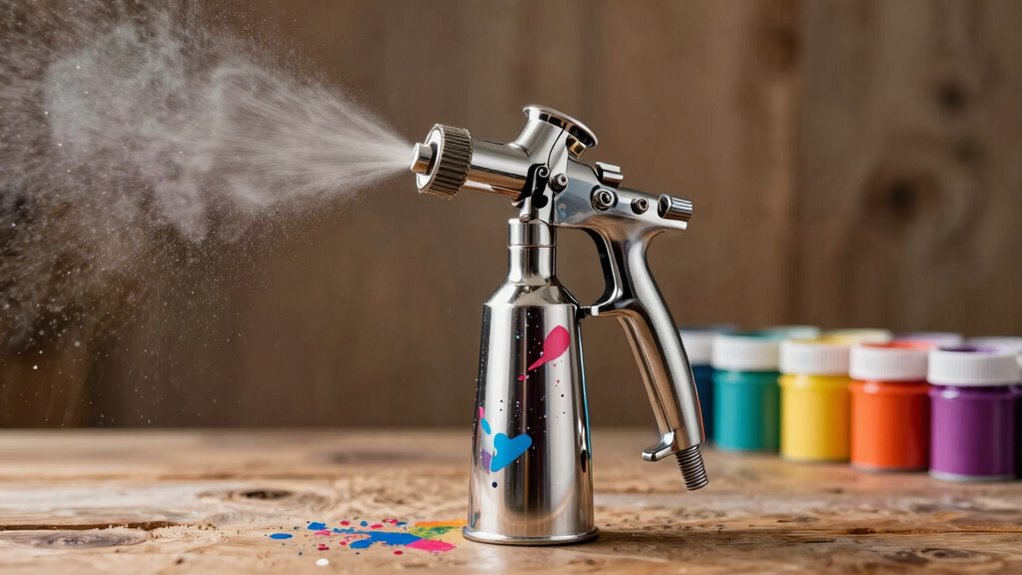

HVLP paint sprayers really shine in more places than you’d think. You can use them for home improvements, furniture refinishing, and even automotive painting. They’re versatile enough for fine arts projects, too. With adjustments for paint viscosity and pressure settings, you’ll achieve a smooth, professional finish every time. Plus, they minimize waste and reduce overspray, making clean-up easier. Stick around to discover even more tips and applications for these incredible tools.

Get furniture and decor delivered free with Prime
- Fast, free delivery on millions of items
- Prime Video, Amazon Music and more included
- Member-only deals all year
Key Takeaways
- HVLP sprayers deliver a professional finish, making them ideal for both large and small projects around the home.
- They’re versatile enough for diverse applications, including furniture refinishing and automotive painting.
- With adjustable settings for paint viscosity, they accommodate a wide range of materials, from thick latex to thin stains.
- Regular maintenance ensures consistent spray patterns and prevents air leaks, enhancing reliability during various tasks.
- Environmental factors like humidity and temperature can be managed for optimal paint adhesion and drying times.

When it comes to achieving a smooth, professional finish in your painting projects, HVLP (High Volume Low Pressure) paint sprayers stand out as a top choice. These tools aren’t just for large-scale jobs; they shine in more places than you’d think. From home improvement tasks to fine arts, their versatility and efficiency make them a valuable addition to your toolkit. You might be surprised at how effectively they can handle various applications, from furniture refinishing to automotive painting.
One of the key advantages of HVLP sprayers is their ability to work with different types of paint viscosity. Whether you’re using a thick latex paint for your walls or a thin stain for a piece of furniture, these sprayers can be adjusted to accommodate your needs. By tweaking the nozzle size and pressure settings, you can achieve an even application without the worry of overspray or drips. This adaptability not only saves time but also minimizes waste, making your projects more cost-effective. Understanding paint viscosity and how it interacts with different sprayer settings can further improve your results. Proper sprayer maintenance also involves checking the seals and filters to ensure consistent spray patterns and prevent air leaks. Additionally, paying attention to the environmental conditions, like humidity and temperature, can influence the quality of your finish and the sprayer’s performance. Knowing how environmental factors impact paint drying and adhesion can help you plan your work for optimal results.
HVLP paint sprayer for furniture refinishing
As an affiliate, we earn on qualifying purchases.
As an affiliate, we earn on qualifying purchases.
Frequently Asked Questions
Can HVLP Sprayers Be Used for Automotive Painting?
Yes, HVLP sprayers can definitely be used for automotive painting. They’re great for achieving smooth automotive finishes with minimal overspray. By mastering proper spray techniques, you can guarantee even coverage and a professional look. Just make sure to adjust the pressure settings for the type of paint you’re using. With the right preparation and technique, you’ll find HVLP sprayers are an excellent choice for your automotive projects.
What Types of Paint Can I Use With HVLP Sprayers?
You can use a variety of paints with HVLP sprayers, and isn’t that exciting? Acrylic paints flow smoothly, while oil-based paints provide durability. You’ll find latex formulations perfect for interior projects, and specialty coatings can create that unique finish you’re after. Just make sure to thin them appropriately for the sprayer to work its magic. With the right paint, you’re set to achieve a flawless finish on any project.
How Do I Clean an HVLP Paint Sprayer After Use?
To clean your HVLP paint sprayer after use, start by flushing it with the appropriate solvent based on the paint type. Use a brush to clean the nozzle and other small parts. For thorough maintenance, disassemble the sprayer following the manufacturer’s instructions. Rinse all components under running water, then dry them completely. Regularly inspect seals and filters to guarantee peak performance. These cleaning techniques and maintenance tips will keep your sprayer in top shape.
Are HVLP Sprayers Suitable for Indoor Use?
Yes, HVLP sprayers are suitable for indoor use, but you need to keep a few things in mind. As the saying goes, “A gust of fresh air does wonders.” Make sure you have good indoor ventilation to help dissipate paint fumes. Opening windows and using fans can create a safer environment. Just remember, while HVLP sprayers minimize overspray, proper ventilation is key to ensuring a comfortable and healthy workspace.
What Is the Average Lifespan of an HVLP Paint Sprayer?
The average lifespan of an HVLP paint sprayer is typically around 5 to 10 years, but it really depends on sprayer maintenance and usage. If you clean it properly after each use and store it well, you’ll extend its life considerably. Factors like the quality of materials, frequency of use, and how well you care for it all play a role. So, treat your sprayer right, and it’ll serve you longer!
Conclusion
In a world where precision meets creativity, HVLP paint sprayers are your secret weapon. Whether you’re revamping furniture or tackling larger projects, these sprayers deliver a smooth finish that transforms surfaces like magic. Don’t underestimate their versatility; they shine in unexpected places, making your DIY dreams come true. Embrace the ease and efficiency, and watch your projects come to life with a professional touch. So grab your sprayer and let your imagination soar!
Columbus Day / Indigenous Peoples' Day Picks
long weekend sales
As an affiliate, we earn on qualifying purchases.