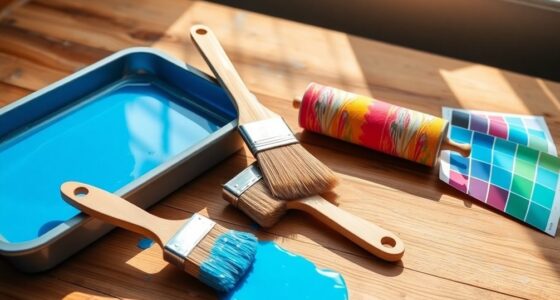
To refresh your kitchen or bathroom on a budget, painting your cabinets is an affordable option. Start by choosing a color that complements your space and test swatches before committing. Clean and sand the surfaces, then apply a primer for better adhesion. Use quality paint and apply multiple thin coats for a smooth finish. Proper prepping and application can make your cabinets look fresh and new—keep going to discover more tips for professional results.
Key Takeaways
- Choose a budget-friendly, stylish color that complements your space and existing elements for a cohesive look.
- Properly clean, sand, and prime cabinets to ensure smooth application and long-lasting paint.
- Use high-quality, durable paint in thin, even coats to achieve a professional finish without extra cost.
- Remove hardware and tape off areas to prevent mess and protect surfaces during painting.
- Allow adequate drying time between coats and finish with proper sealing for a durable, refreshed appearance.
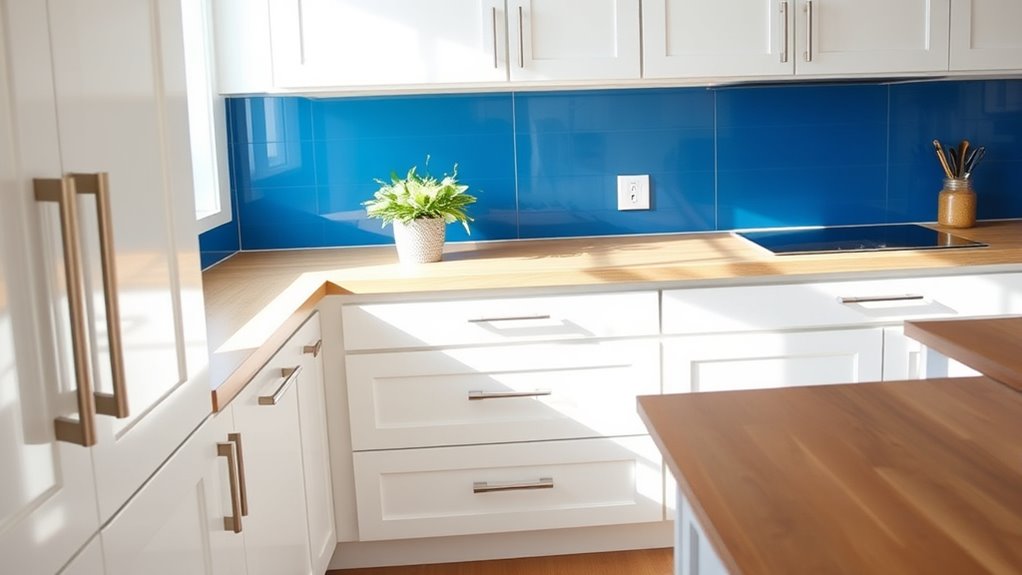
Are your cabinets looking tired or outdated? If so, a fresh coat of paint can dramatically transform your space without draining your wallet. Before diving into the project, the first step is to focus on color selection. Think about the overall vibe you want to create—do you prefer a classic white, a bold navy, or a soft pastel? Consider your kitchen or bathroom’s existing elements, like countertops, flooring, and hardware, to choose a hue that complements rather than clashes. Light colors can make small spaces feel larger and brighter, while darker shades add depth and sophistication. It’s wise to gather paint swatches and test them on your cabinets to see how they look in different lighting throughout the day. Once you settle on a color, you’ll want to pay close attention to prep techniques, which are vital for a smooth, durable finish. Proper preparation ensures your paint adheres well and looks professional. Start by removing all cabinet doors, drawers, and hardware. Clean every surface thoroughly with a degreasing cleaner or a mixture of warm water and mild soap to eliminate grease, dust, and grime. Next, lightly sand the surfaces with fine-grit sandpaper; this creates a slightly rough texture that helps the paint bond better. If your cabinets have a glossy or slick finish, a deglosser or primer designed for glossy surfaces can improve adhesion. Filling any holes, dents, or scratches with wood filler and sanding smooth afterward will give you a flawless base. It’s also essential to tape off areas you don’t want painted, such as walls or countertops, with painter’s tape. Using a high-quality primer suited for your cabinet material is a smart move—it seals the surface and prevents stains or previous colors from bleeding through. Applying primer in thin, even coats with a brush or roller helps achieve a uniform finish. Once the primer dries completely, lightly sand it to smooth out any imperfections before applying your chosen paint. For best results, use a high-quality, durable paint designed for cabinets—either a semi-gloss or satin finish works well for washability and a sleek look. Applying multiple thin coats rather than one thick layer will give you a more even, professional appearance. Remember to allow adequate drying time between coats, and always follow the manufacturer’s instructions. With the right color choice and careful prep techniques, you can breathe new life into your cabinets and enjoy a refreshed, stylish space without the expense of replacement. Additionally, understanding proper prep techniques can significantly impact the longevity and appearance of your finished project.
Frequently Asked Questions
How Long Does Painted Cabinet Finish Typically Last?
Your painted cabinet finish typically lasts 5 to 10 years with proper care. To maximize its lifespan, choose durable paint color choices and update cabinet hardware periodically. Keep in mind that high-traffic areas may cause the paint to wear faster. Regular cleaning and gentle touch-ups help maintain the look, ensuring your refreshed kitchen or bathroom stays vibrant and beautiful for years to come.
What Are the Best Tools for Painting Cabinets?
You’ll want to choose a high-quality brush, like a synthetic or angled brush, for smooth paint application. For primer, use a bonding or stain-blocking type to guarantee durability. Consider foam rollers for larger, flat surfaces and detail brushes for corners and edges. Proper brush selection and the right primer types make your cabinet painting smoother, helping your finish last longer and look professional.
Can I Paint Over Existing Cabinet Finishes?
A stitch in time saves nine, and the same applies to painting cabinets. You can paint over existing finishes if you thoroughly prep your cabinets—clean, sand, and prime properly. Choose the right paint types, like oil-based or high-quality latex, for durability. Proper cabinet prep guarantees your new coat adheres well and lasts longer. Don’t skip steps; it’s the key to a professional-looking, budget-friendly refresh.
How Do I Prevent Brush Marks and Streaks?
To prevent brush marks and streaks, use proper brush stroke techniques like long, even strokes and maintain a wet edge. Apply thin, even coats of paint, avoiding heavy layers that can cause streaking. Use high-quality brushes or foam rollers for smooth application, and follow paint application tips such as sanding between coats and not over-brushing. These steps help achieve a professional-looking finish with minimal brush marks.
Is It Necessary to Remove Cabinet Doors Before Painting?
You don’t have to remove cabinet doors to paint them, but doing so makes achieving a smooth finish easier. Remove cabinet hardware first to prevent paint from sticking and to avoid drips. When painting, consider the paint sheen you want; a semi-gloss or satin finish works best for cabinets. Removing doors also allows you to reach all areas thoroughly, ensuring a professional look that lasts longer.
Conclusion
Painting your cabinets is like giving your kitchen or bathroom a fresh coat of life, transforming dull spaces into vibrant retreats without breaking the bank. With a little effort, you can turn tired cabinets into stunning focal points that brighten your entire home. Think of it as turning a blank canvas into a masterpiece—simple, affordable, and incredibly rewarding. So, roll up your sleeves and start your painting project; your refreshed space is just a brushstroke away.