
TL;DR

Get furniture and decor delivered free with Prime
- Fast, free delivery on millions of items
- Prime Video, Amazon Music and more included
- Member-only deals all year
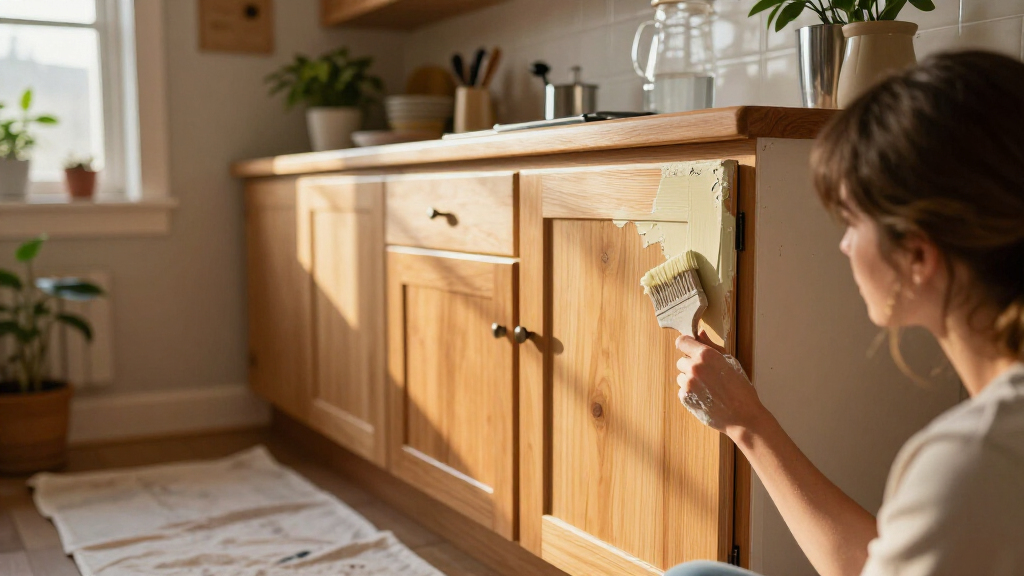
DIY creator Delancey painted honey oak kitchen cabinets bright white to match the walls, giving the room a more unified, contemporary look. Her process included degreasing, sanding, filling the wood grain, priming and applying two coats of cabinet paint; the original report does not independently verify costs or long-term durability.
DIY creator Delancey repainted her honey oak kitchen cabinets bright white to match the walls, according to a renovation video described by Hunker. The makeover shows how changing the cabinet color can make a kitchen feel more cohesive and contemporary without replacing the cabinetry, though the report does not provide independently verified project costs or evidence of how the finish has held up over time.
Hunker reported that Delancey shared the renovation on Instagram, where she described cabinet painting as a change with a “HUGE impact.” In the finished kitchen, the white cabinets blend with the walls rather than contrasting with the honey-colored wood. Hunker said the result made the room feel more spacious and modern, with a modern farmhouse style. Those descriptions are the report’s assessment of the appearance, not measurements of changes to the room.
The process began with removing the doors and drawers, cleaning them with a degreaser and sanding them so primer could adhere to a clean surface. To conceal the visible wood grain, Delancey recommended applying watered-down wood filler, letting it dry and sanding again. She repeated the filling step, adding a slight tint the second time to help show where the filler had been applied, Hunker reported.
For the finish, Delancey recommended using a paint sprayer on the doors and drawers where possible, selecting high-quality cabinet paint and applying two coats. Hunker also listed example supply prices, including roughly $13 for primer, about $10 for wood filler and approximately $50 to $60 for a gallon of cabinet paint. The creator said her sprayer cost about $60. These are figures cited in the report, not a current quote or a full estimate covering every kitchen, tool or preparation need.
How Matching Cabinets Changes the Room
The makeover matters to homeowners weighing a visual update against cabinet replacement. Painting changes the cabinets’ color while leaving their layout and basic structure in place, so it can offer a less extensive route to a different look when the existing units are in usable condition. Hunker characterized the project as cost-effective, but the actual savings will depend on the kitchen’s size, cabinet condition, paint and equipment costs, and whether a homeowner does the work or hires someone.
Matching the cabinet and wall colors can also reduce visual contrast between those surfaces. In Delancey’s kitchen, the shared white finish created a more continuous appearance, according to Hunker. That approach is not the only option: the report says a homeowner could choose a cabinet color a shade or two lighter or darker than the walls to retain some distinction while keeping the palette coordinated.
The trade-off is the labor involved in surface preparation and finishing. Cleaning, sanding, filling grain, priming and applying multiple coats take time, and skipping preparation could affect how the paint adheres or looks. The source gives a creator’s process and an example makeover, not comparative testing against other finishes or a guarantee that the same result will follow in every kitchen.
cabinet paint sprayer for kitchen cabinets
As an affiliate, we earn on qualifying purchases.
As an affiliate, we earn on qualifying purchases.
From Oak Finish to Painted Cabinets
The Hunker report focuses on one kitchen renovation video by Instagram user @delancey.diy. Its central design choice was to paint the cabinets to match the walls, rather than replace them or leave the wood grain visible. Delancey chose bright white; the report says the same matching principle could be used with other wall colors.
The source frames the work as a do-it-yourself project and supplies approximate prices for several products and a sprayer. It does not identify the full quantity of materials used, the kitchen’s dimensions, the total hours spent or the condition of the cabinets before work began. The listed amounts should be read as examples from the report, not a complete budget or a guarantee of present-day retail prices.
Preparation is a major part of the method described. Degreasing and sanding address the surface before primer, while repeated filler and sanding aim to hide the oak grain. The report says Delancey used a sprayer for a more even result on doors and drawers, but it does not specify the paint brand or provide technical details such as drying times and curing conditions.
“If you’ve been wanting to change up your kitchen, painting your cabinets has a HUGE impact.”
— Delancey, in the video caption quoted by Hunker
Costs and Finish Durability Remain Unknown
The source does not say when the video was posted, how long the project took or what the complete project cost. Its supply prices are approximate examples, and the total could vary with cabinet area, materials already on hand, the choice of paint and whether equipment is rented or purchased.
Hunker does not report how the painted cabinets have performed after regular kitchen use. There is no information about chipping, cleaning, moisture exposure, maintenance or the finish’s lifespan. The article also does not establish whether the cabinets were in sound condition before painting or whether the creator used the same approach on cabinet frames as on removable doors and drawers.
The makeover is one example, not a controlled comparison proving that painting will make every kitchen look larger or more expensive. Hunker’s comments about a spacious, contemporary appearance describe the result in this particular room. Readers would need to assess their own cabinet condition, desired finish and project requirements before treating the video as a plan for their kitchen.
What Homeowners Should Check Before Painting
The report does not announce a follow-up project, new product release or further test of Delancey’s finish. For readers considering the same look, the practical next step is to check the cabinets’ condition and plan the full sequence before starting: remove doors and drawers, clean away grease, sand, address visible grain if desired, prime and apply cabinet paint in coats according to the product instructions.
Homeowners should also calculate materials and equipment for their own kitchen rather than rely on the report’s example prices. The finished appearance will depend on factors the source does not quantify, including the chosen paint, the surface preparation and the amount of cabinet area. Delancey’s described process offers a reference point, but it does not establish a guaranteed result or long-term performance.
Key Questions
What did Delancey change in her kitchen?
She painted the honey oak cabinets bright white to match the walls, according to Hunker’s report on her renovation video.
How did she prepare the cabinets?
The reported method was to remove the doors and drawers, degrease and sand them, then use watered-down wood filler and sand again to help conceal the grain before priming.
How much did the project cost?
Hunker cited approximate prices of $13 for primer, $10 for wood filler and $50 to $60 for cabinet paint, along with a sprayer Delancey said cost about $60. The report does not give a complete project total, and the figures may not reflect current prices.
Does matching cabinet paint to the walls make every kitchen look larger?
No such general result is established by the report. Hunker said Delancey’s kitchen felt more spacious and contemporary after the cabinets and walls were painted to match, but that is a description of one makeover, not a guarantee for other rooms.
How long will the painted finish last?
The source does not provide follow-up information on durability, cleaning, chipping or maintenance. It describes the preparation and painting steps but does not verify how the finish performed over time.
Source: rss
Fall Picks
fall essentials
As an affiliate, we earn on qualifying purchases.