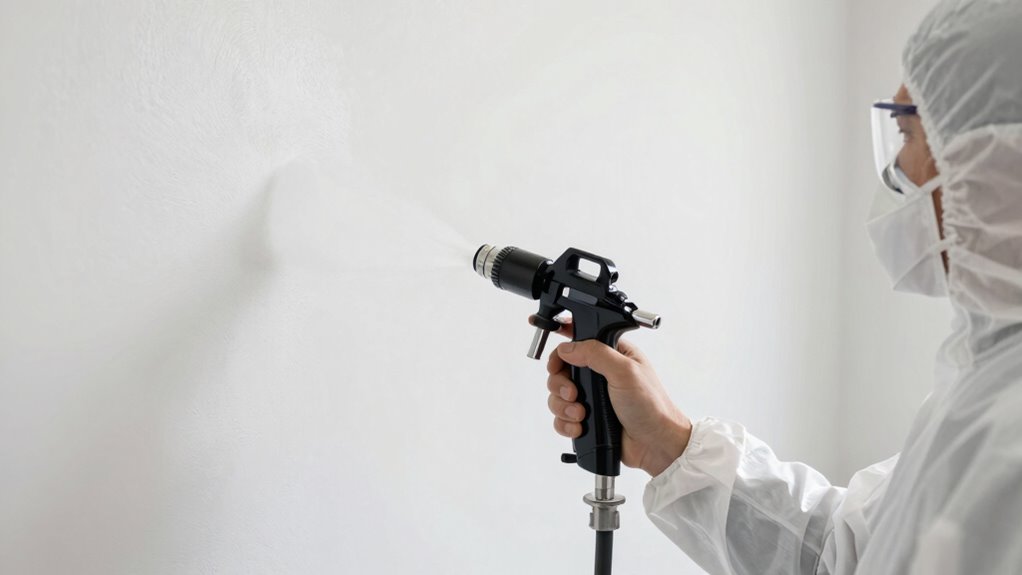

To achieve a clean finish with an airless paint sprayer, you’ll want to understand how it works. It uses high pressure to atomize paint into tiny droplets for even coverage, reducing drips and streaks. Proper setup, consistent technique, and safety precautions are key to avoiding mistakes. Regular maintenance keeps your sprayer running smoothly. Keep these tips in mind, and you’ll discover more ways to get professional results with ease.

Get furniture and decor delivered free with Prime
- Fast, free delivery on millions of items
- Prime Video, Amazon Music and more included
- Member-only deals all year
Key Takeaways
- Adjust pressure settings appropriately to prevent overspray and ensure a smooth, even coat.
- Maintain a proper distance and overlapping passes for consistent coverage.
- Regularly clean and inspect nozzles, filters, and hoses to avoid clogs and uneven spray.
- Test spray on scrap material to fine-tune technique and spray pattern before working on the main surface.
- Use protective gear and proper ventilation to ensure safety and a clean, disaster-free finish.
As an affiliate, we earn on qualifying purchases.
How Do Airless Paint Sprayers Work, and Why Should You Use One?

Airless paint sprayers work by using high pressure to force paint through a small nozzle, creating a fine, even spray. This process guarantees consistent paint flow, which helps achieve smooth coverage without brush marks. consistent paint flow ensures a uniform application and reduces the likelihood of streaks. The spray pattern can be easily adjusted to suit different surfaces and project sizes, giving you control over the finish. Because the paint is atomized into tiny droplets, it covers surfaces quickly and evenly. This efficiency reduces your painting time and effort. Plus, the even spray pattern minimizes drips and uneven coating, delivering a professional look. Using an airless sprayer is ideal for large projects, exterior walls, or any surface requiring a uniform, high-quality finish. It’s a smart choice for those seeking efficiency and a flawless result. Additionally, understanding paint atomization enhances your ability to achieve a smooth, professional finish. The atomization process breaks down the paint into fine particles, which contributes to the smoothness and quality of the final coat. Moreover, the market options for airless paint sprayers provide a range of models suited for various budgets and project complexities, making it accessible for DIYers and professionals alike.
How to Operate Your Airless Paint Sprayer Safely and Effectively
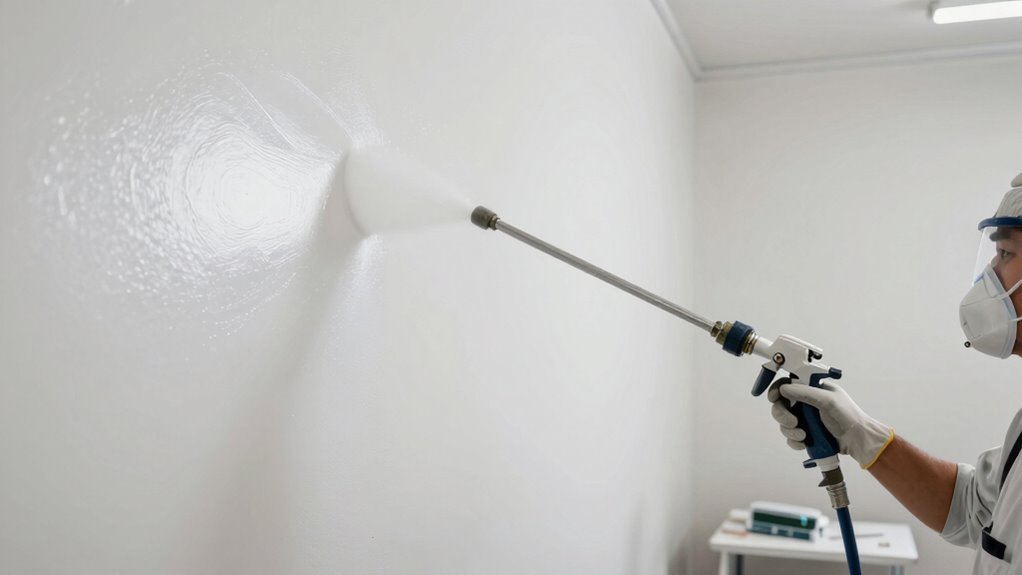
To operate your airless paint sprayer safely and effectively, you need to understand proper setup and handling techniques. Start by wearing safety precautions like goggles and a mask to protect against overspray and fumes. Maintain ergonomic techniques by keeping a steady stance and using your whole body, not just your wrist, to control the sprayer. Adjust the pressure settings to match the surface and type of paint, preventing drips or uneven coats. Always test spray on a scrap piece first to ensure consistent flow. Keep a firm grip, and avoid rushing the job—slow, controlled movements produce a smooth finish. Regularly check hoses and connections for leaks. Being aware of equipment maintenance and proper handling practices ensures the longevity of your tools and safety during operation. Additionally, understanding proper handling techniques can help prevent fatigue and strain during extended use. Proper tool handling techniques also help minimize accidents and improve the quality of your work. Incorporating correct setup procedures from the start can prevent many common issues and enhance overall results. Paying attention to operator safety measures further reduces risk and promotes a secure working environment. Following these safety precautions and ergonomic practices guarantees efficient operation and a professional-looking result.
Preparing Your Equipment and Workspace for a Flawless Finish

Getting your equipment and workspace ready sets the stage for a smooth painting project. First, gather all necessary safety gear, including gloves, goggles, and a mask, to protect yourself from paint fumes and splatters. Make certain your workspace is well-ventilated and free of clutter to prevent accidents and make movement easier. Set up a drop cloth or plastic sheeting to cover surfaces and floors, catching any overspray. Check your airless sprayer for proper assembly, clean it thoroughly, and inspect hoses and nozzles for damage. Organize your paint and tools nearby for quick access. A clean, well-prepared workspace combined with the right safety gear helps you work efficiently and reduces the risk of mishaps, leading to a flawless finish. Pay attention to equipment maintenance to ensure consistent performance throughout your project.
Common Mistakes to Avoid for a Professional Look
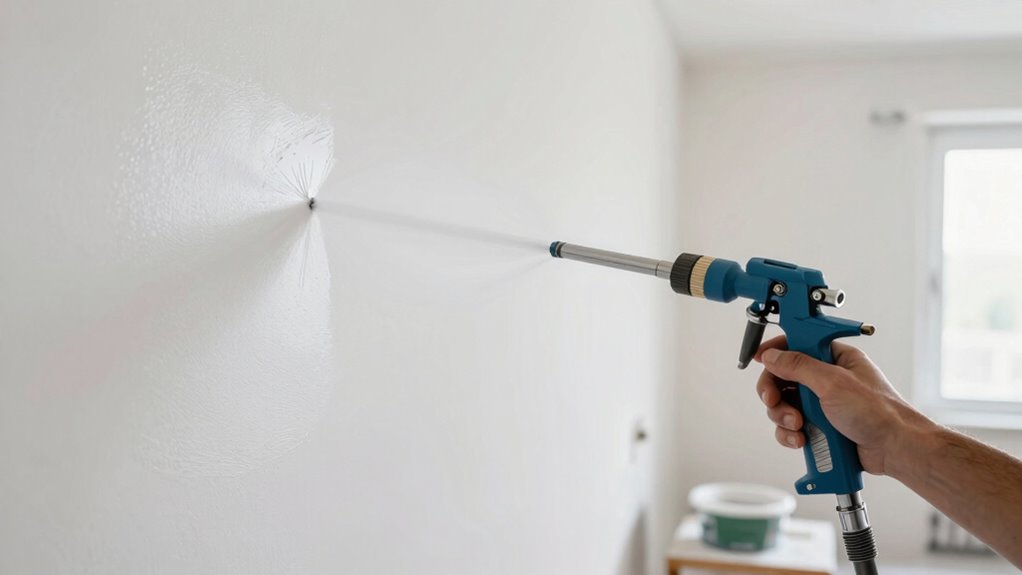
Avoiding common mistakes is essential to achieving a professional-looking finish with your airless paint sprayer. One mistake to watch out for is creating visible brush strokes, which can happen if you move too slowly or hold the sprayer too close. Keep your spray at a consistent distance and maintain steady, overlapping passes for a smooth coat. Additionally, poor color mixing can lead to uneven color and streaks. Always stir or mix your paint thoroughly before spraying to ensure uniformity. Rushing the process or stopping mid-spray can cause inconsistencies and lap marks. Take your time, apply even pressure, and keep your technique steady. Proper technique is crucial for a flawless finish. Understanding electric power generation with bike generators can help you appreciate the importance of steady effort and consistent application in your painting process. Developing a good spraying rhythm can also improve your results by maintaining even coverage and reducing fatigue. Consistently monitoring your spray pattern and adjusting your technique as needed can prevent common issues. By avoiding these pitfalls, you’ll achieve a clean, professional finish without the mess or disaster.
Troubleshooting and Maintenance Tips for Your Airless Sprayer
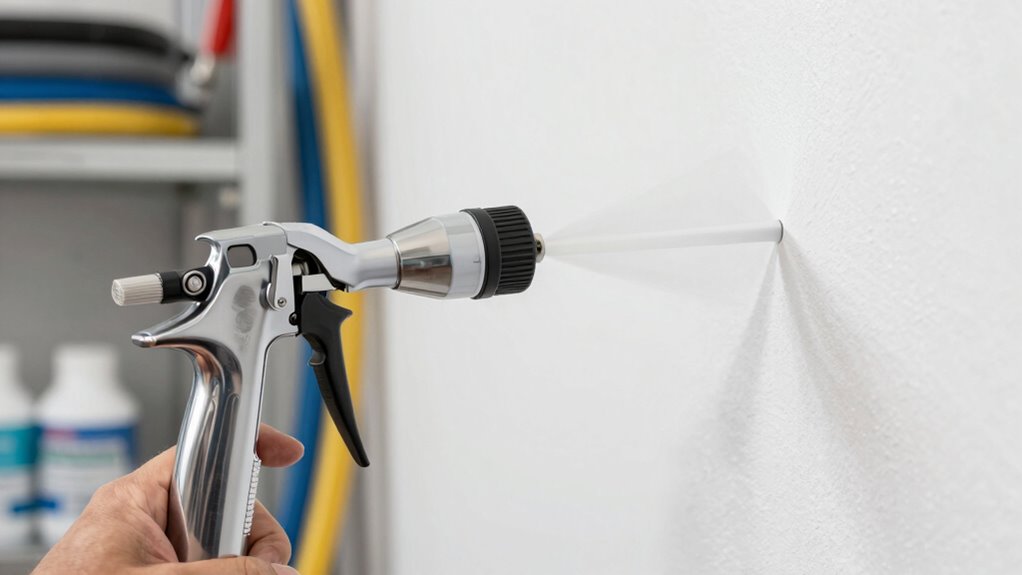
Regular troubleshooting and maintenance are essential to keep your airless paint sprayer operating smoothly and extend its lifespan. To prevent paint nozzle issues, regularly clean the nozzle after each use and check for clogs or buildup. If you notice uneven spray patterns or drips, the nozzle might be blocked. For hose clogs, inspect the hose for debris or paint buildup and flush it out with solvent if needed. Keep the filters clean to avoid airflow restrictions. Filtration and pump protection play a crucial role in maintaining consistent paint flow and preventing damage to your equipment. Always relieve pressure before maintenance and store the sprayer properly. Regularly inspecting and cleaning your equipment minimizes downtime and ensures consistent performance. Addressing issues promptly saves you time and prevents costly repairs, so make routine maintenance a habit for ideal results. Incorporating sound therapy techniques into your maintenance routine can help you stay attentive to potential issues early on. Additionally, understanding the free floating nature of certain components can aid in more effective troubleshooting. Proper equipment calibration ensures your sprayer operates at optimal settings, reducing waste and improving finish quality.
Frequently Asked Questions
What Types of Paints Are Compatible With Airless Sprayers?
You can use latex, acrylic, and oil-based paints with your airless sprayer, but make certain the paint has the right consistency for smooth application. Thinning thick paints improves flow, reducing clogs and splatters. Proper surface preparation is key; clean, dry surfaces help paint adhere better. Always check manufacturer recommendations to confirm compatibility, and strain your paint to prevent debris from clogging the sprayer, ensuring a clean, professional finish every time.
How Do I Choose the Right Nozzle Size for My Project?
Choosing the right nozzle size depends on your project requirements and the type of finish you want. Larger nozzles spray more paint quickly, ideal for large surfaces like walls. Smaller nozzles offer more control, perfect for detail work. Consider the paint thickness and surface area, then select a nozzle that balances coverage with precision. This way, your project flows smoothly, and your finish stays clean and professional.
Can I Use an Airless Sprayer for Staining or Sealing?
Yes, you can use an airless sprayer for staining and sealing. Just make certain you select the right nozzle size for your staining techniques and sealing applications, typically a smaller tip for better control and smooth finish. Keep the pressure moderate to avoid overspray, and test on a small area first. Proper preparation and technique will give you a professional look with even stain or seal coat coverage.
What Safety Gear Is Recommended During Operation?
You should wear protective clothing and eye protection when operating an airless paint sprayer. Protective clothing shields your skin from accidental splatters, while eye protection prevents paint or debris from getting into your eyes. Always use a mask or respirator if spraying for extended periods or working with fumes. Wearing the right safety gear helps prevent injuries and makes for a safer, cleaner painting experience.
How Do I Store My Airless Sprayer Properly Between Projects?
Ever wonder how to keep your airless sprayer in top shape between projects? To store it properly, follow simple storage tips like cleaning all parts thoroughly and draining remaining paint. Keep the sprayer in a dry, cool place to prevent rust. Regular maintenance routines, such as inspecting hoses and replacing worn seals, ensure longevity. Proper storage maintains performance and extends your sprayer’s life, making future projects smoother and more efficient.
Conclusion
So, after all that, you might think mastering an airless sprayer is a breeze. But beware—it’s easy to turn a sleek finish into a splattered mess if you’re not careful. Ironically, the very tools designed for perfection can cause chaos if mishandled. With patience and attention to detail, you’ll avoid disaster and achieve that flawless look. Or, you know, keep spraying and see how creatively messy you can get—your call!
Halloween Picks
halloween
As an affiliate, we earn on qualifying purchases.


![A Better Way To Tie Your Gym Shorts. (Or Any Drawstring) [Video]](https://homeevaly.com/wp-content/uploads/2026/07/a-better-way-to-tie-your-gym-shorts-or-any-drawstring-video-featured-560x300.jpg)