
TL;DR

Get furniture and decor delivered free with Prime
- Fast, free delivery on millions of items
- Prime Video, Amazon Music and more included
- Member-only deals all year
A House Beautiful report compares wool, polyester and polypropylene rugs for households weighing comfort, durability and upkeep. Experts quoted in the report do not name one material as best for every home; they recommend choosing for the room and the rug’s construction as well as its fiber.
House Beautiful has published a comparison of wool, polyester and polypropylene rugs for households choosing floor coverings for kids, pets and busy rooms. The report does not identify a single best material for every home: experts quoted say the choice depends on traffic, maintenance preferences and the quality and construction of the individual rug.
The report describes wool as a natural fiber that can resist water, dirt and stains, and can absorb moisture and dry without developing mold or mildew. It also notes a drawback for some shoppers: wool rugs can shed, and the writer describes dealing with persistent shedding from two wool rugs in her own home. The account is personal experience, not a finding about every wool rug.
Polyester and polypropylene are synthetic fibers, but the report distinguishes their usual uses. Polyester is often selected for softness, color and decorative styles, while polypropylene, also known as olefin, is commonly chosen for moisture and stain resistance and for indoor-outdoor use. Munan Xue, chief marketing officer of Rugs USA, says polypropylene suits heavy-traffic areas and spills, while polyester’s soft feel makes it a better fit for lighter-traffic spaces such as bedrooms.
The report says families concerned about synthetic materials may prefer wool, while those prioritizing convenience may look for synthetic rugs that have been tested, carry low-VOC certifications or use nontoxic dyes. It does not establish that all synthetic rugs have those features. Nor does it offer a single product test or a like-for-like ranking of rugs across the three fibers.
Matching Rug Fiber to Daily Use
The comparison matters to shoppers because the material can affect how a rug feels, how it handles routine wear and spills, and how much care it may require. A family choosing a rug for a play area or a frequently used entryway may weigh stain resistance and cleanup more heavily than softness; for a bedroom, comfort may take priority. The report’s central point is that “best” depends on the room and household, not a universal ranking of fibers.
That distinction also cautions against treating “natural” and “synthetic” as complete measures of quality or sustainability. A rug’s construction, expected lifespan and maintenance can matter alongside its fiber. Chaudhary argues that a rug kept in use for many years may have a different environmental footprint from one replaced often, regardless of material. The article does not provide a comparative lifecycle assessment, so that point is expert guidance rather than a quantified conclusion.
As an affiliate, we earn on qualifying purchases.
What the Three Fibers Offer
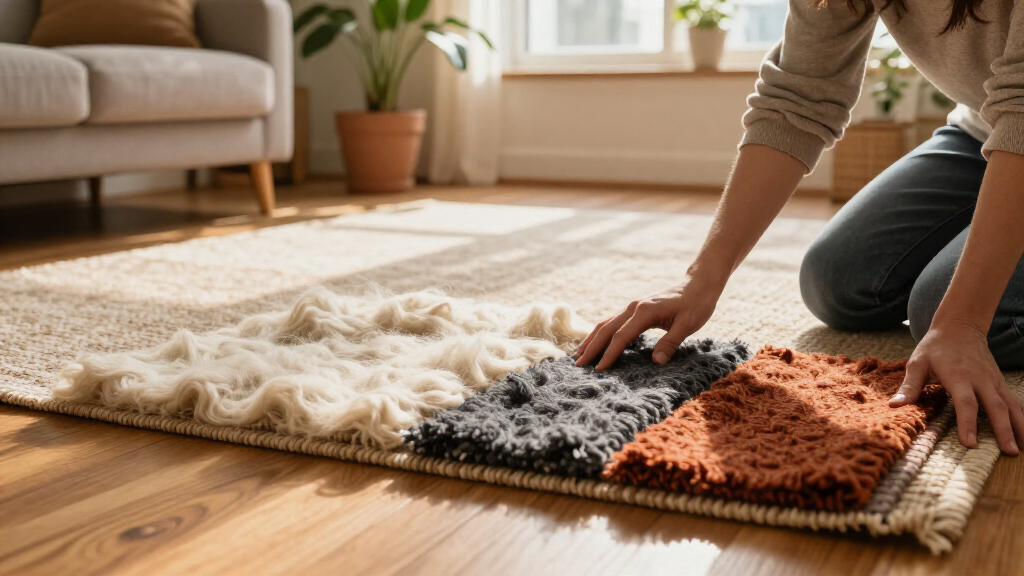
Rug fibers generally fall into natural and synthetic categories. Wool, cotton, jute, sisal, seagrass and silk are natural examples; polyester, polypropylene, nylon and acrylic are synthetic. The report focuses on wool, polyester and polypropylene because they were the options its writer found herself comparing while considering future purchases for a home with children.
Asha Chaudhary, CEO and president of Jaipur Living, advises shoppers to begin with the room, its expected traffic, whether children or pets use it, and how much maintenance the household will accept. She also recommends comparing the rugs themselves, including construction, texture, density and craftsmanship, rather than choosing by material label alone. Her guidance reflects the expert’s view in the report, not a standardized test of the three fiber types.
“Start with the room, not the rug.”
— Asha Chaudhary, CEO and president of Jaipur Living
No Universal Winner Established
The report does not identify one fiber as best for all households, and the supplied material does not give a publication date, a comparative laboratory test or a ranked list of specific rugs. Performance can vary with pile, construction, weight and workmanship, as well as with the room and the way a rug is used. The source also does not quantify shedding across wool rugs or provide a direct environmental comparison of wool, polyester and polypropylene.
Questions about microplastics are raised in the report’s personal introduction, but the supplied material provides no measurements or specific findings on rug-related exposure. Shoppers should not read the comparison as proving that every synthetic rug carries a particular risk, or that every wool rug is free of trade-offs. The details of any low-VOC certification, testing process or dye safety depend on the product and are not specified in the report.
Check the Rug Before Buying
The report offers consumer guidance rather than a scheduled next development. For a purchase, its advice points shoppers toward matching the rug to the room, then checking the particular product’s fiber, construction, pile, weight and care requirements. Households with children or pets can also ask retailers for details about testing, certifications and dyes rather than assuming those features apply to every synthetic rug.
There is no announced follow-up test or product ranking in the source material. The practical decision remains a comparison between specific rugs and the needs of the home: a preference for natural fibers, softness, spill handling, maintenance and expected longevity may each affect the choice.
Key Questions
Which rug material does the report say is best?
It does not name one universal winner. The experts quoted say to choose based on the room, traffic, maintenance needs and the quality of the particular rug.
Which material is recommended for high-traffic areas?
Munan Xue of Rugs USA says polypropylene is suited to heavy traffic and spills. That is expert guidance in the report, not a guarantee about every polypropylene rug.
Is polyester or polypropylene softer?
The report associates polyester with softness and underfoot comfort, particularly for lighter-traffic rooms such as bedrooms. It describes polypropylene as a more practical option for moisture and stain resistance.
Are wool rugs maintenance-free?
No. The report says wool can resist water, dirt and stains, but its writer describes persistent shedding from two wool rugs. Care and performance can differ by rug, so check the specific product’s instructions.
Does the report settle concerns about microplastics?
No. It raises the concern in its introduction but provides no measurements or findings about microplastics from rugs. The supplied report does not quantify comparative environmental impacts either.
Source: rss
Fall Picks
fall essentials
As an affiliate, we earn on qualifying purchases.