
TL;DR
Hunker describes a quick craft that turns clean, unwanted socks into fabric flowers mounted on dowels. The project uses simple supplies and is intended for indoor display; damp conditions can leave moisture in the fabric and lead to mold.
Hunker has outlined a do-it-yourself project that turns old or mismatched socks into fabric flowers for indoor displays, using a rolling or folding technique and a dowel stem. The craft offers a way to reuse socks that might otherwise sit unused, with a warning to keep the finished decorations away from damp outdoor conditions.

Get furniture and decor delivered free with Prime
- Fast, free delivery on millions of items
- Prime Video, Amazon Music and more included
- Member-only deals all year
The project needs clean socks and dowels; pop sticks or bamboo skewers can serve as alternatives. Floral tape or spray paint can cover the stems, while a spare vase provides a place to arrange the finished flowers. Hunker also suggests adding real or artificial greenery and filler for a fuller bouquet. These are optional additions rather than requirements for making the basic flower.
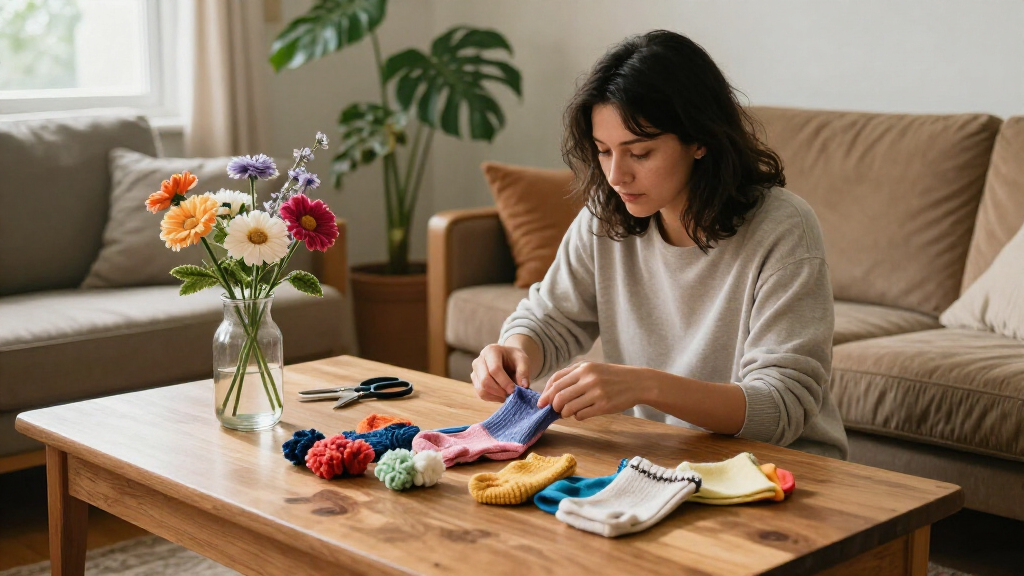
For a rose-like shape, Hunker describes flattening a sock, folding it lengthwise, then rolling it from the toe end. Crafters can twist the remaining fabric as they roll for a more dramatic form, then tuck the end beneath the layers. A simpler variation rolls the sock from the toe to the cuff, which is flipped over the bottom of the roll and adjusted to create petals.
A separate approach uses a rolled sock secured at its middle with a rubber band. Pulling apart the spirals and loosening the outer folds can make the roll look more flower-like. Hunker recommends using two socks for a larger version of this style, including two orphaned socks that match in color and length. In each method, the flower is turned upside down so a painted or floral-tape-covered dowel can be inserted into its center.
A Second Use for Orphaned Socks
The idea gives single socks and worn-out pairs a possible second use as home decor rather than leaving them in a drawer or discarding them. Because the suggested materials are mostly common household items, the basic craft may be accessible to people who want a small reuse project without buying a full set of supplies. Hunker characterizes it as a quick activity that can also involve children, though the source does not provide a timed estimate or report testing the project with children.
The practical limit is where the flowers are displayed. Fabric folds can retain moisture, and Hunker warns that the decorations should not be placed outdoors, especially in rainy conditions, because dampness can contribute to mold. This makes the craft better suited to a dry indoor vase than to a garden or exposed porch.
Products Worth Considering

Philips Hue Bridge Pro Smart Lighting Hub, 1-Pack

Roborock Q7 M5+ Robot Vacuum and Mop

Philips Hue Play Floor Lamp, RGBWWIC LED, 53 Inch, Black
As an affiliate, we earn on qualifying purchases.
From Laundry Drawer to Vase
The guide addresses a familiar household problem: socks that lose their partners in the wash or remain unused after a pair becomes incomplete. Rather than treating the missing sock as a reason to throw away its mate, the project repurposes one or two socks as the flower itself. The report also mentions that readers could use a laundry hack to prevent future missing socks, but it does not explain that separate hack in the supplied material.
The transformation relies on rolling, folding and shaping fabric, not on sewing or specialized craft equipment. The instructions offer several ways to form petals, leaving room to adjust the look based on the sock’s length, color and stretch. A vase, stem covering and extra greenery can change the presentation, but the source does not specify particular sock fabrics, adhesives, or a required flower size.
““Simply roll them up from head to toe and stick them on a dowel to turn them into colorful fabric florals.””
— Hunker
Material and Durability Questions
The supplied report does not state how long the flowers last, which sock materials hold their shape best, or whether the stems need glue or another fastener to stay in place. It also does not describe a cleaning method for finished flowers or say how to protect them from dust. The mold warning is tied to dampness, but the report gives no guidance on drying or treating a flower that has become wet.
These are craft instructions, not a reported product test: the source provides no comparative results, measured cost savings, or evidence about how the decor performs over time. Readers may need to adjust the rolling technique to the socks they have and check that a dowel sits securely before placing the flower in a vase.
Try the Indoor Vase Arrangement
The next step for anyone following the guide is to wash and dry the socks, choose a rolling method, and insert a covered or painted dowel into each finished flower. The arrangement can then be placed in a dry indoor vase, with optional greenery or filler added for volume. Keep the fabric dry and check that the flower remains secure on its stem. Hunker’s report does not announce a follow-up project or provide further testing, so the results will depend on the materials and shaping choices each crafter makes.
Key Questions
What supplies are needed to make a sock flower?
The basic project calls for a clean sock and a dowel. A pop stick or bamboo skewer can replace the dowel. Floral tape or spray paint, a vase, and greenery or filler are optional.
Do I need a matching pair of socks?
No. Hunker describes methods that use one sock per flower. Its rubber-band method can use two socks for a larger flower, and two orphaned socks may be paired if their colors and lengths work together.
How do you shape the sock into petals?
One method rolls the sock from the toe and flips the cuff over the base. Another rolls and twists the fabric, while a third secures a roll with a rubber band and loosens the folds to form petals.
Can sock flowers be displayed outdoors?
Hunker advises against outdoor display, particularly in rainy weather. Moisture can remain in the fabric folds and contribute to mold, so the guide recommends keeping the flowers in a dry indoor setting.
Source: hunker.com