TL;DR
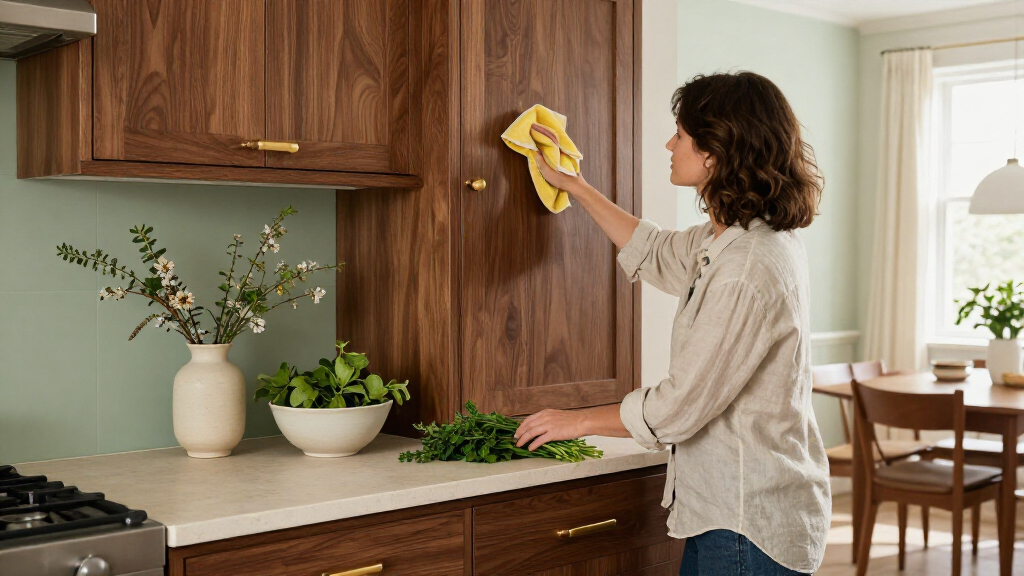
Apartment Therapy Studio Director Vicky Wasik refreshed her kitchen without replacing or painting its dark wood cabinets. New white quartz countertops, green tile and paint, floral wallpaper, brass details and warmer accessories changed how the cabinets read within the room.
Apartment Therapy Studio Director Vicky Wasik refreshed her kitchen without replacing its dark wood cabinets, instead changing the surfaces and details around them. Her makeover paired the existing wood with white quartz countertops, dark green tile and coordinated accents, offering a practical example for homeowners who want a different-looking kitchen without starting with new cabinetry.

Get furniture and decor delivered free with Prime
- Fast, free delivery on millions of items
- Prime Video, Amazon Music and more included
- Member-only deals all year
Wasik said she had repeatedly considered painting her cabinets, inspired by colorful kitchen projects, but reconsidered after seeing rich wood finishes return to favor. She used mockups to explore how tile and countertop choices might change the room, then concluded that the cabinets could stay if the rest of the palette worked with them. That design decision shaped the renovation: the cabinets remained in place, while the surrounding finishes changed.
The largest change was replacing the original granite countertops with plain white quartz. Wasik ordered them using a design tool on The Home Depot’s website. The installation crew also removed the old countertops for an added fee. She described the countertop work as the project’s biggest expense and said the brighter surface made the kitchen feel more modern. She also advised people in walk-up buildings to ask about extra carrying charges before scheduling delivery.
After the countertops went in, Wasik and her father installed green, zellige-inspired backsplash tile on both walls of the galley kitchen. The work took about three days. They removed and raised the cabinets slightly to avoid cutting a large number of tiles along the top edge, and had to plan around outlets and corners. Wasik chose dark charcoal grout. The remaining changes included green wall paint, floral wallpaper, brass hardware and outlet covers, a pot rail, a vintage shelf, natural-texture textiles and glass pendant lights adapted from recessed cans.
Refresh dark wood cabinets with a new palette
Vicky Wasik kept her cabinets and changed the finishes around them. Her project shows how countertops, tile and coordinated details can shift a kitchen’s overall look.
Build a palette around the wood
Mockups helped Wasik explore finishes beside her existing cabinets.
White quartz
Replacing the granite made the kitchen feel brighter and more modern, Wasik said.
Green tile
Dark green, zellige-inspired tile added contrast alongside the wood.
Tie the room together
Green paint, floral wallpaper, brass details and natural-texture accessories completed the palette.
Plan around installation details
The galley layout brought outlets, corners and tile cuts into the plan.
Use samples or mockups to see how counters, tile and paint work with the cabinets.
Ask countertop installers about removal, walk-up carrying charges and other added fees.
Measure walls and account for outlets and corners before work begins.
What staying put involved
Keeping the cabinetry avoided replacing it, but the refresh still involved substantial work and expense.
- Dark wood cabinets were neither replaced nor painted.
- Wasik explored countertop and tile combinations before deciding.
- White quartz replaced the original granite.
- Tile, paint, wallpaper, brass and warmer accessories changed the room’s palette.
A New Palette Around Existing Cabinets
The makeover shows one way to change a kitchen’s overall appearance without treating dark cabinets as an automatic replacement project. In Wasik’s case, the lighter countertop and contrasting green surfaces changed the visual balance around the wood, while brass and natural materials helped tie the new elements together. The reported result is one person’s renovation, not proof that the same choices will suit every kitchen.
Keeping the cabinetry can avoid the cost and disruption of removing and installing new cabinets, though this project was not cost-free: Wasik identified the quartz countertops as its largest expense. The example may help readers think through whether the parts they dislike are the cabinets themselves or the way the cabinets interact with counters, walls, lighting and accessories. It also shows that avoiding cabinet replacement can still involve substantial work, planning and skilled installation.
Products Worth Considering

Hisense E6 Cinema Series 55-Inch 4K UHD QLED Smart Fire TV

Shark Pet Cordless Stick Vacuum IX141

Sonos One (Gen 2) Two-Room Set Voice-Controlled Smart Speaker with Alexa (2-Pack, Black)
As an affiliate, we earn on qualifying purchases.
Why the Cabinets Stayed
Wasik’s starting point was a recurring temptation to paint the cabinets, rather than a report that they were damaged or unusable. She said inspiration from colorful kitchen makeovers had made painting seem appealing, but the renewed popularity of rich wood finishes prompted her to reconsider. Instead of committing to cabinet paint, she tested combinations of tile and countertops with online design tools and Photoshop mockups.
The kitchen had no existing backsplash, so the new tile did not require removing an older one. Its galley layout also brought practical complications: outlets, uneven corners and the number of top-row tiles that might need cutting. The decision to raise the cabinets by about half an inch was a project-specific workaround, not a general instruction for other kitchens. Wasik’s account centers on her own home and choices; it does not provide a broad cost estimate or a comparison with cabinet replacement.
“Do I hate my cabinets, or just how they interact with everything around them?”
— Vicky Wasik, Apartment Therapy Studio Director
Costs and Installation Risks Vary
Wasik did not provide a total project budget, itemized costs or a timeline for the full renovation. The countertop was the biggest expense for her, but the article gives no figures that readers could use to price a similar job. Delivery charges, labor and materials will depend on the home and local providers. It is also unclear how the finishes will wear over time or whether the same palette would work with different wood tones, room sizes or lighting.
The account describes a DIY tile installation and a conversion kit for adapting recessed lighting cans into pendant lights. It does not establish that these tasks are suitable for every homeowner. Electrical work can carry shock and fire risks and may be subject to local codes or permits; use a licensed electrician when required or when the work is outside your competence. Wasik’s description of undertaking the lighting work is not a substitute for professional guidance.
Plan Before Changing Finishes
For readers considering a similar refresh, the project suggests beginning with samples or mockups and testing how proposed counters, wall colors and tile look beside the existing cabinets. Before ordering countertops, ask installers about removal, delivery access and any extra charges. For tile, measure the walls, locate outlets and corners, and plan the layout before work begins; Wasik’s experience shows that those details can affect both cutting and cabinet placement.
The next step is to decide which work can be handled safely and which calls for a professional. Get local advice on permits and code requirements, particularly for electrical changes, and hire a licensed electrician when needed. Wasik’s makeover is a completed personal project, but the article does not announce a follow-up renovation or provide a general cost guide.
Key Questions
Did Vicky Wasik replace or paint her dark wood cabinets?
No. She kept the cabinets and changed the countertops, backsplash, wall finishes, lighting and accessories around them.
What made the kitchen feel brighter?
Wasik said replacing the original granite with plain white quartz countertops made the kitchen feel brighter and more modern. The article does not provide a measured change in brightness.
How long did the backsplash installation take?
Wasik said installing tile on both walls of the galley kitchen took about three days, with help from her father. That is her project timeline, not a standard estimate.
Did the article give the total cost?
No. Wasik said the countertops were the project’s largest expense, but no total budget or itemized price was reported.
Is the lighting conversion a suitable DIY job?
The account does not establish that it is suitable for every homeowner. Electrical work can involve serious hazards and local code requirements; consult a licensed electrician when required or if you are not qualified to do the work safely.
Source: apartmenttherapy.com