To improve accessibility for aging-in-place, combine smart home technology with physical modifications. Install voice-activated devices, sensors, and smart lighting to enhance safety and ease daily tasks. Adding grab bars, ramps, and stairlifts can further support mobility. A phased approach allows you to customize your home comfortably over time, promoting independence. Continuing with this information can help you create a safer, more accessible living space tailored to your needs.
Key Takeaways
- Incorporate physical modifications like grab bars, ramps, and stairlifts to enhance home accessibility.
- Install smart devices such as voice assistants and automated lighting for easier control and safety.
- Use sensors and alerts to monitor movement and prevent falls or other hazards.
- Implement phased upgrades to gradually add safety features based on evolving needs.
- Combine physical modifications with smart technology for a comprehensive, adaptable aging-in-place environment.
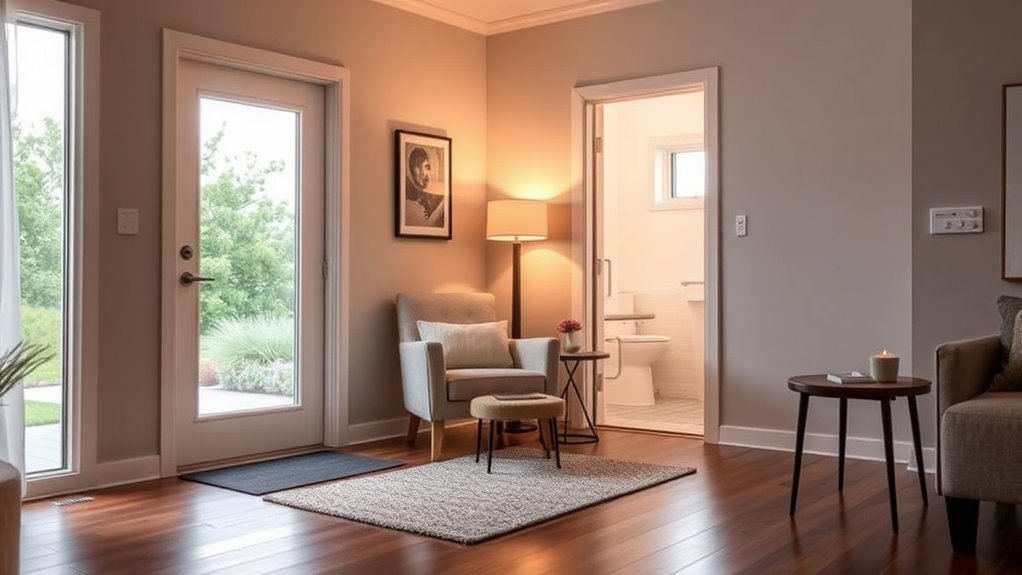
As we age, staying in your own home can become more comfortable and practical with thoughtful modifications. One of the most effective ways to achieve this is by integrating smart home technology. These advancements allow you to maintain independence while providing peace of mind for both you and your loved ones. For example, remote monitoring systems enable you to keep an eye on your home environment from anywhere. Whether you’re checking in on a loved one or ensuring your safety, remote monitoring offers a level of security that traditional methods can’t match. You can receive alerts if there’s unusual activity, or if a door or window is opened unexpectedly, giving you prompt awareness and the ability to respond quickly.
Smart home technology also includes voice-activated assistants and automated systems that make daily routines easier. Imagine controlling your lights, thermostat, or even opening doors with simple voice commands. These features eliminate the need to reach or navigate complex switches or controls, reducing fall risks and physical strain. Installing sensors to detect movement or falls can further enhance safety. When integrated with remote monitoring, these devices can automatically notify caregivers or family members if something seems amiss, allowing for immediate assistance. This combination of technology and monitoring creates a safer, more autonomous living environment.
Voice-activated systems and sensors boost safety and independence by simplifying routines and enabling quick alerts.
In addition to technological upgrades, physical modifications like installing grab bars, ramps, and stairlifts contribute considerably to accessibility. These features work seamlessly with smart home systems, creating a cohesive environment where safety and convenience go hand in hand. For instance, smart lighting can be programmed to turn on automatically when you enter a room, reducing the risk of tripping or stumbling. Likewise, smart locks can allow keyless access, making it easier to secure your home without fumbling for keys, especially for those with mobility challenges or arthritis. Emphasizing home safety assessments can help identify specific areas needing improvement, ensuring tailored solutions that enhance overall accessibility.
The beauty of incorporating smart home technology into your aging-in-place plan is that it’s adaptable. You can start small—perhaps with a few sensors or voice controls—and expand as needed. This phased approach ensures you’re not overwhelmed by complexity while gradually increasing your home’s safety features. It also offers the flexibility to customize your environment to fit your specific needs, preferences, and lifestyle. By combining these innovative technological solutions with thoughtful physical modifications, you create a living space that promotes independence, safety, and comfort for years to come.
Frequently Asked Questions
How Much Do Aging-In-Place Modifications Typically Cost?
Aging-in-place modifications usually cost between $2,000 and $15,000, depending on the scope of work. You should consider cost considerations carefully and plan your budget accordingly. Basic upgrades like grab bars and ramps tend to be affordable, while more extensive renovations, such as bathroom remodels, can be pricier. By evaluating your needs early, you can prioritize modifications that offer the best balance of safety and affordability.
Are There Government Grants or Financial Assistance Options Available?
Yes, you can access financial aid and grant programs to help with home modifications for accessibility. Many local, state, and federal agencies offer grants or assistance programs aimed at making homes safer and more accessible for aging-in-place. You should research options like the Department of Housing and Urban Development (HUD) or local aging agencies, which often provide financial aid to eligible seniors. Applying can help reduce costs considerably.
How Can I Choose the Best Modifications for My Needs?
You might think picking modifications is simple, but surprise—it’s about blending adaptive technology with your unique needs. Start by evaluating your daily routines and emergency preparedness plans. Consider easy-to-use features like ramps, grab bars, or voice-activated devices. Prioritize solutions that enhance safety and independence while fitting your lifestyle. Consulting a professional can help you tailor choices, ensuring your home adapts seamlessly to your evolving needs.
What Is the Average Timeline for Completing Home Modifications?
The installation timeline for home modifications typically ranges from a few days to several weeks, depending on the project’s scope. You can expect the project duration to be influenced by factors like material availability, contractor schedules, and the complexity of changes. To stay on track, communicate clearly with your contractors, and plan for some flexibility in the schedule to accommodate unexpected delays.
Are There Any Safety Certifications I Should Look for in Contractors?
Irony strikes—trusting a contractor without checking certifications? You should look for licensed contractors who meet local licensing requirements, ensuring they adhere to safety standards. Verify their credentials with licensing boards and ask about their experience with accessibility modifications. This way, you avoid shortcuts that could compromise safety, and you guarantee your home improvements meet the necessary standards for safety and quality, giving you peace of mind.
Conclusion
Making aging-in-place modifications might seem costly or unnecessary now, but investing in accessibility features guarantees safety and independence as you age. These improvements can actually save you money in the long run by preventing falls and costly home repairs. Don’t wait until an accident happens—proactively adapting your home gives you peace of mind and keeps you comfortable in your familiar space for years to come. It’s a wise, empowering choice for your future.