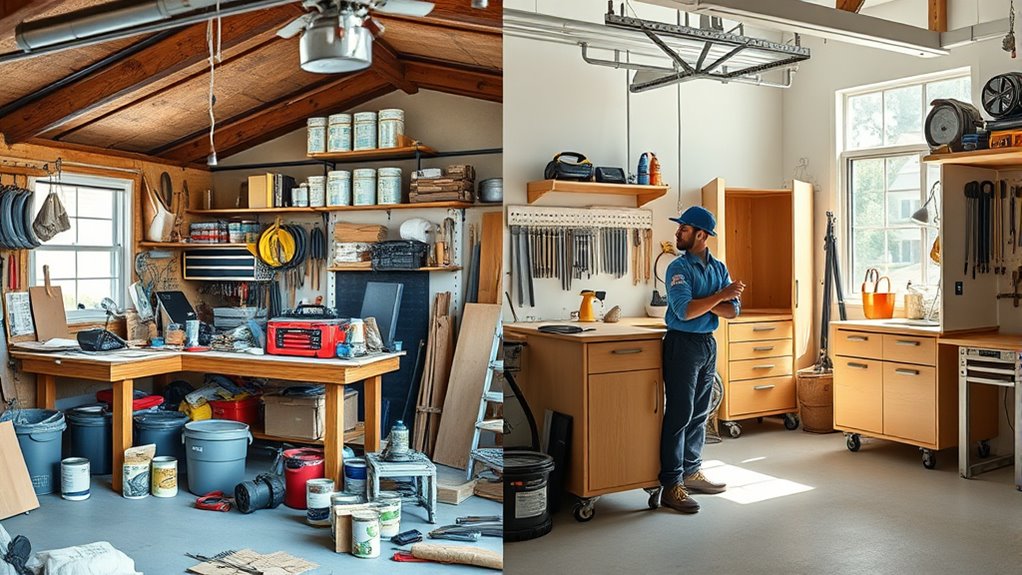

Knowing when to hire a professional depends on your safety, skill level, and project complexity. If you’re unfamiliar with tools or unsure about safety, it’s best to hire someone. Mistakes from DIY can lead to costly repairs later. Complex jobs or tight schedules also favor professionals. We’ll explore how to evaluate your abilities and project risks, so you can make the best choice for a successful home improvement.
Key Takeaways
- Prioritize hiring professionals for complex, safety-critical tasks or when unfamiliar with tools and procedures.
- Consider the total costs, including potential mistakes and repairs, before opting for DIY projects.
- Assess your skill level and confidence; lack of expertise increases risks and suggests professional assistance.
- Evaluate project time requirements; complex projects may benefit from professional efficiency to avoid delays.
- Always prioritize safety; hire experts when unsure about safety measures or proper techniques.

When considering home improvements, you often face the choice between tackling projects yourself or hiring professionals. Deciding which route to take depends on several factors, including your skill level, the complexity of the project, and your safety considerations. If you’re leaning toward a DIY approach, you need to prioritize tool safety. Using power tools or sharp equipment without proper training can lead to serious injuries. Before diving in, familiarize yourself with each tool’s safety features and instructions. Wear protective gear like goggles, gloves, and masks, and ensure your workspace is clean and organized. Knowing how to operate tools correctly minimizes risks and helps prevent accidents. Also, assess whether you have the right tools for the job. Sometimes, renting or borrowing specialized equipment is a safer and more cost-effective option than attempting to improvise with less suitable tools. Additionally, understanding the basics of tool safety can significantly reduce the risk of injury during DIY projects.
Cost analysis plays a vital role in determining whether to do it yourself or hire a professional. While DIY projects often seem cheaper upfront, it’s important to factor in all expenses, including tools, materials, and potential mistakes. If you lack experience, there’s a risk of making errors that could lead to costly repairs later. For example, an improperly installed fixture or poorly sealed window might cause damage that’s more expensive to fix than hiring a pro initially. Conversely, hiring a professional might seem costly initially, but it could save you money in the long run. An experienced contractor can work efficiently, use the right materials, and ensure the job is done correctly the first time, reducing the chance of future problems.
Another aspect to consider is the time investment. DIY projects often take longer than anticipated, especially if you encounter unforeseen issues. If your schedule is tight or the project is complex, hiring a professional can save you time and stress. They bring expertise, experience, and a streamlined process, which can be worth the extra expense. Ultimately, the decision hinges on balancing safety, cost, and your confidence in handling the project. If you’re unsure about tool safety or lack the necessary skills, it’s usually smarter to hire a professional. If you’re comfortable with tools, willing to do thorough research, and understand the true costs involved, a DIY approach can be rewarding. Just remember, no matter what you choose, safety should always be your top priority.
Frequently Asked Questions
How Do I Assess My Skill Level for a Project?
To assess your skill level for a project, start with a skill assessment by honestly evaluating your experience with similar tasks. Consider the project complexity—if it involves electrical, plumbing, or structural work, it’s safer to lean towards professional help. Ask yourself if you have the necessary tools and knowledge. If you’re uncertain about any step, it’s wise to seek advice or hire a pro to avoid costly mistakes.
What Are the Legal Requirements for Home Renovations?
Think of home renovations as a legal maze. You must obtain building permits for significant changes, ensuring your project meets safety standards. Check local regulations to see if a contractor licensing is required—some projects need licensed professionals to avoid fines or issues with insurance. Always verify permits and licenses before starting, so your home remains a safe haven without legal hiccups. When in doubt, consult local authorities or a legal expert.
How Can I Estimate the Total Cost of a Project?
You can estimate your project’s total cost by starting with budget planning and listing all necessary materials. Research current material costs online or at local stores, and add a contingency fund for unforeseen expenses. Break down each task, estimate labor if needed, and sum everything up. Keep track of receipts and update your budget regularly to stay on track and avoid surprises. This approach gives you a clear picture of your project’s total expenses.
What Safety Precautions Should I Take During DIY Projects?
You should always prioritize safety during DIY projects by using proper protective gear like gloves, goggles, and masks. Don’t underestimate the importance of tool safety; read instructions carefully and handle tools correctly. Remember, rushing can lead to accidents, so take your time and stay focused. Ensuring safety precautions keeps you protected and helps prevent injuries, making your project successful and stress-free.
When Should I Consider Warranties or Guarantees?
You should consider warranties or guarantees whenever you’re investing in major projects. Check if product warranties cover parts and labor, giving you peace of mind. If hiring a contractor, ask about their guarantees on workmanship and materials. These protections ensure that if issues arise after completion, you’re covered. Always review warranty terms carefully before starting, so you know what’s included and for how long, saving you money and hassle later.
Conclusion
Ultimately, the choice between DIY and hiring a pro hinges on your skills, time, and the project’s complexity. Like a painter choosing their brush, you must decide if you’re equipped to handle the task or if calling in an expert will yield a masterpiece. Remember, knowing when to step back and call in help isn’t a sign of weakness but wisdom—turning your home improvement dreams into reality with confidence and care.