
Heat pump water heaters are great for saving energy, cutting your water heating costs by up to 70%. However, they need at least 1,000 cubic feet of air space to operate effectively, which means they aren’t suitable for cramped areas like small closets. You’ll need to measure your installation space carefully. Understanding these requirements can help you maximize your savings and guarantee peak performance. Discover more details about installation and climate considerations.

Get furniture and decor delivered free with Prime
- Fast, free delivery on millions of items
- Prime Video, Amazon Music and more included
- Member-only deals all year
Key Takeaways
- Heat pump water heaters can reduce water heating costs by up to 70%, making them highly energy-efficient.
- A minimum of 1,000 cubic feet of air space is required for proper airflow and performance.
- Ideal installation locations include basements or large utility areas, avoiding cramped spaces.
- Efficiency decreases in temperatures below 40°F, impacting performance and potential energy costs.
- Upgrading the electrical panel may be necessary, adding to overall installation costs.
If you’re looking for an efficient way to heat your water, heat pump water heaters might be the solution you need. They use electricity to move heat from the air or ground to heat your water, making them much more energy-efficient than traditional water heaters. In fact, they can reduce your water heating costs by up to 70%. However, before you jump in, it’s vital to evaluate the installation requirements and the space they’ll need.
Looking for energy-efficient water heating? Heat pump water heaters can cut costs by up to 70%, but consider installation needs first.
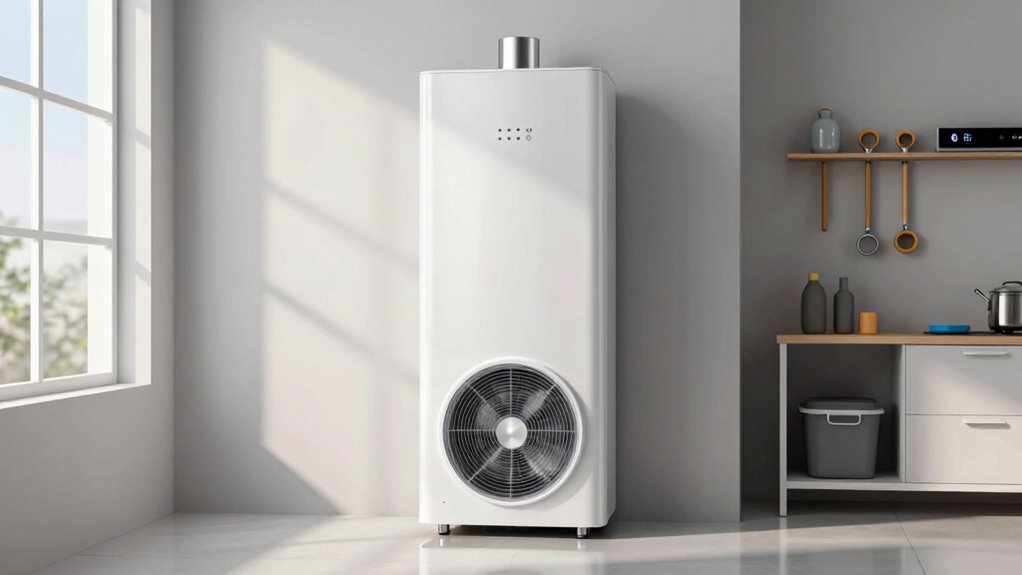
When it comes to installation, you can’t just place a heat pump water heater anywhere. These units require a specific amount of space to function effectively. Typically, you’ll need at least 1,000 cubic feet of air space around the unit to guarantee proper airflow. This requirement means you can’t tuck it away in a small closet or cramped utility room. Instead, you’ll need to choose a location that allows for good air circulation, such as a basement or a large utility area.
Moreover, you should also be aware of the height requirements. These units are generally taller than traditional water heaters, so you’ll need sufficient ceiling height to accommodate them. If you’re thinking about a heat pump water heater, take measurements of your intended installation space to avoid any surprises later.
In addition to space, you should also examine the temperature of the area where the heater will be installed. Heat pump water heaters work best in moderate climates. If you live in a region where temperatures regularly drop below 40°F (about 4°C), the efficiency of the unit can decline. You may still be able to use one, but be prepared for a potential increase in energy costs when the temperatures fall. Understanding renewable energy concepts can help you make more informed decisions about your home upgrades, especially since these units often rely on climate considerations for optimal performance. Ensuring proper installation space is essential for maximizing efficiency and longevity of your unit.
Another key factor is your existing electrical setup. Heat pump water heaters typically require a dedicated circuit and may need an upgrade to your electrical panel if it can’t handle the additional load. This might add to the overall installation cost, so it’s important to factor that into your budget. Additionally, considering home energy efficiency strategies can help maximize your savings with these units.
Products Worth Considering

Coway Airmega 250 Air Purifier for Large Rooms

Levoit Core 400S-P Smart Air Purifier for Large Rooms

Ring Alarm 14-Piece Wireless Security System Kit
As an affiliate, we earn on qualifying purchases.
Frequently Asked Questions
How Do Heat Pump Water Heaters Work?
Heat pump water heaters work by transferring heat from the air or ground to heat your water, making them highly energy efficient. They use electricity to move heat rather than generate it, which reduces your energy costs. While installation costs can be higher than traditional heaters, the long-term savings on your energy bills often outweigh the initial expense. You’ll enjoy hot water while minimizing your environmental impact and lowering your utility bills.
What Is the Lifespan of a Heat Pump Water Heater?
A heat pump water heater’s lifespan typically ranges from 10 to 15 years. Think of it as a wise old tree, growing steadily while providing shade and comfort. Just like you’d weigh installation costs against energy efficiency, consider how well it’ll serve you over time. Regular maintenance can extend its life, ensuring you reap the benefits of lower energy bills and reliable hot water for years to come.
Can I Install a Heat Pump Water Heater Myself?
You can install a heat pump water heater yourself, but it requires some plumbing and electrical skills. DIY installation can save you money, but consider the cost of tools and any potential mistakes. Make sure you check local codes and permits, as improper installation might lead to issues later on. If you’re unsure about any step, it’s best to consult a professional to avoid costly repairs down the line.
Are Heat Pump Water Heaters Noisy During Operation?
Think of your favorite coffee shop—there’s a comforting buzz in the air. Similarly, heat pump water heaters do generate operational sounds, but they’re generally quieter than traditional water heaters. You might hear some noise levels, like a soft humming or occasional clicks, especially during heating cycles. If you’re sensitive to sounds, it’s worth considering where you place it, as a bit of noise can become part of your home’s ambiance.
What Are the Maintenance Requirements for Heat Pump Water Heaters?
You’ll need to perform regular maintenance on your heat pump water heater to guarantee peak energy efficiency and cost savings. This includes checking and cleaning the air filter every few months, inspecting the unit for leaks, and assuring proper air circulation. Additionally, consider flushing the tank annually to remove sediment buildup. By keeping up with these tasks, you can maximize your heater’s performance and longevity, ultimately saving you money on energy bills.
Conclusion
In the end, you’ll find that choosing a heat pump water heater isn’t just about saving energy; it’s also about making smart use of space. Coincidentally, the room you have in mind might just be the perfect fit for this energy-efficient solution. With the right setup, you can enjoy lower utility bills while helping the environment. So, why not seize the opportunity? It’s a win-win, and you’ll feel great about your choice!