
To plan your home remodel, start by setting clear goals for each area you want to update and prioritize your needs. Create a detailed budget, including contingency funds, and gather multiple quotes. Develop a realistic timeline, coordinating closely with contractors to keep things on track. Incorporate sustainable materials for eco-friendliness and long-term savings. If you keep going, you’ll discover step-by-step guidance to help you navigate each stage smoothly.
Key Takeaways
- Define clear renovation goals and prioritize areas needing updates.
- Develop a detailed timeline coordinating with contractors to ensure smooth progress.
- Establish a comprehensive budget, including contingency funds, and gather multiple quotes.
- Select sustainable, energy-efficient materials aligned with long-term objectives.
- Maintain open communication and organization to handle unexpected issues and stay on schedule.
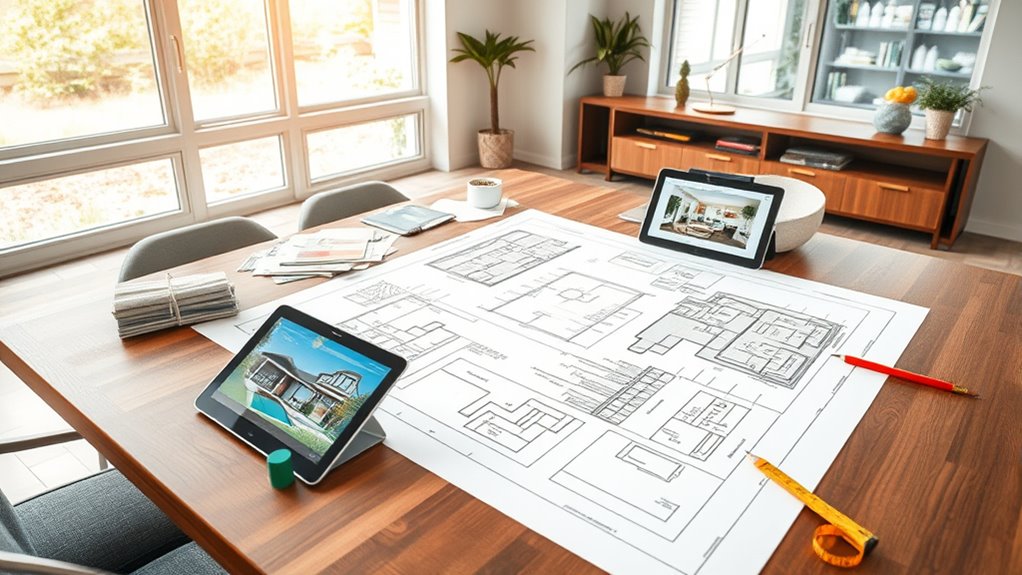
Remodeling your home can be an exciting project, but it requires careful planning to guarantee everything goes smoothly. The first step is setting clear goals for your remodel. Decide which areas need updating, whether it’s a kitchen renovation, bathroom upgrade, or a full home overhaul. Knowing what you want helps you stay focused and makes it easier to prioritize. Once you’ve outlined your goals, you can start researching sustainable materials. Incorporating eco-friendly options like recycled wood, low-VOC paints, and energy-efficient appliances not only benefits the environment but can also save you money in the long run. Sustainable materials are increasingly available and can be integrated into almost any part of your remodel, helping you create a healthier, more efficient home.
Start your home remodel by setting clear goals and choosing eco-friendly, sustainable materials for a healthier, budget-friendly renovation.
Next, establish a realistic budget. Budgeting tips are essential to keep your project on track financially. Break down your total budget into categories such as materials, labor, permits, and unexpected expenses. Always set aside a contingency fund—around 10-15% of your total budget—to cover surprises that might come up during construction. When researching costs, gather multiple quotes from different contractors and suppliers. This will give you a clearer picture of what’s reasonable and help prevent overspending. Be honest with yourself about what you can afford and resist the temptation to splurge on unnecessary upgrades. Staying disciplined with your budget ensures that you won’t have to cut corners later or face financial stress. Additionally, understanding the importance of project planning can significantly improve your chances of a successful remodel.
As you plan, consider how your choices align with your long-term goals. Think about the durability of materials, the style you want, and the energy efficiency of your upgrades. When selecting sustainable materials, look for those that meet your aesthetic preferences and fit within your budget. Keep in mind that some eco-friendly options might cost more upfront but can lead to savings over time through lower utility bills and maintenance costs. Collaborate with professionals who are experienced in green building practices—they can offer valuable insights and help you select the best sustainable materials for your project.
Finally, create a detailed timeline that outlines each phase of your remodel, from demolition to final inspections. This schedule will help you coordinate with contractors and keep the project moving forward. Regular communication and staying organized are key to avoiding delays and surprises. With a clear plan, a well-thought-out budget, and a focus on sustainable materials, you’ll be well on your way to transforming your home into a space that reflects your style and values—all while staying within your means.

Final Touch Kitchen Cabinet Cleaner – Plant Based Cleaner Solution, Safe on Paint and Wood, Safe for Daily Use, No Residue, Eco-Friendly, Approved by Cabinet Finish Specialists – 32oz
Create an inviting atmosphere whether you're hosting a gathering or enjoying a quiet evening at home. It's not…
As an affiliate, we earn on qualifying purchases.
As an affiliate, we earn on qualifying purchases.
Frequently Asked Questions
How Do I Choose the Right Contractor for My Project?
You should start by checking the contractor credentials to verify they’re licensed and insured. Next, ask for contractor references to verify their previous work and reliability. Meet with potential contractors, ask about their experience, and review their portfolio. Trust your instincts and choose someone who communicates clearly and shows professionalism. A reputable contractor with solid credentials and positive references will help make your home remodel smooth and successful.
What Permits Are Needed for a Home Remodel?
You’ll need to check with your local building department to determine which permits are required for your home remodel. Typically, projects involving structural changes, electrical, plumbing, or significant renovations need permits. The permit process ensures your work conforms to building codes, keeping your home safe and legal. Coincidentally, starting this process early helps avoid delays, so contact the appropriate authorities before you begin any work.
How Can I Stay Within My Remodeling Budget?
To stay within your remodeling budget, prioritize your must-haves and set clear goals. Use budget tips like comparing quotes and choosing cost-effective materials. Implement cost-saving strategies such as doing some work yourself and avoiding unnecessary upgrades. Keep track of expenses regularly and stay flexible with your plans. This proactive approach helps prevent overspending, ensuring your remodel stays on budget while still achieving your desired results.
What Are Common Delays During Home Renovations?
During home renovations, you often face timing setbacks caused by unexpected delays. Material shortages can slow down your project, especially if specific items are out of stock or backordered. Weather conditions and contractor scheduling conflicts also contribute to delays. To minimize these issues, stay flexible, communicate regularly with your contractor, and plan for potential setbacks in your timeline. Being proactive helps keep your renovation on track despite common delays.
How Do I Manage Unexpected Issues During Construction?
When unexpected issues pop up, don’t panic—just channel your inner detective. You’ll want to document everything, especially contractor disputes, and file insurance claims promptly. Communicate openly with your contractor, and be ready to negotiate or seek mediation if needed. Staying flexible and proactive helps you navigate surprises smoothly, turning potential chaos into a manageable hiccup rather than a full-blown disaster.

Musings of an Energy Nerd: Toward an Energy-Efficient Home
As an affiliate, we earn on qualifying purchases.
As an affiliate, we earn on qualifying purchases.
Conclusion
Think of your home remodel as sailing a ship across uncharted waters. With your map (plan), steady hands (decision-making), and a clear destination (your dream home), you’ll navigate every wave and wind. Though challenges may arise, stay focused on your horizon. Soon, you’ll anchor in your perfect haven, proud of the journey you’ve taken. Trust the process, and your dream home will be awaiting you just beyond the horizon.

Method Squirt + Mop Hardwood Floor Cleaner, Almond, 25 Ounce, 1 pack, Packaging May Vary
Contains (1) 25 ounce bottle of hardwood floor cleaner.
As an affiliate, we earn on qualifying purchases.
As an affiliate, we earn on qualifying purchases.

EVOLVE Interior Paint & Primer, Eggshell (Cloud White), 1 Gallon – One-Coat Coverage, Excellent Hide, Low VOC, Low Odor, Washable Paint for Walls, Doors & Trim
PAINT + PRIMER IN ONE: Evolve’s paint-and-primer formula helps you get great coverage from the start, sealing your…
As an affiliate, we earn on qualifying purchases.
As an affiliate, we earn on qualifying purchases.