
TL;DR

Get furniture and decor delivered free with Prime
- Fast, free delivery on millions of items
- Prime Video, Amazon Music and more included
- Member-only deals all year
A detailed testing of different portable air conditioners reveals which models are worth buying based on efficiency, cooling power, and ease of installation. The review highlights the best options for various environments and budgets.
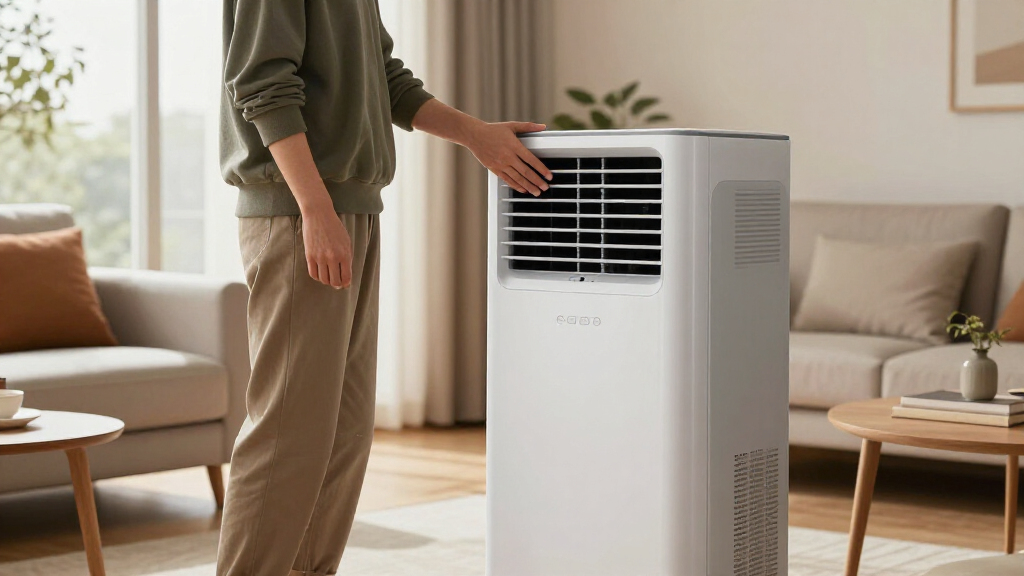
After extensive testing of various types of portable air conditioners, an HVAC expert identified which models provide the best balance of cost, efficiency, and cooling effectiveness. This evaluation helps consumers choose the right unit for their needs amid rising summer temperatures and energy concerns.
The testing covered five main categories: roll-around units, window air conditioners, mini-splits, evaporative coolers, and micro ACs. The expert emphasized that matching the unit type to the room size and climate is crucial for optimal cooling. Price and installation quality also significantly impact performance. For example, dual-hose portable ACs outperform single-hose models by reducing heat recirculation, but they still cannot match the efficiency of window units or mini-splits.
Among the tested models, premium brands like LG, Midea, and Frigidaire offered better cooling and energy efficiency, especially those with inverter compressors. The expert recommends investing in higher-priced units to save energy and achieve better cooling, particularly for larger spaces or prolonged use. DIY mini-splits, although more expensive upfront, proved to be the most energy-efficient and quiet, suitable for garages or home additions. Evaporative coolers are effective in dry climates but ineffective in humid environments, as they add moisture to the air.
I Tested Every Type of Portable Air Conditioner
These are worth buying—and these aren’t. Five cooling formats were compared for efficiency, cooling power, noise, installation, climate fit, and long-term value.
Highest efficiency and lowest noise for garages, additions, and prolonged daily use.
Better pressure balance and less heat recirculation than a single-hose machine.
Evaporative coolers help in dry air but can make humid rooms less comfortable.
Five machines. Five very different jobs.
The right purchase starts with the room, climate, venting options, and expected run time—not with the word “portable” on the box.
Roll-around AC
Convenient and renter-friendly, but the exhaust hose and indoor pressure losses reduce real-world efficiency.
Choose dual-hoseWindow AC
Usually cools more efficiently than a floor-standing portable because the hot components remain outdoors.
Best budget powerDIY mini-split
Quiet, efficient, and powerful. Higher upfront cost pays off when cooling larger rooms for long periods.
Worth the installEvaporative cooler
Low-energy relief in dry regions. It adds moisture, so performance collapses as humidity rises.
Dry air onlyMicro AC
Useful for personal spot cooling, but too limited to meaningfully lower the temperature of a normal room.
Personal zone onlyWhat each cooling type actually delivers
Performance is relative to appropriate use and correct installation. A well-fitted window unit can outperform a poorly vented premium portable.
| Cooling type | Room cooling | Efficiency | Quiet operation | Easy setup | Buying verdict |
|---|---|---|---|---|---|
| Single-hose portable | Fair | Low | Noisy | Easy | Buy only if restricted |
| Dual-hose inverter | Good | Good | Medium | Easy | Best true portable |
| Window AC | Strong | High | Varies | Moderate | Excellent value |
| DIY mini-split | Strongest | Highest | Quiet | Complex | Best long-term |
| Evaporative cooler | Climate-led | High | Good | Easy | Dry climates only |
| Micro AC | Minimal | Personal | Quiet | Easiest | Not a room AC |
The performance ladder
A directional score based on cooling effectiveness, efficiency, and suitability for sustained room cooling—not a laboratory energy rating.
*Evaporative performance can rise substantially in hot, dry climates and fall sharply in humid conditions.
“Spend a little more on a dual-hose portable AC—it’s worth the investment.”
Patrick Gambel · HVAC expert“Pre-charged mini-splits are the most energy-efficient long-term option.”
Mohammad Barzegar · Home services provider“Evaporative coolers are ideal in dry climates but can worsen indoor humidity.”
Jordan Low · HVAC expertCooling power is only half the equation
Short, insulated exhaust routes and tightly sealed openings prevent hot outdoor air from undoing the work of the compressor.
Measure the room
Match capacity to floor area, ceiling height, sun exposure, and heat-producing appliances.
Read the climate
Humidity rules out evaporative cooling and increases the load placed on compressor ACs.
Seal the exhaust
Keep hoses short, avoid sharp bends, and close every gap around the window adapter.
Maintain airflow
Clean filters, clear intakes, manage condensate, and test the unit before peak heat arrives.
Before you buy
Premium inverter models from established brands such as LG, Midea, and Frigidaire generally delivered a stronger balance of cooling and energy use.
Best value for a small room?
A properly sized window unit is the efficiency pick. If portability is essential, choose a mid-range dual-hose inverter model.
Are DIY mini-splits worth the effort?
Yes for larger, difficult-to-cool, or frequently used spaces—provided the installation requirements suit the building and installer.
Can a swamp cooler replace AC in humidity?
No. Evaporative cooling adds moisture and becomes ineffective when the surrounding air is already humid.
Which features matter most?
Prioritize inverter control, effective venting, low published noise, recognized efficiency ratings, and accessible filters.
14 Best Portable Air Conditioners in 2026
See the top picks →15 Best Air Conditioners in 2026
See the top picks →Watch for new efficiency ratings, quieter compressors, and improved installation kits.
Test before peak heat →Why Choosing the Right Portable AC Matters in Summer Heat
With climate change driving more frequent heatwaves, understanding which portable ACs deliver reliable cooling is essential for comfort and safety. Consumers can save money and energy by selecting models that match their environment and use habits. Proper installation and maintenance can extend the lifespan and efficiency of these units, making them a worthwhile investment during increasingly hot summers.
Products Worth Considering

Levoit Vital 200S-P Smart Air Purifier for Large Rooms

Levoit Core 600S-P Smart Air Purifier for Large Rooms

Philips Hue Large Smart Light Tube, Black – White and Color Ambiance LED Color-Changing Light – 1 Pack
As an affiliate, we earn on qualifying purchases.
Evolution of Portable Air Conditioners and Consumer Choices
Over the past decade, portable air conditioners have become more popular due to the rise of climate-controlled homes and the limitations of central HVAC systems in some buildings. Earlier models often suffered from inefficiency and high noise levels, but recent advancements—such as inverter technology and dual-hose designs—have improved performance. Consumer preferences now favor units that balance affordability with energy efficiency, especially as electricity prices climb and environmental concerns grow.
The market currently offers a wide range of options, from budget models to high-end mini-splits, each suited for different needs and environments. This testing provides clarity for buyers overwhelmed by choices and highlights the importance of matching product features to specific cooling requirements.
“Spend a little more on a dual-hose portable AC—it’s worth the investment for better cooling and efficiency.”
— HVAC expert Patrick Gambel
Remaining Questions About Portable AC Performance and Longevity
While the expert’s testing covered many models, it is still unclear how different units perform over extended periods or in extreme conditions. Long-term durability, maintenance needs, and real-world energy savings require further observation. Additionally, the impact of installation quality on portable AC efficiency varies and may influence user experience significantly.
Upcoming Developments and Consumer Guidance for Summer Cooling
Manufacturers are expected to introduce newer, more energy-efficient models with improved noise levels and ease of installation. Consumers should watch for updated reviews and government efficiency ratings to make informed choices. As summer approaches, experts recommend testing units early and ensuring proper venting and sealing to maximize cooling performance.
Key Questions
Which portable air conditioner offers the best value for small rooms?
According to the review, mid-range models from brands like LG and Frigidaire with dual-hose designs provide a good balance of cost and cooling for small spaces.
Are mini-split systems worth the DIY effort?
Yes, pre-charged DIY mini-splits are highly energy-efficient and quiet, making them a worthwhile investment despite the installation effort, especially for larger or hard-to-cool spaces.
Can evaporative coolers replace traditional ACs in humid climates?
No, evaporative coolers are ineffective in humid environments as they add moisture to the air, which can worsen indoor comfort.
How important is proper venting for portable AC units?
Proper venting is critical; poor venting reduces cooling efficiency and can increase indoor heat. Experts recommend keeping hoses short and well-insulated.
What features should I look for in a portable AC?
Look for inverter technology for efficiency, low noise levels, effective venting options, and units with high energy ratings like EnergyStar certification.
Source: rss