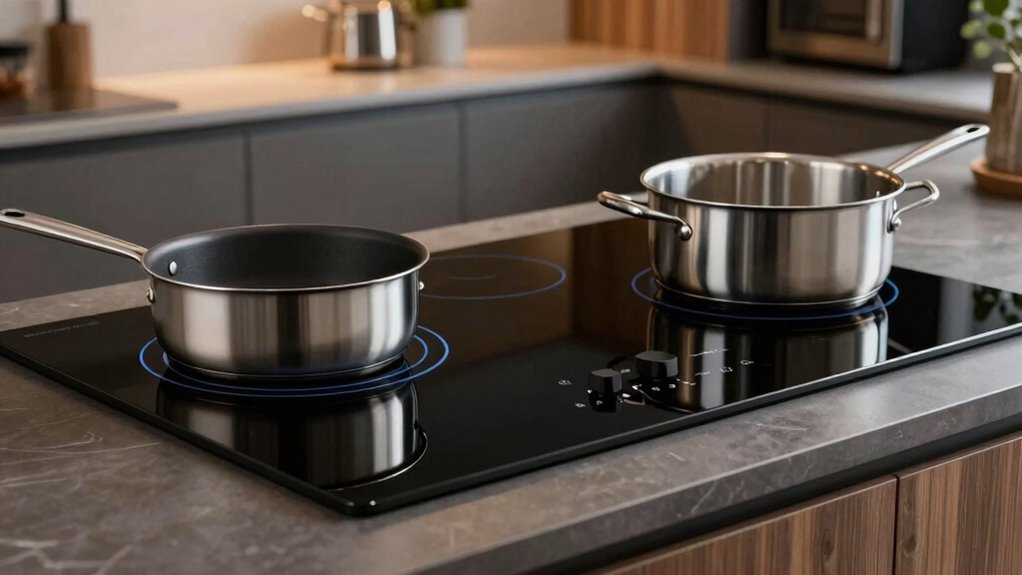
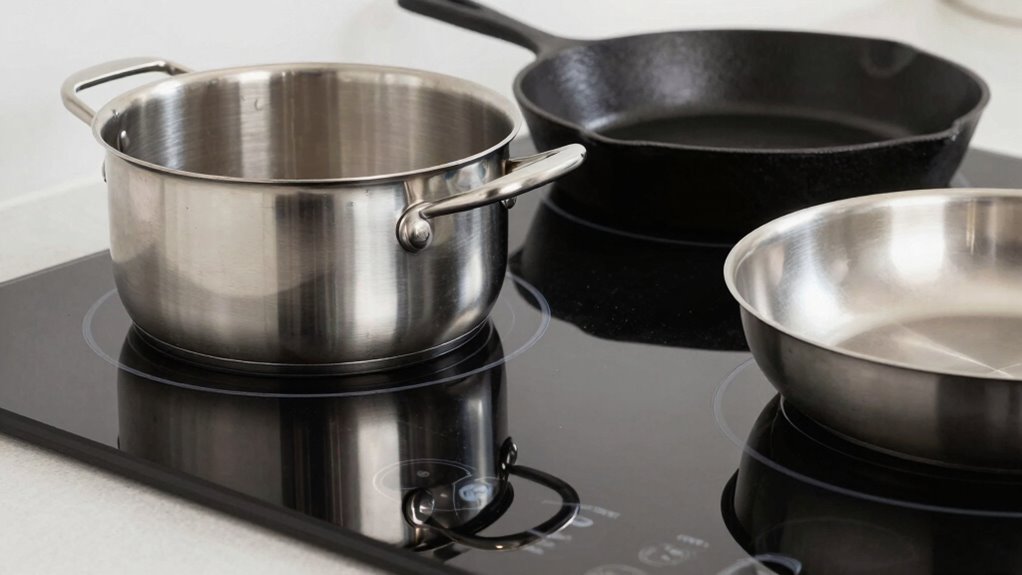
To guarantee your cookware works with your induction cooktop, it must have a magnetic, flat-bottomed base that fits the burner size perfectly. Use a magnet to test compatibility—if it sticks firmly, you’re good to go. Opt for materials like cast iron or magnetic stainless steel for better results, and choose cookware with safety features like heat-resistant handles. Keep your setup efficient and safe by choosing the right cookware—nothing beats knowing what to look for.

Get furniture and decor delivered free with Prime
- Fast, free delivery on millions of items
- Prime Video, Amazon Music and more included
- Member-only deals all year
Key Takeaways
- Ensure cookware has a magnetic base by testing with a magnet for induction compatibility.
- Use flat-bottomed cookware that matches the size of your induction cooktop burners.
- Choose durable materials like cast iron or magnetic stainless steel for safety and efficiency.
- Check for heat-resistant handles and safety certifications to ensure safe handling during cooking.
- Regularly inspect and clean cookware to prevent damage and maintain optimal heat transfer.
induction compatible cookware set
As an affiliate, we earn on qualifying purchases.
As an affiliate, we earn on qualifying purchases.
Does Your Cookware Work With Induction?
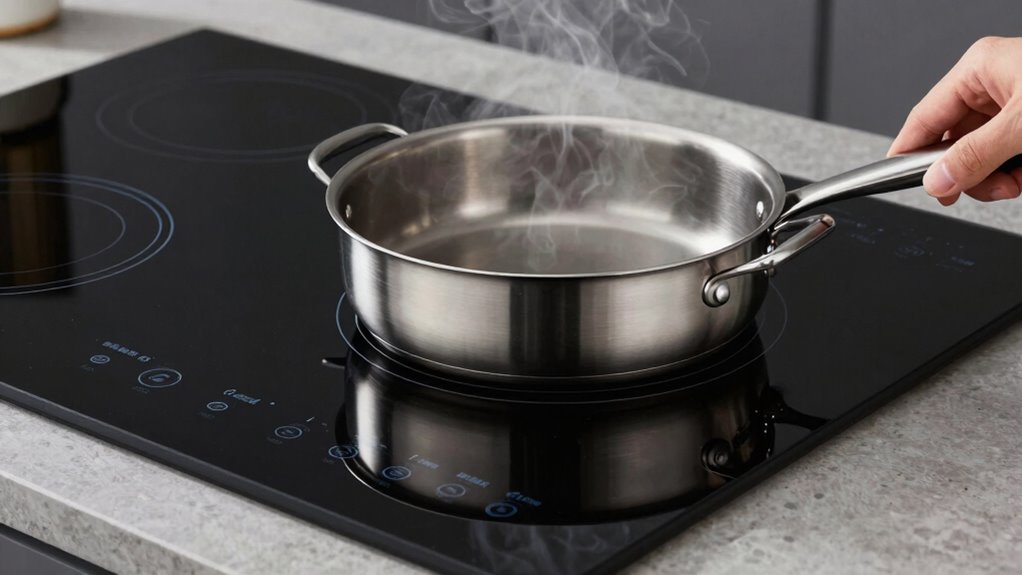
Before you start cooking on an induction cooktop, it’s important to check if your cookware is compatible. Induction cookware compatibility depends on whether your pots and pans have a magnetic base. To test this, see if a magnet sticks firmly to the bottom of your cookware. If it does, your cookware meets the magnetic base requirements for induction cooking. Not all materials work; aluminum, glass, and copper often aren’t suitable unless they have a magnetic layer added. Using incompatible cookware can result in uneven heating or no heat at all. Always verify magnetic base requirements before cooking to guarantee your cookware will work efficiently with your induction cooktop. This simple check saves you time and prevents frustration during meal preparation. Additionally, understanding DIY tools and safety tips can help you maintain and troubleshoot your cookware and cooktop safely. Knowing induction-compatible cookware can also extend the lifespan of your pots and pans and improve cooking results. For optimal performance, it’s helpful to understand induction heating principles so you can select the best cookware for your needs.
How to Choose the Right Size and Shape for Better Results
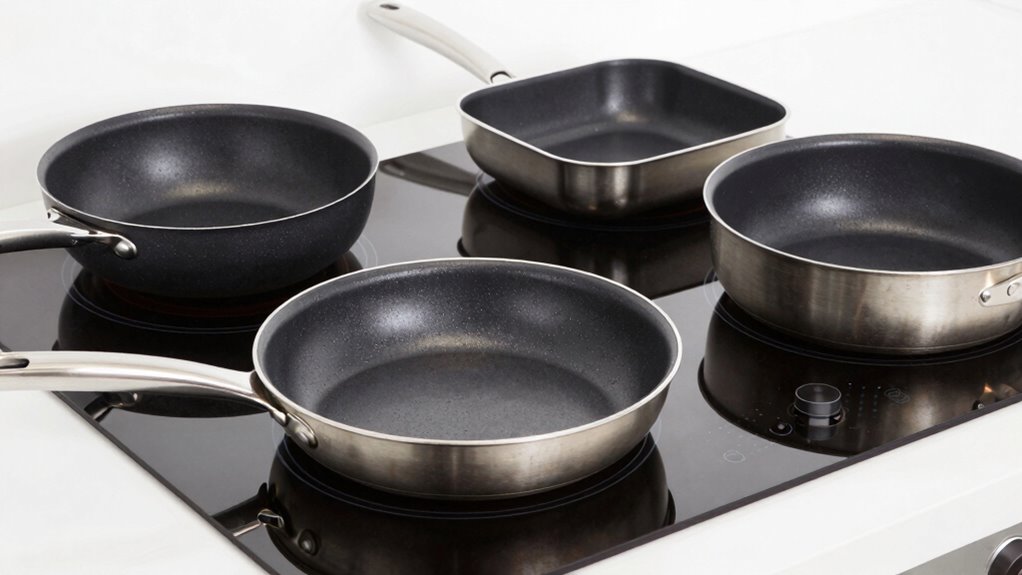
Choosing the right size and shape of cookware is essential for maximizing your induction cooktop’s efficiency and achieving better cooking results. Proper size compatibility ensures heat transfers effectively, preventing energy waste or uneven cooking. When considering shape considerations, opt for flat-bottomed pots and pans that match your cooktop’s surface for ideal contact. Avoid cookware that’s too small or too large, as this can lead to poor heat distribution. Keep these tips in mind:
Use flat-bottomed cookware that matches your cooktop’s size for optimal heat transfer.
- Match cookware size to burner diameter
- Use flat-bottomed cookware for better contact
- Avoid oversized or undersized pots
- Consider cookware with a wide, stable base
- Choose shapes that suit your cooking style
- Select induction-compatible cookware that work well with induction technology
To optimize heat transfer and energy efficiency, selecting induction-compatible cookware is crucial for the best results. Additionally, ensuring your cookware has a magnetic base enhances overall compatibility and performance, which is especially important since proper cookware material directly impacts heat conduction and safety. Incorporating size and shape considerations can significantly improve your cooking experience by ensuring consistent heat distribution and efficient energy use.
What Safety Features Should Induction Cookware Have?

To guarantee safety during cooking, your induction cookware should include specific features that prevent accidents and ensure reliable performance. Look for cookware with safety certifications, which confirm it meets industry standards for safety and quality. These certifications help you trust that the cookware is designed to operate safely with induction cooktops. Additionally, heat resistant handles are essential; they prevent burns when you’re moving or adjusting pots and pans. Handles made from heat-resistant materials reduce the risk of accidental injuries. Ensure the cookware’s handles are securely attached to avoid detachment during use. Overall, prioritizing safety certifications and heat resistant handles ensures your cooking experience remains safe, comfortable, and free from unnecessary hazards. Proper gear maintenance also plays a vital role in keeping your cookware in optimal condition and preventing potential safety issues. The material composition of your cookware can also influence its safety and durability, making it an important consideration when selecting induction-compatible pieces. For added safety, some cookware features thermal cutoff mechanisms that automatically disconnect heat if overheating occurs, providing an extra layer of protection.
Which Materials Are Best for Induction Cooking? Pros and Cons

Selecting the right material for your induction cookware can substantially impact safety, performance, and durability. Materials with good magnetic compatibility ensure your cookware heats efficiently, while those with excellent heat conduction provide even cooking. magnetic compatibility is essential for efficient induction cooking and optimal heat transfer. Proper material selection can also influence the cooking speed and energy efficiency of your appliance. Additionally, choosing materials with durability helps ensure your cookware lasts through years of use. Here are the best options:
- Cast iron: Highly magnetic, excellent heat conduction, durable, but heavy and may scratch glass surfaces.
- Stainless steel: Usually magnetic if bonded with a magnetic base; offers good heat conduction and durability.
- Carbon steel: Magnetic and heats evenly, lightweight, but requires seasoning to prevent rust.
- Magnetic stainless steel: Specifically designed for induction, ensuring magnetic compatibility and reliable heat conduction.
- Aluminum with magnetic base: Not naturally magnetic but compatible when combined with a magnetic layer; heats quickly but may lack durability.
Troubleshooting Common Induction Cookware Problems
Even the best induction cookware can encounter issues that disrupt your cooking experience. One common problem is pottery durability, which can be compromised if cookware cracks or chips easily. To prevent this, make certain you handle your pots and pans carefully, especially during cleaning. When addressing issues, proper cleaning techniques matter—avoid abrasive scrubbers that can damage the surface. If your cookware isn’t heating evenly, check for warping or damage to the base. Sometimes, residue buildup or improper cleaning causes problems; in such cases, a gentle scrub with non-abrasive cleaners can restore performance. Regularly inspect your cookware for cracks or chips, and replace damaged items promptly. Selecting high-quality materials can also help prevent durability issues. Additionally, understanding free floating principles can guide you in choosing the most durable and efficient cookware options. Being aware of material compatibility is essential for optimal performance and longevity. Recognizing quality materials and their properties can significantly extend your cookware’s lifespan. For example, choosing cookware with impact-resistant layers can help withstand everyday use and accidental drops. Troubleshooting these common issues helps maintain your cookware’s longevity and ensures smooth operation on your induction cooktop.
Frequently Asked Questions
Can Non-Metallic Cookware Be Adapted for Induction Use?
Non-metallic cookware can’t be directly used on induction cooktops because they require magnetic materials for induction adaptation. However, you can make them compatible by adding a ferromagnetic base or plate underneath. This allows the induction cooktop to detect the cookware and generate heat effectively. Just make certain the added layer is compatible and securely attached, so your non-metallic cookware can work with induction without compromising safety or performance.
How Do I Test if My Cookware Is Induction-Compatible?
Think of testing your cookware as opening a secret door. To see if it’s induction-compatible, perform a magnetic test by holding a magnet to the bottom—if it sticks, you’re good to go. Alternatively, check for an induction sticker, often found on the bottom. If either method confirms, your cookware is ready to work with your induction cooktop, ensuring efficient and safe cooking.
Are There Specific Brands Known for Quality Induction Cookware?
You should consider brands like All-Clad, T-fal, and Cuisinart, known for their strong reputation and adherence to material standards. These brands produce high-quality induction-compatible cookware that’s durable and efficient. You can trust their products to work well with induction cooktops, thanks to their consistent quality and reliable performance. When shopping, prioritize brands with positive reviews and proven material standards to guarantee you get the best induction cookware for your needs.
What Maintenance Tips Extend the Lifespan of Induction-Compatible Pots?
To extend your induction-compatible pots’ lifespan, follow regular cleaning routines using mild soap and a soft cloth to prevent scratches and residue buildup. Avoid abrasive cleaners or steel wool. Store your cookware properly — stack with protective padding or use pot organizers to prevent dents and scratches. Additionally, avoid sudden temperature changes and handle with care. These practices keep your pots in top shape and make certain they work efficiently on your induction cooktop.
Is It Safe to Use Damaged or Warped Cookware on Induction Stoves?
Did you know that using damaged or warped cookware can increase your risk of accidents? It’s not safe to use warped pans on induction stoves because Cookware safety is compromised, leading to uneven heating and potential damage to your cooktop. Warped pan risks include poor heat transfer and instability, which can cause spills or burns. Always inspect your cookware, and replace any warped or damaged pieces for safe, efficient cooking.
Conclusion
Make sure your cookware is compatible with induction to enjoy efficient cooking. For example, if you notice your pots aren’t heating, checking their material can save you time and frustration. Prioritize the right size, safety features, and quality materials to enhance your experience. With the right setup, you’ll cook faster, safer, and more precisely—turning everyday meals into satisfying results. So, double-check your cookware, and get ready to master induction cooking with confidence.
Halloween Picks
halloween
As an affiliate, we earn on qualifying purchases.