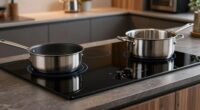
Choosing the right range hood size depends on matching the CFM airflow with your cooktop size, properly installing ducting for maximum efficiency, and minimizing noise for a better cooking experience. A hood should be well-sized and correctly vented to remove smoke, odors, and grease while staying quiet. Ensuring proper installation and maintenance keeps your system running smoothly. Want to know more tips on sizing and installation? Keep exploring to get it just right.

Get furniture and decor delivered free with Prime
- Fast, free delivery on millions of items
- Prime Video, Amazon Music and more included
- Member-only deals all year
Key Takeaways
- Proper hood sizing matches width and CFM to your cooktop for effective ventilation and air quality.
- Calculate CFM based on kitchen volume and desired air changes per hour for optimal airflow.
- Use straight, short ducting with smooth material to maximize airflow and reduce noise.
- Choose noise-reducing features and soundproofing to maintain a quiet kitchen environment.
- Regular maintenance of filters and ductwork ensures long-term performance and efficiency.
As an affiliate, we earn on qualifying purchases.
Why Proper Range Hood Sizing Ensures Efficient Ventilation
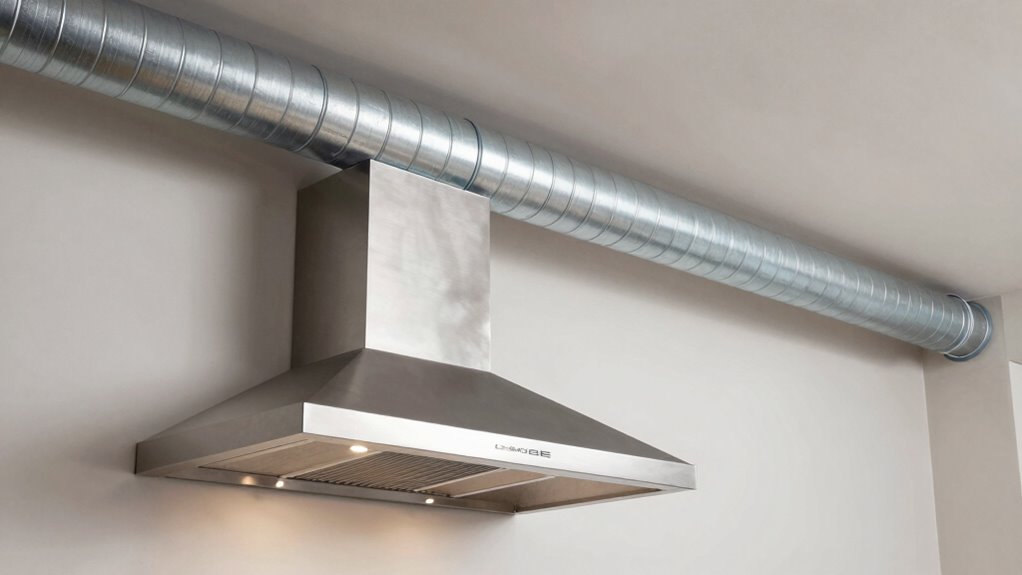
Proper range hood sizing is crucial because an undersized hood can’t effectively remove smoke, grease, and odors, leading to poor indoor air quality. When your vent is too small, airborne contaminants linger, making your kitchen less safe and more uncomfortable. Poor air quality can cause respiratory issues and exacerbate allergies, compromising your health. Additionally, inadequate ventilation increases the risk of grease buildup and fire hazards, jeopardizing kitchen safety. A properly sized range hood ensures efficient airflow, quickly capturing smoke and odors before they spread. This helps maintain air quality and prevents the buildup of harmful residues. Proper sizing also supports ventilation efficiency, ensuring your kitchen remains clean and safe. Selecting the correct size involves understanding CFM requirements, which are essential for optimal performance. This supports good air circulation and creates a safer, more comfortable cooking space for you and your family. Proper sizing is essential for effective, safe kitchen ventilation.
How to Calculate the Right CFM for Your Kitchen

Calculating the right CFM (cubic feet per minute) for your kitchen is essential to guarantee your range hood improves air quality and maintains energy efficiency. Start by measuring the size of your cooking area—multiply the length by width and height to find the total volume in cubic feet. Then, multiply this volume by 15 to 20 air changes per hour, depending on how much you cook. This calculation gives you the minimum CFM needed. Higher CFM ratings can improve air quality by removing smoke, grease, and odors more effectively, but they also consume more energy. Finding the right balance helps your range hood work efficiently without wasting energy. Proper sizing ensures good ventilation, better air quality, and maximum energy use.
Ducting Options and How They Affect Range Hood Performance
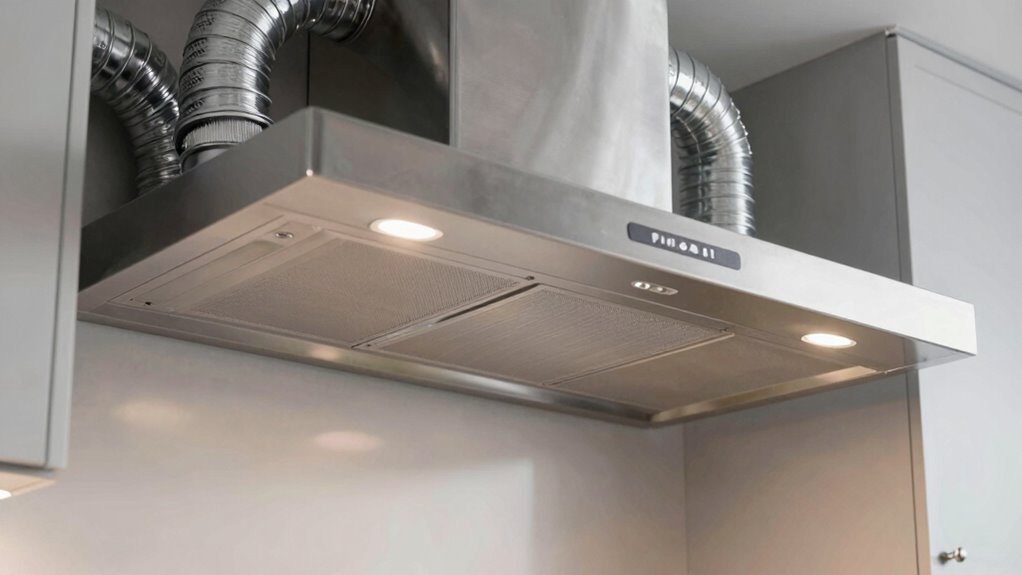
Choosing the right ducting options is essential because they directly impact how effectively your range hood removes smoke, grease, and odors. The ducting materials you select, like metal or flexible aluminum, influence airflow and durability. Metal ducts provide smoother airflow, reducing resistance and improving performance, while flexible ducts are easier to install but may cause airflow restrictions. Venting configurations also matter; straight, short ducts with minimal bends maximize efficiency by reducing airflow resistance. Longer or convoluted duct runs increase static pressure, decreasing your hood’s ability to vent air quickly. Properly sealed duct joints prevent leaks, ensuring pollutants are effectively expelled. By choosing appropriate ducting materials and venting configurations, you optimize your range hood’s performance and maintain a cleaner, healthier kitchen environment.
How Noise Levels Impact Your Cooking Experience
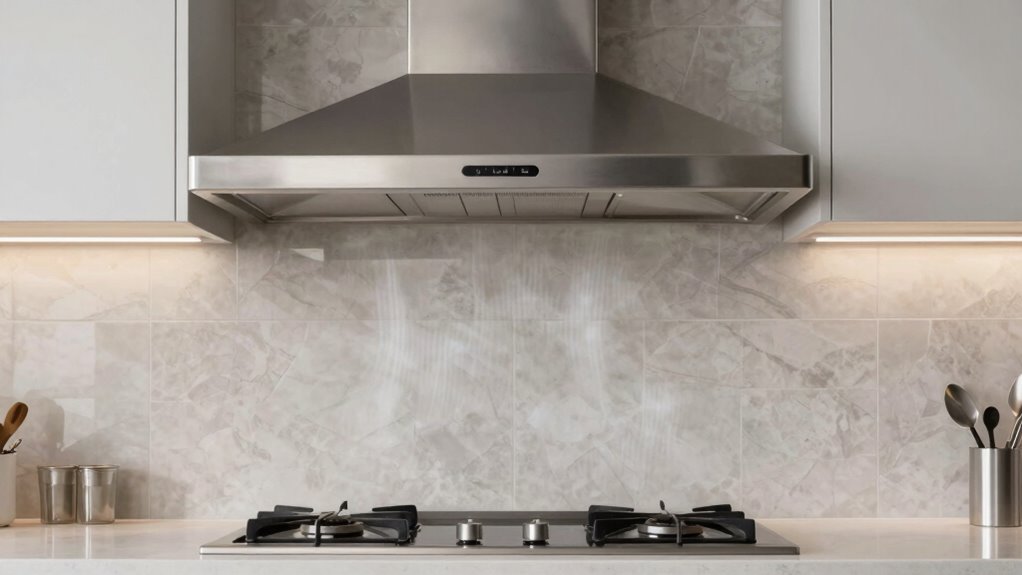
The noise from your range hood can considerably affect your cooking environment, making it harder to enjoy conversations or focus on your recipes. Managing sound levels is essential to create a comfortable space, especially if you often cook for family or guests. Choosing a quieter model can enhance your overall experience and keep your kitchen atmosphere pleasant. Additionally, selecting a range hood with sound-dampening features can significantly reduce noise levels and improve your cooking ambiance. Incorporating wall art trends, such as acoustic panels or decorative soundproofing elements, can also help absorb sound and further improve your kitchen’s acoustic environment. Understanding noise management strategies can further optimize your space and ensure a peaceful cooking experience. For those seeking to enhance their kitchen’s performance, considering performance parts like soundproofing solutions can make a notable difference in your daily routine, especially when integrating soundproofing gear to minimize disruptive noise.
Noise and Cooking Atmosphere
Have you ever noticed how noise from your range hood can disrupt the cooking experience? Excessive noise can make your kitchen feel less inviting and even interfere with conversations or listening to music. Good sound insulation helps reduce the impact of ambient noise, creating a more comfortable atmosphere. When your range hood operates quietly, it allows you to focus on your cooking without distraction. High noise levels can also increase stress and fatigue over time. Choosing a hood with proper sound insulation minimizes these issues, making the environment calmer. Additionally, Free Floating designs in range hoods can contribute to quieter operation by reducing vibrations and noise transmission. Incorporating soundproofing materials around your range hood installation can further enhance noise reduction and overall comfort. Understanding the importance of acoustic engineering can help you select and install range hoods that optimize noise control. Paying attention to sound transmission class (STC) ratings can guide you in choosing more effective soundproofing solutions. Properly designed ventilation systems that account for airflow dynamics also contribute to quieter operation by minimizing turbulence and noise. By maintaining a peaceful cooking atmosphere, you enjoy your time in the kitchen more and prevent noise from becoming a source of frustration. Ultimately, quieter operation enhances both comfort and overall cooking satisfaction.
Managing Sound Levels
Ever wonder how loud your range hood should be to avoid disrupting your cooking? Managing sound levels is key to a pleasant kitchen experience. Look for models with good sound insulation; this helps contain noise and reduces disturbance. Noise reduction features, like quieter motors or insulated ducting, can make a big difference. Keep in mind that higher CFM hoods tend to be louder, so balance power with sound control. Installing soundproofing materials around the hood can also minimize noise transmission. Additionally, choosing a range hood with soundproofing techniques can help you better understand and optimize your kitchen environment. Being aware of piercing care and hygiene can remind you to create a comfortable space that promotes peace and reduces stress. Incorporating protective styling benefits in your range hood setup can also help maintain a quieter environment by reducing the need for frequent cleaning and maintenance. Ultimately, aim for a range hood that effectively ventilates without overpowering your space with noise. By choosing a model with solid sound insulation and noise reduction features, you’ll enjoy a quieter, more comfortable cooking environment.
Picking the Perfect Range Hood Size for Your Kitchen Layout

Choosing the right size for your range hood is essential to guarantee it effectively clears smoke, fumes, and odors from your kitchen. The ideal size depends on your cooktop’s width, ensuring full coverage. If your range is 30 inches wide, your hood should be at least 30 inches too. Consider the range hood aesthetics to match your kitchen style and material selection for durability. Proper sizing prevents air leaks and noise issues while maximizing efficiency. Use this simple guide to match your needs:
| Range Width | Hood Width | Recommended CFM |
|---|---|---|
| 24 inches | 24 inches | 300-400 |
| 30 inches | 30 inches | 400-600 |
| 36 inches | 36 inches | 600-900 |
| 42 inches | 42 inches | 900-1200 |
| 48 inches | 48 inches | 1200+ |
Ensuring your range hood is properly vented and installed is also crucial to maintain optimal airflow and safety in your kitchen.
Common Sizing Mistakes and How to Avoid Them
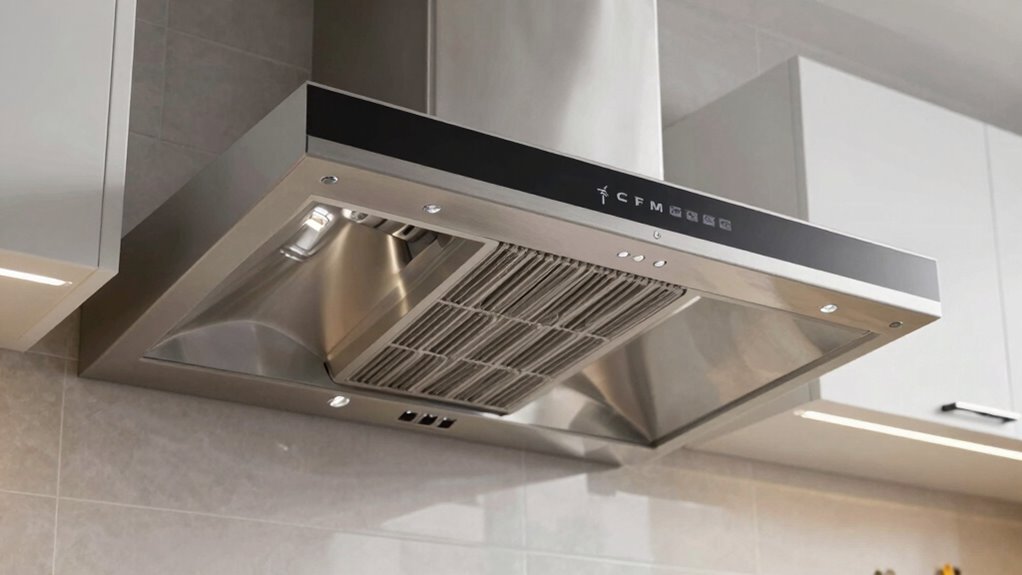
One common sizing mistake is selecting a range hood that’s too small for your cooktop, which can leave smoke and odors lingering in your kitchen. Another mistake is ignoring proper ventilation ductwork, which can reduce airflow and diminish hood performance. Poor ducting or overly long runs increase resistance, lowering efficiency and increasing noise. Additionally, improper hood mounting—such as installing it too high or too low—can compromise effectiveness and airflow. To avoid these errors, measure your cooktop and choose a hood with adequate CFM, considering duct length and duct diameter. Confirm your hood is mounted at the recommended height for ideal ventilation. Proper planning of ductwork and hood placement ensures your range hood works effectively, reducing smoke, odors, and noise. Paying attention to measurement accuracy and using proper tools can help ensure optimal sizing and performance. Additionally, understanding ventilation principles can help you make informed decisions for your specific kitchen setup, including factors like airflow dynamics that influence overall effectiveness. Being aware of duct resistance and how it impacts airflow can further optimize your installation.
Installing Your Range Hood for Maximum Efficiency
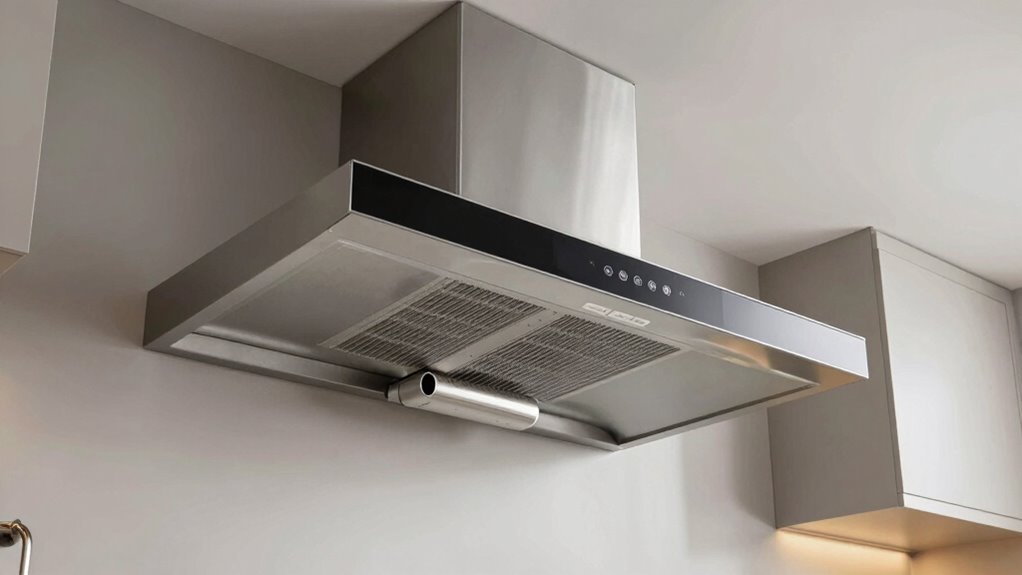
To guarantee your range hood operates at its best, proper installation is essential. Begin by ensuring the hood is securely mounted at the correct height—usually 24 to 30 inches above the cooktop—for ideal airflow. Check that all duct connections are airtight, reducing leaks that can compromise efficiency. When installing, pay attention to hood filters; they should be easily accessible for cleaning and replacement, maintaining proper ventilation. Prioritize installation safety by turning off power before starting and following the manufacturer’s instructions carefully. Proper ducting minimizes noise and maximizes airflow, so choose the right duct size and material. With careful installation, your range hood will perform efficiently, keeping your kitchen air clean and safe.
Maintaining Your Range Hood for Long-Term Performance

Regular maintenance is key to keeping your range hood performing at its best over time. To guarantee long-term performance, focus on these essential tasks:
Routine upkeep ensures your range hood runs efficiently and lasts longer.
- Clean or replace filters regularly to prevent grease buildup.
- Check and maintain proper fan lubrication to keep it running smoothly.
- Inspect ducting for obstructions or damage that could hinder airflow.
- Wipe down surfaces and filters to avoid dust and grease accumulation.
Frequently Asked Questions
How Often Should I Replace or Upgrade My Range Hood?
You should replace or upgrade your range hood every 5 to 10 years, depending on its condition and your maintenance schedule. If it becomes noisy, less effective, or shows signs of wear, it’s time to think about an upgrade. Regularly clean filters and inspect ducting to guarantee peak performance. Upgrading when needed helps maintain good air quality in your kitchen and ensures your range hood continues to serve you well.
Can a Larger CFM Fan Cause More Noise or Energy Use?
Yes, a larger CFM fan can cause more noise and increase energy consumption. As you upgrade to a higher CFM range hood, expect fan noise to rise because more powerful motors work harder. Additionally, it uses more energy to operate at higher speeds. If you want to balance performance and comfort, consider a fan with adjustable settings so you can reduce noise and energy use when full power isn’t needed.
What Are the Best Ducting Materials for Noise Reduction?
Did you know that using insulated ducting can reduce duct noise by up to 50%? To minimize duct noise, opt for smooth, rigid materials like galvanized steel or aluminum, which prevent sound vibrations. Insulation materials such as foil-backed fiberglass or mineral wool further absorb sound waves. These choices keep your kitchen quieter, making your cooking experience more enjoyable while also improving energy efficiency.
How Do I Measure My Kitchen’s Airflow Needs Accurately?
To measure your kitchen’s airflow needs accurately, start by calculating your kitchen’s volume (length x width x height). Then, consider the number of air changes per hour recommended for kitchen ventilation, typically 15-20. Multiply the volume by this number, and divide by 60 to get the required CFM. This airflow measurement guarantees your range hood effectively removes fumes, odors, and moisture, keeping your kitchen well-ventilated.
Are There Smart Range Hoods With Adjustable CFM and Noise Controls?
Yes, many smart range hoods come with adjustable CFM and noise controls. You can easily customize airflow and noise levels using smart controls on your phone or built-in touch panels. These hoods often feature sensors that automatically adjust CFM based on cooking activity, ensuring ideal ventilation while reducing noise. With adjustable settings, you get personalized comfort and efficiency, making your kitchen experience more convenient and quieter.
Conclusion
Getting your range hood size right is like finding the perfect fit—it keeps your kitchen fresh and your cooking quiet. By understanding CFM, ducting, and noise levels, you’ll create a space that’s both efficient and comfortable. Think of your range hood as the unsung hero of your kitchen, silently working behind the scenes. When you choose wisely and maintain it well, your cooking adventures will always be smooth sailing.
Fall Picks
fall essentials
As an affiliate, we earn on qualifying purchases.