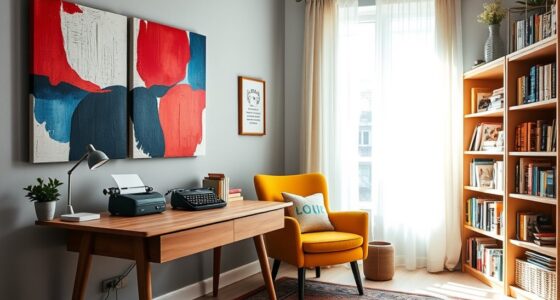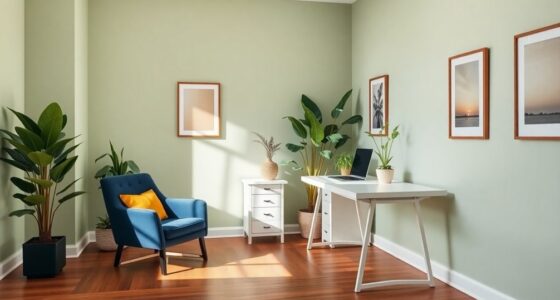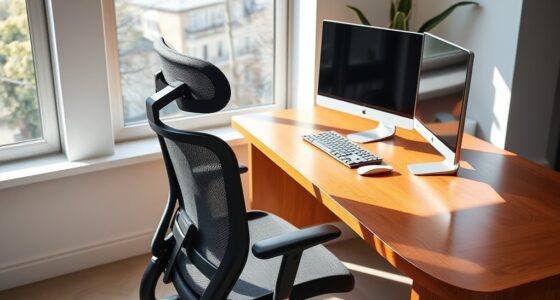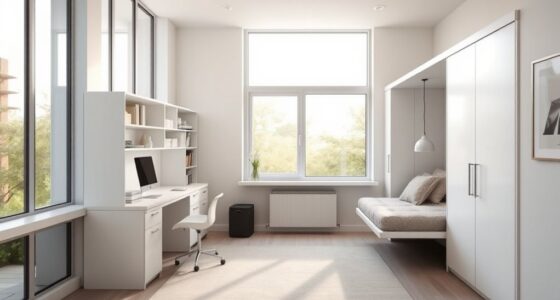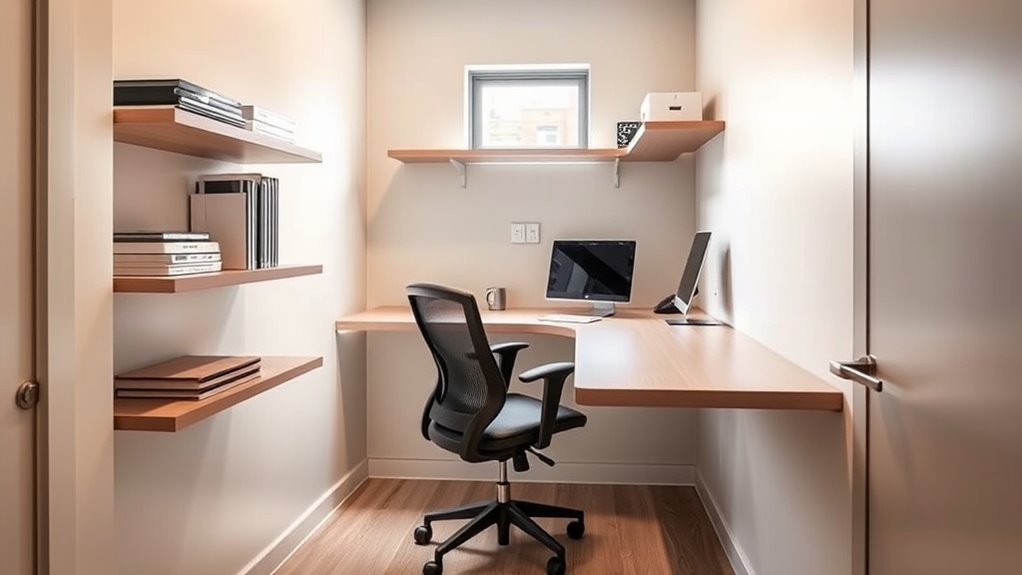

To design an office in a tight space, focus on smart storage like vertical shelves and multi-purpose furniture to maximize every inch. Choose ergonomic, compact furniture that promotes comfort without cluttering the area. Maximize natural light with keen window placement and use mirrors to enhance the sense of space. Keep surfaces clear and organized to maintain a tidy environment. Continue exploring these strategies to transform your small office into a productive, inviting space.
Key Takeaways
- Utilize vertical storage like wall-mounted shelves and tall cabinets to maximize limited space.
- Incorporate multi-purpose furniture such as fold-away desks and storage ottomans for versatility.
- Optimize natural light and add mirrors to visually expand the workspace.
- Choose compact ergonomic furniture with adjustable features suited for small areas.
- Keep surfaces clear and organized to enhance functionality and reduce clutter.
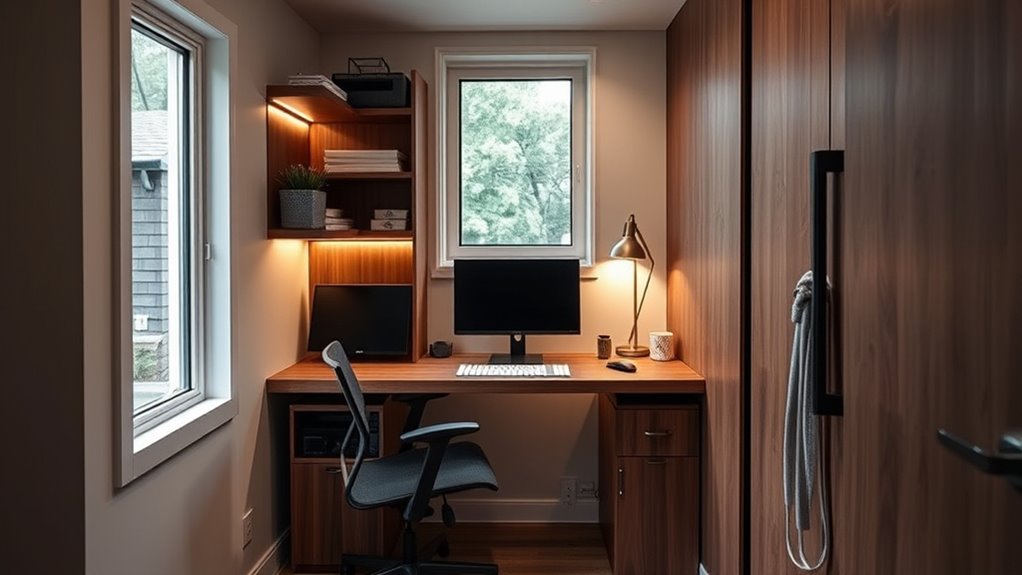
Are you struggling to make the most of a limited space? Small offices can be challenging, but with the right approach, you can create a functional, comfortable environment without feeling cramped. The key is focusing on storage optimization and choosing ergonomic furniture that maximizes every inch of your workspace. When space is tight, clutter quickly becomes a problem, so implementing smart storage solutions is essential. Think vertically—use wall-mounted shelves, pegboards, and tall cabinets to keep items organized and off your desk. Multi-purpose furniture, like desks with built-in drawers or ottomans that double as storage, helps reduce clutter while offering additional functionality. Every piece should serve more than one purpose, allowing you to keep essentials close at hand without sacrificing precious space.
Maximize small spaces with vertical storage and multi-purpose furniture for a clutter-free, functional office environment.
Ergonomic furniture plays an indispensable role in small workspace design because it enhances comfort and productivity without sacrificing space. Compact ergonomic chairs with adjustable features can fit into tight corners, providing proper support without crowding your desk. Look for space-saving desks with adjustable heights or foldable components that can be tucked away when not in use. Consider standing desks or sit-stand converters, which allow flexibility and help you avoid the pitfalls of prolonged sitting in a small area. When selecting furniture, prioritize pieces that promote good posture, as prolonged discomfort can reduce your efficiency and overall well-being. Ergonomic design isn’t just about comfort; it’s about creating a space where you can work efficiently and feel good doing it. Incorporating ergonomic solutions can also help prevent discomfort and injuries over time, contributing to your overall well-being.
Lighting is another essential element in small workspace solutions. Natural light should be maximized whenever possible—position your desk near windows and use light, airy curtains to avoid blocking sunlight. Supplement this with well-placed task lighting that doesn’t take up much space but provides ample illumination. Mirrors can also help make a small office feel larger by reflecting light and opening up the room visually. Adding a few strategic decorative elements, like plants or artwork, can personalize your workspace without cluttering it.
Ultimately, designing a small office requires intentional choices. Focus on storage optimization by keeping surfaces clear and using vertical space wisely. Select ergonomic furniture that fits your space and supports your health. By carefully balancing these elements, you’ll turn a tight workspace into a productive, inspiring environment. Small spaces can be just as efficient and inviting as larger offices—if you plan thoughtfully and prioritize functionality. With the right furniture and storage solutions, you’ll find that even the tiniest office can feel spacious, organized, and conducive to your best work. Being mindful of space management and ergonomic principles ensures your workspace remains both functional and comfortable.

MKO 8" Small Floating Shelves for Wall, Metal Wall Mounted Shelf for Bathroom, Bedroom, Living Room, Kitchen, Little Mini Tiny Display Hanging Shelves for Books/Storage/Room Decor 2 Packs, Black
Lightweight And Durable: Made of high-strength aluminum alloy, it is both light and stable
As an affiliate, we earn on qualifying purchases.
As an affiliate, we earn on qualifying purchases.
Frequently Asked Questions
How Can Natural Light Be Maximized in Small Offices?
You can maximize natural lighting in small offices by strategically placing windows to allow maximum sunlight exposure. Opt for larger or additional windows on exterior walls, and use glass partitions to distribute light more effectively. Keep window areas clear of heavy curtains or obstructions, and consider reflective surfaces to bounce light around the space. These steps will brighten your office and create a more inviting, productive environment.
What Are the Best Storage Solutions for Tight Spaces?
You can maximize your space by choosing vertical storage solutions that make use of wall height, freeing up valuable floor area. Pair this with modular furniture that adapts to your needs, easily reconfigured for different tasks. This combination transforms tight spaces into functional, organized work areas, allowing you to keep essentials at hand without clutter. Embrace vertical and modular design to create a smart, efficient office environment.
How to Choose Multifunctional Furniture for Small Workspaces?
To choose multifunctional furniture for small workspaces, focus on space-saving designs that maximize utility without cluttering. Look for pieces like fold-away desks, storage beds, or desks with built-in shelves. Prioritize versatile options that serve multiple purposes, such as a desk that doubles as a conference table or an ottoman with hidden storage. Guarantee the furniture complements your space and allows for easy movement, making your workspace efficient and comfortable.
What Color Schemes Optimize Small Office Environments?
You should choose light, neutral colors like soft blues, greens, or warm beiges to optimize your small office. These shades promote calmness and improve focus through positive color psychology. To enhance visual harmony, incorporate subtle accent colors that complement the base palette. This combination makes your space feel larger and more inviting, helping you stay productive and relaxed in a compact environment.
How Can Acoustic Privacy Be Maintained in Compact Offices?
Your small office can become a fortress of privacy with the right strategies. Use sound masking systems to drown out distractions and enhance focus. Install acoustic panels strategically around your workspace to absorb noise and create quiet zones. These solutions work together like a sound barrier, ensuring conversations stay private and reducing disruptions. With these tools, you’ll transform your compact office into a peaceful haven where productivity reigns supreme.

WOHOMO Folding Desk, Small Foldable Desk 31.5" for Small Spaces, Space Saving Computer Table Writing Workstation for Home Office, Easy Assembly, Oak
【Small Folding Desk for Small Spaces】Product dimensions is 15.75"D x 31.5"W x 29.52"H when it is unfold, which…
As an affiliate, we earn on qualifying purchases.
As an affiliate, we earn on qualifying purchases.
Conclusion
As you step into your compact office, envision every inch optimized like a carefully curated puzzle. With smart storage, fold-away desks, and cozy yet functional designs, your space transforms into a vibrant hub of productivity. The sunlight dances across your well-placed furniture, making the room feel open and inviting. In this tiny haven, you’ll find that clever design turns even the tightest space into a inspiring workspace where ideas flourish effortlessly.

BestOffice | Ergonomic Office Chair | Mid-Back Swivel Desk Chair | Breathable Backrest & Lumbar Support | Adjustable Height | Sponge Seat | Rolling Wheels | Dark Black | for Adults & Women
BREATHABLE MESH BACK: 100% ventilated mesh back promotes airflow to keep you cool and comfortable during long hours…
As an affiliate, we earn on qualifying purchases.
As an affiliate, we earn on qualifying purchases.

DUMOS 30in Storage Ottoman Bench, Storage Chest, End of Bed Foot Rest Stool with Padded Seat, Bedroom Bench for Living Room, Bedroom, Support 660lbs, Grey
【Sturdy & Comfortable】: This storage ottoman bench is supported by thick MDF panels for excellent stability. The top…
As an affiliate, we earn on qualifying purchases.
As an affiliate, we earn on qualifying purchases.