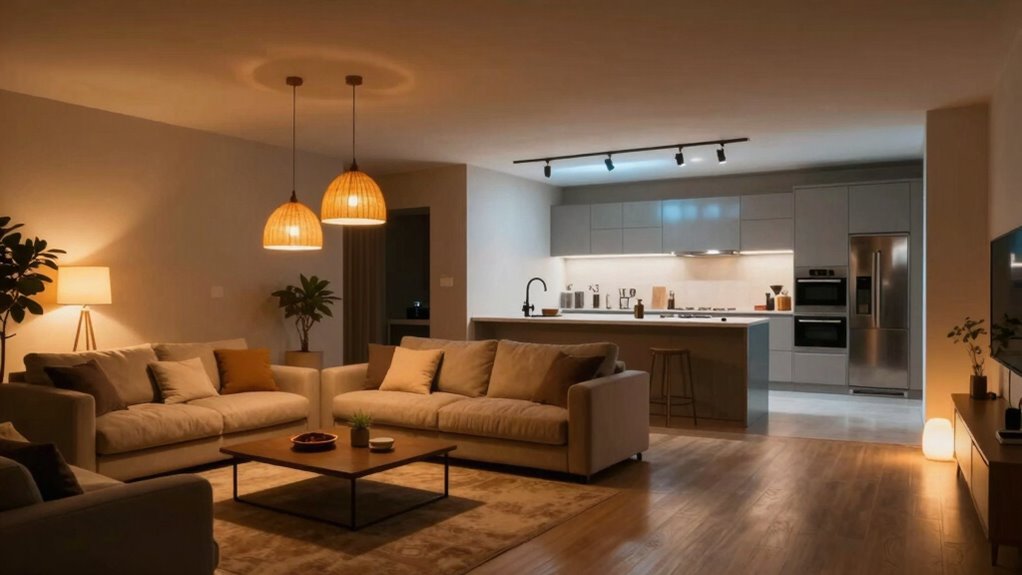

To separate zones in a large room with lighting, use a combination of ambient, task, and accent lighting to define each area. Soft, ambient lighting creates a warm, inviting backdrop, while focused task lights highlight specific functions. Incorporate different fixtures like pendant clusters, floor lamps, or dimmable options to add visual cues and contrast. Vary color temperatures and brightness levels to enhance mood and clarity. Keep exploring to discover more ways lighting can help you shape your space.

Get furniture and decor delivered free with Prime
- Fast, free delivery on millions of items
- Prime Video, Amazon Music and more included
- Member-only deals all year
Key Takeaways
- Use pendant clusters or fixtures to visually define and distinguish dining areas from living spaces.
- Incorporate different lighting temperatures (warm for cozy zones, cooler for task areas) for clear zone separation.
- Utilize layered lighting with dimmable ambient lights to create subtle boundaries without physical barriers.
- Add focused task lighting in work or reading corners to signal their specific function.
- Employ accent lighting to highlight architectural features or decor, enhancing visual separation and atmosphere.
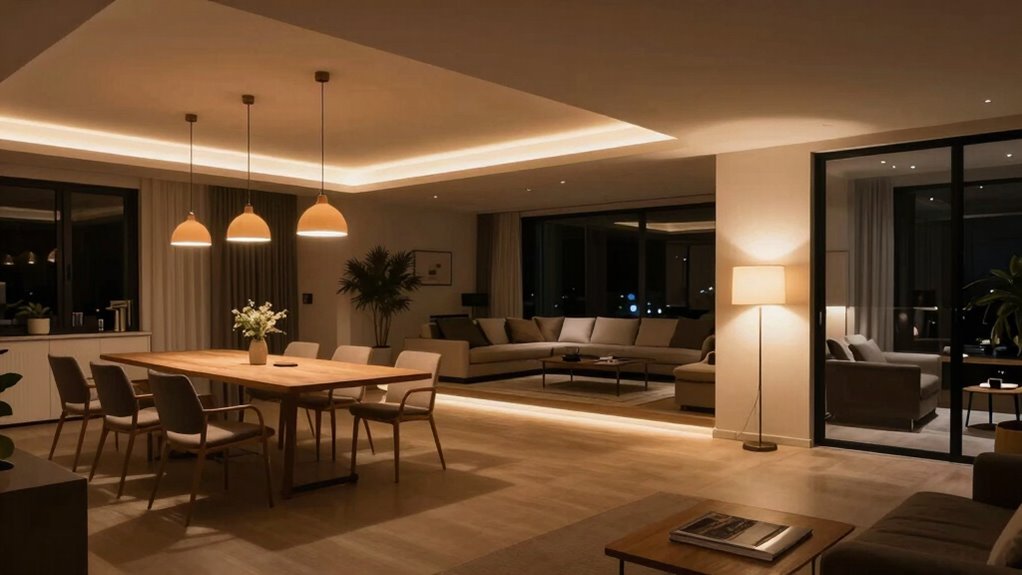
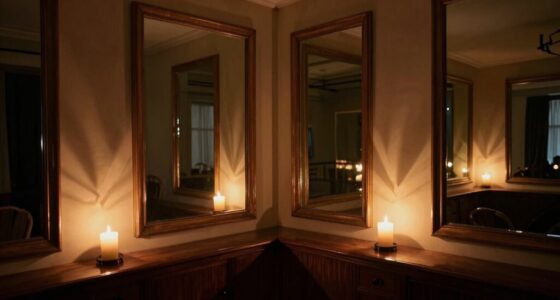
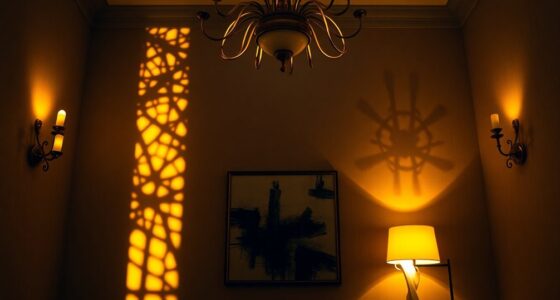
Ever wondered how to make a large open-plan room feel cozy and organized? The key lies in strategic lighting that defines different zones without closing off the space. Start by thinking about ambient glow. This soft, overall illumination sets the mood and creates a warm, inviting atmosphere. Use ceiling-mounted fixtures, recessed lights, or pendant lamps placed at different heights to subtly delineate areas. For example, install dimmable lights over the seating area to allow flexibility—bright enough for socializing and dim enough to relax. The ambient glow acts as a unifying element, tying the entire space together while still giving each zone its own personality.
Strategic ambient lighting defines zones, creating a cozy, unified open-plan space.
Next, focus on task illumination to clearly define specific areas like the kitchen, work nook, or reading corner. Task lighting provides bright, focused light where you need it most, making activities safer and more comfortable. Under-cabinet lights in the kitchen prevent shadows on countertops, while adjustable desk lamps in a work zone offer flexibility. In a reading nook, a wall-mounted or floor lamp with a directed beam ensures you don’t strain your eyes. By layering task illumination within each zone, you create visual cues that signal the purpose of each space, making the room feel more organized and functional.
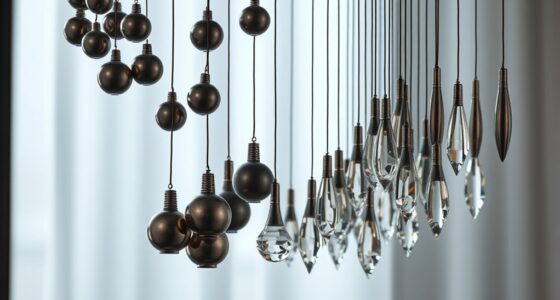
Using different lighting styles and fixtures can also help to visually separate zones. For instance, hanging a cluster of pendant lights over the dining table sets it apart from the living area. A floor lamp or a series of table lamps can add warmth and define a cozy corner, contrasting with the brighter overhead lights in the main space. Consider dimmer switches for all lighting points so you can adjust the mood according to your needs—bright and lively during the day, soft and intimate at night. This flexibility enhances the sense of separation without creating physical barriers, keeping the room feeling open yet intentional.
Finally, think about color temperature and brightness levels. Cooler tones (around 5000K) work well for task lighting, offering clarity and focus. Warmer tones (around 2700K to 3000K) produce a relaxing ambiance, perfect for the ambient glow that makes the space inviting. Incorporating layered lighting ensures each zone is distinct while maintaining visual harmony. By carefully balancing these elements, you can transform a sprawling open-plan room into a series of distinct yet harmonious zones. The right lighting doesn’t just illuminate; it guides the eye, sets the tone, and makes your large space feel both functional and welcoming.
dimmable pendant lighting fixtures
As an affiliate, we earn on qualifying purchases.
As an affiliate, we earn on qualifying purchases.
Frequently Asked Questions
Can Lighting Solutions Be Easily Changed or Adjusted Later?
Yes, lighting solutions can be easily changed or adjusted later if you use smart controls and adjustable fixtures. Smart controls let you modify brightness, color, and even schedules remotely, giving you flexibility. Adjustable fixtures, like dimmable or multi-directional lights, let you tailor the lighting to your needs over time. This setup makes it simple to update your space’s ambiance or function without a full overhaul, keeping your lighting versatile and adaptable.
What Are Budget-Friendly Lighting Options for Zone Separation?
You can create distinct zones with budget-friendly lighting options like affordable fixtures and DIY lighting projects. Imagine hanging string lights overhead to add a cozy glow or using clip-on lamps to spotlight different areas. Repurposing existing lamps or painting inexpensive fixtures can also personalize your space. These cost-effective ideas let you easily adjust or upgrade your lighting as your style evolves, making your big room feel more inviting and organized without breaking the bank.
How Does Natural Light Affect Zone Lighting Choices?
Natural illumination considerably influences your zone lighting choices. Daylight influence varies throughout the day and seasons, so you should adjust your artificial lighting accordingly. During the day, rely more on natural light to brighten spaces, reducing the need for harsh artificial lighting. In the evenings or on gloomy days, enhance your zones with targeted lighting to complement daylight, creating a balanced atmosphere that feels natural and comfortable.
Are There Safety Concerns With Specific Lighting Fixtures?
Like a vigilant guardian, you should prioritize fixture safety and follow lighting regulations to prevent hazards. Some fixtures, especially those used outdoors or in damp areas, need waterproof or explosion-proof designs. Make certain cords and bulbs are rated correctly, and avoid overloading circuits. By choosing fixtures that meet safety standards, you reduce fire risks and electrical issues, keeping your space both beautifully lit and safe for everyone.
How to Coordinate Lighting Styles Across Different Zones?
You should coordinate lighting styles across zones by choosing fixtures with similar design elements and color temperatures to create visual harmony. Use dimmer switches to adjust brightness levels and seamlessly blend zones when needed. Opt for warm or neutral color temperatures to maintain consistency, but consider cooler tones for specific tasks or accents. This approach guarantees a cohesive look while allowing flexibility to enhance each zone’s function and ambiance.
Conclusion
So, next time you’re feeling overwhelmed by your open-plan chaos, just remember: lighting isn’t just for setting mood—it’s your secret weapon to pretend you have a mansion instead of a glorified studio apartment. With a few well-placed fixtures, you can carve out cozy corners or dramatic drama zones, all while maintaining that effortless “designer” vibe. Who knew that shedding some light could make your sprawling space look less like a warehouse and more like a home?
Halloween Picks
halloween
As an affiliate, we earn on qualifying purchases.