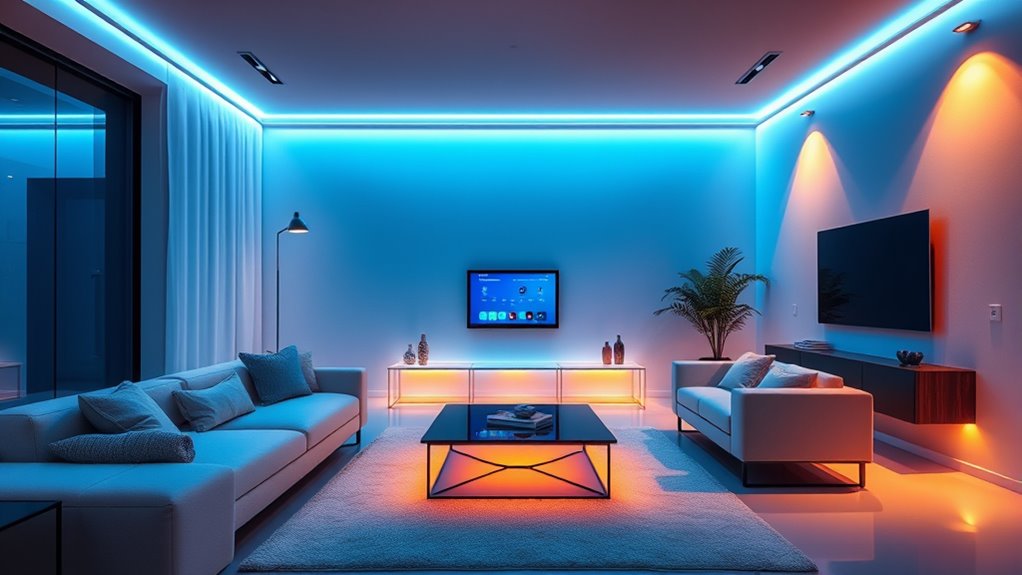

Smart lighting systems let you automate and customize your home’s illumination effortlessly. With advanced controls, you can schedule lights to turn on or off, adjust brightness and colors, and even set scenes for different activities. Integrating with voice assistants and other smart devices, these systems boost energy efficiency and create personalized moods. By exploring further, you’ll discover how smart lighting can transform your home into a more comfortable, efficient, and inviting space.
Key Takeaways
- Smart lighting systems enable automated control through scheduling, motion sensors, and integration with other smart home devices.
- Customizable features include adjustable colors, brightness levels, and scene settings to create personalized moods.
- Voice assistants like Alexa or Google Assistant simplify adjusting lighting preferences hands-free.
- Automation enhances energy efficiency by turning lights off or dimming based on presence or time of day.
- Integration with music, security, and climate controls creates cohesive, dynamic home environments.
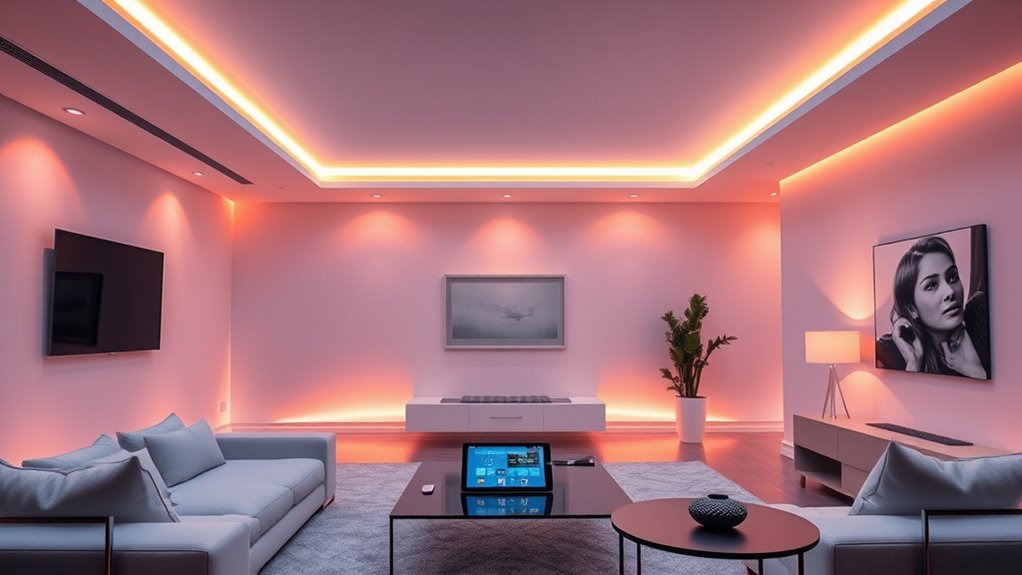
Have you ever wondered how modern lighting can adapt seamlessly to your lifestyle? Smart lighting systems make this possible by allowing you to control and customize your illumination effortlessly. These systems harness advanced technology to deliver energy efficiency and mood enhancement, transforming how you experience your living space. Instead of traditional switches, you can use your smartphone, voice commands, or automated schedules to turn lights on and off, dim, or change colors. This flexibility means you’re not just saving energy but also creating the perfect ambiance for any moment, whether it’s a cozy movie night or an energizing morning routine.
Energy efficiency is at the heart of smart lighting. Unlike conventional bulbs that burn power even when not needed, smart LED lights are designed to consume less energy while providing brighter, more customizable illumination. You can set schedules so lights turn off automatically when you leave a room or wake up just before you get out of bed. Motion sensors detect your presence and adjust lighting accordingly, ensuring that no energy is wasted. Over time, these features considerably cut down your electricity bills and reduce your carbon footprint. Plus, because these systems are scalable, you can start with a few smart bulbs and expand as needed, making energy conservation both easy and affordable.
Beyond saving energy, smart lighting elevates your mood through thoughtful customization. Different lighting colors and intensities influence how you feel. For example, bright, cool whites are ideal for work or focus, while warm, dimmed lights create relaxing environments for winding down. With the ability to program lighting scenes, you can instantly set the right mood for any activity. Imagine walking into your home after a long day and having the lights automatically shift to a calming amber hue, instantly relaxing you. Or, during a gathering, you can adjust the lighting to a vibrant, lively tone that energizes your guests. This level of control helps you craft atmospheres that suit your emotional needs, making your space feel more personalized and inviting. Additionally, understanding lighting control systems can help you optimize your setup for maximum comfort and efficiency.
Furthermore, smart lighting systems integrate seamlessly with other smart home devices, allowing you to automate routines effortlessly. You can synchronize lighting with music, security systems, or climate controls to create a cohesive environment. Voice assistants like Alexa or Google Assistant make adjustments even more straightforward—just a simple command is enough to change the lighting or set a scene. This automation not only adds convenience but also enhances your overall well-being by simplifying daily routines and helping you stay organized. In essence, smart lighting systems do more than illuminate—they transform your home into a smarter, more efficient, and mood-enhancing sanctuary tailored to your lifestyle.

Govee Smart Light Bulbs, Color Changing Light Bulb, Work with Alexa and Google Assistant, 16 Million Colors RGBWW, WiFi & Bluetooth LED Light Bulbs, Music Sync, A19, 800 Lumens, 4 Pack
16 Million DIY Colors: Govee smart light bulbs own millions of color and 54 preset scene modes, you…
As an affiliate, we earn on qualifying purchases.
As an affiliate, we earn on qualifying purchases.
Frequently Asked Questions
Can Smart Lighting Systems Be Integrated With Voice Assistants?
Yes, smart lighting systems can be integrated with voice assistants. You can use voice command integration to control your lights effortlessly, making adjustments with simple voice prompts. Just make sure your system has device compatibility with your preferred voice assistant, like Alexa, Google Assistant, or Siri. This seamless integration allows you to turn lights on or off, dim, or change colors using voice commands, enhancing convenience and automation in your home.
What Is the Typical Lifespan of Smart Light Bulbs?
Smart light bulbs usually last around 15,000 to 25,000 hours, enough to light up your life for what feels like an eternity. This means you might only need to replace them every 3 to 5 years, depending on usage. The key is bulb longevity, which varies with brand and type. With proper care, you can enjoy consistent illumination without frequent replacement, making your smart lighting investment truly worthwhile.
Are Smart Lighting Systems Energy-Efficient Compared to Traditional Lighting?
Smart lighting systems are more energy-efficient than traditional lighting, helping you save on energy costs and reduce environmental impact. By automatically adjusting brightness and turning off lights when not in use, you optimize energy savings. These systems also use LED bulbs, which consume less power and last longer. Overall, switching to smart lighting benefits both your wallet and the environment by lowering energy consumption and minimizing waste.
How Secure Are Smart Lighting Systems From Hacking?
Smart lighting systems are generally secure, but you should be aware of cybersecurity risks and privacy concerns. Hackers can exploit vulnerabilities if your system lacks strong passwords or updates. To protect yourself, regularly update firmware, use secure Wi-Fi networks, and enable two-factor authentication. By staying vigilant, you minimize the chances of hacking and safeguard your personal data, ensuring your smart lighting remains both convenient and secure.
What Are the Costs Involved in Installing a Smart Lighting System?
The costs involved in installing a smart lighting system depend on several factors, including the complexity of your setup, the number of fixtures, and the brand you choose. Installation expenses can vary if you hire a professional or opt for DIY. Typically, you should budget for smart bulbs, switches, hubs, and installation costs. Keep in mind that upgrades and additional features may increase overall expenses, but the convenience often outweighs the initial investment.

OUTON Pathway Lights Outdoor, Smart Low Voltage Landscape Lighting with RGB and 2200K-6500K White, APP Voice Remote Control, IP65 Waterproof Aluminum Walkway Lights for Yard Garden Patio, 4 Pack
Smart Control For Effortless Outdoor Lighting: Control these pathway lights outdoor your way with the app, remote, or…
As an affiliate, we earn on qualifying purchases.
As an affiliate, we earn on qualifying purchases.
Conclusion
So, you’ve gone from fumbling with switches to commanding your lights with a tap or a voice. Irony? Now, your smart lighting system might be more attuned to your schedule than your own reflection. While you enjoy perfectly timed illumination, remember, one day, your lights might just decide it’s time for a spontaneous disco or blackout—reminding you that even the smartest tech can have a sense of humor. Welcome to the future of illumination—where you’re never truly in control.
Govee Smart Light Bulbs, Color Changing Light Bulb, Work with Alexa and Google Assistant, 16 Million Colors RGBWW, WiFi & Bluetooth LED Light Bulbs, Music Sync, A19, 800 Lumens, 4 Pack
16 Million DIY Colors: Govee smart light bulbs own millions of color and 54 preset scene modes, you…
As an affiliate, we earn on qualifying purchases.
As an affiliate, we earn on qualifying purchases.

BroadLink Smart Home Starter Kit – Includes 3 Bulbs, 1 Scene Switch and 1 Hub, Uses FastCon and Bluetooth Low Energy Tech, Compatible with Alexa and Google Home
【Smart Home】BroadLink FastCon is a better smart home solution you can find, making your entire house smart in…
As an affiliate, we earn on qualifying purchases.
As an affiliate, we earn on qualifying purchases.