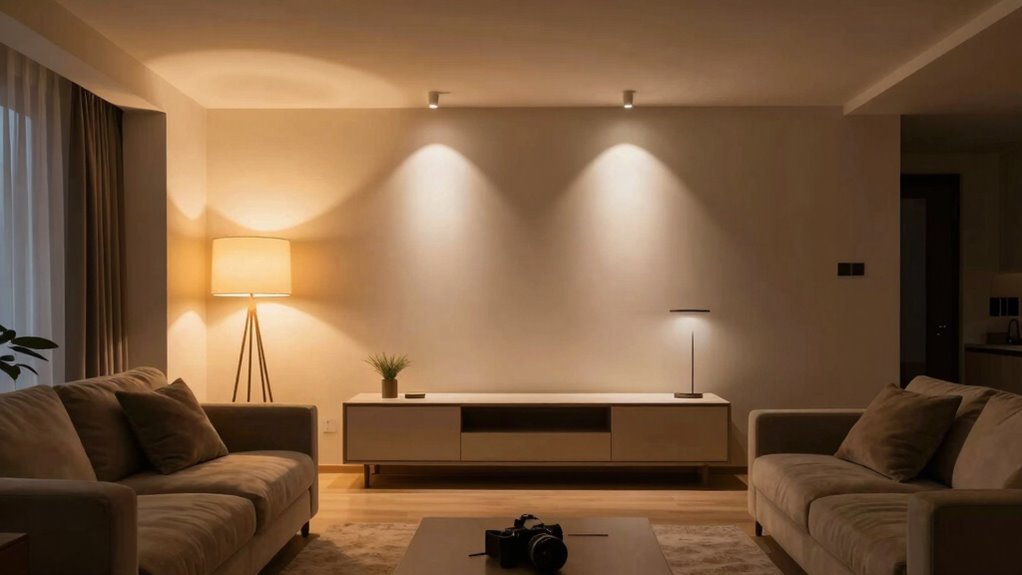

After sunset, you’ll want to layer your lighting with ambient, task, and accent lights to create a warm, inviting space. Start with ambient lighting, like ceiling fixtures or wall sconces, to fill the room with softness. Add task lighting where needed, such as reading lamps or under-cabinet lights, for function. Finally, incorporate accent lights to highlight features or artwork, adding depth and personality. Keep exploring, and you’ll discover how to blend these layers seamlessly for the perfect ambiance.

Get furniture and decor delivered free with Prime
- Fast, free delivery on millions of items
- Prime Video, Amazon Music and more included
- Member-only deals all year
Key Takeaways
- Incorporate ambient lighting as the base to create a warm, evenly lit environment after sunset.
- Use accent lighting to highlight architectural features, artwork, or focal points for added visual interest.
- Add task lighting in specific areas for activities like reading or cooking, ensuring functionality.
- Implement dimmers and smart controls to adjust lighting levels seamlessly based on mood and needs.
- Balance all layers to achieve a cohesive, inviting atmosphere that transitions smoothly from natural to artificial light.

Layered lighting is essential for creating a balanced, functional, and inviting space, and understanding the right formula can make all the difference. After sunset, this becomes even more critical, as natural light fades and your indoor environment needs to adapt. To achieve the perfect ambiance, you need to think about three key layers: ambient lighting, task lighting, and focal accents. These layers work together to produce a cohesive and inviting atmosphere that feels natural and comfortable.
Layered lighting creates a warm, inviting atmosphere by blending ambient, task, and accent lights for comfort and style after sunset.
Start with ambient glow, which serves as the foundation for your entire lighting scheme. It’s the soft, overall illumination that fills the room and sets the mood. After sunset, you’ll want to replace harsh overhead lights with warm, diffused lighting options like ceiling fixtures, wall sconces, or indirect LED strips. These sources create a gentle ambient glow that avoids stark contrasts and harsh shadows. The goal here is to provide even, overall illumination that makes the space feel cozy and welcoming. When you focus on ambient lighting, you guarantee that there’s enough light to see comfortably without overwhelming the senses. Recognizing layered lighting importance can help you craft a truly harmonious environment.
Next, introduce focal accents to highlight specific features or areas of interest. These are the lights that draw attention to artwork, architectural details, or a statement piece. When you incorporate focal accents, you add depth and personality to your space. Use directional spotlights, picture lights, or table lamps to create visual interest and guide your eye around the room. These accents should be subtle but deliberate, emphasizing the elements you want to showcase. Proper placement of focal accents not only enhances the aesthetic appeal but also makes your space feel curated and layered. Recognizing the importance of layered lighting** can help you craft a truly harmonious environment. Additionally, incorporating layered lighting techniques** allows you to customize the atmosphere for different occasions and moods, which is especially important in adapting to varying evening activities.
Then, consider task lighting for areas where you perform activities like reading, cooking, or working. These lights are more focused and brighter, providing clarity and reducing eye strain. After sunset, you might rely on adjustable desk lamps, under-cabinet lights, or reading lamps to assure you have adequate illumination for specific tasks. When combined with ambient glow and focal accents, task lighting completes your layered lighting scheme, allowing you to facilitate seamlessly from general comfort to specific functionality. An effective layering approach ensures you can easily switch between different activities and moods throughout the evening. Proper task lighting also helps prevent accidents and enhances productivity in your home environment.
Ultimately, the secret to effective layered lighting after sunset lies in balancing these layers. Use dimmers to fine-tune the intensity of ambient and accent lights, creating a dynamic environment that adapts to your mood and needs. When executed thoughtfully, this formula transforms your space into a warm, inviting haven that feels natural and perfectly lit, no matter the hour. Incorporating smart lighting solutions can further enhance this balance by allowing you to control lighting levels conveniently and precisely.
As an affiliate, we earn on qualifying purchases.
Frequently Asked Questions
How Do I Balance Natural and Artificial Lighting Effectively?
To balance natural and artificial lighting effectively, start by matching their color temperature for seamless integration. Use warm artificial lights in harmony with sunset hues, and cool tones during the day. Incorporate light diffusion to soften harsh shadows and create a cohesive look. Adjust your artificial lighting throughout the day, ensuring it complements natural light, enhancing ambiance without overpowering or clashing with the outdoor environment.
What Are the Best Fixtures for Layered Outdoor Lighting?
For layered outdoor lighting, choose fixtures like pathway illumination to guide your way safely, and incorporate accent fixtures to highlight landscape features. Use bollard lights or stake lights along walkways for clear, even illumination, and add spotlights or uplights to accent trees, sculptures, or architectural details. This combination creates depth and visual interest, ensuring your outdoor space is both functional and inviting after sunset.
How Does Weather Affect Nighttime Lighting Design?
You should consider weather patterns and seasonal variations when planning nighttime lighting. For example, in a region prone to heavy rain or snow, waterproof fixtures and corrosion-resistant materials become essential. Seasonal changes, like shorter winter days, might require brighter, more strategic lighting to compensate for reduced daylight. By adapting your design to these factors, you guarantee consistent, safe illumination throughout the year, regardless of weather conditions.
Can Layered Lighting Reduce Energy Consumption?
Yes, layered lighting can reduce energy consumption. By using energy-efficient fixtures and adjusting lighting layers based on need, you optimize illumination while minimizing waste. Incorporating sustainability practices, like motion sensors and dimming controls, further enhances energy efficiency. You can create effective nighttime lighting that saves power, supports environmental goals, and maintains a welcoming ambiance, all while reducing your overall energy costs.
What Safety Considerations Are Essential for Outdoor Lighting?
You should prioritize landscape safety by ensuring your outdoor lighting enhances pathway visibility, reducing accidents by up to 50%. Proper placement of lights prevents tripping hazards and deters intruders. Use fixtures that minimize glare and avoid overly bright lights that can disturb neighbors. Regularly check for damaged wiring or broken bulbs. Good outdoor lighting creates a safe environment and helps you enjoy your space confidently after sunset.
Conclusion
By mastering the layered lighting formula, you transform your space from mere functionality to a curated sanctuary. After sunset, the interplay of ambient, task, and accent lighting creates a symphony of shadows and highlights—an artful contrast that elevates your environment. Just as darkness reveals the subtlety of shadows, your thoughtful layering uncovers a depth and sophistication that turns a simple room into an enchanting retreat, proving that the right light, layered thoughtfully, makes all the difference.
Fall Picks
fall essentials
As an affiliate, we earn on qualifying purchases.