
TL;DR

Get furniture and decor delivered free with Prime
- Fast, free delivery on millions of items
- Prime Video, Amazon Music and more included
- Member-only deals all year
A Livingetc sofa-care report brings together expert advice on routine cleaning, cushions and upholstery labels. Its suggested methods depend on the fabric: readers should check the care tag, use minimal moisture for spot treatment and let the sofa dry fully before using it.
Livingetc has published a sofa-care guide combining cleaning advice from several industry experts, including a five-step routine for removing surface dirt and treating stains. The report says cleaning methods depend on the upholstery, and advises checking manufacturer instructions before using water, cleaning products or a washing machine.
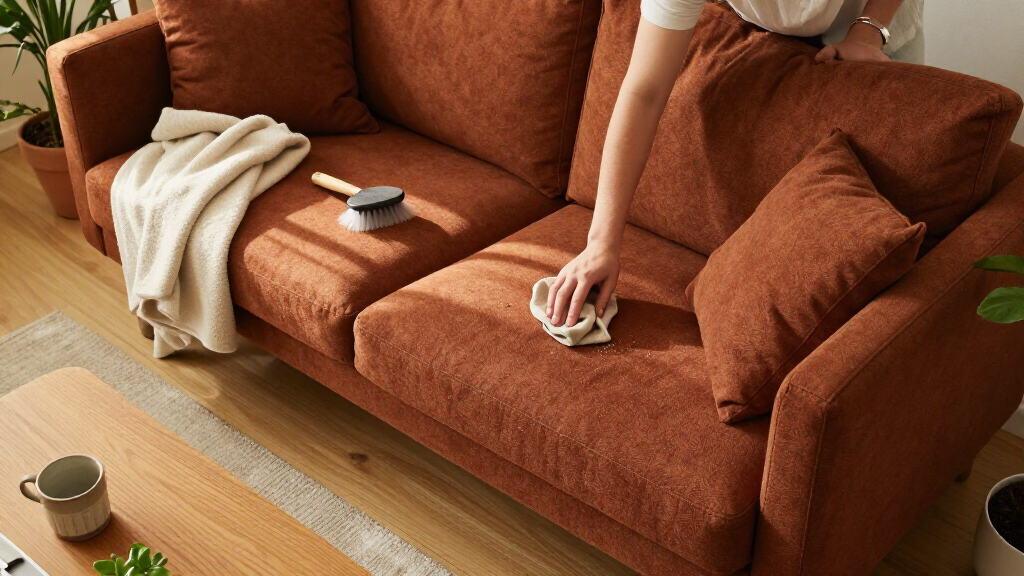
The five-step approach is attributed to Marla Mock, a cleaning expert and president of Molly Maid. It starts with brushing the sofa using a clean white towel or stiff brush to loosen dried material. The guide then recommends sprinkling baking soda over the couch, leaving it for at least 20 minutes and up to an hour, and vacuuming it off with a brush attachment.
For remaining stains, Mock suggests mixing a teaspoon of dishwashing liquid, a tablespoon of white vinegar and a cup of warm water, then adding a teaspoon of baking soda. The report advises spraying the solution onto a white cloth rather than directly onto the sofa, and gently dabbing or rubbing the affected area. It says the same mixture can be used to wipe down the sofa, but does not establish that the recipe is suitable for every upholstery material.
After cleaning, the sofa should be left to air-dry completely, with people staying off it for a few hours or until it is dry. For cushions, the guide recommends brushing first and spot-treating with a small amount of diluted cleaner rather than soaking the fabric. Covers should only be machine-washed if their care instructions allow it; the report says to check the label and avoid hot water, which can shrink or fade some covers.
Why Fabric Labels Matter
The advice matters because the same cleaning method can have different results across upholstery types. Using water or solvent on a fabric that does not tolerate it may damage the sofa, while excess moisture can leave cushions damp. Checking the care label first gives owners a way to avoid treating all sofas as if they were made from the same material.
The report also distinguishes regular upkeep from deeper cleaning. It cites cleaning expert Elizabeth Shields, operations manager at Super Cleaning Service Louisville, as recommending a seasonal deep clean. Shields says sofa covers that can be removed may need deep cleaning only twice a year, while a weekly vacuum can help with routine maintenance. These are expert recommendations in the report, not a universal schedule for every household or fabric.
As an affiliate, we earn on qualifying purchases.
Cleaning Advice by Sofa Material
Livingetc’s report frames sofa care around how frequently couches are used and the type of upholstery they have. It recommends routine removal of dust, hair and loose debris, followed by more targeted cleaning when needed. Shields says she uses a lint roller for pet hair and makes a quick weekly pass with a vacuum; that is her personal routine as described in the article, not a requirement for all homes.
The guide also lists common upholstery-label codes supplied by Rocky Vuong, founder of Neatbrite: “W” or “WS” indicates water-based upholstery cleaners; “S” or “SW” indicates solvent cleaners; and “X” means vacuuming and light brushing only. The article advises readers to follow the care tag and manufacturer instructions, particularly before washing removable covers.
““Next up, sprinkle the entire couch with baking soda, and let it sit for at least 20 minutes, up to an hour.””
— Marla Mock, president of Molly Maid, as quoted by Livingetc
What the Guide Does Not Specify
The supplied report does not give a publication date, identify which upholstery fabrics are compatible with its homemade cleaning mixture, or provide test results showing how it performs on different stains. It also does not fully explain how to remove red wine or eliminate odors, despite raising those topics in its introduction. The excerpt ends during its discussion of washing sofa covers, so further care instructions may have appeared beyond the material provided.
Readers should not assume that baking soda, vinegar or water is safe for every sofa. The article’s label-code guidance offers a starting point, but the manufacturer’s care instructions remain the clearest source for a particular couch. Whether a professional cleaner is needed will depend on the fabric, stain and sofa maker’s recommendations.
Check the Tag Before Cleaning
The immediate next step for sofa owners is to locate the care label and identify whether the upholstery permits water-based cleaning, solvent cleaning, or only vacuuming and brushing. Owners should test any permitted cleaner on an inconspicuous area and avoid soaking cushions. If a removable cover is approved for machine washing, follow its label rather than assuming that all covers can go in the washer.
After spot treatment or a deeper clean, allow the sofa to dry fully before sitting on it. The Livingetc report provides no follow-up schedule or additional testing, so guidance for particular fabrics and persistent stains remains dependent on the manufacturer or a qualified upholstery-cleaning professional.
Key Questions
What cleaning method does the Livingetc report describe?
The method attributed to Marla Mock is to brush the sofa, apply baking soda for 20 minutes to an hour and vacuum it away, then use a cleaning solution on a cloth to treat stains. Let the sofa air-dry fully. Check the upholstery care instructions before using the method.
How often should a sofa be deep-cleaned?
Cleaning expert Elizabeth Shields recommends deep-cleaning a sofa once a season. She says covers that can be removed may need deep cleaning twice a year. The report presents these as expert recommendations, not a schedule that fits every sofa or household.
Can sofa cushion covers go in the washing machine?
Only if the manufacturer’s label says they can. Livingetc’s report recommends checking the laundering instructions before washing, and cautions against hot water because it can shrink or fade some covers.
What do the upholstery codes W, S and X mean?
According to the guide, W or WS permits water-based upholstery cleaners, S or SW indicates solvent cleaners, and X means vacuuming and light brushing only. Follow the specific manufacturer’s instructions for the sofa.
Source: rss
Fall Picks
fall essentials
As an affiliate, we earn on qualifying purchases.