
TL;DR

Get furniture and decor delivered free with Prime
- Fast, free delivery on millions of items
- Prime Video, Amazon Music and more included
- Member-only deals all year
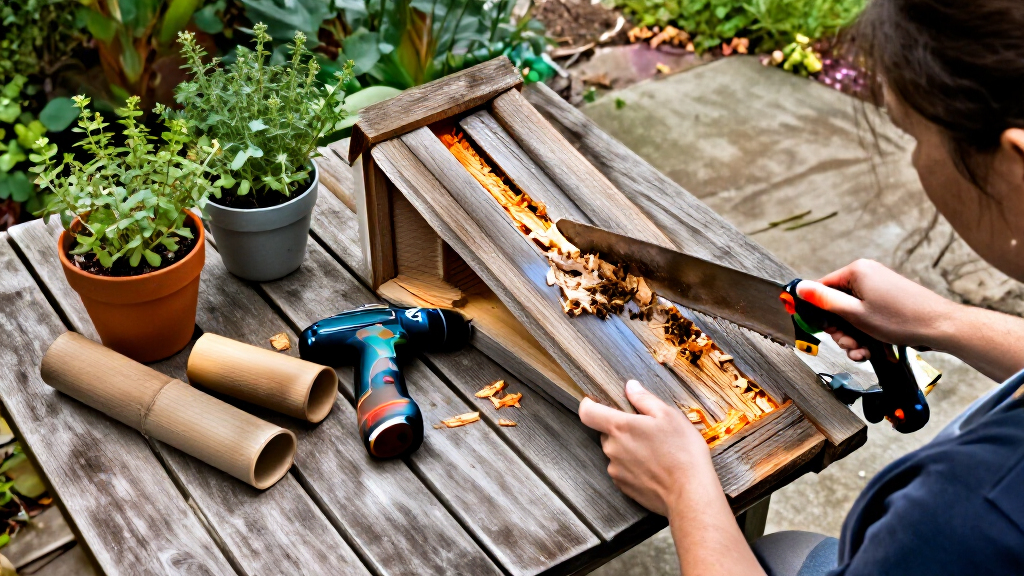
A Nature Yardlife YouTube tutorial shows a gardener turning an untreated cedar fence board into a small, roofed nesting house for mason bees. The project uses removable nesting tubes and offers a way to provide solitary bees with nesting cavities alongside flowers for food.
A Nature Yardlife YouTube tutorial shows how to turn an extra, untreated cedar fence board into a small, roofed nesting house for mason bees, giving gardeners a way to add nesting cavities as well as flowers to a backyard. The design uses removable nesting tubes and basic woodworking supplies; the report does not provide evidence about how many bees the house attracts or whether it has been independently tested.
The finished structure has an overhanging roof, side panels, a back and floor, and an upper compartment for nesting tubes. The tutorial also shows an optional divider that creates a lower compartment, which the maker uses for bee cocoons. Its dimensions depend on the fence board and the length of the tubes, so the report advises choosing the tubes before cutting the wood.
The materials listed include an untreated cedar board, a tape measure, pencil, saw and sandpaper. Assembly can use screws and a drill or a brad nailer with suitable fasteners. The builder also needs mounting hardware and removable tubes made for mason bees; paper liners are optional. The supplied report describes the design and process but does not give a tested build time, exact measurements or a cost.
After sanding rough edges, the sides and back are joined, followed by the floor and roof. A scrap-wood strip attached to the back can serve as a mounting point on a tree or post. The tutorial recommends fixing the house firmly beneath cover and facing it east, where it can receive morning sun. The report says that warmth can help bees become active after a cool night, but does not quantify any effect on nesting success.
A Nesting Place Alongside Garden Flowers
The project addresses one part of making a yard more hospitable to solitary mason bees: providing places to nest, not just plants to visit. According to the source, these bees use existing cavities to raise their young rather than living in a shared, honeybee-style hive. Nesting tubes are intended to imitate small cavities that bees might otherwise find in hollow stems and similar spaces.
For readers, the practical point is modest but useful: a leftover board can become a purpose-built structure without requiring an elaborate build. A bee house is not, on its own, a guarantee that bees will arrive or thrive. The report recommends pairing the structure with bee-friendly flowers and landscaping, so potential visitors have a source of food as well as a place to nest.
Maintenance also matters. The source recommends removable tubes that can be cleaned or replaced seasonally, warning that reused nesting materials without proper care can allow parasites and disease to build up. The tutorial is a home-gardening project, not a study measuring its effect on local bee populations.
As an affiliate, we earn on qualifying purchases.
How the Fence-Board Design Works
The report describes mason bees as solitary bees that raise young in existing cavities, rather than sharing the kind of hive associated with honeybees. The house’s tubes provide enclosed spaces for that nesting behavior. The design therefore differs from building a honeybee hive: its central feature is a set of individual nesting channels, not a colony chamber.
Planning starts with the tubes because their length determines how deep the housing should be. The maker then cuts matching side panels, with one side higher than the other to angle the roof toward the front. The roof should extend beyond the sides and entrance. Once the pieces are assembled and smoothed, the tubes go in the upper section and the completed house is mounted under cover.
Hunker’s report is based on a tutorial from Nature Yardlife on YouTube. Its description includes a note that the publisher may receive a commission from purchases made through links. The supplied source does not state when the video was posted or provide independent testing of the design.
““Use removable tubes so you can maintain them seasonally.””
— Hunker report on the tutorial
What the Tutorial Does Not Establish
The supplied report does not say how many bees have used a completed house, whether the design has been tested across different climates, or how much it costs to build. It gives no exact cut list or board dimensions, leaving builders to size the structure around their chosen tubes and available lumber. It also does not identify a particular location or specify which mason bee species the tutorial targets.
The source offers general placement and maintenance guidance but does not provide a detailed schedule for cleaning, replacing tubes or handling cocoons. Its recommendation to use removable tubes and maintain them seasonally should not be read as a guarantee against pests or disease. Whether a house attracts bees will depend on local conditions, including the availability of suitable nesting materials and flowers.
Planning and Maintaining the Bee House
For anyone following the tutorial, the next practical step is to select mason-bee nesting tubes and plan the housing depth around them before marking cuts. Builders can then assemble the box, smooth splinters, add mounting hardware and place it firmly beneath cover, following the tutorial’s east-facing recommendation where suitable.
The source advises pairing the house with flowers and other bee-friendly landscaping, then maintaining or replacing removable tubes seasonally. It does not announce a follow-up test or monitoring project, so results from the design remain unreported. Any assessment of its use would depend on observing the installed house over time.
Key Questions
What is the fence-board project designed for?
It is a small nesting house for mason bees, using removable tubes as cavities where solitary bees can raise young.
What materials and tools does the tutorial list?
The listed supplies include an untreated cedar fence board, measuring and marking tools, a saw, sandpaper, fasteners, mounting hardware and removable mason-bee nesting tubes. Assembly can use screws and a drill or a brad nailer with suitable fasteners.
Why choose the nesting tubes before cutting the board?
The tubes determine how deep the housing needs to be. Choosing them first helps the builder plan the cuts so the finished box can shelter them.
Where does the tutorial recommend mounting the house?
It recommends fixing the house firmly beneath cover, on a tree or post, and facing it east for morning sunlight. The supplied report does not provide evidence comparing placement outcomes.
Does the bee house need maintenance?
Yes. The report recommends removable tubes that can be maintained seasonally, noting that poorly maintained reused nesting materials can allow parasites and disease to build up. It does not specify a detailed cleaning schedule.
Source: rss
Columbus Day / Indigenous Peoples' Day Picks
long weekend sales
As an affiliate, we earn on qualifying purchases.