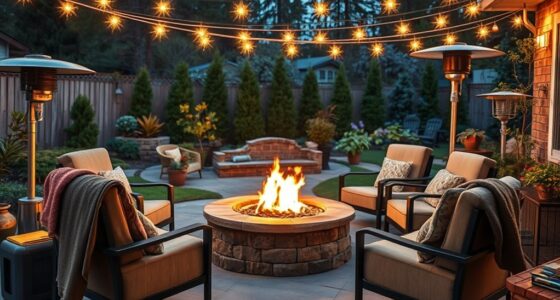
Landscape lighting involves choosing the right voltage, transformers, and beam angles to create a safe, attractive outdoor space. Most systems use low voltage, like 12V or 24V, which is safer and easier to install. Transformers convert mains power to low voltage, and selecting the right size guarantees consistent brightness. Beam angles determine how focused or broad your light is, highlighting features effectively. To turn your landscape into a stunning, functional area, understanding these basics is essential—more details await you.
Key Takeaways
- Proper voltage (12V or 120V) ensures safe, efficient, and optimal performance of landscape lighting systems.
- Transformers convert high voltage to low voltage, with size and type affecting brightness stability and system longevity.
- Selecting the correct beam angle (10°-60°) enhances feature focus, coverage, and prevents light spillage.
- Maintaining consistent voltage prevents flickering, bulb burnout, and damage to fixtures and wiring.
- Matching transformer capacity to total wattage and choosing weatherproof models improve system reliability.

DEWENWILS 120W Low Voltage Landscape Transformer, Outdoor Transformer with Timer and Photocell Sensor, 120V AC to 12V AC, Weatherproof, for LED Lighting, Spotlight, Pathway Light, ETL Listed
- Dusk to Dawn Sensor: Automatically turns lights on/off at dusk/dawn
- Countdown Timer: Sets 1-9 hour automatic shutoff
- Easy Installation: Includes mounting holes and outdoor cord
As an affiliate, we earn on qualifying purchases.
As an affiliate, we earn on qualifying purchases.
What Is Landscape Lighting and Why Is It Important?
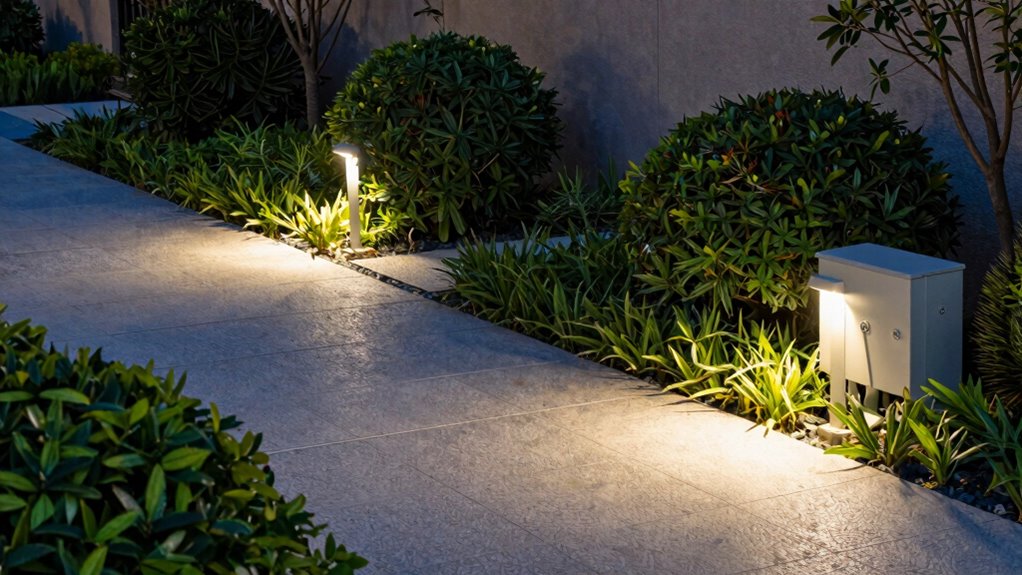
Have you ever noticed how landscape lighting transforms a yard after sunset? It’s not just about visibility; it enhances your garden aesthetics and creates a welcoming outdoor ambiance. Landscape lighting highlights key features like trees, pathways, and water features, making your yard look stunning even at night. It adds depth and dimension, turning an ordinary space into a magical retreat. Beyond beauty, it boosts safety by illuminating walkways and steps, reducing hazards. Proper lighting also extends your outdoor enjoyment, allowing you to relax or entertain after dark. Additionally, Free Floating elements such as water features or sculptures can be accentuated with strategic lighting to create focal points. By thoughtfully installing landscape lights, you control the mood and highlight your garden’s best elements. Ultimately, landscape lighting isn’t just decorative—it’s an essential way to elevate your outdoor living space.
How Much Voltage Do Your Landscape Lights Need?

Most landscape lights operate at either 12V or 120V, so it’s crucial to know your system’s voltage. Low-voltage lighting offers safety and easier installation, but you need to make certain your fixtures match your power source. Always check voltage compatibility to avoid damage and ensure your lights perform their best. Understanding regional flavors and their unique characteristics can also help you select the most suitable lighting style for your landscape. Additionally, considering the contrast ratio can improve your landscape’s nighttime appearance by enhancing visual depth and detail. Being aware of circuit configurations can help in planning a safe and efficient lighting setup. Proper transformer selection is essential to ensure your landscape lighting system operates reliably and safely, and understanding system voltage is key to choosing the right components for optimal performance.
Typical Voltage Levels
Understanding the typical voltage levels for landscape lighting is essential to guarantee your system functions safely and effectively. Most landscape lights operate at low voltages, usually 12V or 24V, which are safe for outdoor use and compatible with many fixtures. If you’re using solar panels, they often power floodlight zones with a voltage range that depends on the panel’s output and the system’s design. These lower voltages help prevent electrical hazards and reduce wiring costs. Additionally, the choice of voltage influences the brightness and fixture performance, which can impact the overall aesthetic of your landscape. Proper voltage levels ensure your landscape lighting system remains reliable, safe, and energy-efficient. Always verify your fixtures’ voltage requirements and match them with your power source to avoid issues down the line. Furthermore, understanding the voltage compatibility of your components can help you troubleshoot and expand your system more effectively. Being aware of voltage fluctuations can also help maintain consistent lighting performance over time. To optimize your system’s safety and efficiency, consider the appropriate transformer size to handle your lighting load without overloading. Knowing the common voltage standards in outdoor lighting can also assist in selecting compatible equipment and ensuring system longevity.
Low Voltage Benefits
Using low voltage for landscape lighting offers several key benefits. It’s safer to install, reducing the risk of electrical shock, and easier to work with for DIY projects. Low voltage systems also consume less energy, making them more energy-efficient and cost-effective over time. Additionally, they’re compatible with solar power options, boosting sustainability. This flexibility allows you to create beautiful lighting setups without high power demands.
- Safer installation and maintenance
- Lower energy consumption for savings
- Easier integration with solar power systems
- Enhanced control over lighting effects
Voltage Compatibility Checks
Before installing landscape lighting, verifying the voltage requirements of your fixtures is vital. Check each fixture’s voltage compatibility to ensure they operate safely and effectively. Most landscape lights use low voltage, typically 12V or 24V, and mismatched voltage can cause poor performance or damage. Proper transformer sizing is essential; select a transformer that matches your total wattage needs, with some extra capacity for future additions. Avoid overloading the transformer, as it can lead to flickering or failure. Measure the voltage at the fixture during installation to confirm it matches the specified requirements. Ensuring voltage compatibility and appropriate transformer sizing guarantees your landscape lighting system functions reliably, lasts longer, and provides the desired aesthetic effect. Additionally, regularly testing the voltage levels can help prevent issues caused by fluctuating power supply. Paying attention to electrical specifications during setup ensures safety and optimal performance of your landscape lighting system. Regular system checks can also help identify potential issues early and maintain consistent lighting performance. Incorporating proper wiring techniques can further enhance safety and system longevity.
How Transformers Power Your Outdoor Lighting Systems

Transformers are essential for powering your outdoor lighting system safely and efficiently. They come in different types with specific functions to match your setup. Making sure the proper voltage level guarantees your lights perform well and last longer. Additionally, understanding support vs boundaries can help you manage your lighting system effectively and avoid potential issues. Properly sizing and installing transformers also enhances system reliability, ensuring consistent performance over time. Being aware of voltage regulation can further prevent flickering and damage to your lights, contributing to a more durable setup. Selecting the right transformer capacity is crucial for accommodating future expansions and ensuring your entire system remains balanced. Incorporating Indonesian decor masks into your landscape design can add cultural richness and artistic appeal, enriching the visual experience of your outdoor space.
Transformer Types and Functions
To power your outdoor lighting system safely and efficiently, you need a transformer that converts the high-voltage electricity from your mains supply into the low-voltage current your lights require. Different transformer types serve various needs, such as magnetic or electronic models. Magnetic transformers are durable and handle larger loads, making them ideal for extensive landscapes. Electronic transformers are often more energy-efficient and compatible with LED lighting, ensuring LED compatibility and smooth operation. Some transformers include features like surge protection or adjustable output, enhancing system longevity. Selecting the right type depends on your specific setup and future expansion plans. Remember, a durable transformer guarantees reliable performance, while compatibility with LED lights helps maximize energy savings and lifespan for your outdoor lighting system. Understanding transformer functions is essential for choosing the best system for your needs. Additionally, considering testing accuracy can help ensure your system operates safely and efficiently over time. Proper installation practices are also vital to optimize performance and prevent potential electrical issues.
Proper Voltage Maintenance
Maintaining proper voltage levels is essential to guarantee your outdoor lighting system functions reliably and safely. Voltage fluctuation can cause bulbs to flicker or burn out prematurely, reducing your system’s lifespan. Power surges, often caused by lightning or electrical issues, can damage transformers and fixtures if not managed properly. To prevent this, ensure your transformer is correctly rated for your system’s load and regularly check its output voltage. Installing surge protectors can also help guard against unexpected power surges. Consistent voltage ensures your lights operate at ideal brightness and prevents costly repairs. By monitoring and maintaining steady voltage levels, you protect your investment and enjoy a safe, beautiful landscape lighting display all season long.
How to Choose the Right Transformer for Your Landscape
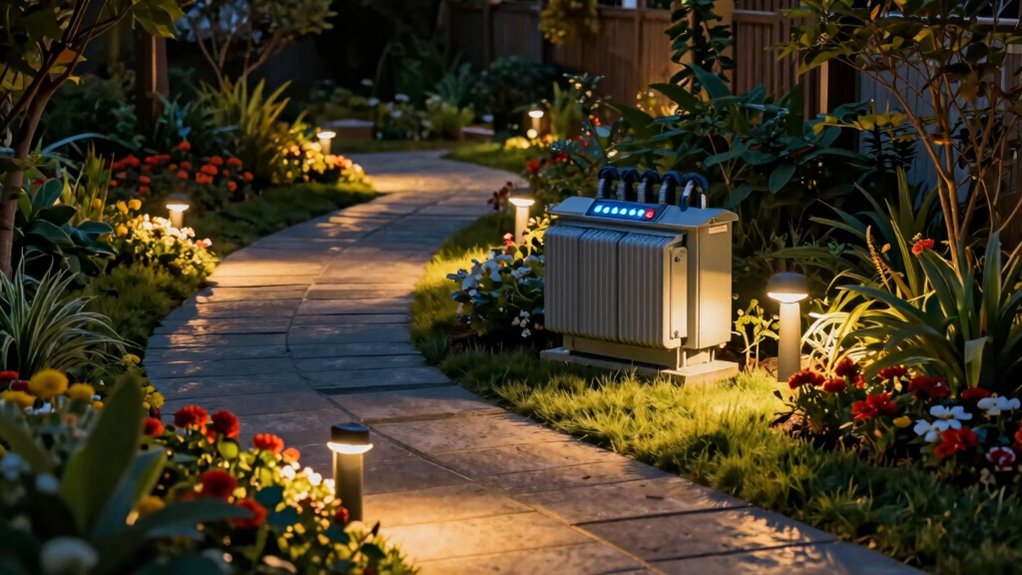
Choosing the right transformer is essential for guaranteeing your landscape lighting operates safely and efficiently. Proper transformer sizing ensures you have enough power without overloading, while good voltage regulation maintains consistent brightness across all fixtures. When selecting a transformer, consider your total wattage needs and future expansion. An undersized transformer can cause flickering or dimming, whereas an oversized one may waste energy. Look for models with reliable voltage regulation to keep your lights steady. Also, check for features like adjustable output and durability to handle outdoor conditions.
Choosing the right transformer ensures safe, efficient, and reliable landscape lighting performance.
- Match the transformer’s wattage capacity to your total fixture load
- Prioritize quality to guarantee consistent voltage regulation
- Allow for future lighting additions with a slightly larger capacity
- Choose weatherproof, durable models for outdoor use
What Beam Angle Do You Need for Different Features?

Have you ever wondered how the beam angle affects the way your landscape features are illuminated? Your choice of beam width determines the light spread, shaping how much area is lit and how focused the illumination appears. A narrow beam angle, like 10-20 degrees, creates a tight, concentrated light ideal for highlighting specific features such as statues or trees. A wider beam angle, around 40-60 degrees, offers a broader light spread perfect for illuminating larger areas like lawns or pathways. For general ambient lighting, a very wide beam, over 60 degrees, ensures even coverage. Matching the beam angle to your feature’s size and purpose helps you craft a balanced, effective landscape lighting design that highlights your space beautifully.
How Voltage Affects Brightness, Safety, and Longevity

The voltage of your landscape lighting system directly influences the brightness, safety, and lifespan of your fixtures. Too high or too low voltage can cause issues, so proper voltage regulation is essential. When voltage is too high, bulbs may burn out faster, and wiring risks overheating. Conversely, low voltage can result in dim lighting, reducing your desired effect. To make certain safety precautions are met, always check that your system’s voltage matches the fixture requirements. Key points to take into account include:
- Maintaining consistent voltage to prevent fixture damage
- Using appropriate transformers for voltage regulation
- Avoiding overloading circuits to enhance safety
- Regularly inspecting wiring for signs of wear or damage
Which Beam Angles Are Best for Garden Features?

Choosing the right beam angles helps you highlight your garden’s focal points effectively. Narrow beams draw attention to specific features, while wider beams create a sense of depth and dimension. By selecting appropriate angles, you can enhance your garden’s visual appeal and overall atmosphere.
Highlighting Garden Focal Points
To effectively highlight garden focal points, selecting the right beam angles is essential. Narrow beam angles, like 10-15 degrees, create focused illumination that draws attention to specific features, enhancing your garden aesthetics. Wider angles, such as 30-45 degrees, soften the light, providing a more natural look that complements plant health and overall scenery. Proper beam selection prevents light spillage that can disturb neighboring plants or create harsh shadows. Consider these points:
- Narrow beams accentuate architectural details and statues
- Wide beams provide gentle ambient light, ideal for larger features
- Avoid overly narrow angles that cause harsh shadows
- Balance beam angles to highlight focal points without overpowering the scene
Choosing the right angles guarantees your garden remains visually appealing while supporting healthy plant growth.
Creating Depth and Dimension
Using the right beam angles can add depth and dimension to your garden, making it appear more layered and visually interesting. Narrow beam angles, around 10-15 degrees, focus light tightly, highlighting specific features like sculptures or trees, creating dramatic shadows that enhance garden aesthetics. Wider angles, such as 30-60 degrees, illuminate larger areas, adding a sense of space and openness. To create depth, use a combination of narrow and wider beams, positioning lights at different heights and distances. This layered lighting approach improves visual interest while maintaining energy efficiency, as you direct light precisely where needed. By selecting appropriate beam angles, you enhance your garden’s overall look and feel, making it more inviting and professionally lit without wasting energy.
Common Landscape Lighting Mistakes to Avoid
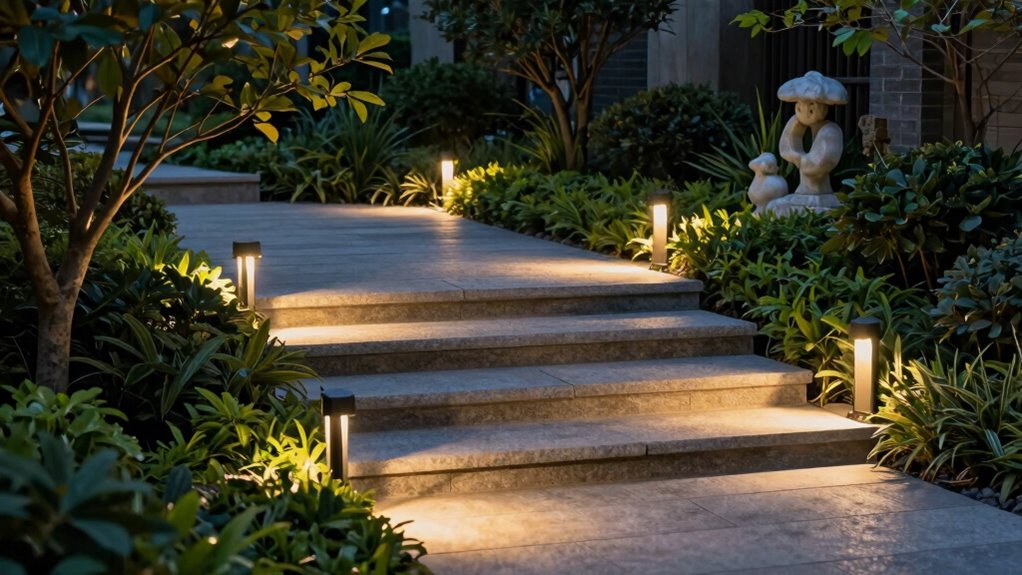
One of the most common mistakes in landscape lighting is over-illuminating the space, which can create harsh glare and wash out the details you want to highlight. To avoid this, pay attention to timing considerations and choose the right color temperature to set the mood. Incorrect timing can leave your landscape too bright at night or too dim when you want to impress. Using a warm color temperature (around 2700K-3000K) creates a cozy, inviting atmosphere, while cooler tones (4000K and above) can feel stark or uninviting.
- Over-illuminating and causing glare
- Ignoring the importance of timing considerations
- Using mismatched color temperatures
- Failing to balance light layers for depth
How to Save Energy and Money With Your Outdoor Lighting
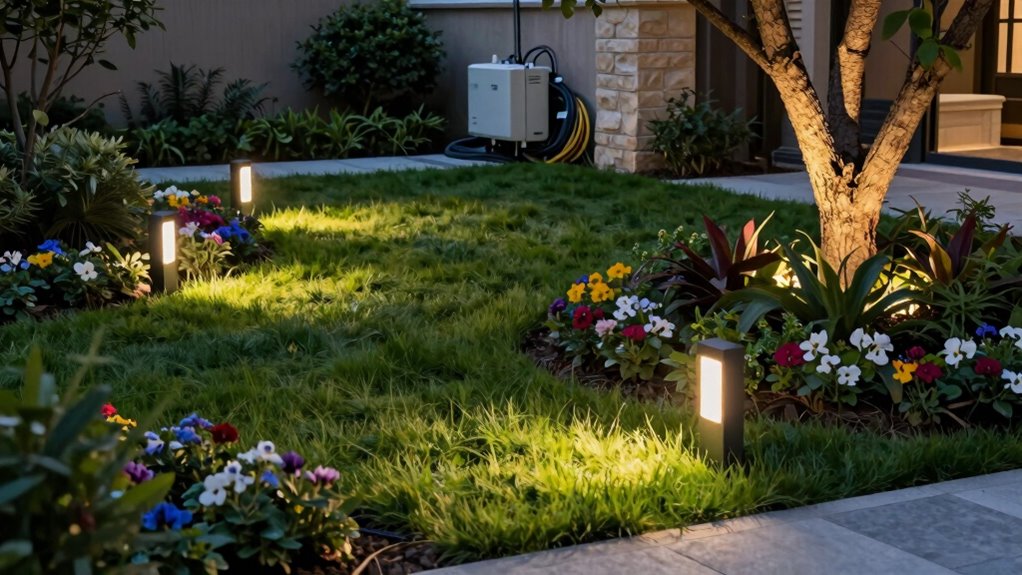
Smart outdoor lighting choices can substantially cut your energy bills and extend your fixtures’ lifespan. To maximize savings, focus on energy conservation and solar efficiency. Use LED bulbs, which consume less power and last longer. Incorporate solar-powered fixtures when possible, reducing reliance on grid electricity. This not only lowers costs but also supports eco-friendly practices. Consider adjusting beam angles to avoid light spillage, making your lighting more efficient. Here’s a quick comparison:
| Feature | Benefits |
|---|---|
| LED bulbs | Lower energy use, longer lifespan |
| Solar-powered lights | No energy bills, eco-friendly |
| Adjustable beam angles | Reduced light waste, better focus |
Planning and Installing Your Landscape Lighting Step-by-Step

Planning and installing your landscape lighting carefully guarantees your outdoor space is both functional and attractive. Start by mapping out your design, considering focal points, pathways, and safety. Choose energy-efficient options like solar power lights to reduce electricity use. Incorporate smart controls for easy customization and automation, enhancing convenience and security. When installing, ensure proper placement to highlight key features while avoiding glare. Test your setup before finalizing to confirm brightness and coverage. Keep in mind the importance of layering lighting for depth and ambiance. Proper planning prevents costly adjustments later and maximizes your investment in outdoor lighting. By following a step-by-step approach, you’ll create a stunning, efficient landscape that’s easy to manage and enjoy.
Frequently Asked Questions
How Do I Calculate the Total Wattage for My Landscape Lighting System?
To calculate the total wattage for your landscape lighting system, add up the wattage of each fixture to perform a wattage calculation. Make certain your transformer can handle this total to ensure fixture compatibility. Check each fixture’s wattage label, then sum them up. This way, you’ll avoid overloading your system and maintain safe, effective lighting. Always verify your transformer’s wattage capacity before installation.
Can I Use LED Bulbs With Existing Halogen Landscape Fixtures?
Yes, you can use LED bulbs with existing halogen landscape fixtures, but check for LED compatibility first. Many fixtures require specific LED bulbs or may need fixture upgrades to guarantee proper fit and performance. Upgrading your fixtures can improve energy efficiency and lifespan. Always verify the wattage and voltage ratings to avoid damage, and choose LED bulbs designed for outdoor landscape use for the best results.
What Are the Best Practices for Burying Low-Voltage Wiring?
Oh, burying underground wiring? It’s as simple as digging a hole and tossing in the cables, right? Not quite. You should follow safety precautions, like using a conduit, keeping wiring deep enough (at least 6 inches), and avoiding sharp rocks. Properly laying underground wiring guarantees durability and prevents damage. Always double-check local codes and consider professional help to keep your landscape lighting safe and reliable.
How Often Should Landscape Lighting Transformers Be Maintained or Replaced?
You should inspect your landscape lighting transformer annually for proper operation and signs of wear. Regular transformer maintenance includes checking for corrosion, making sure it’s clean, and verifying bulb compatibility to prevent overloads. Replace the transformer if it shows signs of damage, overheating, or if it’s outdated. Staying proactive with maintenance ensures your lighting stays functional and safe, extending the life of your system and enhancing your landscape’s appearance.
Are There Specific Colors or Beam Angles Recommended for Security Lighting?
For security lighting, you should choose warm white or cool white colors with a color temperature around 3000K to 5000K, providing clear visibility without harshness. Opt for a wider beam spread, around 40 to 60 degrees, to cover more area effectively. This guarantees your security lighting illuminates key entry points and pathways, enhancing safety while maintaining energy efficiency and minimizing light pollution.
Conclusion
By understanding voltage, transformers, and beam angles, you hold the key to transforming your outdoor space into a breathtaking oasis. When you choose the right lighting and install it thoughtfully, your garden will glow with warmth and character—like a jewel shining in the night. So, take charge of your landscape lighting journey and let your outdoor world shine brighter than ever, turning your home into a sanctuary that welcomes you home every evening.