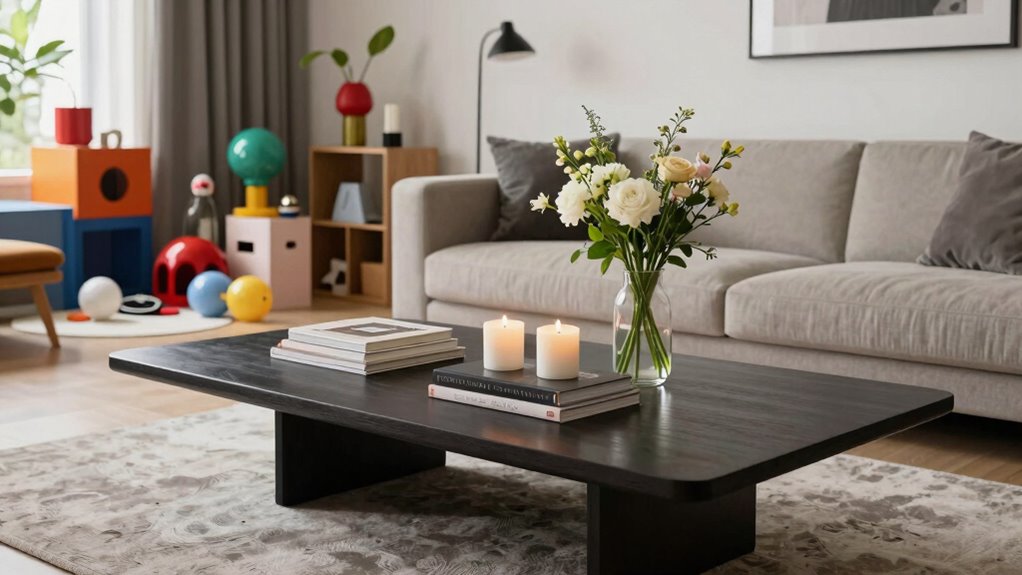

Styling focuses on arranging and presenting a space temporarily to highlight features, emphasizing color, focal points, and textures, while decorating involves selecting and permanently placing furniture, art, and accessories to create a cohesive overall look. Styling is flexible, allowing quick updates for special occasions or mood changes, whereas decorating involves long-term choices that define your space’s personality. Understanding these differences helps you plan better, and if you keep exploring, you’ll discover how to use both effectively.

Get furniture and decor delivered free with Prime
- Fast, free delivery on millions of items
- Prime Video, Amazon Music and more included
- Member-only deals all year
Key Takeaways
- Styling focuses on temporary arrangement and visual harmony, while decorating involves permanent selection of furniture and decor elements.
- Styling emphasizes arrangement, color harmony, and focal points; decorating establishes the overall aesthetic and long-term design.
- Styling allows quick, flexible updates; decorating involves long-term decisions impacting the room’s structure and layout.
- Styling experiments with textures and placements; decorating chooses statement pieces and foundational elements.
- Understanding the difference helps determine whether to refresh a space or undertake a major redesign.

When it comes to transforming a space, understanding the difference between styling and decorating can make all the difference. Styling focuses on arranging and presenting a space to highlight its best features, while decorating involves selecting and applying elements like furniture, accessories, and colors to create a cohesive look. If you’re aiming to refresh a room, knowing whether you need to style or decorate can help you achieve your goal efficiently.
Styling is about creating visual harmony and balance within a space. You use your knowledge of color theory to select hues that evoke the right mood and complement each other. For example, cool tones can promote relaxation, while warm tones energize a room. You also think about space optimization—making sure furniture placement and accessories maximize the room’s potential. Styling involves experimenting with different arrangements, layering textures, and placing objects thoughtfully to emphasize certain features or create focal points. It’s a dynamic process, often temporary, that allows you to easily change the vibe of a room without making permanent alterations. Understanding interior design principles can help inform your styling choices and improve overall visual appeal. Recognizing the importance of space utilization can further enhance your ability to craft a well-balanced environment. Additionally, being aware of design flexibility can help you adapt your styling efforts over time as your needs and tastes evolve. Incorporating biodiversity-inspired elements and natural materials can also bring a sense of harmony and sustainability into your space.
Styling creates harmony through color, arrangement, and layering, allowing flexible, temporary room transformations.
Decorating, on the other hand, is more about the long-term choices that define a room’s overall aesthetic. It involves selecting furniture, wall art, rugs, curtains, and other decorative items that align with your style preferences. When decorating, you consider how each piece contributes to the overall look, ensuring that colors and textures work together seamlessly. This process requires an understanding of color theory to create harmonious color schemes and may involve choosing statement pieces that anchor the space. Decoration also involves practical decisions—picking furniture that fits comfortably within the space and enhances functionality through space optimization. You’re essentially building a visual foundation that reflects your personality and makes the space inviting.
While both styling and decorating aim to make your space appealing, they serve different purposes. Styling can be more fluid, allowing you to shift things around for a fresh feel, whereas decorating often involves more permanent decisions about furniture and layout. When you’re aware of these distinctions, you can better plan your efforts—perhaps styling a vignette for a special occasion or redecorating a room entirely for a new look. Ultimately, understanding the nuances between the two helps you create spaces that are not only beautiful but also functional and tailored to your lifestyle.
temporary room styling accessories
As an affiliate, we earn on qualifying purchases.
As an affiliate, we earn on qualifying purchases.
Frequently Asked Questions
Do Stylists and Decorators Work Together Often?
Yes, stylists and decorators often work together to bring your vision to life. They collaborate closely, blending fashion trends and personal expression to create cohesive spaces and looks. Stylists focus on your appearance, highlighting your style, while decorators craft the environment reflecting your personality. This teamwork guarantees your personal expression shines through, whether in your wardrobe or your home, making every detail uniquely yours.
Can Decorating Be Done Without Professional Help?
Yes, you can definitely decorate without professional help. A DIY approach allows you to personalize your space and stick to your budget considerations. Start by choosing a color scheme, then add accessories, artwork, and furniture that reflect your style. Take your time to experiment with different arrangements, and don’t be afraid to update or swap out items as your preferences evolve. This way, decorating becomes a fun, budget-friendly project you control.
How Do I Choose Between a Stylist and a Decorator?
You should choose a stylist if you’re after a personalized look that reflects your unique style, especially when you have a flexible budget. On the other hand, decorators excel at transforming spaces within set budgets, focusing on aesthetics and overall ambiance. Ironically, if you’re indecisive about your personal style or budget, hiring both might actually be the smartest move—though that’s a story for another time!
What Are the Typical Costs for Each Service?
The cost comparison between styling and decorating varies, but generally, styling services tend to be more affordable, often ranging from $200 to $1,000 per session, while decorating can cost from $1,000 to several thousand dollars depending on scope. Service fees depend on the project’s size and complexity. You should factor in consultation fees, hourly rates, and product costs to get an accurate idea of your budget needs.
Are There Any Certifications Required for Stylists or Decorators?
You won’t need a superhero cape, but certifications can boost your credibility! While there’s no universal license for stylists or decorators, many pursue certifications like the Certified Interior Decorator (CID) or Certified Professional Interior Stylist (CPIS). Staying updated on styling trends and mastering decorating themes can set you apart, making your work legendary. These credentials and knowledge help you confidently turn ordinary spaces into extraordinary masterpieces.
Conclusion
So, next time you step into a space, remember that styling is about personal expression and creating a vibe, while decorating is about filling that space with beautiful, functional items. Interestingly, some experts suggest that styling actually influences how we feel more deeply than decorating alone—shaping our mood and identity. By understanding this, you can intentionally craft environments that not only look good but truly resonate with who you are.
Halloween Picks
halloween
As an affiliate, we earn on qualifying purchases.