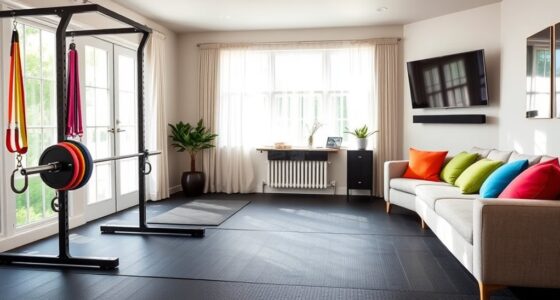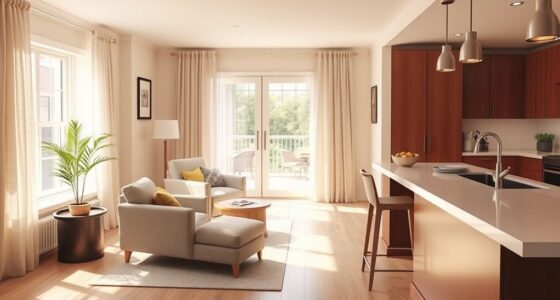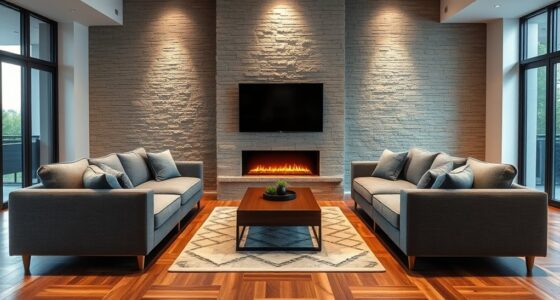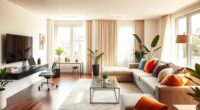
To create zones in your open-concept space, start by strategically placing furniture to define different areas, like a sofa arrangement for the living zone and a dining table nearby. Use rugs to anchor each space visually, choosing appropriately sized options that blend texture and pattern for added interest. Incorporate varied lighting—pendant lights, lamps, or dimmers—to highlight each zone’s function. Keep exploring to discover even more ways to craft distinct, inviting areas within your open plan.
Key Takeaways
- Use rugs of appropriate size and placement to visually anchor and define specific zones within the open space.
- Incorporate layered textures and patterns to enhance zone distinction and create visual interest.
- Implement varied lighting fixtures, such as pendant lights, lamps, and dimmers, to highlight and differentiate each area.
- Assign distinct functions to zones and choose furniture placement that supports each area’s purpose.
- Use lighting temperature and focal points to set the mood and emphasize specific zones within the open-concept layout.
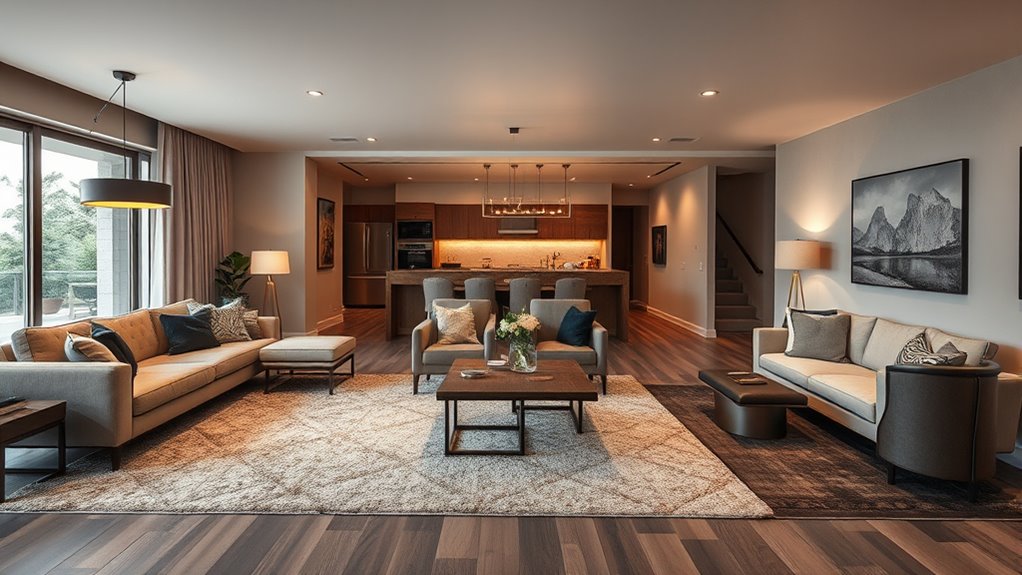
Open-concept spaces offer flexibility and a modern aesthetic, but without careful planning, they can feel chaotic or unfocused. To create a sense of order and purpose, you need to define distinct zones within the open layout. One of the simplest ways to do this is by using area rugs. Rugs not only add texture and warmth but also visually anchor a space, signaling where one zone ends and another begins. For example, placing a large rug under your sofa and coffee table clearly designates your living area, while smaller rugs in a dining nook or entryway help separate those zones from the rest of the room. When choosing rugs, consider size and placement carefully; too small, and they won’t serve their purpose, too large, and they might overwhelm the space. Layering different textures and patterns can also make each zone feel intentional and inviting.
Lighting strategies play a vital role in defining and highlighting these zones. Instead of relying solely on ceiling fixtures, incorporate a mix of lighting options tailored to each area’s function. Use pendant lights or chandeliers over dining tables to create a focal point and add a sense of intimacy. For seating areas, table lamps or floor lamps help establish a cozy atmosphere while providing task lighting. Dimmers are invaluable, allowing you to adjust brightness to suit different activities and moods. By carefully positioning lighting fixtures, you can subtly guide the eye and emphasize specific zones, making the entire space feel cohesive yet distinct. For instance, spotlighting a reading nook with a dedicated lamp helps it stand out, while softer lighting in the lounge area invites relaxation. Additionally, understanding how color temperature affects the ambiance can help create the desired mood for each zone.

8×10 Area Rugs for Living Room Rug Washable: Abstract Large Rug for Dining Room Bedroom Carpet Non Slip 8 by 10 Indoor Modern Nursery Home Office Blue Grey
Soft & Durable: This 8×10 area rug low-pile combines soft faux wool fibers with a 0.25-inch height for…
As an affiliate, we earn on qualifying purchases.
As an affiliate, we earn on qualifying purchases.
Frequently Asked Questions
How Do I Choose the Right Rug Size for Each Zone?
To choose the right area rugs for each zone, measure your space carefully. For seating areas, opt for larger rugs that fit under all furniture legs, creating a unified look. Use different rug shapes—rectangular, round, or square—to define each zone. Make certain the rug size complements the space without overwhelming it. This balance makes your zones feel cohesive and inviting, enhancing the overall flow of your open-concept area.
What Lighting Options Best Define Different Spaces?
You should use a mix of ambient and task lighting to define different spaces. Ambient lighting, like ceiling fixtures or recessed lights, creates a warm overall glow, while task lighting, such as table lamps or pendant lights, highlights specific areas like reading nooks or kitchen counters. Combining these options helps visually separate zones, making your open-concept space feel cozy and well-organized.
How Can Furniture Placement Improve Flow Between Zones?
Imagine it’s 1920, and you’re arranging furniture to improve traffic flow. You should position furniture to create clear pathways, avoiding clutter and obstacles. Good furniture arrangement naturally guides movement between zones, making the space more functional and inviting. By thoughtfully placing sofas, tables, and chairs, you guarantee smooth traffic flow, helping each area feel distinct yet interconnected, enhancing the overall harmony of your open-concept space.
Are There Color Schemes That Help Distinguish Zones Effectively?
Yes, choosing color schemes with strong contrast helps distinguish zones effectively. You can use different wall or accent colors to create clear visual boundaries, making each area feel separate yet cohesive. Bright or bold hues contrast well with neutral tones, guiding the eye and defining spaces. This approach helps you seamlessly shift between zones, enhancing the overall flow and making your open-concept space feel organized and inviting.
How Do I Incorporate Storage Without Disrupting the Zones?
Your open space is a canvas, so use multi-functional storage like stylish benches or sleek shelves to keep clutter at bay without disrupting zones. Incorporate decorative storage solutions such as baskets or attractive cabinets that blend seamlessly into your design. Position these smart storage pieces strategically—under windows or along walls—to maintain flow and functionality, ensuring your space stays organized without sacrificing style or the visual clarity of each zone.

Black Farmhouse Chandelier, 6 Light Geometric Dining Room Light Fixture, Modern Industrial Metal Ceiling Light Rustic Hanging Pendant Lights with E12 base for Kitchen Island Entryway Foyer, Indoor
Style & Design: This black chandelier features 6 geometric square metal frames, each equipped with a lampholder. When…
As an affiliate, we earn on qualifying purchases.
As an affiliate, we earn on qualifying purchases.
Conclusion
By thoughtfully using rugs, lighting, and furniture placement, you can effortlessly create distinct zones in your open-concept space. Remember, it’s all about your personal touch—think of it as designing your own modern speakeasy, where every element has a purpose. With a little planning, you’ll turn your open layout into a harmonious haven that feels both stylish and functional. So go ahead, channel your inner Martha Stewart and make your space uniquely yours!

SUNMORY Arc Floor Lamp,Modern Floor Lamp with 9W 3 Color Temperatures Bulb,Metal Standing Lamps with Adjustable Hanging Lampshade,Tall Floor Lamps for Living Room,Bedroom,Office (Black)
【3 Color Temperature LED Bulbs Included】SUNMORY Modern Floor Lamp includes a 9 watt,800 lumen, LED E26 bulb.This arc…
As an affiliate, we earn on qualifying purchases.
As an affiliate, we earn on qualifying purchases.
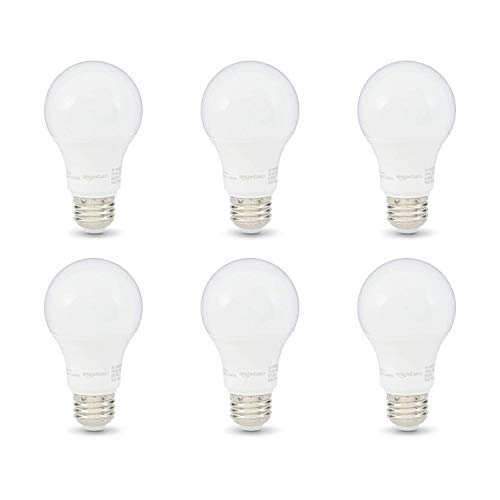
Amazon Basics A19 LED Light Bulbs, 60 Watt Equivalent, Energy Efficient 9W, E26 Standard Base, Soft White 2700K, Dimmable, 10,000 Hour Lifetime , 6-Pack
ENERGY EFFICIENT: These 9W LED light bulbs provide the brightness of 60 watt light bulbs, saving $55.87 in…
As an affiliate, we earn on qualifying purchases.
As an affiliate, we earn on qualifying purchases.