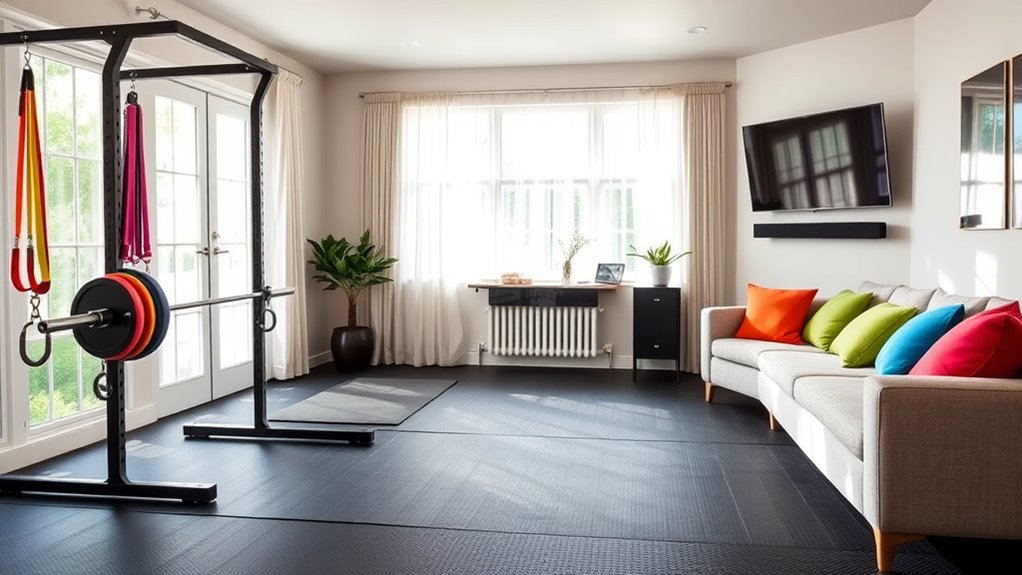

To create a home gym in a multi-functional space, start by identifying and dedicating an area for workouts that blends well with your room’s purpose. Use compact, versatile equipment like foldable mats, resistance bands, and small weights to save space. Organize with wall racks, shelves, and containers to keep everything tidy and accessible. Proper layout and storage make your space both functional and inviting—keep exploring to find more ways to optimize your setup effectively.

Get furniture and decor delivered free with Prime
- Fast, free delivery on millions of items
- Prime Video, Amazon Music and more included
- Member-only deals all year
Key Takeaways
- Dedicate specific zones within the multi-functional space solely for workout activities to minimize clutter.
- Choose compact, versatile equipment like foldable mats, resistance bands, and small dumbbells to save space.
- Utilize vertical storage solutions such as wall-mounted racks, hooks, and shelves to organize equipment efficiently.
- Arrange equipment to allow easy access and unobstructed movement, optimizing the layout for functionality.
- Enhance the environment with good lighting, ventilation, and sound absorption for a motivating workout space.

Ever wondered how to transform a multi-functional space into an effective home gym? It’s a common challenge, but with the right approach, you can turn any room into a sleek, functional workout zone. The key lies in smart equipment organization and space optimization. First, assess the space you have available. Look for areas you can dedicate solely to fitness, even if it’s just a corner or a small alcove. Once you identify the spot, think about how to maximize every inch. You want your equipment to be accessible yet neatly stored to prevent clutter, which can quickly turn your gym into a chaotic zone.
Start by choosing versatile, space-saving equipment. Foldable yoga mats, compact dumbbell sets, and resistance bands are excellent because they don’t take up much room when not in use. For larger items like a treadmill or a stationary bike, consider models with foldable frames that can be stowed away easily. To improve equipment organization, invest in storage solutions tailored for fitness gear. Wall-mounted racks for weights or resistance bands keep things off the floor, freeing up space and reducing tripping hazards. Baskets, bins, or clear containers can hold smaller accessories like jump ropes, gloves, or water bottles, making everything easy to find and put away.
Choose foldable, compact gym equipment and smart storage solutions to maximize space and organization.
Next, focus on space optimization through layout. Position your most-used equipment where it’s easiest to access, ideally near power outlets if needed. Arrange items in a way that allows free movement around the space, avoiding narrow pathways that make workouts cumbersome. Use vertical space for storage—install shelves or hooks on the walls to hang mats, towels, or smaller gear. This keeps the floor clear and emphasizes a tidy, inviting environment. If your space doubles as a living area, consider multi-purpose furniture or fold-away mats that can be stored when not in use. This way, your gym can seamlessly blend into your daily life without feeling like a dedicated workout room. Incorporating sound-absorbing materials can also help reduce noise disruption, especially in shared living spaces.
Lighting and ventilation also play vital roles. Bright, well-ventilated spaces feel more motivating and comfortable. Keep windows open or add fans to circulate air during intense sessions. To guarantee your setup remains effective even in a multi-functional room, keep your equipment organized and your space optimized. This not only makes workouts more enjoyable but also prevents your home gym from disrupting your other daily activities. With thoughtful planning, you can create a dedicated, efficient space that encourages consistency and makes your fitness journey enjoyable and sustainable.
As an affiliate, we earn on qualifying purchases.
Frequently Asked Questions
How Can I Maximize Storage in a Small Multi-Purpose Room?
To maximize storage in your small multi-purpose room, use multi-purpose furniture like beds with drawers or fold-away desks to save space. Incorporate wall-mounted storage solutions such as shelves, hooks, or cabinets to keep essentials organized and off the floor. These options help you efficiently utilize limited space, making your room functional for both gym activities and other purposes without clutter.
What Are the Best Noise Reduction Techniques for a Home Gym?
Ever wonder how to keep your workout noise contained? You should consider installing soundproofing materials like dense mats or acoustic panels to block sound from escaping. Adding noise absorbing panels to walls and ceilings can further minimize noise transmission. Do you want a quieter gym experience? These techniques help reduce noise, making your workouts less disruptive to others while creating a more focused environment for yourself.
How Do I Adapt Lighting for Different Gym and Living Activities?
You can adapt lighting for your gym and living activities by using lighting control options like dimmers or smart bulbs, allowing you to switch between bright workout lighting and softer mood lighting easily. Incorporate adjustable fixtures or layered lighting to suit each activity. This flexibility helps create the perfect ambiance, whether you’re exercising intensely or relaxing afterward, making your space versatile and comfortable for all your needs.
What Safety Considerations Are Essential in Shared Spaces?
You should prioritize emergency preparedness by keeping a first aid kit nearby and guaranteeing clear, unobstructed pathways. Regularly inspect equipment safety to prevent accidents, making sure everything is secure and in good condition. Communicate shared space rules with others, and create quick-access plans for emergencies. These steps help prevent injuries and ensure everyone’s safety while balancing gym and living activities in your shared environment.
How Can I Incorporate Technology Seamlessly Into a Multi-Functional Gym?
Did you know 78% of fitness enthusiasts find wearable integration motivates better workouts? To seamlessly incorporate technology, choose smart equipment that syncs with your devices, offering real-time feedback. Position wearable tech conveniently, like on your wrist or clothes, for easy access. Use intuitive apps to customize routines and track progress. This integration keeps your space sleek and functional, making workouts more engaging and efficient without cluttering your multi-functional gym.
Conclusion
Creating a home gym in a multi-functional space is a smart way to stay active without sacrificing your home’s versatility. Did you know that people who exercise regularly at home are 25% more likely to stick with their routines? By cleverly designing your space, you make fitness convenient and sustainable. So, embrace the challenge, and turn your multi-purpose area into a motivating workout zone—your health and flexibility will thank you!
Halloween Picks
halloween
As an affiliate, we earn on qualifying purchases.