To create an effective dining room layout, choose a table shape that fits your space and lifestyle—rectangular, round, or square. Make certain there are at least 36 inches of clearance for easy traffic flow and avoid clutter around entry points. Pick comfortable chairs that match your style and boost seating capacity with benches if needed. Thoughtful lighting and decor add ambiance, making your space inviting. Keep these tips in mind to design a stylish, functional dining area tailored for both everyday use and special occasions.

Get furniture and decor delivered free with Prime
- Fast, free delivery on millions of items
- Prime Video, Amazon Music and more included
- Member-only deals all year
Key Takeaways
- Choose table shapes that suit your room size and promote social interaction, such as rectangular for larger spaces and round for intimacy.
- Maintain at least 36 inches of clearance around the table to ensure smooth traffic flow and easy movement.
- Select comfortable, ergonomic chairs that match the table style and accommodate your typical number of guests.
- Use strategic lighting like chandeliers or pendant lights to enhance ambiance and highlight the dining area.
- Incorporate wall decor and ensure layout balance to create an inviting, cohesive space supporting both everyday use and gatherings.
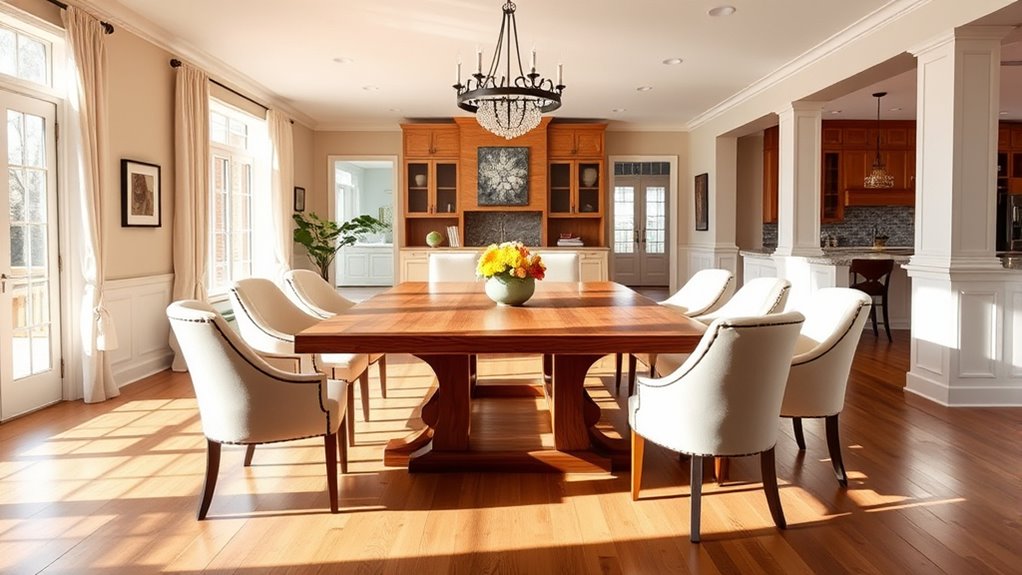
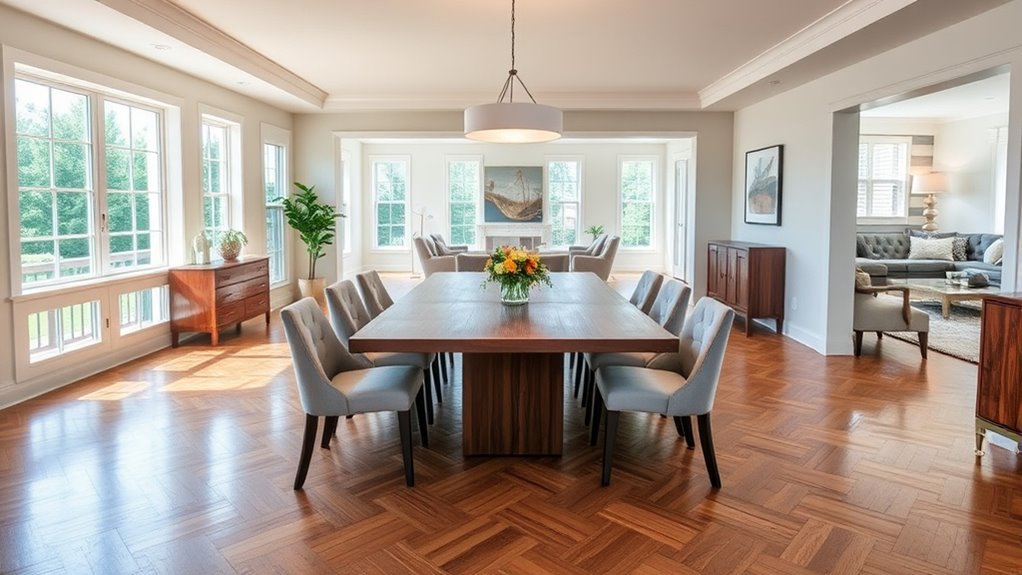
Are you wondering how to make the most of your dining room space? The key lies in choosing a layout that balances function and style. Your table shape plays a significant role here. Rectangular tables are great for longer rooms and can seat more people, making them ideal for family dinners or entertaining guests. Round tables foster a more intimate atmosphere and encourage conversation, especially in smaller spaces. Square tables are versatile, fitting well in compact areas and providing a modern look. Whatever shape you pick, ensure it complements your room’s size and your lifestyle.
Choosing the right table shape enhances your dining space’s style and functionality.
Traffic flow is another critical aspect. You want to move around your dining area effortlessly without bumping into furniture or feeling cramped. Position your table so that there’s at least 36 inches of clearance on all sides. This allows for comfortable movement, whether you’re serving food, clearing dishes, or just moving around guests. Keep pathways clear of clutter, and avoid placing furniture that blocks entry points or windows. When arranging your room, think about how people will circulate, especially during gatherings. Good traffic flow not only enhances comfort but also makes your space feel more open and inviting. Additionally, considering the contrast ratio of your lighting and decor can further improve visibility and ambiance.
Seating comfort is essential for creating an enjoyable dining experience. Choose chairs that match your table and suit your style, but also prioritize comfort. Padding and ergonomic design matter, especially if you host long dinners. When planning your layout, consider how many people you typically seat and whether you want additional seating options like benches or side chairs. If your space allows, incorporate custom lighting to highlight your dining area. A well-placed chandelier or pendant lights above the table can set the mood and add visual interest. Pairing this with thoughtful wall decor — such as artwork, mirrors, or decorative panels — can make the space feel more personalized and cohesive. These elements draw the eye and create a focal point, making your dining room more welcoming.
In designing your layout, keep in mind that balance and flow are essential. Use your wall decor to add character without overwhelming the space, and choose lighting that enhances both functionality and ambiance. With careful planning of table shape, traffic flow, and seating comfort, you’ll create a dining room that feels both stylish and practical. This thoughtful approach ensures your space is perfect for everyday meals and special gatherings alike.
round dining table with 36 inch clearance
As an affiliate, we earn on qualifying purchases.
As an affiliate, we earn on qualifying purchases.
Frequently Asked Questions
How Do I Choose the Best Table Shape for Small Spaces?
You should choose a round or oval table for small spaces because they maximize seating while maintaining traffic flow and aesthetic balance. Multi-purpose furniture like extendable tables adds versatility without clutter. These shapes create a cozy feel and encourage conversation. Opt for compact designs that fit your space, and consider multi-functional pieces to enhance functionality without sacrificing style. This approach guarantees your small dining area remains practical and inviting.
What Are the Safety Considerations for Different Table Sizes?
You should consider fire hazards and child safety when selecting table sizes. Smaller tables reduce clutter and improve traffic flow, lowering fire hazards. Round tables are safer for children, minimizing sharp corners and fall risks. Make certain there’s enough space around the table for easy evacuation in emergencies. Avoid overcrowding, which can increase fire risk and make children prone to bumps or falls, keeping safety a top priority in your dining space.
How Can I Maximize Seating Without Overcrowding?
Imagine your dining space like a well-orchestrated symphony—every instrument must play harmoniously. To maximize seating without overcrowding, opt for flexible furniture and multi-functional layouts that adapt to your needs. Use extendable tables and stackable chairs to create versatile configurations. This approach allows you to host larger gatherings comfortably, maintaining flow and comfort while avoiding the feeling of cramped quarters. You orchestrate a balanced, inviting environment.
What Are the Current Trends in Dining Room Design?
You should embrace current dining room design trends by combining luxury materials like marble or velvet with vintage styles such as antique chandeliers or distressed wood furniture. This mix creates a sophisticated yet cozy vibe. Incorporate statement lighting and bold color accents for visual interest. Focus on balancing opulence with comfort, ensuring your space feels both trendy and inviting. This approach keeps your dining room stylish and timeless.
How Do I Incorporate Accessibility in My Layout?
You should prioritize wheelchair accessibility by ensuring clear pathways and choosing adaptable furniture that suits various needs. Research shows that inclusive design enhances comfort for everyone. You can incorporate wider spaces between tables, low-profile furniture, and adjustable seating options to make your layout more accessible. This way, your dining area becomes welcoming, functional, and easy to navigate for all guests, regardless of mobility.
Conclusion
Now that you’ve explored the essentials of table shapes, traffic flow, and seating comfort, the perfect dining room layout is within your grasp. But remember, the real challenge lies in the details—those subtle choices that can transform an ordinary space into something extraordinary. Will you discover the ideal balance, or overlook the small cues that make all the difference? The secret to a flawless dining experience awaits just beyond what you see—are you ready to find out?
Halloween Picks
halloween
As an affiliate, we earn on qualifying purchases.