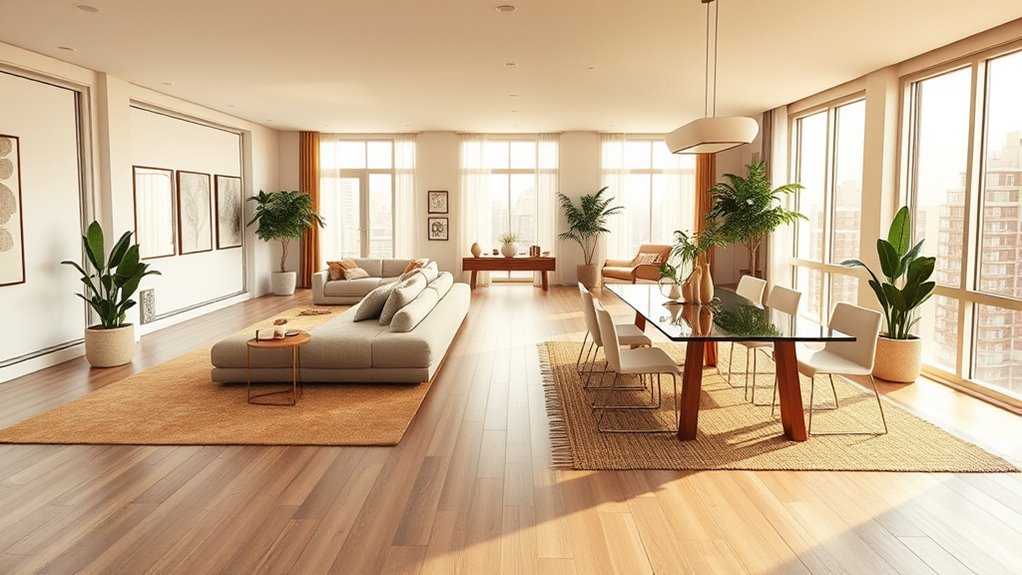

To optimize a long room by combining your living and dining areas, use strategic furniture placement and cohesive colors to define zones without clutter. Position the sofa perpendicular to the room’s length and incorporate multifunctional pieces like a dining table that doubles as a workspace. Use rugs, lighting, and subtle dividers to create visual boundaries while maintaining openness. For more ideas on designing seamless, inviting spaces, keep exploring these layout tips and styling strategies.

Get furniture and decor delivered free — and shop member deals
- Fast, free delivery on millions of items
- Access to Prime Big Deal Days deals on October 6–7
- Prime Video, Amazon Music and more included
Key Takeaways
- Position the sofa perpendicular to the room’s length to define the living zone and create natural separation.
- Use low bookshelves or console tables as subtle dividers to delineate dining and living areas without blocking flow.
- Choose slim-profile furniture and multifunctional pieces to maximize space and maintain an open, uncluttered feel.
- Apply a cohesive color palette with accent colors to unify the long room visually across both zones.
- Incorporate strategic lighting, such as pendant lights and floor lamps, to differentiate areas while preserving overall harmony.

Combining living and dining areas can create a more spacious and flexible environment in your home. When you merge these spaces, you open up endless possibilities to make your long room feel cozy yet functional. The key lies in choosing the right furniture and design strategies that define each zone without making the area feel cluttered. Multifunctional furniture plays an essential role here, allowing you to maximize space while maintaining a cohesive look. For example, a sofa bed or an ottoman with storage can serve as both seating and storage, reducing the need for extra pieces that can clutter the room. Similarly, a dining table that doubles as a workspace or a fold-away design can adapt to your needs without sacrificing style. These versatile pieces help you keep the flow open and avoid unnecessary barriers.
Maximize your space with multifunctional furniture that defines zones and keeps your long room cozy and stylish.
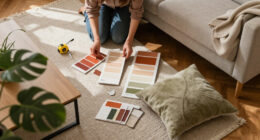
Color coordination is equally important when blending living and dining spaces. Selecting a unified color palette creates visual harmony, making the room feel more connected and less segmented. Stick to a consistent set of colors for walls, furniture, and accessories, or use complementary shades to subtly differentiate zones. For instance, if your living area features neutral tones, incorporate accent colors in the dining zone through chairs or tableware to create a sense of unity. You can also use rugs, curtains, or artwork to define each area while still maintaining overall harmony. This approach prevents the room from feeling disjointed or chaotic, especially in a long, narrow layout. Incorporating rustic decor elements can further enhance the farmhouse charm and warmth in your combined space.
In arranging your furniture, consider placing the sofa perpendicular to the length of the room, creating a natural boundary between living and dining zones. Use a console table or a low bookshelf to subtly divide without closing off the space completely. To enhance the sense of openness, opt for slim-profile pieces and avoid bulky furniture that can make the room feel cramped. Lighting also plays an indispensable role; pendant lights over the dining table and floor lamps in the living area can help visually separate the zones while maintaining a cohesive look.
Lastly, keep your pathways clear and avoid overcrowding with unnecessary furniture. By carefully selecting multifunctional pieces and ensuring color coordination, you create a seamless flow that invites conversation and relaxation. Long rooms can be challenging, but with thoughtful planning, you’ll enjoy a space that feels both expansive and inviting—perfect for hosting gatherings or simply unwinding after a long day.
As an affiliate, we earn on qualifying purchases.
Frequently Asked Questions
How Can I Improve Natural Lighting in a Long Combined Space?
To improve natural lighting in your long, combined space, you should maximize window treatments to let in more light and avoid heavy curtains. Consider installing skylights to add overhead natural light, especially if wall windows are limited. Keep windows unobstructed, use mirrors to reflect sunlight, and opt for light-colored walls and furnishings to make the space feel brighter and more inviting throughout the day.
What Color Schemes Work Best for Merging Living and Dining Areas?
You should choose color schemes that create harmony and define zones, like neutral tones for the main areas combined with accent palettes to highlight specific spaces. Opt for color coordination that flows seamlessly from living to dining, using complementary or analogous colors. Light shades like soft grays or beiges work well, while bold accents in cushions or artwork add personality without overwhelming the space. This approach keeps your long room feeling cohesive and inviting.
How Do I Define Different Zones Without Physical Walls?
You can define different zones through visual separation and furniture zoning. Start by arranging rugs to anchor each space, creating distinct areas without walls. Use furniture placement—like a sofa or a dining table—to naturally divide the zones, and vary lighting or color schemes to enhance separation. This approach maintains flow, making your long room feel cozy and organized while seamlessly blending living and dining functions.
What Furniture Arrangements Maximize Space and Functionality?
You should opt for multi-functional furniture like sofa beds and extendable tables to maximize space and functionality. Use zoning techniques such as rugs or furniture placement to define areas clearly. Position seating to face different zones, and keep pathways clear for easy movement. This arrangement helps you create distinct, practical zones within your long room, making the space feel open yet organized.
How Can I Incorporate Storage Solutions in a Long Room?
Think of your long room as a treasure chest waiting to be opened. You can incorporate storage by using multifunctional furniture, like ottomans and sofa beds, that hide away clutter. Vertical storage solutions, such as tall shelves or wall-mounted cabinets, maximize space without crowding the room. This approach keeps your space organized, practical, and visually appealing, turning your long room into a well-organized, stylish haven.
Conclusion
By thoughtfully blending your living and dining spaces, you create a harmonious flow that echoes the timeless dance of day and night. Just as a well-composed symphony balances melody and rhythm, your layout invites comfort and connection in every corner. With a little creativity, your long room transforms into a versatile haven—where laughter, conversation, and everyday moments weave together seamlessly, much like the ongoing rhythm of life’s beautiful dance.
Fall Picks
fall essentials
As an affiliate, we earn on qualifying purchases.